
Local Sanitary Pad Production Decision Guide | Welldone

From Direct Sales Data to a Local Sanitary Pad Line
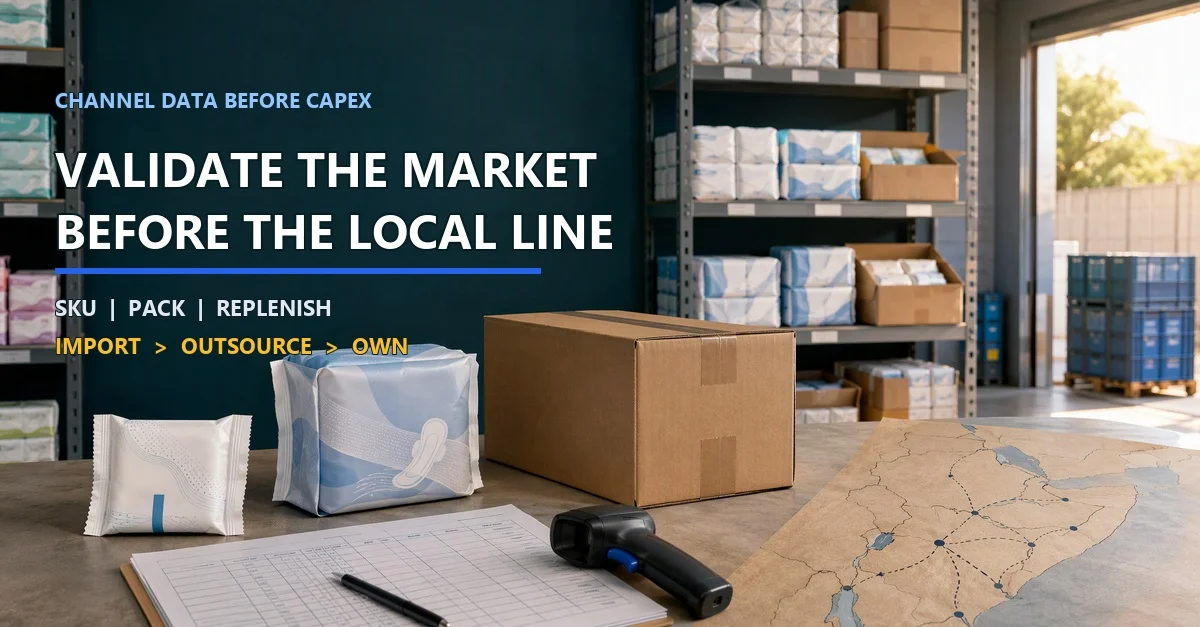
The distributor says demand is rising. The investor asks for a sanitary-pad line quotation. But nobody can show which pack size is replenished every week, which SKU sits in the warehouse or whether a single sachet and a multipack travel through the same channel.
That is not yet a machinery project. It is a market-validation gap.
What Unicharm's East Africa announcement confirms
On October 22, 2026, Unicharm announced full-scale operation of SOFY UNICHARM EAST AFRICA in Kenya. The company said it was moving from a traditional wholesale model toward direct sales managed by the new subsidiary, working with local sales agents in Kenya and expanding exports to neighboring countries.
The announced portfolio spans premium SOFY Deep Absorb, affordable SOFY Long Lasting produced through local outsourcing, and SOFY Long Lasting Single Sachet. The company set 2030 goals of KSH 1.5 billion in net sales and delivery to 2 million women in East Africa.
Source & Date
Primary: Business Wire / Unicharm release, October 22, 2026
Industry: Nonwovens Industry, October 23, 2026
Official company registration: Unicharm, August 14, 2026
Joint venture: Toyota Tsusho, August 14, 2026
Primary: Business Wire / Unicharm release, October 22, 2026
Industry: Nonwovens Industry, October 23, 2026
Official company registration: Unicharm, August 14, 2026
Joint venture: Toyota Tsusho, August 14, 2026
Registered manufacturing scope is not proof of an owned line
Unicharm's official registration notice lists manufacturing and sales of sanitary products and disposable diapers, plus export to neighboring countries, within the joint venture's business scope. Toyota Tsusho also states that local production and sales of SOFY Long Lasting began in January 2025.
The October release is more specific about the current operating model: SOFY Long Lasting is produced through local outsourcing. None of the sources read this run confirms an owned sanitary-pad line, machine count, capacity, factory dimensions or commissioning data.
Operating-model boundary: this article does not claim that Unicharm commissioned its own line. The event shows how a company can combine direct sales, imported products, local outsourcing and a legal manufacturing scope while learning where deeper localization may be justified.
The real question is not whether local manufacturing sounds strategic. It is which control gap has become expensive enough to justify the next localization step.
Direct sales turns market opinion into operating evidence
A wholesale report often ends at total orders. Direct-sales records can go further: outlet, SKU, pack count, selling period, replenishment interval, returned stock, promotion, region and service level. That evidence shows demand shape rather than headline demand.
A single monthly total can hide opposite realities. One urban channel may reorder premium multipacks while rural outlets move single sachets with smaller but more frequent replenishment. Combining them into one average pack creates the wrong packaging brief and the wrong finished-goods inventory.
A common mistake is to treat distributor purchase orders as consumer demand. Orders can include pipeline filling, safety stock or promotion loading. The investor needs replenishment and sell-through patterns before converting cartons into required qualified pieces per month.
Single sachets and multipacks create different factory boundaries
A single sachet is not merely a smaller sales unit. It changes primary-pack material, count accuracy, coding, secondary grouping, carton quantity, handling cost and replenishment behavior. A multipack may favor fewer packaging cycles but require more cash at the retail counter.
The production line must first make a stable pad. The packaging system must then create the pack architecture that the channel has validated. If the mix between single sachets and multipacks is unknown, the buyer cannot define the stacker, counting, bagging and carton handover boundary.
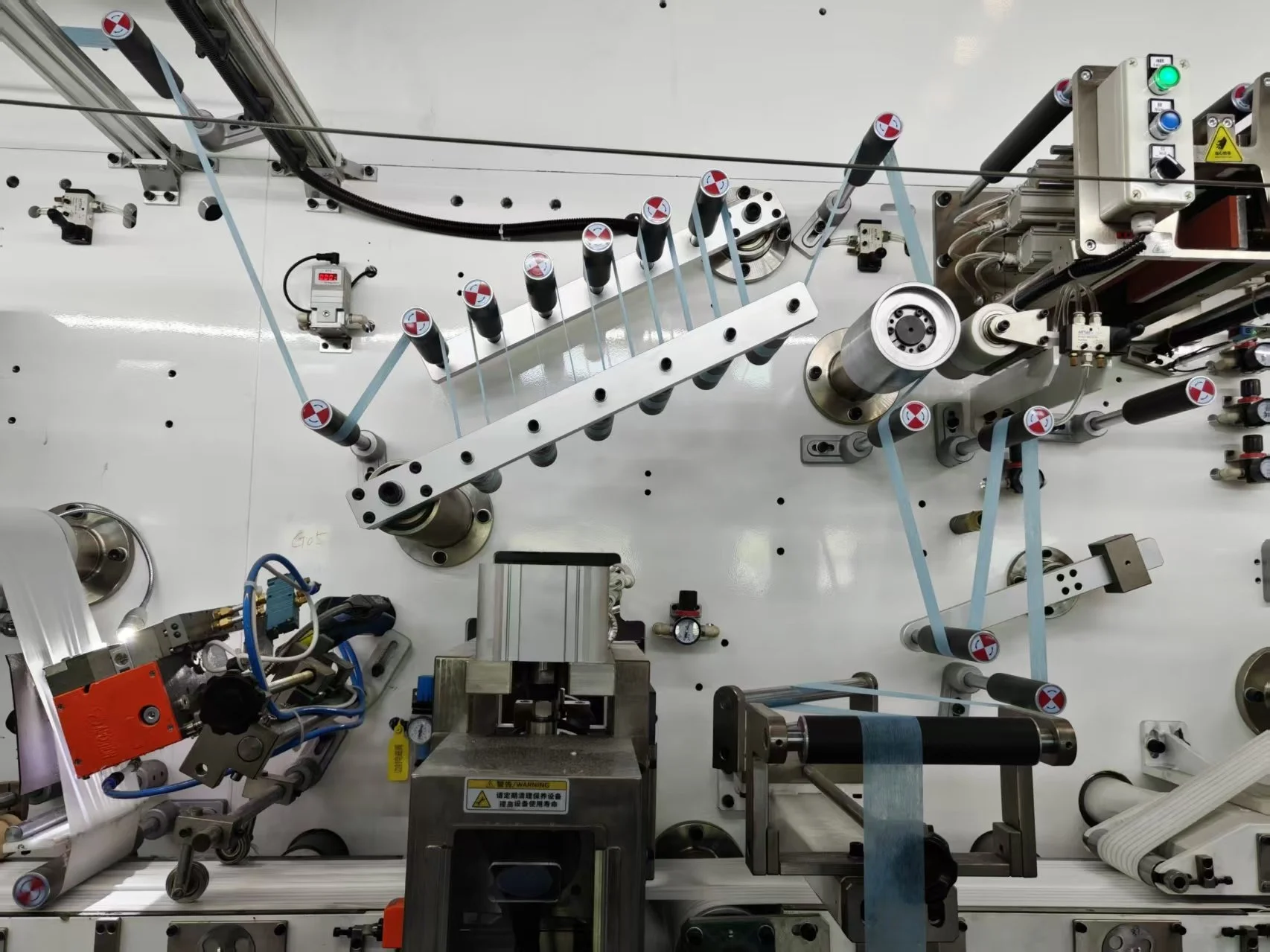
Pack-level channel data should therefore sit beside the finished-product specification: pad size, layer structure, absorption target, release paper, wings, individual wrap, pack count and carton format. Marketing names alone cannot define the process route.
Use four localization gates instead of jumping to a factory
| Stage | Control gained | Evidence before moving on | Main risk |
|---|---|---|---|
| Imported finished products | Fast portfolio and channel test | SKU movement, pack acceptance, replenishment and landed service level | Long lead time and weak local response |
| Regional finished-product procurement | Shorter supply route and specification negotiation | Signed specification, quality files, pack/carton and supply terms | Supplier dependency |
| Local outsourcing | Closer production and faster learning | BOM control, trial matrix, batch traceability, release and forecast stability | Brand demand and factory priorities diverge |
| Owned production line | Asset, process and capacity control | Qualified monthly demand, SKU/pack mix, materials, utilities, staffing and acceptance plan | Overbuilt capacity or wrong configuration |
In most cases, these stages overlap. A brand may import a premium SKU, outsource an affordable high-volume SKU and test single sachets through a separate channel. The decision is not “local or imported.” It is which product should be localized, when and to what depth.
Local outsourcing needs a controlled product, not only a local address
Outsourcing reduces the immediate capital commitment, but it does not remove the need for a signed sample, BOM, material specifications, inspection plan, batch identity and release criteria. The brand must know whether a change came from the agreed product, an approved material substitution or a factory process deviation.
Use actual market samples in trials. Test the pack formats that the channel sells. Record the material lots and the quality result by batch. If local outsourcing cannot reproduce the target consistently, buying a line without resolving the product definition only moves the same uncertainty onto the investor's balance sheet.
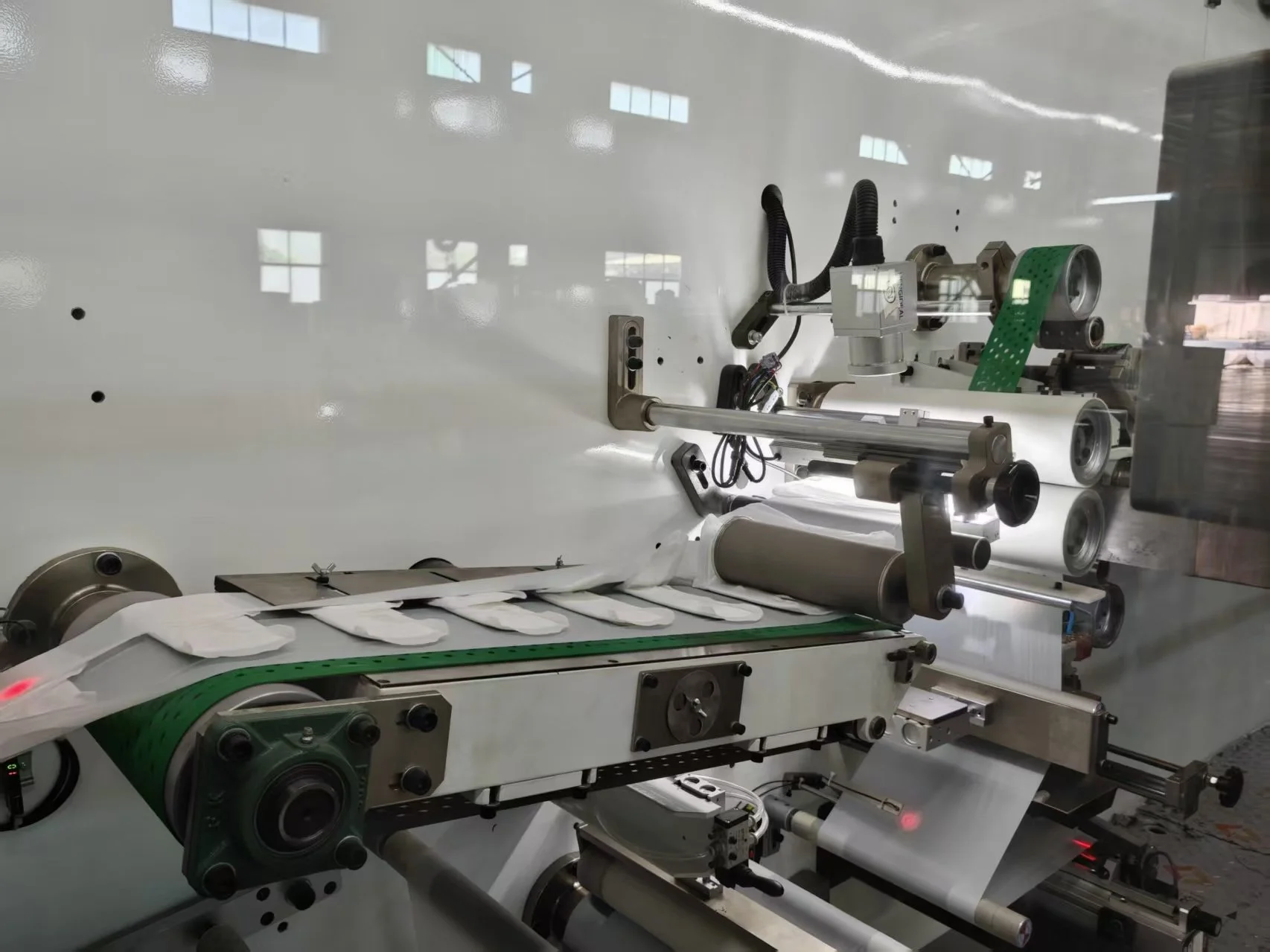
The reviewed Welldone guidance on material matching and stable production reinforces the same principle: material behavior and process settings must be tested together.
What evidence should open the equipment RFQ?
The RFQ should begin when the commercial team can hand engineering one controlled demand-and-product package. It does not need perfect certainty, but every assumption should have an owner and a test plan.
| RFQ input | Required evidence | Why the supplier needs it |
|---|---|---|
| Qualified demand | Monthly pieces by SKU and pack, adjusted for replenishment rather than first fill | Line count, shift plan and capacity boundary |
| Product specification | Signed sample, dimensions, BOM, absorption and layer structure | Material path and converting modules |
| Pack architecture | Single sachet/multipack mix, count, film, carton and coding | Counting, bagging and downstream interface |
| Local materials | Supplier samples, roll specifications and trial acceptance | Unwind, tension, bonding and cutting compatibility |
| Project readiness | Site, utilities, team, maintenance and ramp-up plan | Layout, commissioning and acceptance scope |
I believe the most valuable first quotation is not the fastest line on paper. It is the smallest complete configuration that can produce the validated product and pack mix with a clear expansion path.
How Welldone supports the next localization decision
Welldone's reviewed female-care machinery portfolio and sanitary-pad production-line page provide equipment routes after the product, material and pack boundary is defined.
Welldone can also discuss production equipment, material samples/BOM matching and finished-product procurement requirements. Specific product, certification, MOQ, price, stock, delivery and equipment configuration require inquiry confirmation.
Market gateTranslate SKU, pack and replenishment records into qualified demand.
Product gateFreeze the sample, BOM, materials, pack and acceptance evidence.
Investment gateCompare imports, procurement, outsourcing and owned production against control needs.
Buyer checklist before committing to local production
- Separate first-fill orders from repeat replenishment.
- Measure SKU movement by region, outlet type and pack count.
- Freeze the target product structure and quality release method.
- Confirm whether single sachets and multipacks require different packaging routes.
- Test locally available materials on the intended process route.
- Compare imported product, regional procurement and local outsourcing before capex.
- Convert qualified monthly pieces into shifts, changeovers and packaging demand.
- Define the evidence that will trigger expansion or a second line.
Ask one final question: if one channel changed its preferred pack tomorrow, would the planned line still match the validated business—or would the factory be locked into yesterday's assumption?
Conclusion: let the channel earn the factory
Unicharm's East Africa announcement does not provide a template for another company's equipment purchase. It does show a disciplined sequence: strengthen direct market access, operate multiple product and pack positions, use local outsourcing where appropriate, and build a business foundation that can respond to local needs.
For a new investor, the conclusion is practical. Do not use market size to choose a machine. Use channel evidence to choose the next level of control.
Frequently Asked Questions
Did Unicharm announce an owned sanitary-pad production line in Kenya?
No source read this run confirms an owned line. The registered business scope includes manufacturing, while the October release identifies SOFY Long Lasting as locally outsourced.
When is local outsourcing better than owning a line?
It can be useful while SKU, pack and demand patterns are still being validated or when a qualified local partner can provide acceptable control. The contract and quality system must still preserve BOM, batch and release evidence.
What direct-sales data matters most for a machinery decision?
Repeat replenishment by SKU and pack, regional stock age, returns, promotion effects and service levels are more actionable than total distributor orders alone.
Can one line handle single sachets and multipacks?
The main converting line may feed different packaging routes, but the answer depends on pad orientation, counting, individual wrapping, bagging, buffering and carton requirements. Confirm the exact interface in the project specification.
Can Welldone support equipment and product-supply planning?
Welldone can discuss line solutions, material/BOM trials and finished-product requirements through its project inquiry process. All supply and configuration conditions require confirmation.
Turn market evidence into the right localization step
Discuss a sanitary-pad line, material/BOM trial, finished-product sourcing requirement or phased local-production plan.
Website: www.cnwelldone.com | Email: welldone@cnwelldone.com
Discuss your feminine-care project