
ATB Nonwoven Roll Qualification Guide 2026 | Welldone Machine

Before ATB Nonwovens Enter a Hygiene Line: Qualify the Roll
The certificate says the ADL roll meets its average basis weight. During the trial, liquid moves faster on one side of the finished pad than the other. The material supplier points to the certificate; the converting team changes tension and glue settings.
Both teams may be looking at the wrong level of evidence. An average does not describe where variation sits across the roll.
A new ATB oven puts cross-web uniformity back in focus
On October 23, 2026, Nonwovens News reported that Trützschler Nonwovens will present a new air-through-bonding oven for hygiene, medical and filtration materials at ITMA Asia + CITME. The report identifies hygiene topsheets, backsheets and acquisition and distribution layers as target applications.
Both the October 23 report and an October 26 exhibition preview emphasize gentle, uniform heat distribution and homogeneous airflow across the web. Trützschler's official carding page adds the upstream context: fibers must be opened, blended and distributed across the working width before bonding, because uneven web formation is difficult to correct later.
Source & Date
Primary: Nonwovens News, October 23, 2026
Supplementary: Textile Insights, October 26, 2026
Technical context: Trützschler X-Series carding technologies
Event: ITMA Asia + CITME, November 20–24, 2026, Shanghai
Primary: Nonwovens News, October 23, 2026
Supplementary: Textile Insights, October 26, 2026
Technical context: Trützschler X-Series carding technologies
Event: ITMA Asia + CITME, November 20–24, 2026, Shanghai
Uniform heating is a process claim—not your incoming acceptance result
The reports describe what the new oven is designed to support. They do not provide its working width, temperature window, energy use, customer results or a specification for every commercial roll. The article therefore does not turn an exhibition claim into a material guarantee.
The real question is how the buyer converts “uniform airflow” into evidence that can be checked at goods receipt and again on the hygiene line. That requires agreed material properties, sample positions, batch identity and a trial protocol.
Evidence boundary: Welldone did not participate in the Trützschler announcement and does not claim to supply the ATB oven. This guide addresses the incoming material and converting interface after an ATB nonwoven roll reaches a hygiene-product factory.
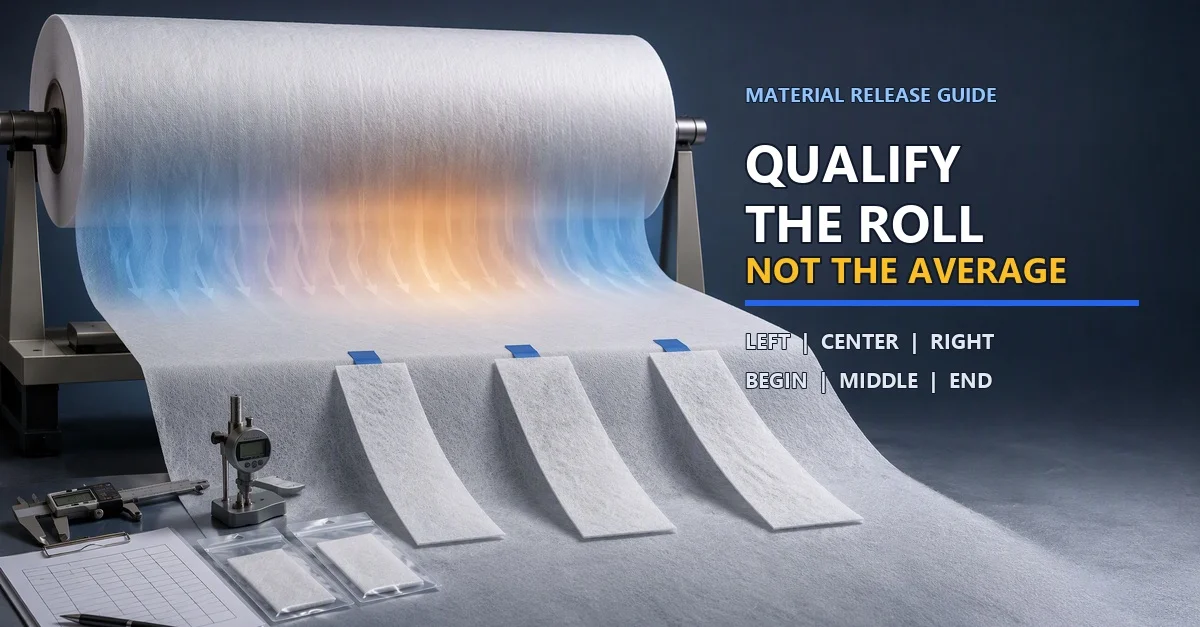
One center sample cannot represent a production roll
A lab technician cuts one specimen from the center of a roll. It passes. The result says nothing about the left edge, right edge, roll beginning, roll middle or roll end.
A common mistake is to increase sample count without defining sample location. Five center samples can repeat the same blind spot five times. The sampling plan should map space: across the web, through the roll and between rolls in the delivery.
| Sampling axis | Suggested locations | Question answered |
|---|---|---|
| Across the width | Left, center and right | Does cross-web formation or bonding vary by position? |
| Through the roll | Beginning, middle and end | Does winding or process drift change material behavior? |
| Between rolls | Multiple roll IDs from the lot | Is the approved result repeatable across the shipment? |
| Across lots | Initial and later production lots | Can the supplier sustain the agreed window? |
Freeze properties that matter to converting and product performance
Basis weight is necessary, but it is not a complete release specification. Depending on whether the material is a topsheet, backsheet or ADL, the buyer may need to define thickness, loft, tensile behavior, elongation, surface condition, width, roll build and functional liquid-management tests.
Do not copy limits from another product. The acceptance window should come from the approved product structure, supplier capability and line trial. A parameter belongs in the specification only when its variation creates a known converting or finished-product consequence.
| Evidence group | Possible checks | Factory consequence |
|---|---|---|
| Roll identity | Supplier, grade, lot, roll ID, width, core and storage | Trace the result to the actual web used |
| Web structure | Basis weight, thickness, loft and cross-web profile | Avoid hidden left/center/right differences |
| Mechanical behavior | Tensile, elongation, edge integrity and splice condition | Set a safe unwind and handling window |
| Surface and bonding | Surface condition, adhesive response and lamination result | Prevent wrinkles, weak bonds or deposits |
| Functional performance | Tests appropriate to topsheet, ADL or backsheet duty | Connect the roll to finished-product performance |
The reviewed Welldone article on material quality and machine stability explains why two rolls with the same nominal value can behave differently in production.
Run the trial with a material map, not a roll name
The converting trial should record which roll section entered the line and when. Without that link, operators may change tension, adhesive or alignment settings while the material itself changes across the width or through the roll.
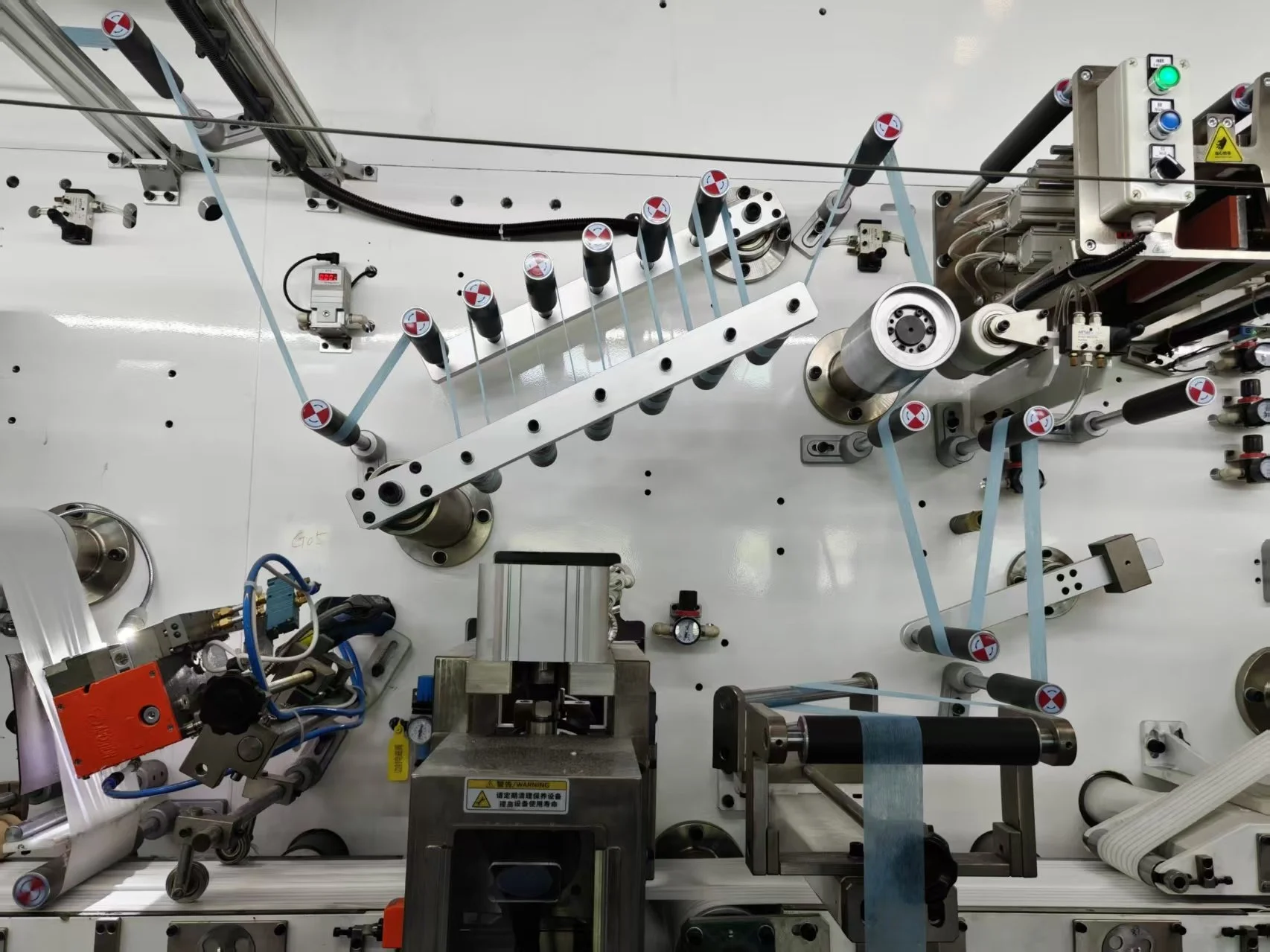
In most cases, a useful trial has three layers of evidence. First, the roll runs without uncontrolled breaks, wrinkles or tracking corrections. Second, the web bonds and cuts within an agreed setting window. Third, finished products made from identified roll sections pass the applicable quality tests.
The trial is not an attempt to prove that the material is universally good. It establishes where the material, product and line work together—and what evidence triggers rejection or further investigation.
Release the roll only when the evidence chain closes
A supplier certificate, incoming inspection and line trial answer different questions. The certificate describes the supplier's reported result. Incoming inspection checks the delivered rolls. The line trial verifies conversion under the buyer's product and process conditions.
If a finished-product result varies, retain samples from the relevant left/center/right position and the corresponding product interval. That pairing lets the team test whether the difference follows the roll position, the machine lane, the adhesive pattern or another process condition.
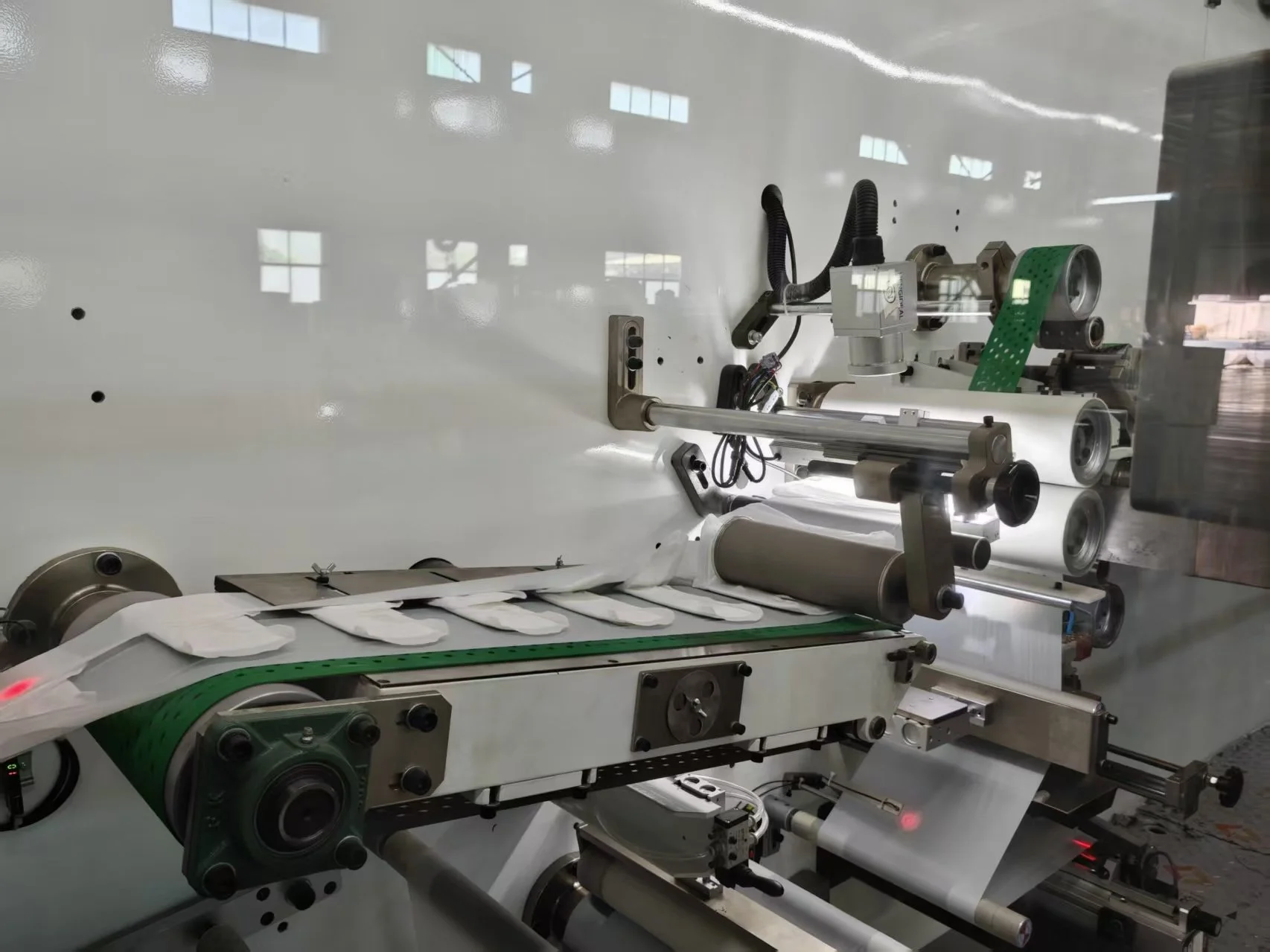
- Release when roll identity, samples, inspection and trial results are complete.
- Conditionally release only with a defined restriction, owner and review date.
- Quarantine when location-based variation exceeds the agreed evidence window.
- Do not average a failed edge with a passing center to hide the failure.
Put evidence requirements into the material RFQ and factory acceptance plan
An RFQ that asks only for grade, width and price pushes qualification work downstream. Ask the material supplier how cross-web uniformity is measured, how roll and lot identities are maintained, which tests appear on the certificate and how change notification is controlled.
For a new hygiene line, include the target material rolls in FAT or pre-shipment trials when practical, then repeat the agreed checks during SAT using local production materials. The purpose is not to make the machinery supplier certify the material. It is to prevent the machine, material and product specifications from being approved in separate rooms.
I believe the best acceptance document is a shared evidence map: each material property points to an incoming test, a line condition and a finished-product result.
How Welldone supports the material-to-line interface
Welldone's guidance on material matching and stable production treats machine, materials, operators and process control as one system. Its reviewed female-care machinery page provides line routes after the product and material boundary is defined.
Welldone can discuss production equipment, material/BOM samples and trial requirements. Specific material grades, acceptance limits, certifications, price, stock, MOQ and machine configuration require project confirmation.
Incoming gateDefine roll identity, sample map and evidence fields.
Trial gateConnect roll position to settings and finished samples.
Release gateApprove, restrict or quarantine against one signed window.
Buyer checklist for ATB nonwoven roll qualification
- Define the material duty: topsheet, backsheet or ADL.
- Freeze the approved product sample and relevant BOM version.
- Require roll, lot and supplier change-notification fields.
- Map samples across width, through the roll and between rolls.
- Agree which structural, mechanical and functional tests apply.
- Use identified roll sections in the converting trial.
- Record unwind, bonding, cutting and finished-product outcomes.
- Retain paired material and product samples.
- Define release, conditional-release and quarantine authority.
- Requalify after an agreed material, process or supplier change.
If the next roll passes only because the team changes three machine settings, is the material qualified—or has the factory simply moved the variation into the process?
Conclusion: qualify the spatial variation, not just the average
The new ATB oven announcement highlights a real upstream priority: uniform web formation, heat distribution and airflow matter. The hygiene-product buyer still needs to prove what arrived in each commercial roll.
Start with a map. Left, center, right. Beginning, middle, end. Roll to roll. Then connect those samples to the line and the finished product. That is how an upstream technology claim becomes a defensible production decision.
Frequently Asked Questions
Does this article claim Welldone supplies the Trützschler ATB oven?
No. Welldone did not participate in the announcement. The article addresses qualification of incoming ATB nonwoven on hygiene converting projects.
Is a supplier certificate enough to release an ATB roll?
It is one part of the evidence. Buyers should also define location-based incoming samples and verify conversion and finished-product results under the approved product conditions.
Should topsheet, backsheet and ADL use the same tests?
No. Their product duties differ. Each specification should include only properties and functional tests linked to the intended product and process consequence.
How many samples should be taken from one roll?
There is no universal number in the sources reviewed. Define a risk-based plan that covers cross-web, roll-length and roll-to-roll variation, then adjust it using supplier capability and qualification data.
Can Welldone support a material trial?
Welldone can discuss line solutions, material/BOM matching and trial requirements through its project inquiry process. Exact responsibilities and acceptance limits must be confirmed for the project.
Build a roll qualification plan before commercial release
Discuss a hygiene production line, ATB nonwoven trial, BOM matching request or incoming material evidence plan.
Website: www.cnwelldone.com | Email: welldone@cnwelldone.com
Discuss your hygiene material trial