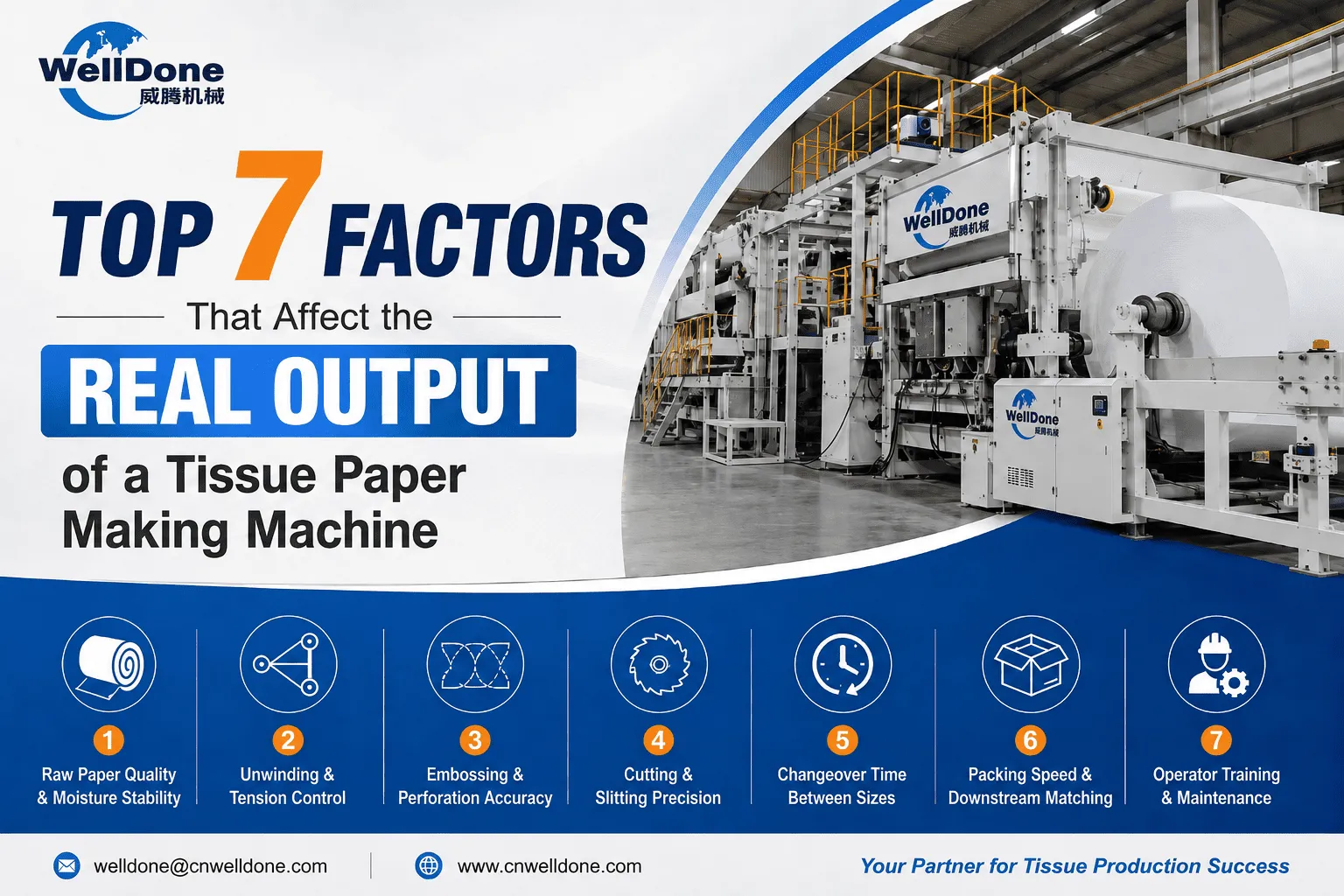
Top 7 Factors That Affect the Real Output of a Tissue Paper Making Machine

Welldone Top Insights Series
Top 7 Factors That Affect the Real Output of a Tissue Paper Making Machine
A practical guide for factory owners, investors, and procurement teams who want to understand why real tissue production output is not decided by machine speed alone.
Why Machine Speed Does Not Equal Real Output
When buyers compare a Tissue Paper Making Machine, the first question is often simple: “How many pieces or rolls can it produce per minute?”
This is a reasonable question. Speed is easy to compare, and it looks clear on a quotation. But in real factory operation, the final output of a Tissue Machine is not decided by design speed alone.
A machine may have a good speed on paper, but if the factory cannot control raw paper quality, web tension, embossing stability, cutting accuracy, product changeover, packing speed, and operator adjustment, the actual daily output may be much lower than expected.
The real output of a tissue factory is not brochure speed. It is stable running, low waste, clean cutting, smooth packing, and repeatable production every day.
In many markets, tissue factories are paying closer attention to raw paper cost, energy use, labor efficiency, packing bottlenecks, and long-term maintenance. When production cost becomes more sensitive, every rejected roll, every broken web, and every unstable shift becomes more expensive.
01
Raw Paper Quality and Moisture Stability
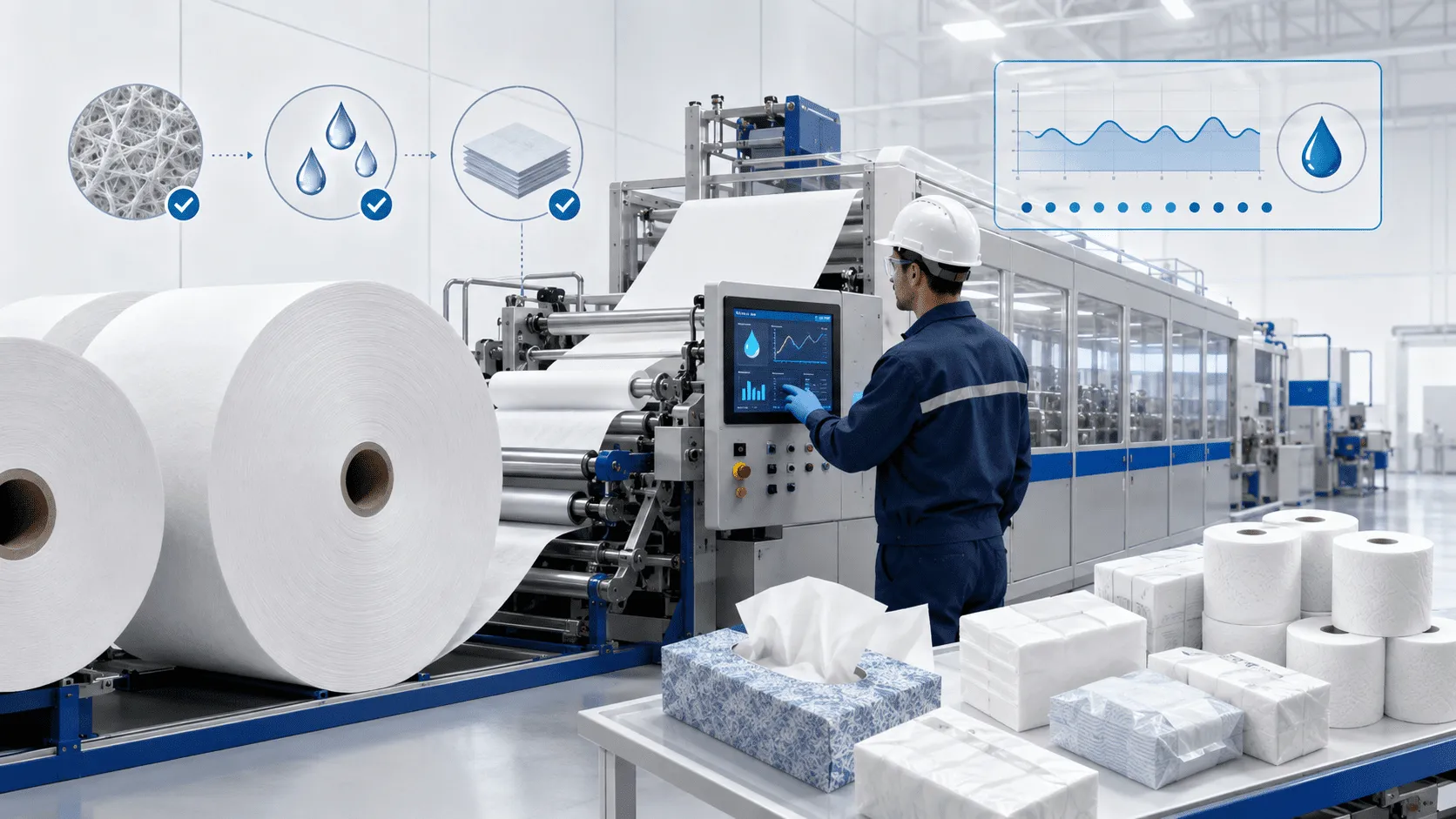
Raw paper quality is one of the first factors that affects the real output of a Tissue Paper Making Machine. If the raw paper is unstable, the machine cannot perform consistently, even if the equipment itself is well designed.
Common raw paper problems include unstable moisture, uneven thickness, weak tensile strength, inconsistent roll tightness, dust, fiber shedding, and unstable jumbo roll width.
02
Unwinding and Tension Control
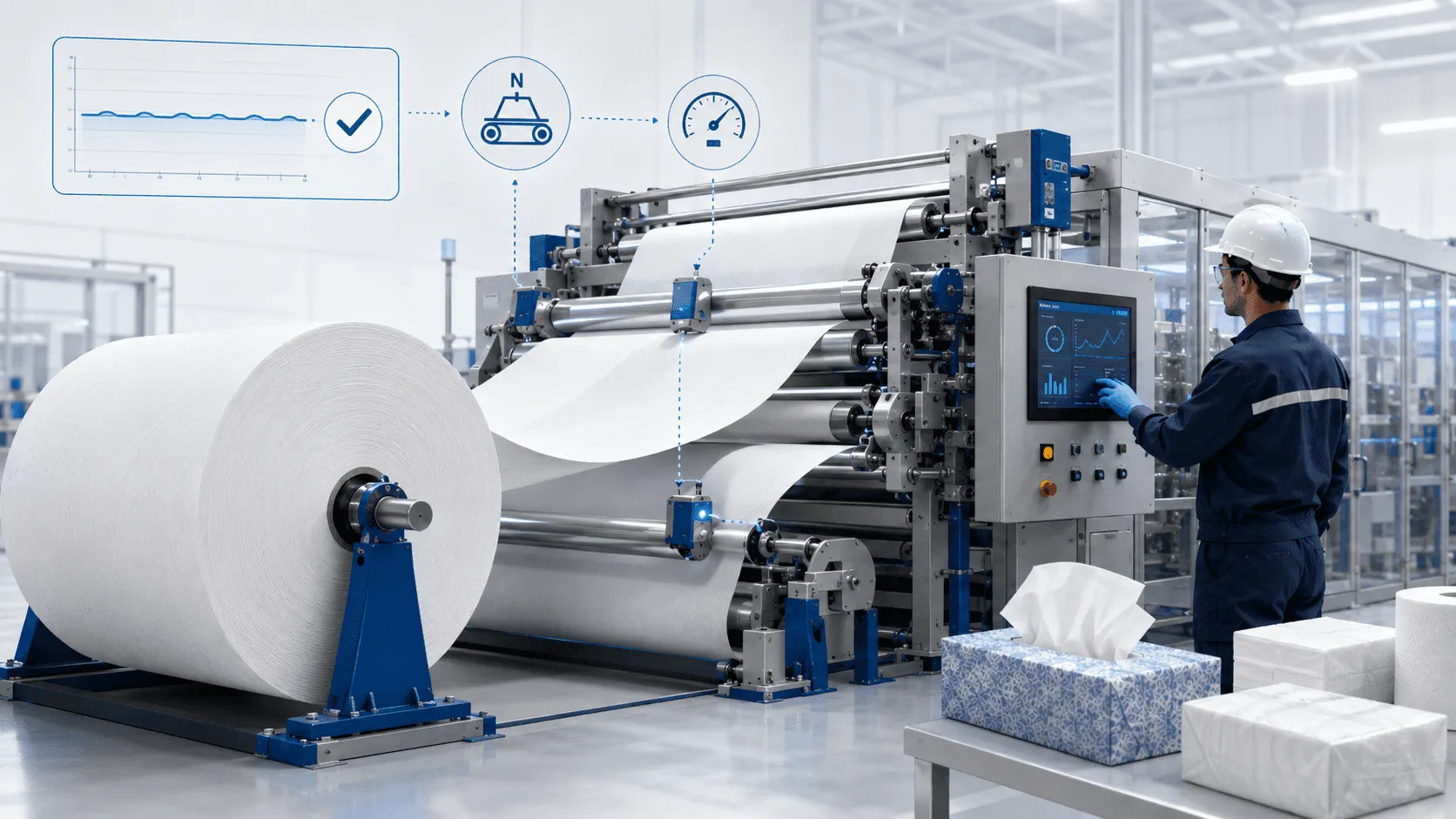
Unwinding and tension control directly affect how smoothly the tissue paper moves through the machine. If tension is unstable, the factory may face paper breakage, web deviation, wrinkle formation, unstable folding, poor embossing effect, and higher rejection rate.
If a machine runs fast but breaks paper frequently, the factory does not really gain output. It loses time, raw paper, and operator confidence.
03
Embossing and Perforation Accuracy
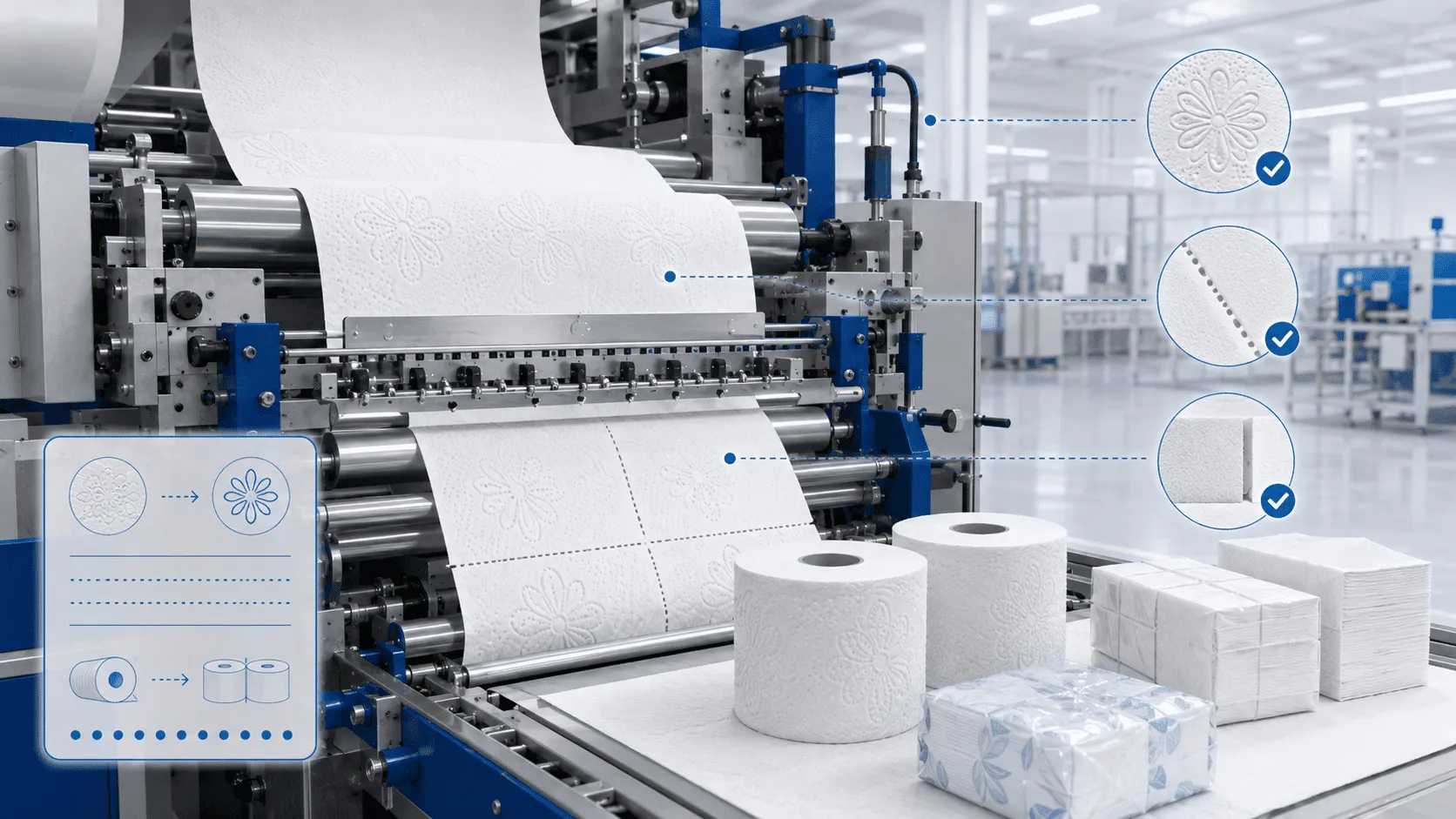
Embossing and perforation are not only about appearance. They also affect product quality, customer experience, and production stability.
A good Tissue Paper Making Machine should not only produce fast. It should produce a stable product that looks and feels acceptable to the buyer’s market.
04
Cutting and Slitting Precision
Cutting and slitting precision affect product appearance, roll width, sheet size consistency, packing quality, and waste control.
- Clean cutting edges
- Stable roll width
- Less product deformation
- Lower rejection rate
05
Changeover Time Between Product Sizes
Many tissue factories produce toilet paper, facial tissue, napkins, kitchen towels, hand towels, and customized private-label products.
If changeover takes too long, the factory loses production time and raw paper.
07
Operator Training and Maintenance Habits
Even a good Tissue Paper Machine cannot perform well without trained operators. Operators need to understand jumbo roll loading, tension adjustment, blade maintenance, alarm handling, and daily inspection.
06
Packing Speed and Downstream Matching
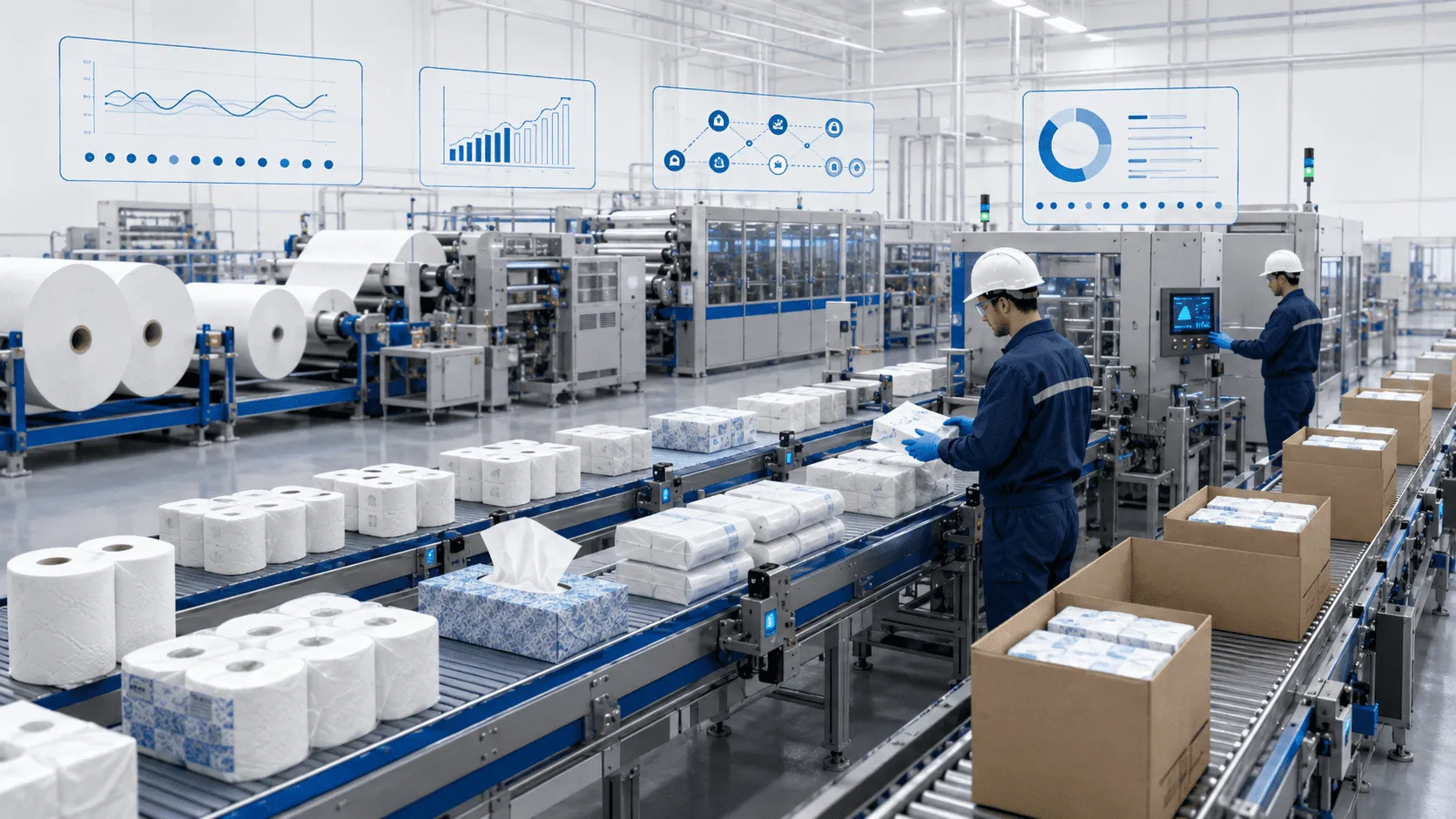
One of the most common hidden bottlenecks in tissue production is packaging. The main machine may run fast, but if the packing section cannot keep up, the whole factory output is still limited.
Real factory capacity is decided by the whole line, not only the main machine. A Tissue Paper Making Machine should be planned together with packing method, product type, labor condition, factory layout, storage area, and final shipment method.
The Better Buying Question
Before choosing a Tissue Paper Making Machine, buyers should not only ask: “How fast can this machine run?”
A better question is: “Can this machine help my factory produce stable, qualified tissue products every day?”
Why Welldone
Welldone is a hygiene products machinery manufacturer under Quanzhou Shimao Weiteng Import & Export Co., Ltd. With more than 18 years of industry experience and our own factory support, Welldone provides Tissue Paper Making Machines, Toilet Paper Machines, facial tissue machines, napkin tissue machines, kitchen towel machines, wet wipes machines, baby diaper machines, sanitary napkin machines, adult diaper machines, pet pad machines, and related hygiene product production solutions.
For tissue and paper projects, Welldone can support buyers with tissue machine configuration advice, toilet paper machine solutions, facial tissue and napkin machine options, raw paper specification discussion, embossing and cutting requirements, packing method planning, factory layout suggestions, installation and commissioning guidance, operator training support, spare parts, and after-sales service.
If you are evaluating a Tissue Machine Manufacturer, you can also explore Welldone’s Paper & Wet Wipes Machines for different tissue and wet wipes production solutions.
Related Machines
Conclusion
The real output of a Tissue Paper Making Machine is not decided by machine speed alone. It is decided by raw paper quality, tension control, embossing accuracy, cutting precision, changeover efficiency, packing speed, operator training, and maintenance habits.
A machine that looks fast in the quotation may still create low real output if the factory faces frequent paper breaks, unstable cutting, slow packing, long changeover time, and untrained operators.
The real value of a Tissue Machine is not only how fast it runs, but how stable it helps your factory produce every day.
FAQ
1. What affects the output of a tissue paper making machine?
The output is affected by raw paper quality, moisture stability, unwinding and tension control, embossing accuracy, cutting precision, changeover time, packing speed, operator training, and maintenance habits.
2. Is machine speed the same as real tissue factory output?
No. Machine speed is only one part of the calculation. Real factory output depends on stable running, low waste, clean cutting, smooth packing, and trained operators.
3. Why does raw paper quality matter for tissue production?
Raw paper quality affects paper breakage, folding stability, cutting performance, embossing effect, roll tightness, product appearance, and waste rate.
4. Why is packing speed important in tissue production?
Packing speed can become a bottleneck. If the main machine runs fast but packing cannot keep up, the whole production line output is still limited.
5. Can Welldone support a complete tissue paper production project?
Yes. Welldone can provide tissue machines, toilet paper machines, facial tissue machines, napkin tissue machines, kitchen towel machines, packing solutions, factory layout advice, installation guidance, operator training, spare parts, and after-sales support.
Planning a Tissue Paper Production Project?
If you are comparing a Tissue Paper Making Machine, Toilet Paper Machine, or Tissue Production Line, Welldone can help you evaluate machine configuration, raw paper specifications, packing methods, factory layout, and long-term production support.
Contact Welldone