

Hygiene Elastic Fiber Qualification Guide 2026 | Welldone

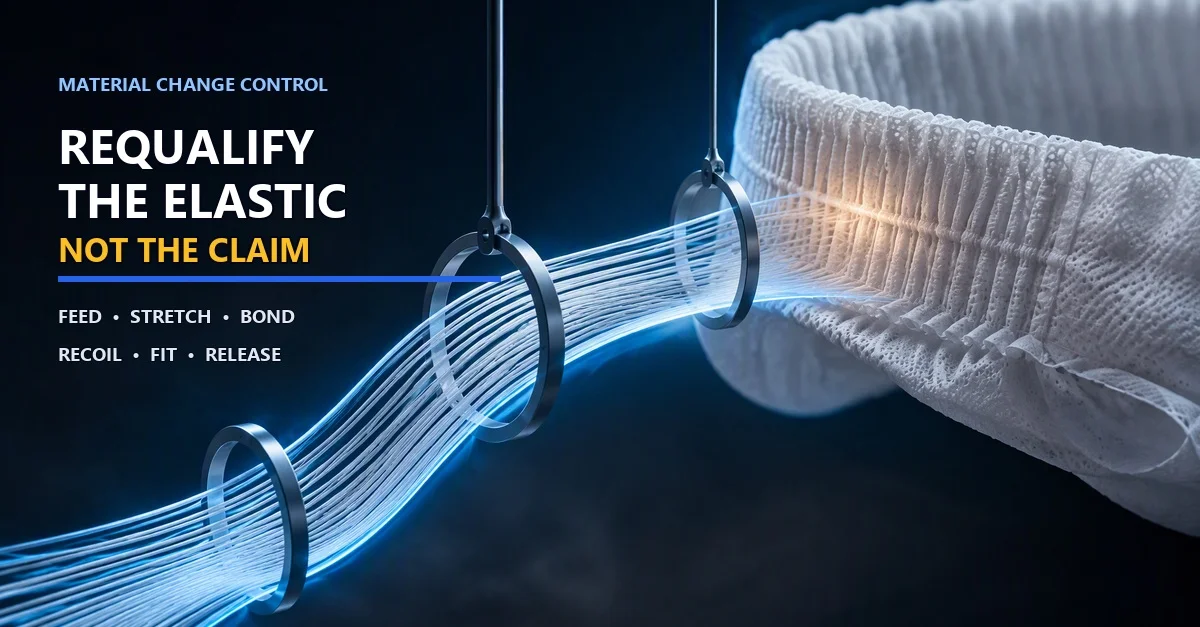
Before Adaptive Elastic Enters a Hygiene Line: Requalify the Window
The new elastic strand looks clean at low speed. The waistband opens smoothly, the product lies flat and the first samples appear acceptable.
After the line accelerates and restarts, one side recovers faster. Operators adjust tension and glue. The material supplier points back to a comfort claim.
The missing document is not another brochure. It is a signed production window.
Hygienix puts adaptive stretch into the hygiene-material discussion
On October 26, 2026, INDA announced The LYCRA Company as one of four finalists for the 2026 Hygienix Innovation Award. The finalist entry is LYCRA® ADAPTIV fiber, described as a spandex polymer with unique chemistry intended to adapt dynamically to the wearer.
The LYCRA official personal-care page places the fiber in baby diapers, adult incontinence and feminine-care products. The stated benefits include soft, easy stretch, easier on and off, fit flexibility and a fit that does not bunch, gap or droop.
Source & Date
Primary: INDA, October 26, 2026
Official technology: LYCRA® ADAPTIV fiber product page
Official personal-care scope: LYCRA fibers for personal care and hygiene
Launch background: Company-distributed release, May 14, 2026
Primary: INDA, October 26, 2026
Official technology: LYCRA® ADAPTIV fiber product page
Official personal-care scope: LYCRA fibers for personal care and hygiene
Launch background: Company-distributed release, May 14, 2026
A material benefit is not a converting recipe
The sources do not publish a hygiene-line speed, fiber denier, package format, pre-stretch ratio, adhesive amount, recoil limit or machine-specific setting. None of those values can be inferred from the award description.
The LYCRA product page also displays a general “drop-in integration” benefit. Because the same page spans apparel and personal-care applications, this article does not treat that phrase as proof that a hygiene line can change elastic material without adjusting feeds, guides, bonding or recipes.
Evidence boundary: Welldone did not participate in the LYCRA announcement and does not manufacture or claim to resell LYCRA® ADAPTIV fiber. The following qualification plan is Welldone's engineering analysis for a buyer evaluating any new elastic material.
The real question is whether the new elastic produces repeatable product geometry across speed, size and restart conditions—not whether one sample feels softer by hand.
Map every interface from package to finished waistband
Elastic material does not enter the product at one point. It leaves a package, separates into strands, passes guides, receives controlled extension, meets adhesive or another bonding process, becomes trapped between webs and later recovers after cutting.
A change at the material level can therefore appear as a machine symptom. Uneven package take-off may look like tension instability. A different surface interaction may look like a glue problem. Changed recoil may become a size or registration complaint downstream.
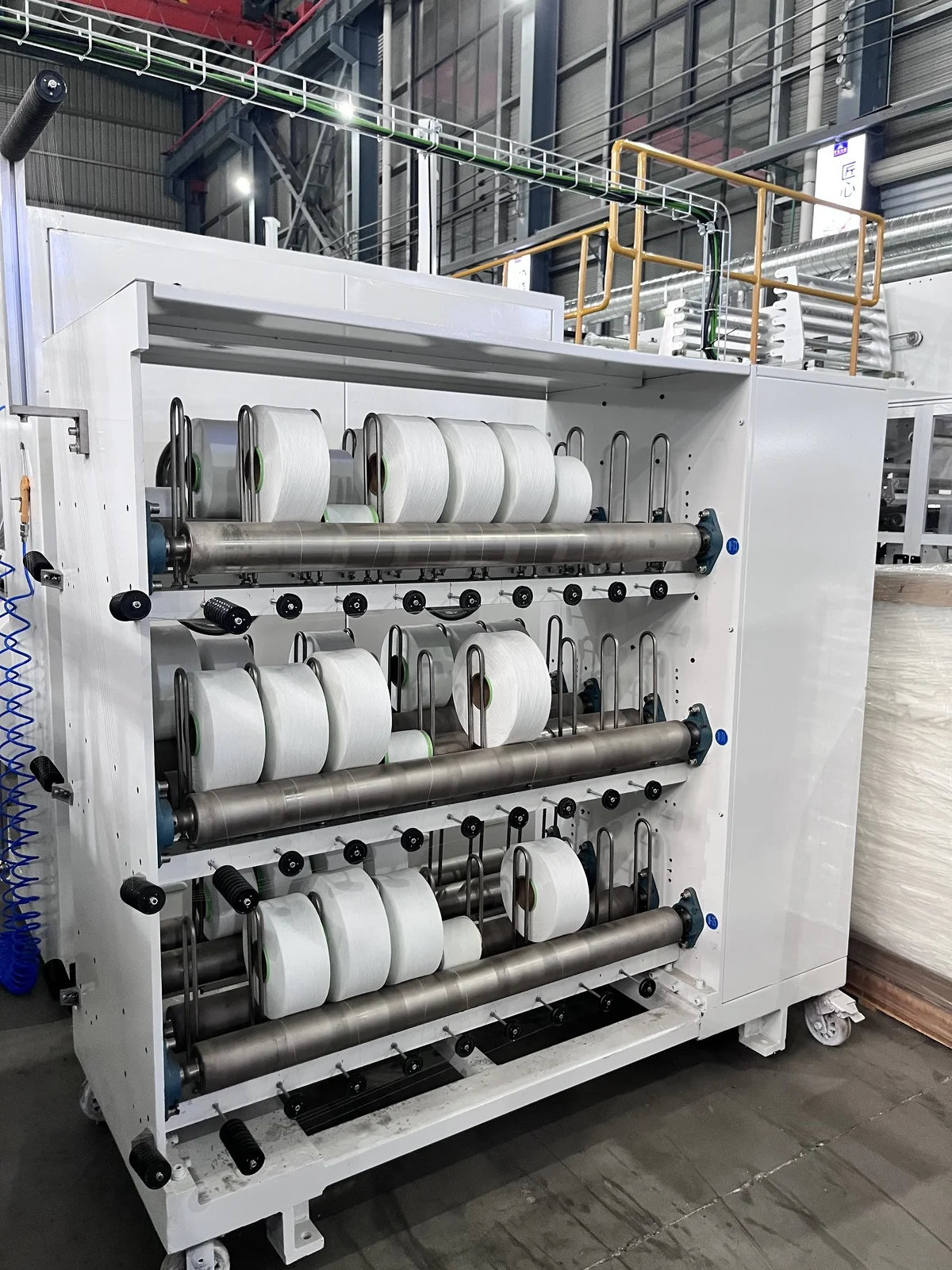
The reviewed Welldone guide on material quality and machine stability explains why nominally similar raw materials can demand different production controls.
Use a trial matrix that separates material behavior from operator compensation
A common mistake is to run one short roll at one comfortable speed, adjust until the samples look good and call the material qualified. That trial proves only that one operator found one temporary setup.
The matrix should vary only the conditions needed to answer a decision. Start from the approved incumbent recipe, record every intentional change and retain products from each window. If the team changes tension, extension and glue at the same time, it cannot identify which change solved the result.
| Trial block | Controlled comparison | Evidence to retain |
|---|---|---|
| Incoming package | Package identity, lot, storage and unwind orientation | Label, certificate, incoming check and retained material |
| Feed condition | Approved low, normal and intended operating conditions | Recipe, alarms, strand tracking and break history |
| Product size | Each size intended for release | Size recipe, cut product and dimensional check |
| Restart state | Start, controlled stop, brief stop and restart | Time window, first accepted product and rejected interval |
| Finished fit | Approved test method for waist, leg or product duty | Identified samples and release disposition |
Bonding must be qualified with the real web pairing
The elastic does not perform alone. It interacts with nonwoven surfaces, adhesive pattern, application timing, compression and the time allowed before the product changes direction or is cut.
Do not approve a new elastic from strand data alone. Run it with the actual paired webs and the intended product structure. Observe whether strands remain separated, whether bonding is continuous and whether the laminated zone stays clean through speed changes.
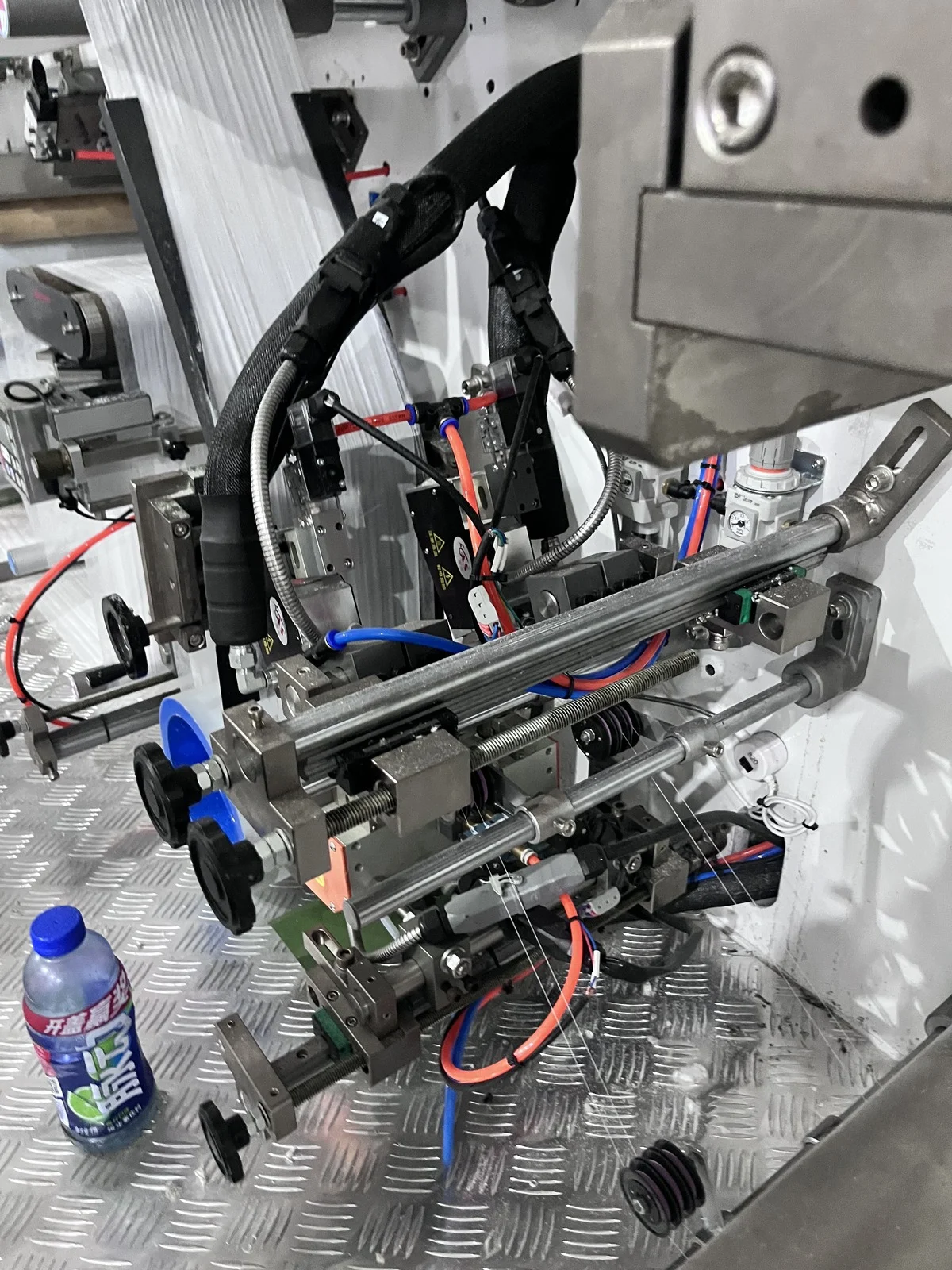
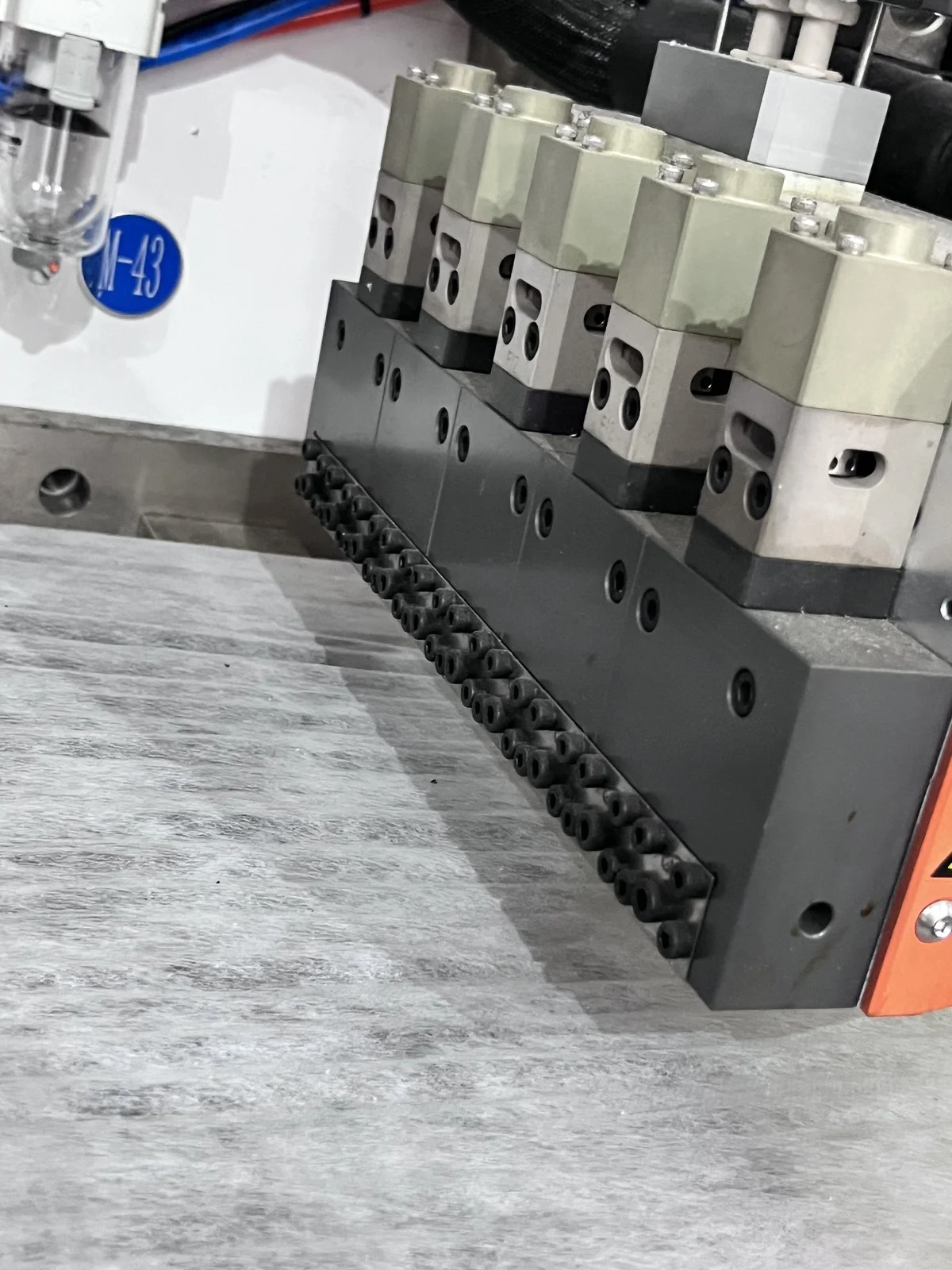
In most cases, adding more adhesive is a poor first response. It can hide an interface problem while changing product feel, material cost and machine cleanliness. Record the lowest stable process window supported by evidence rather than the highest setting that temporarily holds.
Measure recoil after the process has changed the product
Elastic extension before bonding is only an input. The buyer needs the output: the geometry and force behavior of the finished waistband or leg cuff after lamination, cutting and a defined conditioning period.
Compare identified samples from each trial window. Check the properties required by the approved product specification, not a generic “stretch” label. The method may need to cover relaxed dimensions, extension behavior, recovery and the relationship between left and right sides.
One material may support a wider fit window, but that does not automatically justify fewer SKUs. Size architecture remains a product decision that must be verified against target users, product dimensions and the approved fit method.
Stop-and-restart behavior exposes the weak production window
A continuous run can look stable while a brief stop changes strand condition, adhesive state or web relationship. The first products after restart are therefore part of material qualification, not merely startup waste.
Define who can release the restart interval. Record the stop reason, duration, recipe state, alarm history, rejected count and first accepted sample. Without that identity, the team cannot tell whether the material recovered or the operator simply discarded enough products to hide the transition.
That is the practical conflict: approve a material for its best continuous minute, or approve it for the operating cycle the factory actually runs.
Release by product size and process window—not by material name
A material can pass one product size and remain unqualified for another. Differences in waist geometry, strand routing, product pitch or bonding area may create a new process boundary even when the fiber grade is unchanged.
| Decision | Required evidence | Control after decision |
|---|---|---|
| Release | All intended sizes and operating conditions meet the signed criteria | Approved recipe, incoming identity and change notification |
| Restricted release | Only named sizes or conditions are proven | Recipe lock, clear restriction and review owner |
| Further trial | Result is promising but one boundary remains unresolved | Quarantine commercial use until the gap is tested |
| Reject | The material cannot sustain an agreed critical condition | Lot disposition and supplier corrective-action path |
How Welldone supports elastic-material change control
Welldone's reviewed baby-care machinery page includes diaper and pull-up routes with elastic application, lamination, cutting and rejection interfaces. The reviewed adult-care machinery page covers pull-up and open-type adult products where fit and size changes create a different qualification boundary.
Welldone can discuss equipment configuration, BOM matching and controlled trials. Exact material grade, supply terms, acceptance limits, certification, price, MOQ and availability require project confirmation.
Material gateFreeze identity, package, lot and change-notification fields.
Process gateProve feed, stretch, bonding and restart windows.
Product gateRelease only the sizes and fit conditions supported by samples.
Buyer checklist for adaptive elastic qualification
- Define the elastic duty: waistband, leg cuff, barrier cuff or another application.
- Freeze the approved product sample, BOM and size range.
- Request material identity, package data, lot traceability and change notification.
- Record the incumbent recipe before changing the material.
- Run controlled comparisons across intended speeds and sizes.
- Check package take-off, strand separation, tracking and breaks.
- Verify bonding with the actual nonwoven and adhesive system.
- Retain samples before and after cutting and conditioning.
- Test stop, restart and first-accepted-product rules.
- Release, restrict, retrial or reject through signed authority.
If the elastic needs a different recipe for every shift, has the material been qualified—or has the qualification burden been transferred to the operator?
Conclusion: convert wearer language into factory evidence
The Hygienix finalist announcement brings a useful material question into focus. Softer stretch and broader fit are wearer-facing outcomes. A hygiene factory must translate them into a repeatable relationship between feed, extension, bonding, recoil and finished-product geometry.
Do not ask whether the new elastic can run once. Ask where it can run, under which recipe, across which sizes and after which operating interruptions. That boundary is the production asset.
Frequently Asked Questions
Does this article claim Welldone supplies LYCRA® ADAPTIV fiber?
No. Welldone did not participate in the announcement and does not claim to manufacture or resell the named fiber.
Does “drop-in integration” mean no line adjustment is required?
Not for the hygiene line based on the sources reviewed. Buyers should verify feed, stretch, bonding, recoil, size and restart behavior under their actual product conditions.
Can one elastic qualification cover every diaper size?
Only if the evidence supports it. Different sizes may use different geometry, material paths, recipes and fit criteria, so release should identify the validated range.
Should a trial use more adhesive to guarantee bonding?
No universal setting is supported here. Use the actual paired webs and define a stable process window without masking an incompatible interface through uncontrolled compensation.
Can Welldone help plan the trial?
Welldone can discuss line configuration, BOM matching and trial evidence. Project responsibilities and exact acceptance criteria must be confirmed through the inquiry process.
Plan the elastic trial before changing the commercial BOM
Discuss a diaper production line, elastic-material trial, BOM matching request or size-release evidence plan.
Website: www.cnwelldone.com | Email: welldone@cnwelldone.com
Discuss your elastic qualification plan