

EUDR Fluff Pulp Hygiene Traceability Guide 2026 | Welldone

Fluff Pulp In, Diapers Out: Map Your EUDR Hygiene Boundary
When a hygiene plant imports fluff pulp rolls or tissue parent reels to manufacture baby diapers, sanitary pads, adult incontinence briefs, or paper products for European customers, customs code changes inside the factory determine whether a shipment requires a full European Union Deforestation Regulation (EUDR) Due Diligence Statement (DDS) or falls outside the product scope. Treating the entire BOM as uniformly exempt—or uniformly regulated—creates avoidable customs holds and audit failures.
1. What the November 2026 Cepi EUDR Guidance Update Confirms
On November 5, 2026, PulPaperNews reported that Cepi (the Confederation of European Paper Industries) published its updated 27-page guidance on the revised EU Deforestation Regulation—Regulation (EU) 2023/1115 as amended by Regulation (EU) 2025/2650—and scheduled a dedicated industry webinar for November 2026 ahead of the regulation's entry into application.
According to the official Cepi guidance document (dated October 12, 2026, Brussels), Regulation (EU) 2025/2650 postponed EUDR application by one year so that core obligations apply from December 30, 2026 for medium and large operators—and across the forest-based value chain irrespective of company size for products covered by the Annex to the former EU Timber Regulation (EUTR). For other micro or small undertakings established by December 31, 2024, obligations apply from June 30, 2027.
Most importantly for disposable hygiene manufacturers, raw-material buyers, and private-label importers, Section 3 of the Cepi guidance explicitly draws the Combined Nomenclature (CN) and Harmonized System (HS) boundary between wood-based raw materials and finished hygiene goods:
- Fluff pulp (HS Chapter 47 — Pulp of wood or of other fibrous cellulosic material): Listed in Annex I of the EUDR. Importing fluff pulp into the EU, placing it on the EU market, or exporting it triggers full EUDR obligations.
- Absorbent hygiene products under CN code 9619 (sanitary towels, tampons, diapers, and napkin liners): Not listed in Annex I. Converting pulp into products falling under code 9619 and placing them on the EU market or exporting them does not fall within the scope of the Regulation.
- Tissue and paper hygiene products under CN code 4818 (toilet paper, cleaning tissues, handkerchiefs, towels, and related paper articles): Listed in Annex I under Chapter 48. Placing code 4818 products on the EU market or exporting them falls squarely within EUDR scope.
- Corrugated cartons and paper sacks under HS code 4819: Regulated when placed on the market or imported as standalone empty packaging materials, but exempt under General Rule 5(b) when used solely as packing material to support, protect, or carry another product placed on the market.
2. Keep the Regulatory Fact Boundary Separate from Factory Engineering
Evidence Boundary: The official Cepi guidance (October 12, 2026) and the November 5, 2026 PulPaperNews report confirm the EUDR application dates (December 30, 2026 and June 30, 2027), the HS/CN scope distinction between Chapter 47 fluff pulp, CN 9619 diapers/sanitary pads, CN 4818 tissue products, and HS 4819 packaging, the TARIC codes (C716, Y133, Y196, Y188), the transitional reference number (99EU9999999999), the 4-hectare polygon rule, the two plot-allocation methods, and the semicolon-separated CSV format.
Cepi notes that its guidance has no binding legal value. Welldone was not involved in drafting the Cepi guidance. The sections below present Welldone's engineering and supply-chain framework for aligning BOM management, raw-material unwinding, lot coding, and line recipes with these rules.
3. Why the HS Code Change Inside a Hygiene Factory Creates a Compliance Trap
In many hygiene converting plants, procurement teams treat customs classification as a shipping department task that happens after pallets leave the warehouse. Under the EUDR, however, a company's legal role changes depending on where the wood-based fiber crosses the EU border and which HS code appears on the customs declaration.
The real question is whether your plant crosses the EU customs boundary with Chapter 47/48 raw materials or with CN 9619 finished hygiene articles. Consider two common supply structures confirmed by Case 7 of the Cepi guidance:
- EU-based hygiene converter importing fluff pulp from outside the EU: Even though outgoing baby diapers, pull-up pants, or sanitary pads leave the plant under CN code 9619 (outside EUDR scope), the factory acts as an Upstream Operator when it imports non-EU fluff pulp (Chapter 47) or tissue parent rolls (Chapter 48) for release into free circulation. Before customs clearance, the converter must collect plot-level geolocation coordinates, tree species scientific names, and legality evidence, and submit a DDS in TRACES (TARIC code
C716). - EU-based hygiene converter buying fluff pulp or tissue wrap already placed on the EU market: If an upstream pulp importer or EU mill has already submitted the initial DDS, the converter becomes a Downstream Operator. Converting that pulp into CN 9619 diapers and pads takes the finished goods out of EUDR scope, whereas converting tissue rolls into CN 4818 facial tissue or paper towels keeps the finished goods inside EUDR scope—requiring 5-year retention of upstream DDS reference numbers.
4. Fluff Pulp Unwinding & Hammermill Feeding: Why Storage Windows Beat Excess Declarations
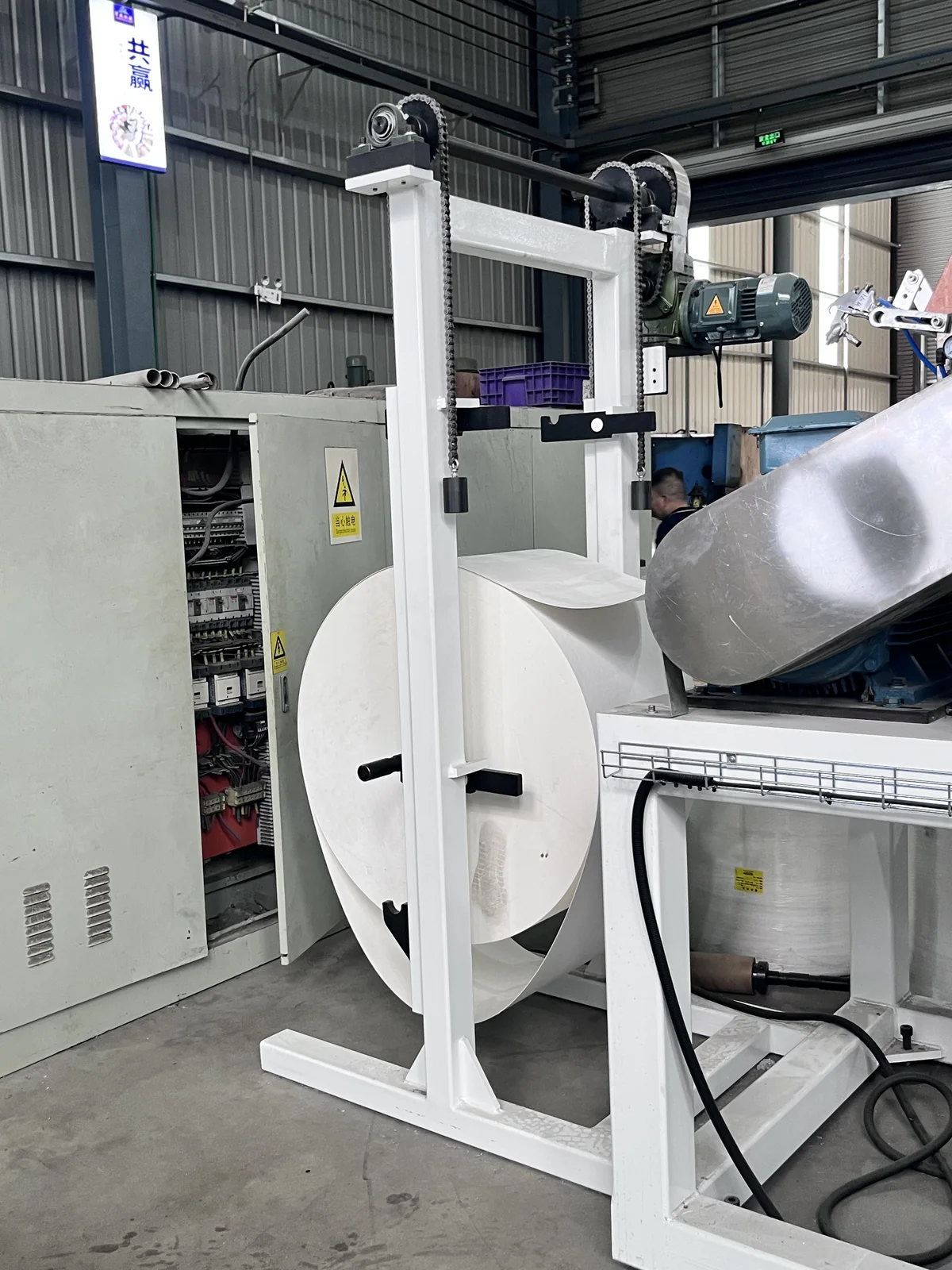
Once an EU converter or an export-oriented pulp supplier has to link incoming fluff pulp rolls to EUDR Due Diligence Statements, the physical reality of a pulp warehouse and diaper crusher station comes into play. Wood chips and pulp bales from multiple harvest plots are routinely blended before or during pulping, and fluff pulp reels from different shipments often sit side by side behind the diaper machine's pulp unwinder stand.
A common mistake is assuming that a supplier can simply attach a massive list of every possible forest plot from an entire region to every fluff pulp reel. Section 9 (Case 5C) of the Cepi guidance explicitly warns against this "declaration in excess" approach (Commission FAQ 1.18): while declaring more plots of land than physically present in a batch is technically permitted under strict conditions, a single non-compliant plot inside that oversized list contaminates the entire production volume covered by the DDS.
Instead, Cepi highlights the storage-based approach (FAQ 1.17), where plots of land are allocated according to the physical turnover time of the woodyard, storage pile, or warehouse lot so that no unknown material enters the batch window. On a baby pull-up, adult diaper, or sanitary pad production line, translating this into factory practice requires discipline at the pulp feeding station:
- Reel-to-shift barcode logging at the pulp unwinder: Record the exact reel ID, supplier batch number, net weight in kilograms, and associated DDS reference number whenever a new fluff pulp roll is mounted on the unwinder stand.
- Clean cut-off between transitional and post-December 2026 stock: Under Section 14 of the Cepi guidance, pulp placed on the EU market during the transitional period (June 29, 2023 to December 30, 2026) remains subject to EUTR rules and does not require a new EUDR DDS when used later, provided the operator retains customs declarations, bills of lading, CMRs, or delivery notes proving placement date. When transitional and post-December 30, 2026 reels run on the same line, only newly placed stock requires DDS plot coverage.
- Defibration energy and moisture stability when switching pulp grades: When switching to a new certified softwood fluff pulp grade, verify fiber length, sheet density, and moisture content before full-speed running so hammermill screen wear and fluff knot rates stay controlled.
5. Core Wrap Tissue vs. CN 4818 Paper Products: Managing Mixed-Scope Lines
Fluff pulp is not the only wood-derived web entering a hygiene factory. Many baby diaper, pull-up pant, underpad, and sanitary pad BOMs use upper and lower tissue paper carrier webs (Chapter 48) to wrap the fluff-SAP core before pressing, while multi-line factories also operate dedicated converting lines for facial tissue, napkins, and handkerchief tissues.
This creates a sharp operational split across equipment categories:
- Tissue carrier webs consumed inside CN 9619 diapers or sanitary pads: If the factory imports tissue jumbo rolls from outside the EU under Chapter 48, that import is an EUDR-regulated event requiring an operator DDS. Once that tissue is laminated inside a baby pull-up or sanitary pad under CN 9619, the finished diaper or pad is no longer in EUDR scope when sold or exported.
- Finished tissue products under CN 4818 (facial tissue, toilet paper, cleaning tissues, paper towels): Every stage—from importing parent jumbo rolls under Chapter 48 to selling or exporting finished folded packs under CN 4818—stays inside Annex I of the EUDR. Manufacturers operating paper and wet wipes production lines for the EU market must therefore maintain end-to-end DDS reference handoff from parent-reel unwinding through slitting, folding, and final pack coding.
6. Empty Corrugated Cartons (HS 4819) and Converting Scrap (TARIC Y133)
Two details in the Cepi guidance catch many hygiene procurement managers by surprise: how customs rules treat paperboard packaging (HS 4819) and how they treat recycled fibers vs. converting trim scrap.
In most cases, a hygiene brand assumes that cardboard shipping cartons or paper retail bags are minor auxiliary items that never trigger forestry due diligence. Section 3.2 of the Cepi guidance clarifies the exact legal boundary:
Four Packaging & Scrap Rules Every Hygiene Buyer Should Verify
Directly grounded in Sections 3.1 and 3.2 of the October 2026 Cepi EUDR Guidance:
1. Empty HS 4819 Packaging Imports Are Regulated
When corrugated boxes, paper cartons, or paper sacks under HS 4819 are placed on the EU market or imported as standalone empty packaging materials, they are subject to EUDR obligations. A hygiene manufacturer importing empty cartons from outside the EU to pack its products is considered a First Importer (Operator) for those cartons.
2. Packaging Carrying a Product Is Exempt (Rule 5b)
Once packaging is used exclusively to "support, protect or carry" another product placed on the market (classified with the goods under General Rule 5b), the packaging itself is not covered by the EUDR. Exporting finished diapers inside cartons does not trigger an HS 4819 packaging filing.
3. 100% Recycled Material Exemption (Code Y133)
Products produced entirely from material that has completed its lifecycle and would otherwise have been discarded as waste (such as 100% recycled paperboard) are excluded from EUDR scope and declared at customs using TARIC exemption code Y133.
4. Converting Trim & Virgin Blends
Cepi notes that shavings and scrap generated during converting processes qualify as waste-derived recovery when reprocessed. However, if a paper or carton grade contains any percentage of non-recycled virgin wood fiber, the virgin share remains fully subject to EUDR geolocation and DDS traceability.
7. How Full-Servo Converting Lines Protect Yield During Pulp or Paper Lot Changes
Why does a customs and forestry regulation matter to the mechanical and electrical setup of baby care production lines and female care machinery? Because EUDR compliance is prompting European converters and global OEM suppliers to consolidate pulp and tissue vendors, segregate EU-destined production runs from non-EU runs, and switch carton or paper-bag substrates toward higher recycled content.
I believe the biggest hidden cost of regulatory material switching is not the paperwork—it is the machine downtime caused when a buyer changes fluff pulp, tissue wrap, or carton board suppliers without adjusting line recipes. On a high-speed converting line, three physical interfaces must be re-verified whenever BOM lots are segregated or substituted:
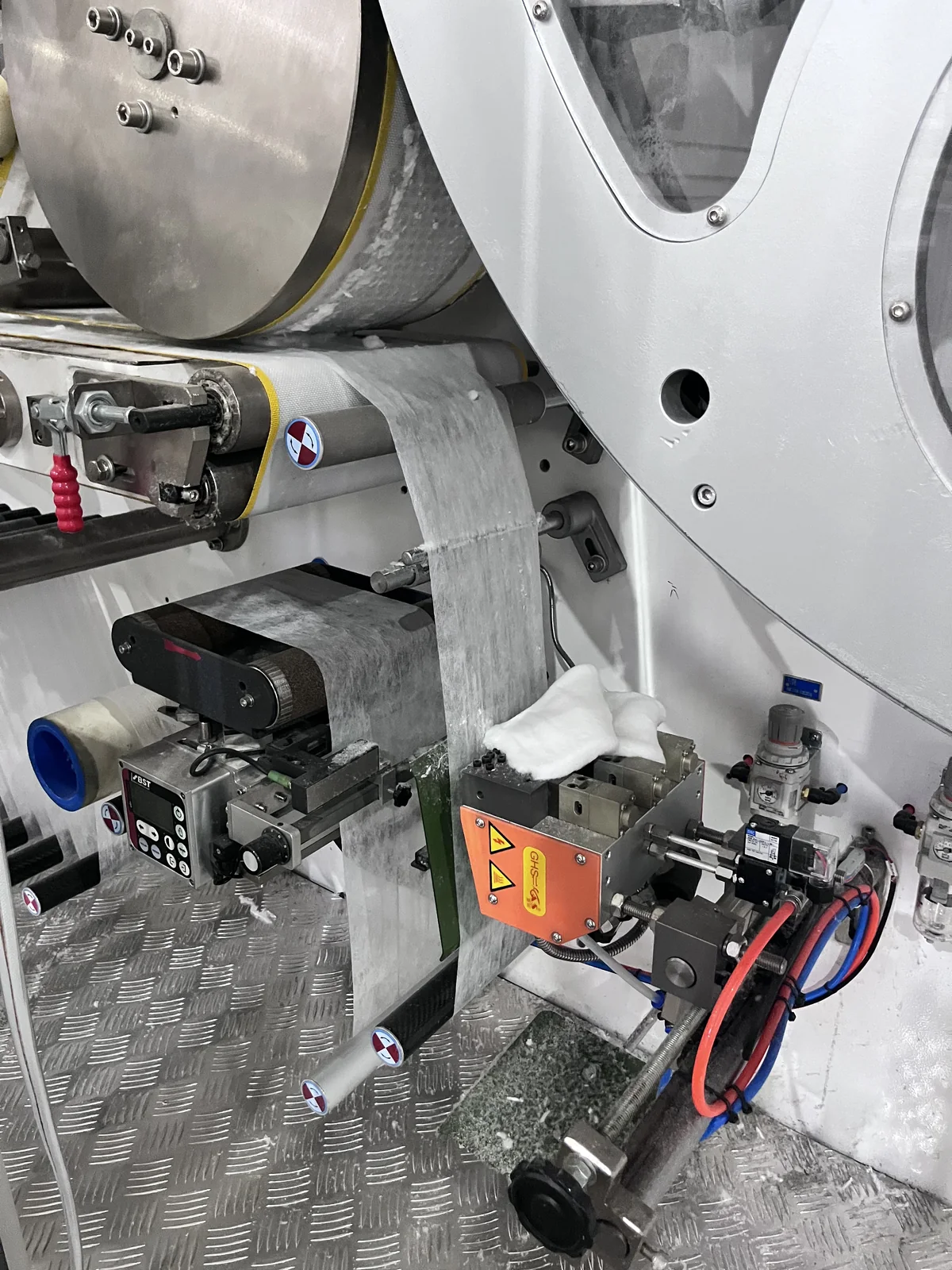
- Hammermill defibration and forming-drum vacuum balance: Treated vs. untreated fluff pulp grades differ in burst strength and fiber coarseness. Recipe-controlled servo feed ratios between the pulp unwinder and crusher keep defibrated bulk consistent without over-cutting fibers into dust.
- Servo tension control on low-basis-weight tissue wrap: Shifting to a new EUDR-verified tissue wrap or a higher-recycled-content paper web alters tensile elongation. Independent servo unwinders (±0.02 mm positioning accuracy on full-servo lines) prevent web breaks during splices.
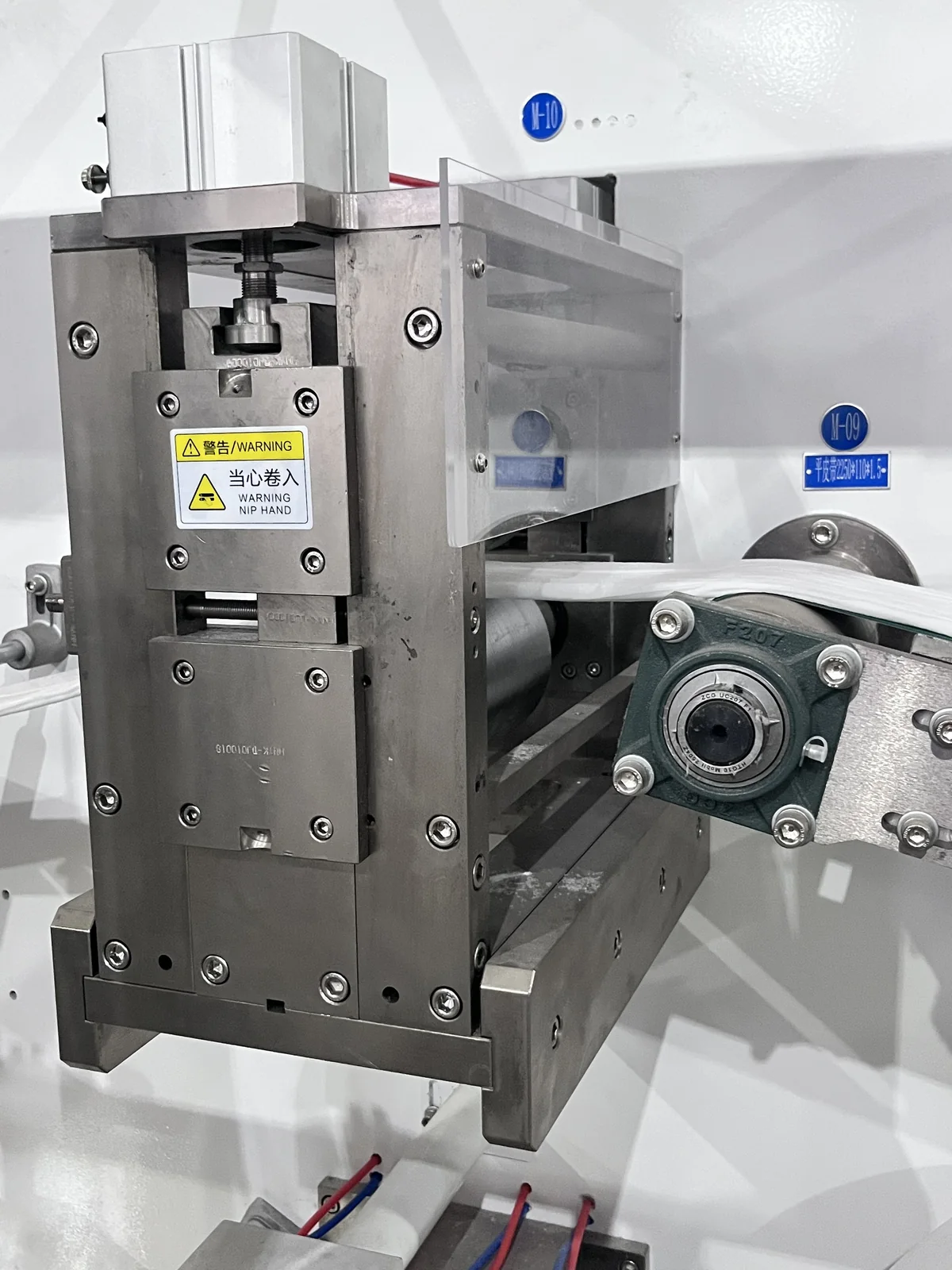
- Core pressing nip and automatic reject batch boundaries: When running segregated EU-compliant lots (Illustrative example only: finishing a transitional pulp lot before starting a post-December 2026 DDS-linked lot), operators use the HMI counter and auto-reject gate to discharge splice transition pads cleanly.
8. Standardizing ERP/MES Handoff: Cepi's CSV Schema and TARIC Codes
For hygiene manufacturers that act as Downstream Operators or export Chapter 47/48 goods, manual email attachments of PDF certificates quickly break down once dozens of parent reels arrive each week. In Section 13 of its guidance, Cepi recommends exchanging DDS reference numbers electronically using a standardized CSV file format:
- Recommended CSV technical format: UTF-8 encoding, semicolon (
;) column separator, and comma (,) decimal separator. - Mandatory data columns recommended by Cepi: Company name, company identifier number (such as VAT), company identifier type, supplier reference, customer reference, delivery date, HS heading, description of goods, net weight in kilograms (matching TRACES requirements), and DDS reference number(s) (plus optional DDS verification number where contractually requested under substantiated concern).
- Key customs & TARIC codes to configure in shipping software:
C716— Standard TARIC document code declaring that an operator's DDS reference number accompanies an in-scope import or export.Y133— Exemption code for products made 100% from waste/recycled material that has completed its lifecycle.Y196/Y188— Dedicated TARIC certificate codes for downstream operators or SMEs exempt from submitting a new DDS upon export.99EU9999999999— Universal conventional reference number communicated by the Commission for exporting or re-importing products initially placed on the EU market during the transitional period (June 29, 2023 to December 30, 2026).
9. EUDR Hygiene Material, Product & Packaging Decision Matrix
Use the reference table below to map each item in your hygiene factory's incoming BOM and outgoing product catalog to its EUDR scope status, customs code, and factory floor control point.
| Material or Product Stream | HS / CN Heading | EUDR Annex I Scope Status | Customs & DDS Requirement | Factory & Line Control Point |
|---|---|---|---|---|
| Imported fluff pulp jumbo rolls | Chapter 47 (Wood pulp) | In scope when imported into or placed on the EU market | Upstream Operator DDS in TRACES (C716) with plot geolocation (polygons >4 ha) and species scientific name; or transitional proof before Dec 30, 2026 |
Pulp unwinder reel scan, storage-window batch allocation, and hammermill feed recipe |
| Tissue carrier wrap / parent jumbo rolls | Chapter 48 (Paper & paperboard) | In scope as raw paper roll import or EU placement | Operator DDS on non-EU import, or retain upstream supplier DDS reference number via UTF-8 semicolon CSV for 5 years | Upper/lower tissue applicator splice logging and servo unwinder tension control |
| Finished baby diapers, pull-ups, sanitary pads, tampons, napkin liners | CN 9619 | Out of scope (not listed in Annex I) | No DDS required when placing finished CN 9619 goods on the EU market or exporting them (upstream Chapter 47/48 imports by an EU plant still trigger operator rules) | ERP bill-of-materials HS mapping linking Chapter 47/48 consumption to CN 9619 finished lots |
| Finished facial tissue, toilet paper, cleaning tissues, paper towels | CN 4818 | In scope for EU placement, import, and export | Operator DDS or Downstream Operator reference retention (5 years); export TARIC code Y196 / Y188 where applicable |
Parent-reel-to-case lot coding on tissue slitting, folding, and bundling lines |
| Corrugated cartons & paper sacks | HS 4819 | In scope if imported/sold empty; exempt under Rule 5b when packing a product | Empty non-EU carton imports require DDS unless 100% recycled waste-derived (Y133); any virgin fiber share requires plot traceability |
Incoming packaging vendor audit (100% recycled vs. virgin blend) and case-packer lot records |
10. Why Welldone: Production Lines, Raw Materials and Hygiene Product Supply Support
Navigating raw-material transitions, customs classifications, and high-speed production stability requires a partner that understands both the converting machinery and the upstream bill of materials. JINJIANG WELLDONE MACHINE CO., LTD. (serving global hygiene machinery projects since 2008) supports hygiene manufacturers and buyers across three integrated areas:
- Full-Servo Hygiene & Tissue Converting Machinery: We manufacture production lines for baby diapers, baby pull-up pants, adult incontinence products, sanitary napkins, panty liners, underpads, facial tissue, napkins, and wet wipes—featuring independent servo unwinders, precision forming drums, low-tension tissue feeders, and automatic defect rejection.
- Raw Material & BOM Matching Coordination: Alongside machinery, Welldone coordinates hygiene raw materials—including fluff pulp, tissue paper, nonwovens, SAP, breathable PE films, spandex, release paper, and hot-melt adhesives—helping buyers align machine runnability with supplier documentation.
- Finished Hygiene Goods & Project Consultation: Whether you are sourcing finished CN 9619 hygiene products, qualifying raw materials, or planning a new line, our team aligns equipment specifications, trial matrices, and supply documentation. Specific parameters, grades, certifications, MOQs, lead times, and commercial terms are confirmed per inquiry.
11. Actionable Buyer Checklist Before the December 30, 2026 EUDR Deadline
8-Step Hygiene BOM & Factory Traceability Checklist
- Audit every wood-derived item by HS/CN heading: Separate Chapter 47 fluff pulp, Chapter 48 tissue carrier rolls, CN 4818 finished tissue products, HS 4819 empty cartons, and CN 9619 absorbent hygiene products in your ERP master data.
- Determine your legal role per transaction: Confirm whether your entity is importing raw pulp/paper from outside the EU (Upstream Operator) or buying customs-cleared material inside the EU (Downstream Operator).
- Reject "declaration in excess" plot lists from pulp vendors: Require pulp and paper suppliers to use storage-window batch allocation so a single disputed plot cannot taint an entire quarter's deliveries.
- Ring-fence transitional inventory before December 30, 2026: Archive customs declarations, bills of lading, CMRs, and invoices for pulp and paper placed on the EU market between June 29, 2023 and December 30, 2026, and configure
99EU9999999999where transitional re-export rules apply. - Verify HS 4819 carton and paper-bag composition: If importing empty boxes or paper pouches into the EU, confirm whether they qualify as 100% recycled waste-derived material (
Y133) or contain virgin fiber requiring geolocation data. - Implement Cepi's semicolon-separated CSV handoff: Standardize supplier batch files around UTF-8 encoding with VAT ID, HS heading, net weight in kilograms, delivery date, and DDS reference numbers.
- Link unwinder reel scans to finished pallet codes: Record pulp and tissue reel changeovers at the machine HMI so every pallet of CN 4818 tissue or EU-audited hygiene goods maps to a bounded storage window.
- Run a machine recipe trial before switching pulp or tissue suppliers: Test defibration energy, forming-drum vacuum stability, core pressing caliper, and tissue web tension before committing to a new EUDR-compliant raw material grade.
12. Source & Date
Verified Regulatory & Trade Sources Used in This Article:
- PulPaperNews (November 5, 2026): Cepi publishes new guidance on the revised EU deforestation regulation.
- Cepi Official Guidance Document (October 12, 2026, Brussels): Cepi Guidance on the Revised EU Deforestation Regulation – (EU) 1115/2023 (as amended by Regulation (EU) 2025/2650).
13. Frequently Asked Questions (FAQ)
Q1: Are finished baby diapers, sanitary pads, and adult briefs covered by the EUDR?
Finished absorbent hygiene products under CN code 9619 (sanitary towels, tampons, diapers, and napkin liners) are not listed in Annex I. Placing finished CN 9619 products on the EU market or exporting them falls outside EUDR scope. However, if an EU plant imports raw fluff pulp (Chapter 47) or tissue paper (Chapter 48) from outside the EU, that raw-material import triggers operator obligations.
Q2: Why are CN 4818 tissue products treated differently from CN 9619 diapers?
Products under CN code 4818—toilet paper, facial tissues, cleaning tissues, and paper towels—fall under Chapter 48 in Annex I of the EUDR. Both the parent reel and the finished CN 4818 product remain in scope when placed on the EU market or exported.
Q3: Do corrugated shipping boxes or paper bags require an EUDR Due Diligence Statement?
Under Section 3.2 of the Cepi guidance, HS 4819 cartons and sacks are regulated when imported or sold as standalone empty packaging (unless 100% recycled waste-derived under TARIC code Y133). Once used solely to support, protect, or carry a finished product (General Rule 5b), the packaging is exempt.
Q4: How can Welldone help when switching fluff pulp, tissue wrap, or converting equipment?
Welldone supplies servo hygiene and tissue converting lines alongside coordinated raw materials (fluff pulp, tissue paper, nonwovens, SAP, films, spandex, adhesives) and finished hygiene goods. Exact specifications, certificates, and commercial terms are confirmed upon inquiry.
14. Align Your Hygiene Converting Line & BOM with Welldone
Whether you are upgrading a baby diaper, sanitary pad, adult care, or tissue converting line, qualifying alternative fluff pulp and tissue carrier grades, or sourcing hygiene raw materials and finished products, contact our engineering and supply team to review your specification list.
- Contact: https://www.cnwelldone.com/contact-us
- Website: www.cnwelldone.com
- Email: welldone@cnwelldone.com