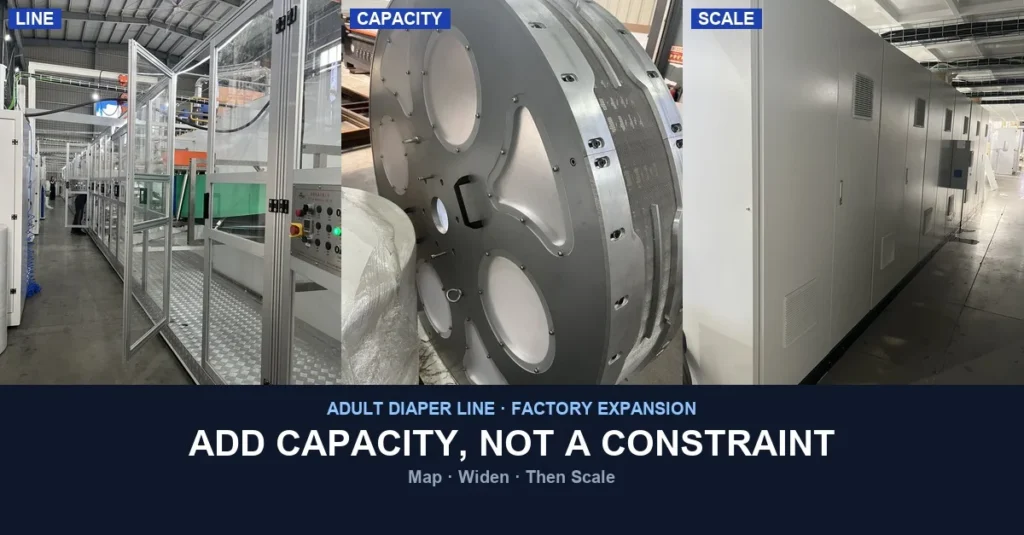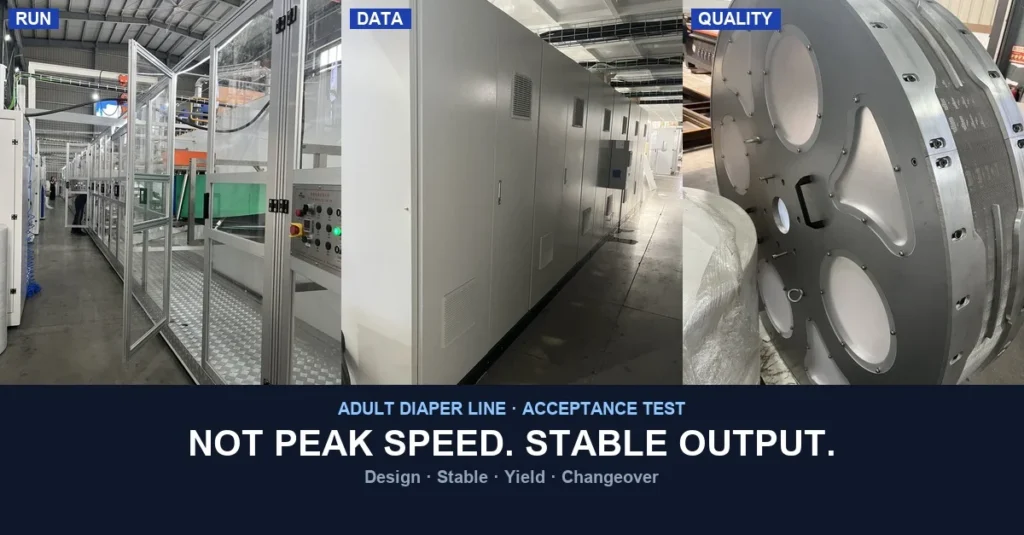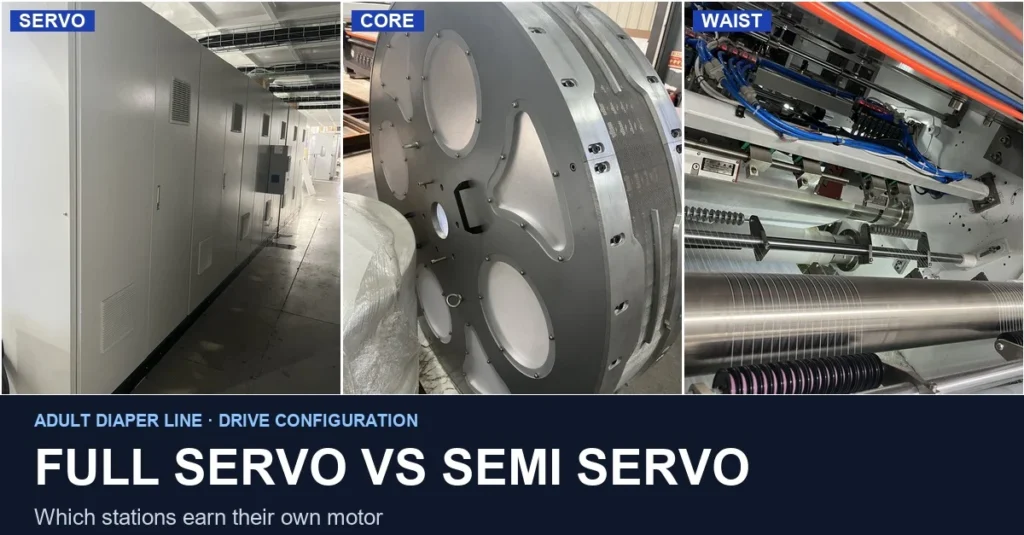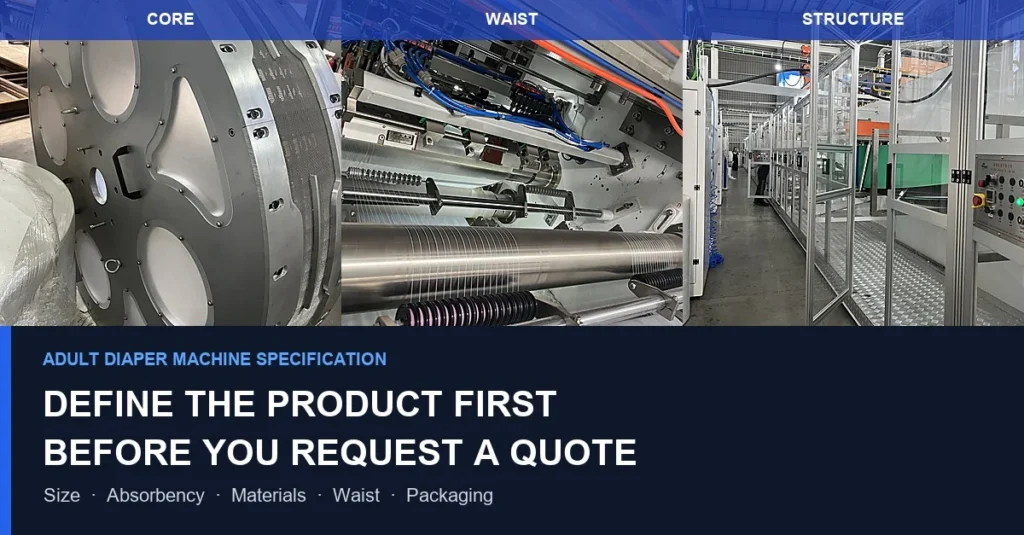
Define the Product First: How to Choose the Right Hygiene Product Machine Configuration

On June 12, 2026
Comments Off on Define the Product First: How to Choose the Right Hygiene Product Machine Configuration
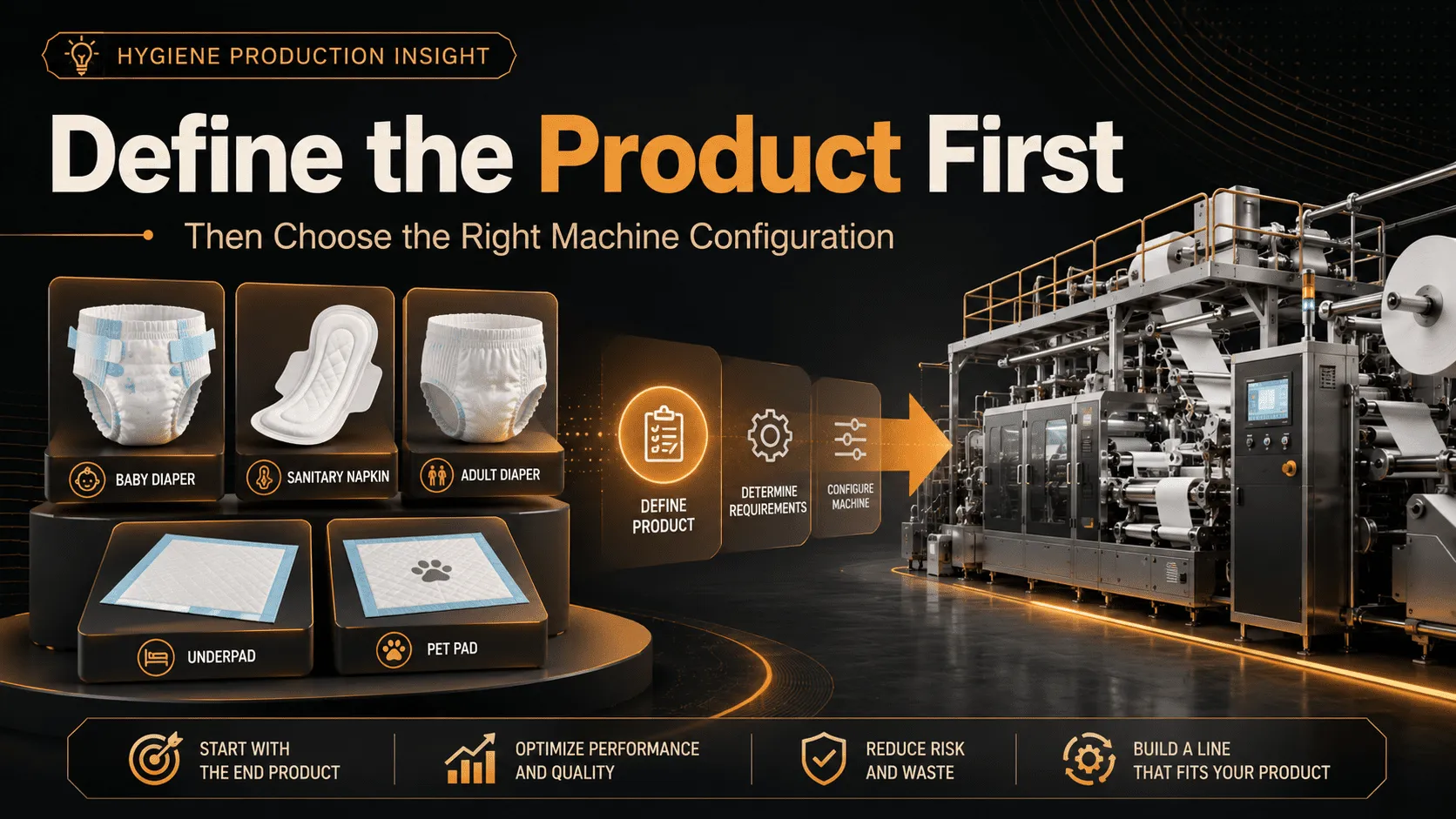
Define the Product First: How to Choose the Right Hygiene Product Machine Configuration
Before choosing a hygiene product machine, buyers should define the product first. The machine configuration should always follow the product plan, target market, raw materials, packing method, and long-term production goal.
Why Product Definition Comes Before Machine Selection
Many buyers start a hygiene products project by asking one simple question: “How much is the machine?”
This is understandable. Price is important. Budget is important. Investment control is important. But in real factory projects, price should not be the first question.
The better first question is: “What product do you want to produce?”
For a Diaper Manufacturing Machine, Sanitary Napkin Machine, Adult Diaper Machine, Pet Pad Machine, wet wipes machine, or tissue machine, the machine configuration should always follow the product plan.
A machine is not an isolated piece of equipment. It is part of a full production system. That system includes product structure, raw materials, factory layout, operator skill, packing method, target market, quality standard, and future production goals.
If the product plan is unclear, the machine choice can easily become unclear too. The right machine is not always the cheapest one. It is also not always the most expensive one. The right machine is the one that fits the buyer’s real product, real market, real factory conditions, and real long-term plan.
Machine Price Should Not Be the First Question
When buyers ask only for machine price, suppliers may give a quick quotation. But a quick quotation does not always mean the best solution.
For hygiene product manufacturing, a machine price depends on many factors.
- Product type
- Product size range
- Product structure
- Production speed
- Servo configuration
- Automation level
- Raw material feeding system
- Glue application system
- SAP or absorbent core design
- Cutting and sealing method
- Packing connection
- Installation and training support
The better process is: first, define the product. Then, define the production requirement. Then, choose the machine configuration. Finally, evaluate the price.
Product Structure Decides Machine Configuration
Product structure is one of the most important factors in machine selection. Different hygiene products have different production logic.
A baby diaper may include topsheet, acquisition layer, absorbent core, SAP, fluff pulp, backsheet, frontal tape, side tape, leg cuff, waist elastic, glue, and packing materials.
A sanitary napkin may include nonwoven topsheet, absorbent core, PE film, release paper, wing structure, glue application, cutting shape, and packing format.
An underpad or pet pad may look simple, but it still needs stable absorbent core distribution, PE film leakage control, edge sealing, cutting accuracy, and size flexibility.
- Material unwinding system
- Tension control
- SAP dosing system
- Core forming method
- Glue application position
- Elastic application
- Folding method
- Cutting system
- Waste collection
- Product inspection
- Packing connection
There is no single best machine for every buyer. There is only the machine that best matches the product plan.
Target Market Affects the Production Solution
Before choosing a machine, buyers should also think about the target market. Different markets may have different product preferences.
Some markets focus more on price. Some markets care more about softness and comfort. Some markets require stronger absorbency. Some markets prefer thinner products. Some markets need small package quantities, while others need family-size packing.
- Who is the target customer?
- What product level does the market need?
- What price range can the market accept?
- What absorbency level is required?
- What package format is suitable?
- What product sizes should be produced first?
- Will the factory need customized products later?
- Will the factory need higher automation in the future?
A clear market plan helps the supplier recommend a more suitable machine configuration. Without this information, machine selection may become too general.
Raw Materials Must Match the Product Plan
Raw materials are directly connected to product quality and machine stability. A machine that runs well with one material may need adjustment when using another material.
For diaper production, raw materials may include nonwoven, PE film, SAP, fluff pulp, ADL, frontal tape, side tape, elastic materials, hot melt glue, and packing film.
For sanitary napkin production, raw materials may include nonwoven topsheet, absorbent paper, fluff pulp, SAP, PE film, release paper, hot melt glue, individual wrapping film, and packing materials.
- If the product plan is high absorbency, the machine and material system must support that structure.
- If the product plan focuses on softness, material selection and tension control become important.
- If the product plan needs better appearance, cutting accuracy and product forming stability become more important.
- If the product plan focuses on low cost, material usage and waste control must be carefully considered.
A good machine supplier should not only ask, “What machine do you need?” They should also ask, “What product do you want to make, and what materials will you use?”
Packing Method and Daily Output Should Be Planned Early
Packing is often discussed too late in many projects. But for hygiene products, packing is part of the production solution. A product is not ready for the market until it is packed properly.
- Manual packing or automatic packing
- Pieces per bag
- Bag size
- Packing film requirement
- Carton packing
- Labor arrangement
- Daily output target
- Storage space
- Delivery method
- Supermarket or distributor requirements
Daily output should also be planned realistically. Buyers should not only look at design speed. They should consider real stable speed, qualified product rate, shift arrangement, size changeover time, machine maintenance, packing rhythm, and operator skill.
Future Upgrade Space Matters for Long-Term Growth
A hygiene product factory should not only think about the first production stage. It should also think about future growth.
Many buyers start with one product and later expand to more sizes, higher-end products, different packing formats, or additional production lines.
- Can the machine support different product sizes?
- Can the product structure be adjusted later?
- Is there room for packing automation?
- Can the factory layout support future lines?
- Are operators able to handle more advanced production later?
- Are spare parts and technical support available long-term?
- Can the supplier support future product development?
This does not mean every buyer must choose the highest configuration from the beginning. But buyers should understand what can be upgraded later and what cannot be easily changed.
From Machine Buying to Production Planning
There is a big difference between buying a machine and planning production. Buying a machine focuses on equipment. Production planning focuses on the full project.
Define Product
Clarify product type, size, structure, market level, and packing format.
Match Materials
Confirm raw material standards, product performance, and production stability.
Configure Machine
Choose automation, speed, servo system, glue system, and packing connection.
Plan Production
Prepare layout, operators, daily output, quality control, and future upgrade space.
When buyers start from product definition, the whole project becomes clearer. They can better understand what kind of machine they need, what materials should be prepared, what factory space is required, and how the final product will enter the market.
Why Welldone
Welldone is a hygiene products machinery manufacturer under Quanzhou Shimao Weiteng Import & Export Co., Ltd. With more than 18 years of industry experience and our own factory support, Welldone provides machinery and production solutions for baby care, female care, adult care, pet care, paper products, and wet wipes.
Our product range includes diaper manufacturing machines, baby diaper machines, baby pull-up pants machines, sanitary napkin machines, adult diaper machines, underpad machines, pet pad machines, wet wipes machines, tissue machines, packing machines, and related hygiene product raw materials.
Welldone supports buyers not only with machine supply, but also with practical production planning, including product structure discussion, machine configuration advice, raw material matching, factory layout planning, production capacity planning, packing method suggestions, installation preparation, operator training, spare parts planning, and after-sales technical support.
You can explore our related machine categories: Baby Care Machines, Female Care Machines, Adult Care Machines, Pet Care Machines, and Paper & Wet Wipes Machines.
Welldone is not a distributor or wholesaler. We are a manufacturer focused on helping buyers build stable, long-term hygiene product manufacturing capacity.
Related Machines
Diaper Manufacturing Machine
Suitable for producing baby diapers with stable absorbent core, accurate material control, flexible size options, and long-term production support.
Sanitary Napkin Machine
Suitable for producing sanitary napkins with stable core forming, clean cutting, accurate glue application, and consistent product quality.
Adult Diaper Machine
Suitable for producing adult diapers for elderly care, medical care, nursing homes, and healthcare product markets.
Underpad Machine
Suitable for producing disposable underpads for hospitals, elderly care, baby care, and pet care applications.
Pet Pad Machine
Suitable for producing pet pee pads with stable absorbency, leakage control, and flexible size options.
Wet Wipes Machine
Suitable for producing wet wipes for hygiene, cleaning, baby care, personal care, and household applications.
Tissue Machine
Suitable for producing facial tissue, napkins, toilet tissue, handkerchief tissue, and related paper products.
Conclusion
Before choosing a hygiene product machine, buyers should define the product first. This means thinking clearly about product type, size, structure, absorbency level, material standard, packing method, target market, daily output, and future growth plan.
The machine configuration should follow the product plan. If the product plan is clear, the supplier can recommend a more suitable solution. If the product plan is unclear, machine selection may become only a price comparison.
A hygiene products factory does not make profit from the lowest quotation alone. It makes profit from a machine that matches the product and supports stable production.
So before asking: “How much is the machine?” it may be better to ask: “What product do we want to produce, and what machine configuration can support it?”
FAQ
1. Why should buyers define the product before choosing a hygiene product machine?
Because machine configuration depends on product type, size, structure, absorbency, materials, packing method, target market, and daily output. A clear product plan helps suppliers recommend a more suitable machine solution.
2. Is the cheapest machine always the best choice?
No. The cheapest machine may not match the buyer’s product structure, output requirement, quality standard, or future growth plan. Buyers should compare machine value, not only machine price.
3. What product details should buyers prepare before asking for a quotation?
Buyers should prepare product type, size range, target market, absorbency level, material requirements, packing method, expected output, automation preference, and future product expansion plan.
4. How do raw materials affect machine configuration?
Raw materials affect tension control, glue bonding, absorbent core forming, SAP distribution, cutting accuracy, packing stability, and final product quality. Machine configuration should match the planned raw materials.
5. Can Welldone help buyers define the right machine configuration?
Yes. Welldone can support buyers with product structure discussion, machine configuration advice, raw material matching, factory layout planning, packing method suggestions, installation support, operator training, and long-term after-sales service.
Planning a Hygiene Products Production Project?
If you are not sure which machine configuration fits your product plan, Welldone can help you review product structure, raw materials, target market, packing method, factory layout, output plan, and long-term production needs.
Contact Welldone