

Adult Pull-Up Overnight Protection Test Guide | Welldone

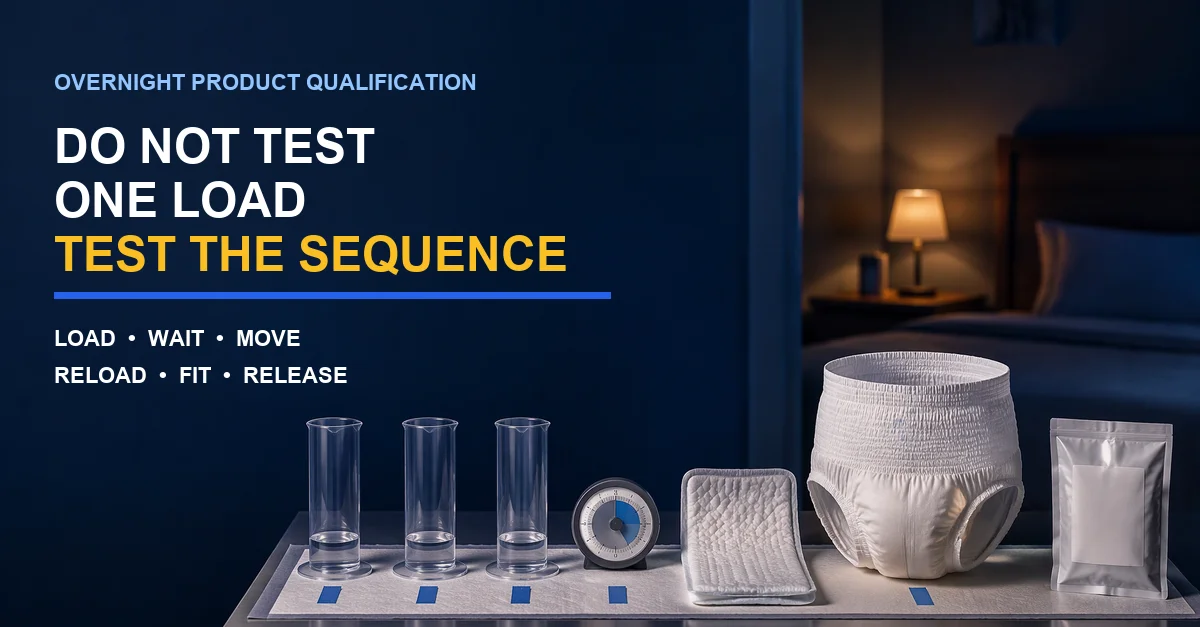
Can an Adult Pull-Up Claim Overnight Protection? Build the Test Matrix
The first liquid load disappears quickly. The sample looks dry, the scale confirms the added mass and the development team marks the trial as passed. Hours later, the same product receives a second load while the wearer is lying on one side. The leak appears at the leg opening—not because the total absorbent capacity was exhausted, but because acquisition, distribution and fit no longer worked as one system.
One convenient loading cannot qualify an overnight adult pull-up.
An adult pull-up overnight protection test must define the sequence of events the product is expected to survive, then connect each result to the product structure and the production process that created it.
A new adult pull-up moves the market claim beyond thinness
On October 28, 2026, Nonwovens Industry reported NorthShore's launch of GoSupreme Max for heavy bladder leaks. The report attributes to the company claims of up to 10 hours of protection and up to three full bladder releases. It describes an enhanced absorbent core, dual elastic leak guards stated to be 50% taller than standard pull-up guards, extended front-to-back coverage, closer waist and leg fit, tear-away side seams and a rear disposal tape.
The official NorthShore product page confirms the same positioning and lists Medium, Large and X-Large at launch, with 2XL and 3XL due in early 2027. It also lists a 46 oz absorbency specification, a wetness indicator on the white version, a cloth-like waterproof backsheet and a material list including fluff pulp, sodium polyacrylate, nonwovens, film, adhesive and non-latex elastics.
Those are product statements from NorthShore. They are not Welldone machine parameters, independent laboratory conclusions or universal adult-care specifications.
Source & Date
Primary: Nonwovens Industry, October 28, 2026
Official product evidence: NorthShore GoSupreme Max product page, read November 3, 2026
Recency check: Nonwovens Industry weekly recap, November 1, 2026
Primary: Nonwovens Industry, October 28, 2026
Official product evidence: NorthShore GoSupreme Max product page, read November 3, 2026
Recency check: Nonwovens Industry weekly recap, November 1, 2026
The published claim does not provide another factory's test method
The reviewed sources do not disclose liquid type, individual load volume, load interval, application point, body position, conditioning method, sample count, failure definition or statistical release rule. They also do not identify the converting line, machine supplier, line speed, core-forming recipe, SAP ratio, material basis weights or packaging compression limit.
This article therefore does not attempt to reproduce NorthShore's proprietary design or evidence. It converts the public product signal into a buyer-side framework for developing a different adult pull-up responsibly.
The real question is not whether a sample can hold a large total volume. It is whether an approved production window can repeatedly deliver the required acquisition, containment, fit and removal performance across every commercial size.
Freeze the claim before selecting the test
“Overnight,” “multi-void” and “heavy leak” are not test methods. Each term needs an operational definition agreed by product development, quality, marketing and the manufacturing team.
State the intended use window, target user group, allowed product changes, test liquid, application location, number of loads, interval between loads, posture sequence and end condition. If a bowel movement requires immediate change, state that limitation rather than allowing a urinary-protection claim to imply something broader.
The claim must be narrow enough to test and the test must be demanding enough to expose the real failure mode.
A common mistake is to start with a competitor's headline and work backward to a passing demonstration. Start with the user's expected event sequence, then decide which product structure and evidence can support it.
Test repeated loading—not one large dose
Three smaller events separated by waiting and movement are not equivalent to one combined pour. The first load changes the core. It occupies pore space, moves SAP toward swelling, changes local stiffness and can reduce the acquisition rate available for the next event.
The trial record should capture acquisition time for each load, surface condition after the agreed wait, liquid distribution, leakage location and retained mass. If the second or third load slows sharply, the team needs to know whether the bottleneck is the acquisition layer, pulp/SAP distribution, core compaction, channel geometry or local saturation.
Do not hide the sequence inside one final weight. A product can retain the total test mass and still fail the user because liquid remained on the surface too long or escaped before reaching unused core capacity.
The absorbent core must preserve a usable liquid route
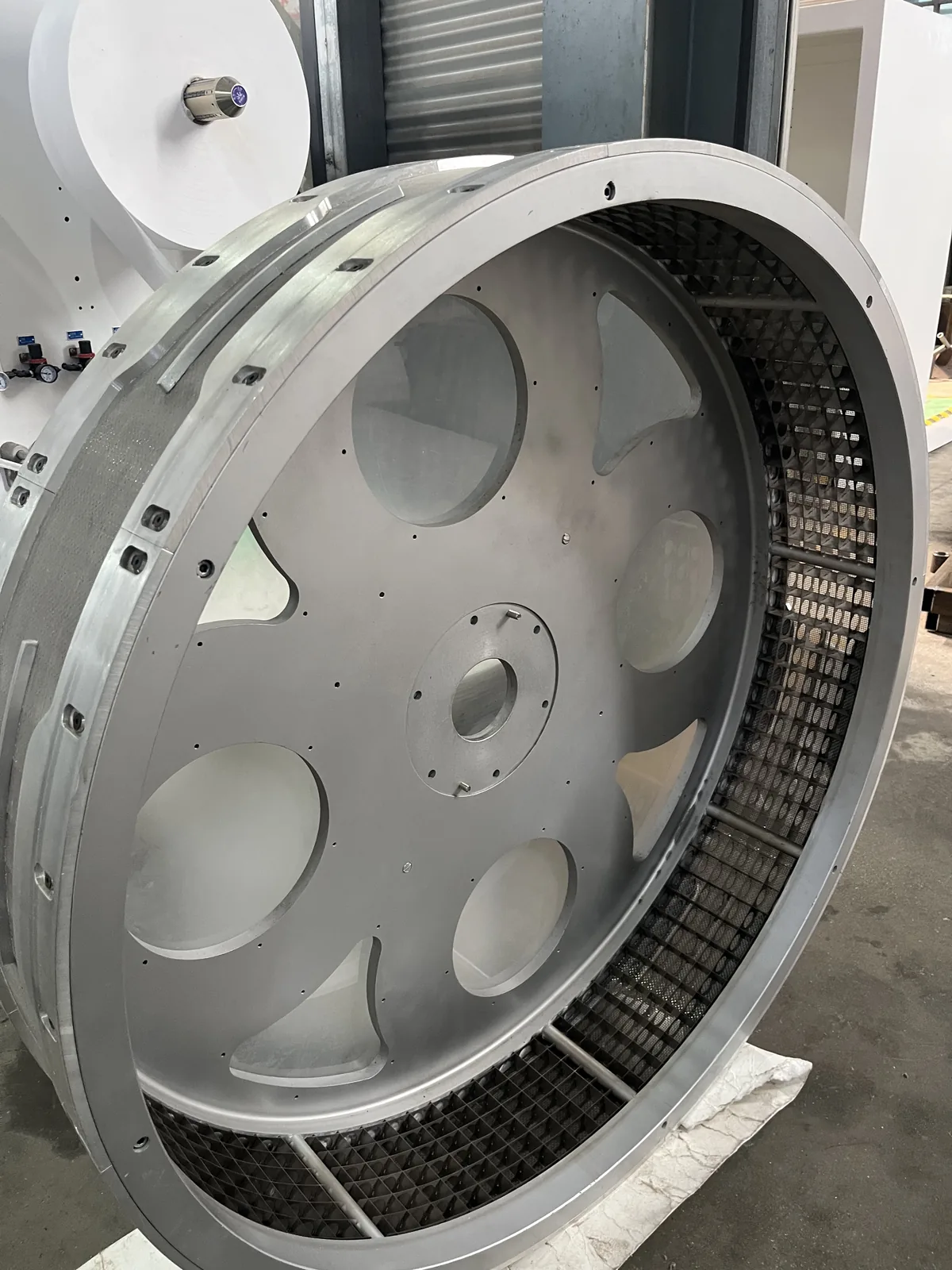
Total absorbent mass is only one input. Core length, width, thickness profile, pulp/SAP distribution, wrapping integrity and density determine whether liquid can enter, spread and remain contained after movement.
A heavier core may demand different forming, transfer, pressing and cutting conditions. It can change vacuum demand, dust behaviour, web tension and the force required to move the composite without distortion. The buyer should not assume that adding absorbent material leaves the existing production window unchanged.
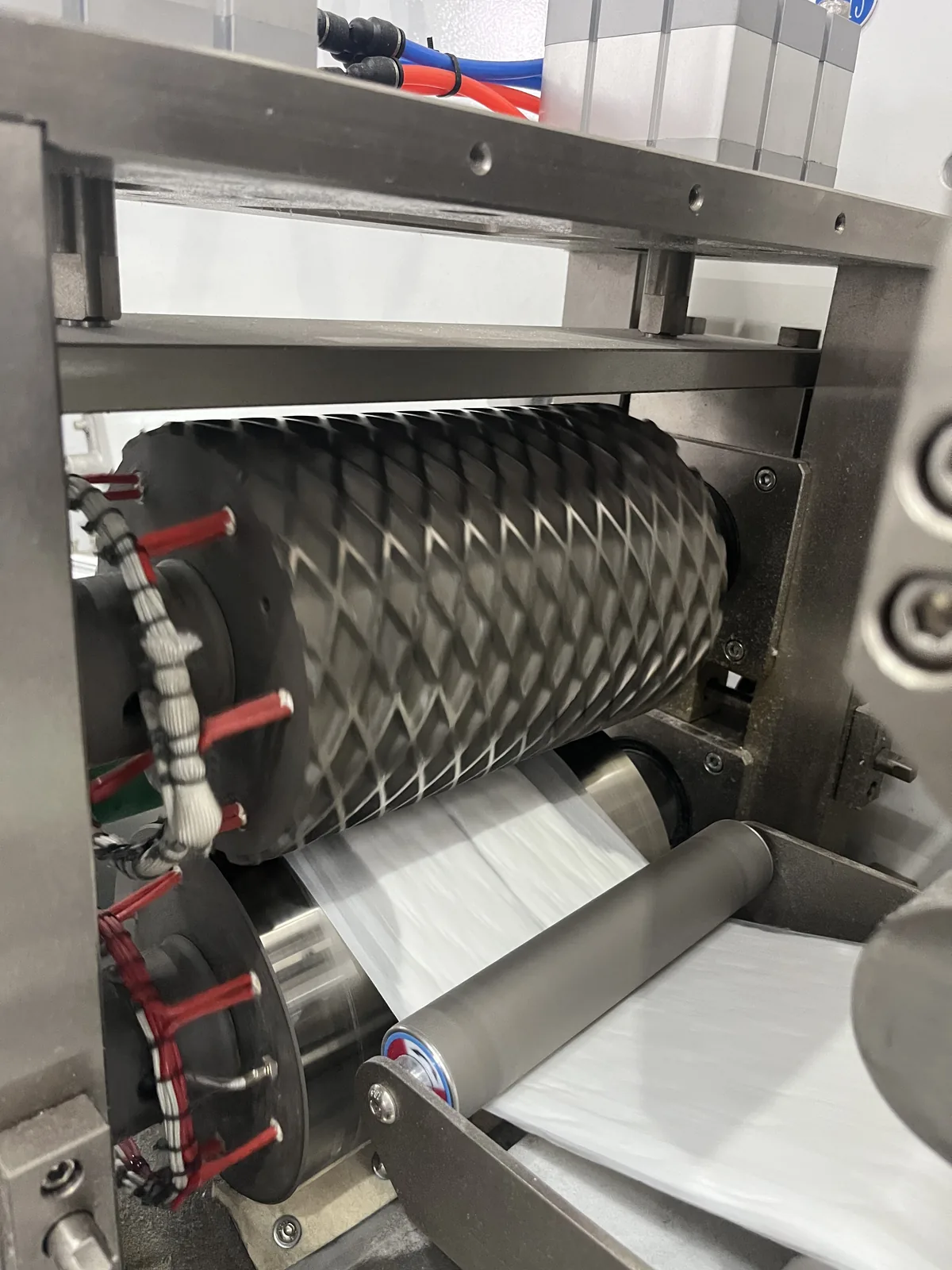
In most cases, the most useful development sample is not the best-looking dry product. It is the sample whose wet core can be opened, mapped and compared with the recorded process window.
Taller leak guards still need placement and elastic evidence
A guard can be tall on the drawing and ineffective on the body. Its performance depends on material width, fold geometry, elastic location, pre-extension, bonding, continuity and the relationship between the guard and the leg opening.
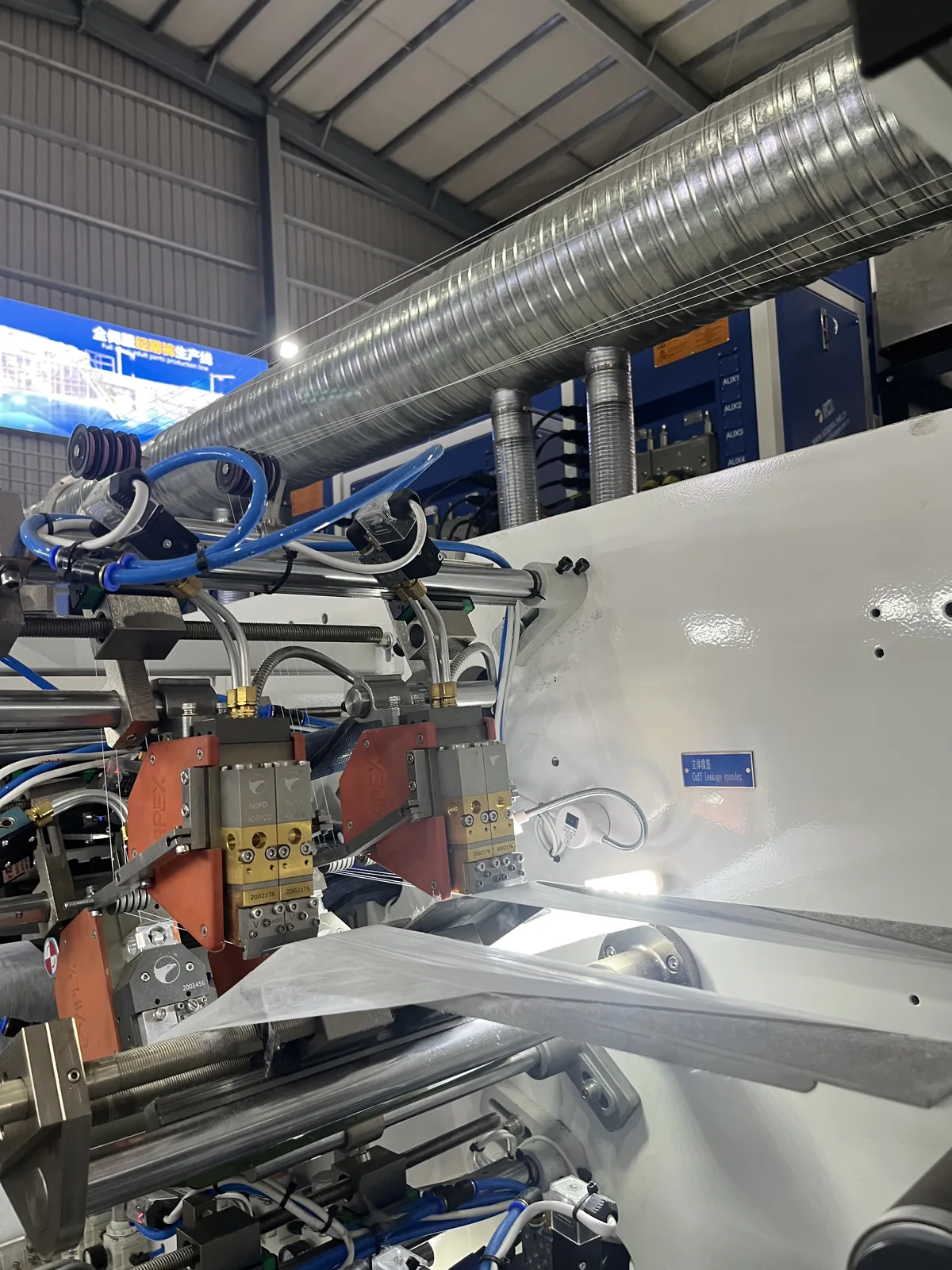
Run the agreed load sequence in the relevant positions, including side orientation if that is part of the intended overnight use. Record which side leaked, where the liquid crossed the guard and whether the guard stayed standing after the product became heavier.
A pass in the largest size cannot release the smallest size. Leg opening, body contact and elastic recovery change by SKU. Each commercial size needs a signed geometry and a release basis.
Fit is part of absorbency performance
The core can have unused capacity while the product leaks through a fit gap. Waist tension, leg tension, product rise, front-to-back coverage and wet sag all determine whether liquid remains inside the containment zone.
Use representative fixtures, mannequins or approved wear protocols appropriate to the project. Define how the product is applied, how long it is conditioned, how position changes are made and when measurements occur. Do not let each technician “fit it naturally” in a different way.
I believe fit failures should be mapped back to measurable product geometry before operators are asked to change machine settings. “Loose at the leg” is a symptom; the corrective action requires dimensions, elastic condition and failure position.
Removal, disposal and indicators belong in the specification
Overnight performance does not end when absorption stops. A wet product must still be removed without uncontrolled tearing, rolled or contained as intended and disposed of using the specified tape or closure feature.
Challenge tear-away seams in both dry and loaded states. Confirm that disposal tape remains present, bonded and usable after the product has passed through converting, folding and package compression. If a wetness indicator is included, define its location, activation expectation and inspection method.
These features create manufacturing controls. Side-seam strength requires a bounded window; a disposal tape needs presence and position checks; printed indicators require registration and material compatibility evidence.
Decide whether the existing line can make the new structure
Compare the signed target sample and BOM with the installed line module by module: core forming, SAP dosing, tissue or core wrap, ADL application, cuff construction, waist and leg elastic application, lamination, cutting, folding, inspection and packaging.
The verified Welldone adult-care machinery range includes pull-up and open-type adult diaper lines, underpad systems and adult-care packing solutions. That category capability does not prove that every existing line can produce every overnight structure. The exact product and module boundary must be reviewed for the project.
The existing line may be suitable if its forming envelope, web widths, elastic routes, cutting geometry, control recipes and packaging interfaces cover the target structure. A retrofit may be required when one bounded module is missing. A new line becomes the responsible option when core, geometry, speed and downstream requirements exceed several connected interfaces.
The reviewed Welldone guide on material quality and machine stability supports the same principle: the machine, material and process must be qualified together.
Build one witnessed matrix from claim to release
| Test block | Controlled inputs | Evidence for release |
|---|---|---|
| Repeated loading | Liquid, volume, point, interval, temperature and sample size | Acquisition by load, surface result, leakage and retained mass |
| Position change | Back, side and movement sequence defined by intended use | Leak location, guard condition and wet-core position |
| Fit by SKU | Signed size drawing, application method and fixture or wear protocol | Waist, leg, rise, symmetry and wet-sag result |
| Removal | Dry and loaded samples, seam opening method and disposal sequence | Controlled tear, tape presence and contained disposal |
| Production repeatability | Recipe, lots, speed window, stop/restart and retained samples | Same product result across identified production windows |
| Packaging | Pack count, compression, storage orientation and conditioning time | Product recovery, feature integrity and correct pack identity |
Illustrative framework only. This matrix is not a NorthShore test method, a regulatory requirement, a customer result or a universal acceptance standard. Replace every input and limit with project-approved values.
Use the matrix before the line quotation is frozen. Update it during material trials, FAT and SAT, then retain the final version as part of commercial product release. The purpose is continuity: the product claim, machine configuration and quality evidence should describe the same product.
Why Welldone starts with the target product and evidence
Welldone can support an adult pull-up project from sample review and line configuration through BOM matching, factory planning and trial preparation. The objective is not to copy a branded product or promise a marketing claim. It is to translate the buyer's approved product into a controllable manufacturing route.
Freeze the product
Approve size drawings, BOM, core profile, cuffs, elastics, removal features and pack format.
Map the line
Confirm which modules already cover the structure and where a retrofit or new line is required.
Release with evidence
Connect identified production windows to repeated-load, fit, leakage, removal and packaging results.
Specific materials, equipment configuration, samples, supply conditions and acceptance limits must be confirmed through a project inquiry.
Buyer checklist: turn the overnight claim into a manufacturing brief
- Define the intended user, wear window and claim limitations.
- Freeze load volume, count, interval, liquid, point and position sequence.
- Approve a size drawing and physical reference sample for every commercial SKU.
- Specify core dimensions, profile, wrapping and material identities.
- Record acquisition time and leakage location after every load.
- Inspect wet-core distribution and deformation, not only final retained mass.
- Define leak-guard height, fold, elastic route and bonding window.
- Verify waist and leg fit after loading and movement.
- Challenge tear-away seams, disposal tape and wetness indicator where applicable.
- Compare the target structure with every installed line module.
- Separate existing-line capability, bounded retrofit and new-line requirements.
- Run identified material lots through stop/restart and packaging conditions.
- Keep retained samples linked to recipe, time window and test result.
- Release only the sizes, materials and pack formats supported by evidence.
If the product passes one large pour but fails after a second load and a position change, which process interface would your team investigate first?
Source and date
- Nonwovens Industry, October 28, 2026: launch report and attributed product claims.
- NorthShore official product page, read November 3, 2026: product features, sizes, materials, package quantities and listed specifications.
- Nonwovens Industry, November 1, 2026: weekly recap confirming the launch remained a current industry item.
Source limitation: No reviewed source discloses the product's test protocol, manufacturing line, machine supplier, process settings or commercial release criteria. Welldone is not identified as a participant in the event. Engineering guidance above is buyer-side analysis.
Frequently asked questions
Is total absorbency enough to support an overnight claim?
No. The project should also evaluate acquisition after repeated loads, leakage during position changes, surface condition, wet-core stability and fit.
Can a standard adult pull-up line make a higher-absorbency product?
Possibly, but only after comparing the target core, materials, web widths, elastic geometry, cutting, folding and packaging requirements with the installed modules.
Should every size use the same test?
The method can share a framework, but each commercial size needs an approved sample, geometry, fit basis and release evidence.
When is a retrofit more appropriate than a new line?
A retrofit is reasonable when a bounded module can close the verified gap without destabilizing connected processes. Multiple linked gaps may justify a new line.
Can Welldone discuss equipment, BOM and finished-product requirements together?
Yes. Welldone can review production-line scope, material matching and target product requirements. Exact supply conditions and specifications must be confirmed during inquiry.
Freeze the test matrix before freezing the adult pull-up line
Send the target sample, size range, BOM, protection objective and pack format for a project-specific discussion covering equipment, materials and product trials.
Website: www.cnwelldone.com
Email: welldone@cnwelldone.com