Sanitary Napkin Specification Checklist Before Requesting a Quote

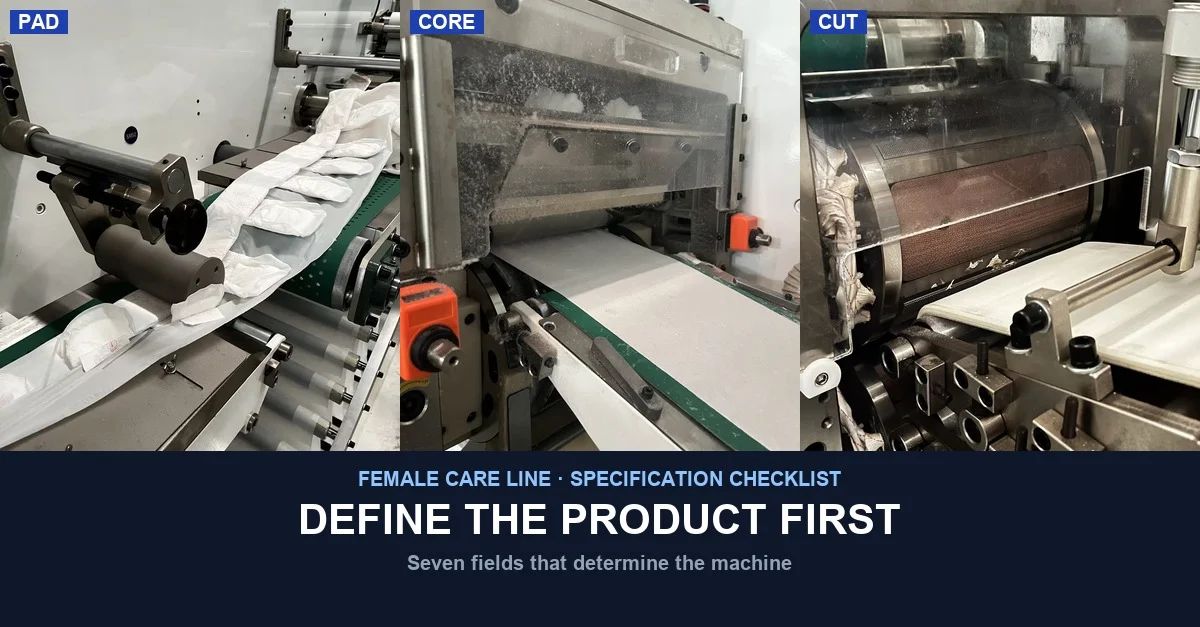
Define the Sanitary Napkin Product Before Requesting a Machine Quote
A supplier receives an inquiry: "Please quote a sanitary napkin machine." The reply asks: what length? Which face material, cotton feel or dry mesh? Winged or straight? What core weight? Daily or overnight or ultra-thin?
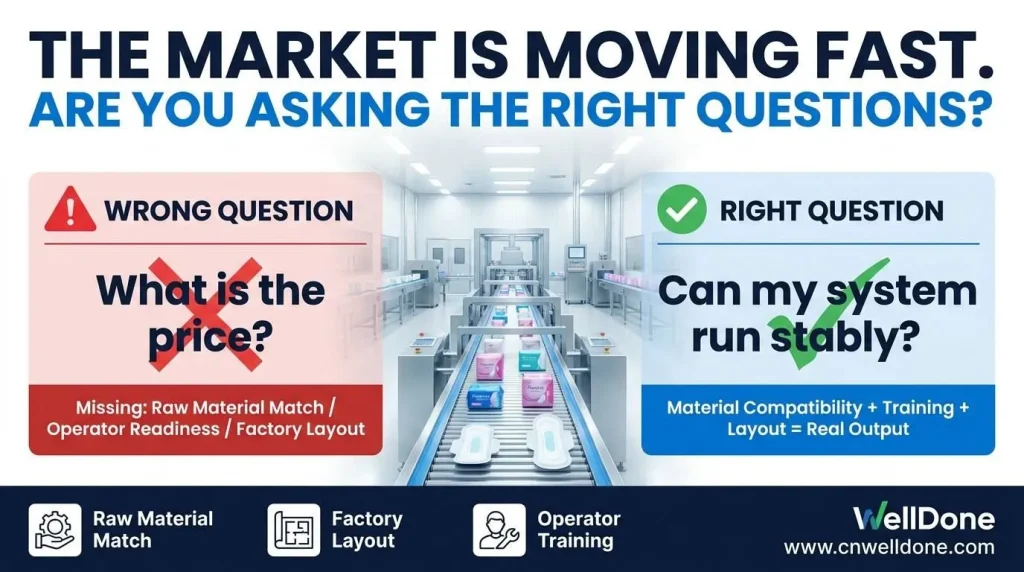
None of those questions are about the machine. They are all about the product. A machine quotation converts your finished-product specification into mechanical scope, and without the specification, every supplier is pricing a different assumption.
Starting a Sanitary Napkin Manufacturing Business · Part 2
Part 1: Which line to start with — pad vs liner vs menstruation pant.
Part 2 — this article: define the product specification before requesting a quote.
Part 3: Full servo vs semi servo for sanitary napkin lines.
Part 4: Can one machine produce pads and liners?
Part 1: Which line to start with — pad vs liner vs menstruation pant.
Part 2 — this article: define the product specification before requesting a quote.
Part 3: Full servo vs semi servo for sanitary napkin lines.
Part 4: Can one machine produce pads and liners?
A product name is not a specification
Actually, a machine quotation starts from your product specification, not from the product's marketing name. "Sanitary napkin" tells the supplier almost nothing about the machine. "A 245 mm winged daily pad with a spunlace topsheet and a 35 g/m² fluff-SAP core, individual wrapped in heat-seal film, ten pads per retail bag" tells the supplier exactly which stations, which mold set and which speed band to size the line for.
Every one of those fields — length, face material, wing or no wing, core construction, pack format — changes a different part of the machine or the die. None of them can be assumed safely. Suppliers who receive an incomplete brief quote a middle assumption: medium length, no wing, standard core. If your product differs from that assumption on any three of those fields, the machine you receive may not be able to make your product at all.
Length and width: the first two numbers to fix
Sanitary pads vary in length across the product range — daily pads sit in a different range from overnight pads, and ultra-thin pads may share a length but require a different die profile. Width narrows the mold further, especially when wings are involved, because the wing width and fold angle are cut into the mold.
A machine is built around a specific length range and can accommodate changeover within a designed envelope. Requesting a line without fixing the length range first means the supplier cannot tell you whether a size change is a quick recipe switch or a mold swap — and those two answers have very different cost and time implications. Fix the product range in millimetres before the quotation.
Face material: cotton feel vs dry mesh
The real question is not which face material feels better, but which one your channel expects and what its physical properties demand of the machine. A spunlace cotton-feel topsheet and a perforated dry-mesh PE film are different raw materials: different roll width, different tension setting, different unwinding and bonding conditions.
A machine is calibrated for one or the other as the primary material. Running both on the same line without adjusting tension and bonding parameters is possible in principle but only within a limited window — and that window is defined at the time the line is built. Tell the supplier which face material you plan to run on day one, and which one you may add later, before the build begins.
Wing or no wing: the station that changes everything
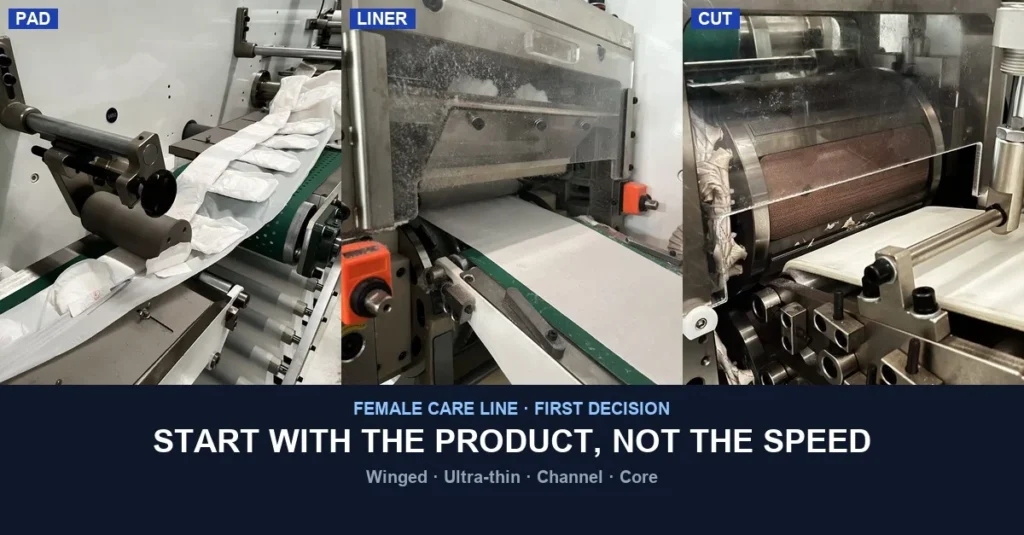
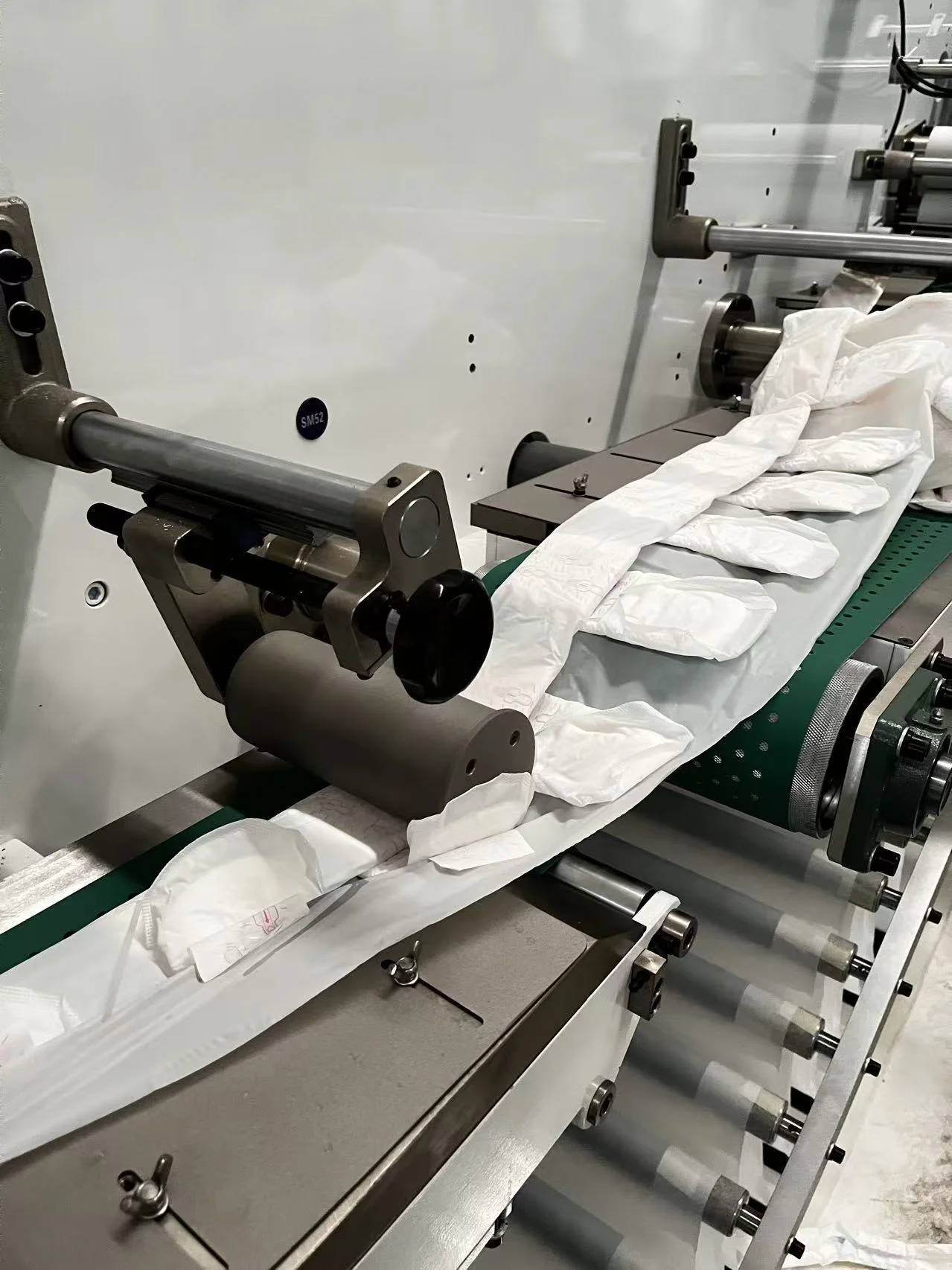
Adding side wings to a sanitary pad adds a wing-forming, notching and folding station. That station is not an accessory bolted on at the end; it is part of the web path from the beginning. A wingless line has a different physical layout from a winged one, and swapping later is a rebuild, not a modification.
The decision to run a winged product is a day-one decision. If the plan includes winged pads at any point in the first two years, build the line for wings from the start. If the plan is a straight pad for the life of the line, the wing station can be removed and the line simplified. Decide before the quotation, because after the contract is signed, the answer is locked into the mechanical layout.
Core weight and SAP ratio: absorbency and machine settings
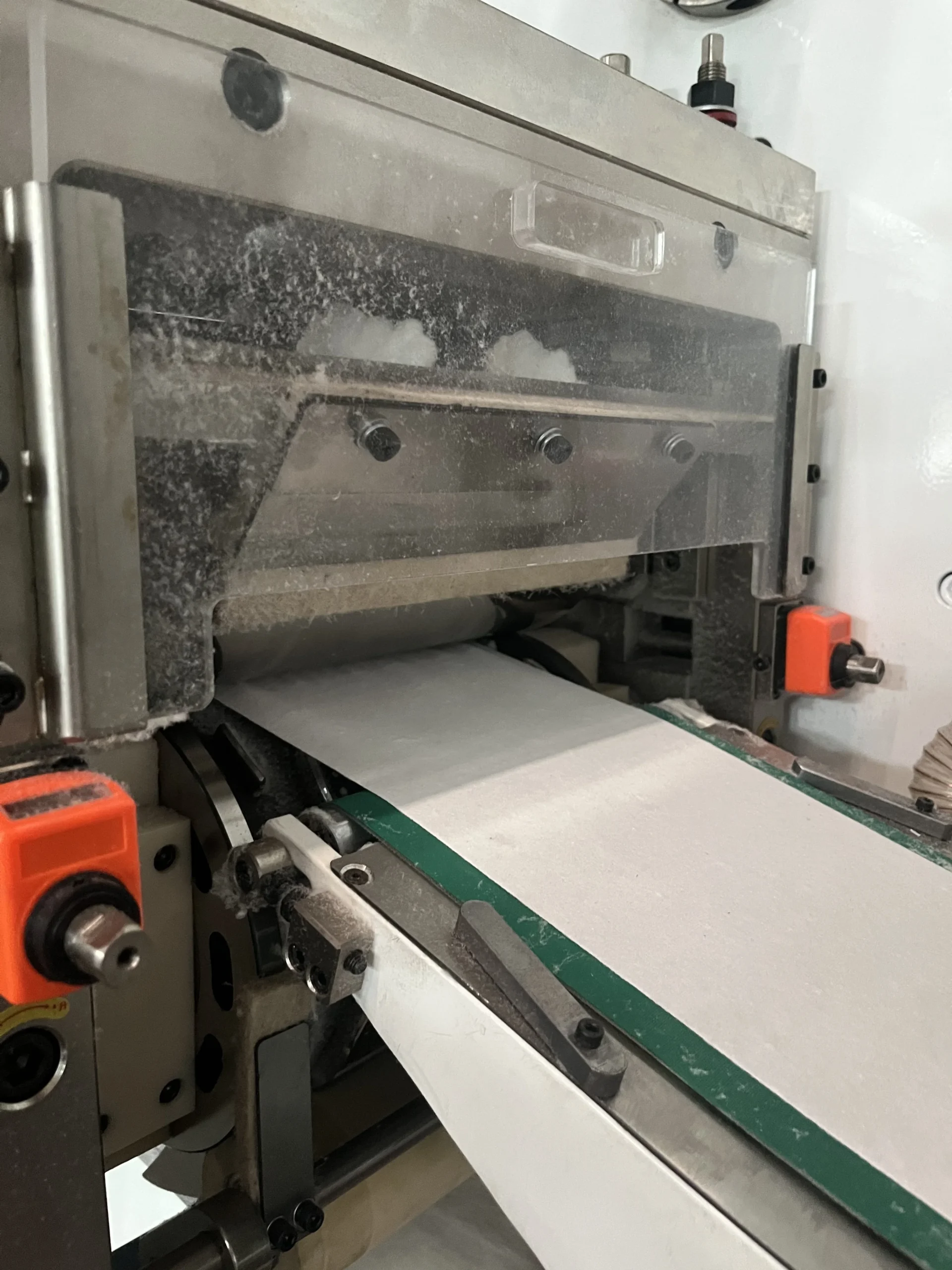
The absorbent core of a sanitary pad is a combination of fluff pulp and super-absorbent polymer. The ratio between the two is the single biggest variable between an ultra-thin pad and a regular pad, and it changes the core forming settings, the SAP dosing unit and the core weight per piece that the line targets.
A heavier fluff core is bulkier and forms differently from a thin SAP-heavy core. The machine is set — and the mold is shaped — around the target core weight and construction. Tell the supplier whether the product is a conventional fluff core, a thin-core SAP-dominant design, or a multi-layer structure, and give the target core weight in grams. That one number, more than any other, tells the supplier what the core forming and dosing stations need to do.
Release paper and packaging format
Every individually wrapped sanitary pad has a release paper on the bottom and, if winged, on the wing adhesive lines. The release paper affects the wrapping station: its width, the adhesive pattern and the fold sequence depend on the pad dimensions and wing layout.
Packaging format is a separate decision that determines the end-of-line equipment. A single-piece individually wrapped pad in a retail multi-pack requires a different packing arrangement from a bulk loose-count bag. Tell the supplier the retail pack count, the bag size and the packing format before the quotation, because the packing station is sized to match the line's output speed.
The specification checklist before the quotation
I believe the most useful RFQ starts with a finished product sample or a confirmed product drawing. If neither is available, the checklist below covers the minimum fields a supplier needs to size the line correctly. Missing any one of them forces the supplier to assume, and a wrong assumption in the quotation is an engineering change order after the contract.
| Specification field | What to define | Why it matters to the machine |
|---|---|---|
| Pad length | Length in mm for each SKU in the planned range | Sets the die cut length and the repeat cycle on the line |
| Pad width | Width in mm at the widest point including wings | Determines the web width and the mold outer dimension |
| Face material | Cotton-feel spunlace, dry mesh PE, or other non-woven type | Drives tension calibration, bonding parameters and unwinding setup |
| Wing vs straight | Winged product, straight product, or both (with changeover plan) | Presence of wings requires a dedicated wing-forming and fold station |
| Core construction | Conventional fluff core, thin SAP-heavy core, or multi-layer | Determines core forming path, SAP dosing unit and target core weight |
| Individual wrap | Heat-seal film type and release paper coverage (including wing tabs) | Sets the wrapping station width and the adhesive pattern |
| Retail pack format | Count per retail bag, bag size and packing arrangement | Determines end-of-line packing equipment and its speed requirement |
Why send the specification before the quote
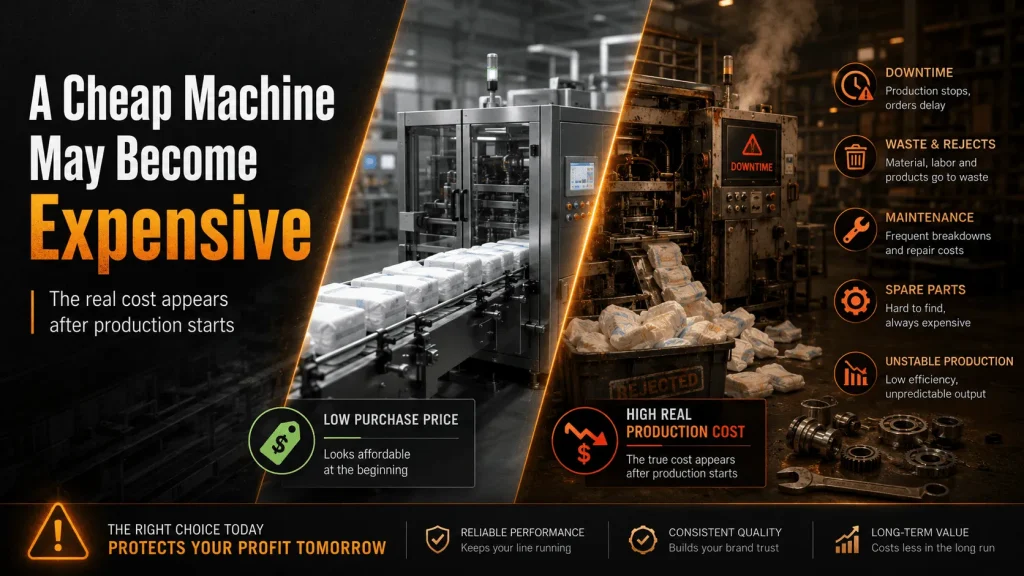
In most cases, a supplier without a complete specification quotes a machine for an average product — medium length, no wing, standard fluff core. If your product differs from that average in two or three fields, the price changes, the lead time changes, and some stations may need to be added or rebuilt.
Sending the specification first means the quote is for your product, not for a generic line. It also shortens the engineering review after the contract, because the main product decisions are already on the table. A buyer who sends a finished product sample or a complete spec sheet in the first inquiry gets a more accurate price, a shorter contract negotiation and fewer surprises at factory acceptance.
Why Welldone
Welldone builds sanitary pad, panty liner and menstruation pant lines with full-servo, semi-servo and mechanical drive options, and provides mold customization for T-type, wing-type and closed-core designs. The specification checklist above is the starting point for every product-line discussion — Welldone's team will work through each field with you and confirm the machine scope before the quotation is issued.
Spec-first quotation
Every quotation starts from your product specification, so the price is for your product, not an assumed average.
Mold customization
T-type, wing-type and closed-core molds are available, sized to your pad dimensions and wing geometry.
Engineer support
Welldone can provide overseas engineer support for installation, commissioning and training.
Conclusion
The specification checklist is not a formality. It is the engineering brief that turns your product idea into a machine scope. Every field you leave blank is one the supplier fills with an assumption, and an assumption that misses by 20 mm in length, one face material type or one station is a machine that cannot make your product as planned.
Before you send the next inquiry, answer this: if the supplier built the machine to their best guess about your product, how many fields would be wrong?
FAQ
What information does a sanitary napkin machine supplier need before quoting?
At minimum: pad length and width, face material type, wing or straight, core construction (conventional or thin SAP-heavy), individual wrap format, and retail pack count. A finished product sample is even better, because it resolves all these fields at once. See the female care machines page for the mechanical scope each specification drives.
Can I add wings to a straight-pad line later?
Adding wings to a line designed for straight pads is a rebuild, not an add-on, because the wing station changes the web path and the die layout from the beginning. The decision to run winged pads must be made before the machine is built. If wings are in the plan at any point in the first two years, specify them on day one.
Does core weight affect the machine, or just the product?
Both. The core weight per piece sets the SAP dosing rate and the forming drum profile. A thinner SAP-heavy core and a conventional fluff core are formed differently and dosed differently. The core specification is one of the fields Welldone reviews before finalizing the quotation.
If I plan to sell both daily pads and overnight pads, do I need two machines?
Not necessarily. A line can accommodate a range of lengths if the changeover is planned into the build. The key is to tell the supplier the full length range at the start, so the line is designed with the right changeover envelope. Adding a length outside the designed range later usually requires a mold change and re-validation. See the product line selection guide for more on how product range shapes the line.
Send us your specification, not just a product name
We will work through the checklist with you and return a quotation sized for your product.
Send your specification See female care machinesWebsite: www.cnwelldone.com Email: welldone@cnwelldone.com