Sanitary Napkin Absorbent Core: SAP, Fluff and ADL | Welldone

Sanitary Napkin Absorbent Core: SAP, Fluff Pulp and the Acquisition Layer
A sanitary pad can pass a visual check and still disappoint the user. The top sheet looks clean, the contour is correct, and the wings sit straight — but liquid remains near the entry point or returns to the surface under pressure.
The problem is often described as “not enough SAP.” That diagnosis is incomplete. Intake, distribution and storage are three different jobs, and the absorbent core only works when fluff pulp, SAP and the acquisition layer are designed and processed as one system.
Starting a Sanitary Napkin Manufacturing Business · Part 5
Part 1: Choose the product line.
Part 2: Define the product specification.
Part 3: Choose the drive architecture.
Part 4: Decide whether pads and liners should share a line.
Part 5 — this article: connect absorbent-core design to SAP dosing, fluff forming and ADL application.
Part 1: Choose the product line.
Part 2: Define the product specification.
Part 3: Choose the drive architecture.
Part 4: Decide whether pads and liners should share a line.
Part 5 — this article: connect absorbent-core design to SAP dosing, fluff forming and ADL application.
Three materials, three different jobs
Actually, treating SAP, fluff pulp and ADL as interchangeable “absorbent materials” is the fastest way to write an unusable specification. They cooperate, but they do not do the same work.
| Core element | Primary job | What the machine must control | Typical factory symptom when unstable |
|---|---|---|---|
| Fluff pulp | Creates the fibrous matrix and carries SAP through the formed core | Defiberization, air flow, forming distribution and core weight | Thin spots, dust, core breakage or uneven shape |
| SAP | Stores liquid after it reaches the core | Metering consistency, flowability and distribution across the core | Uneven absorption, SAP leakage or pad-to-pad variation |
| ADL | Takes liquid from the topsheet and spreads it before storage | Unwinding, tension, position, short cutting and lamination | Slow intake, local saturation or poor layer alignment |
The production line therefore needs more than an absorbency target. It needs a defined core architecture and a material specification for every layer.
Fluff pulp builds the matrix
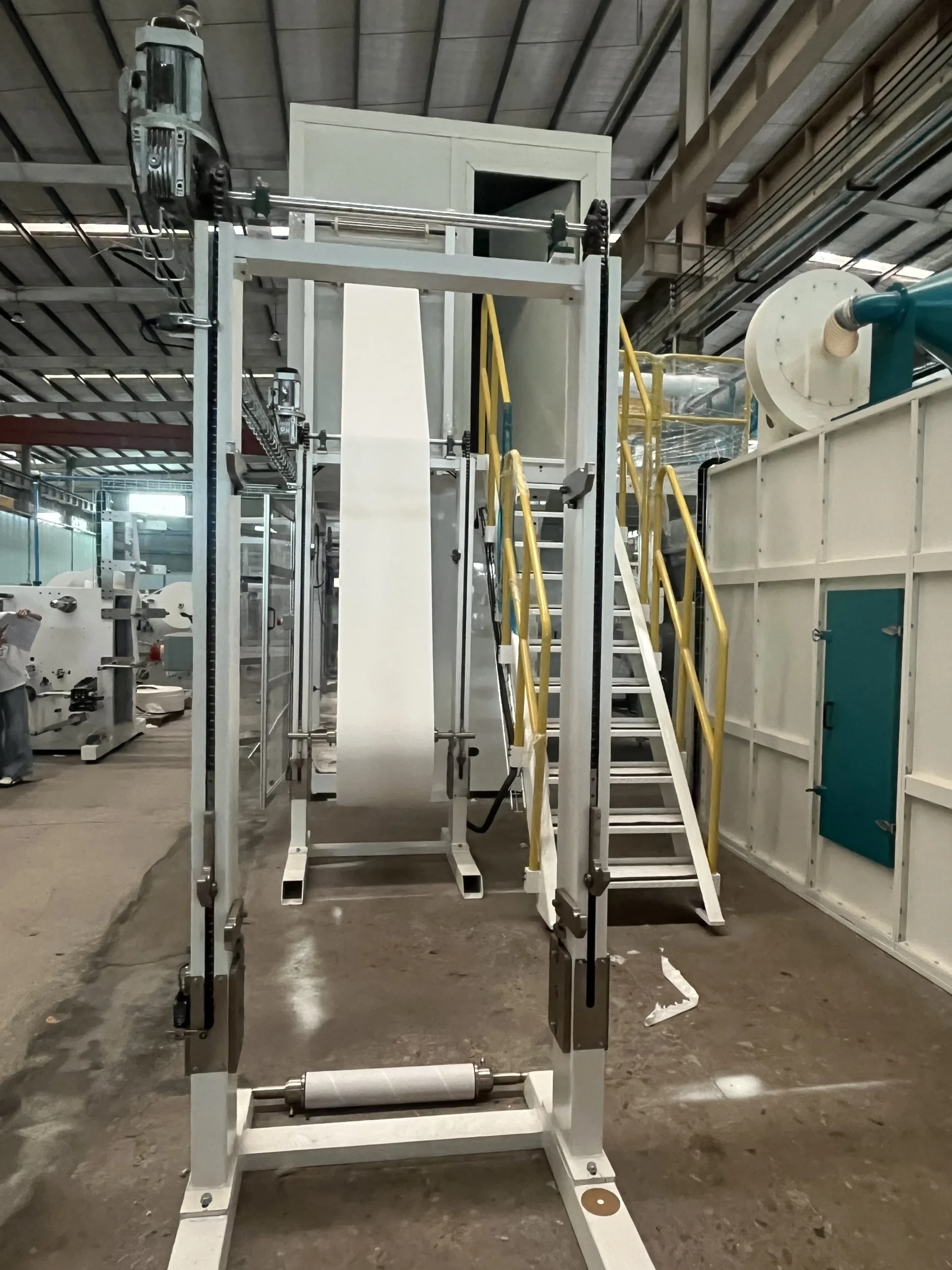
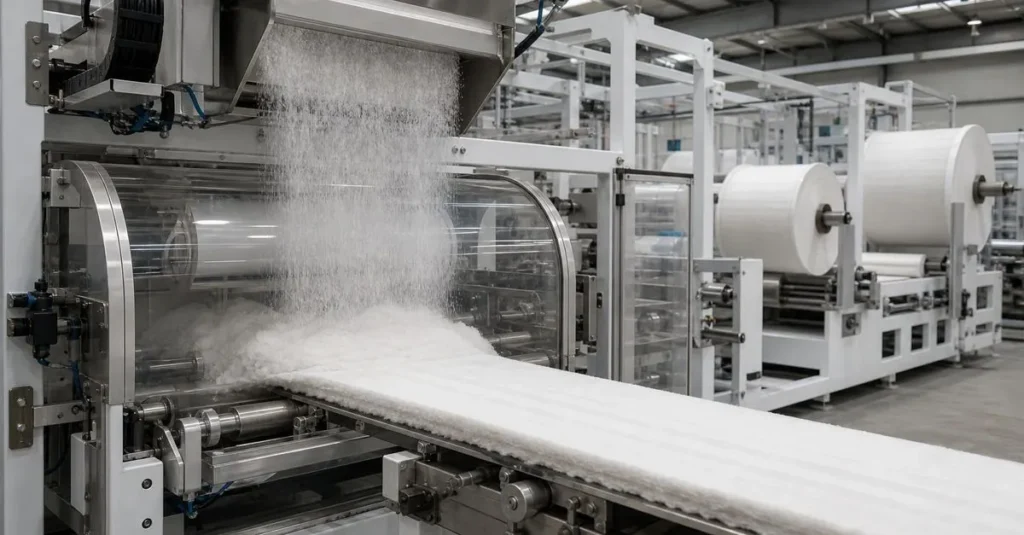
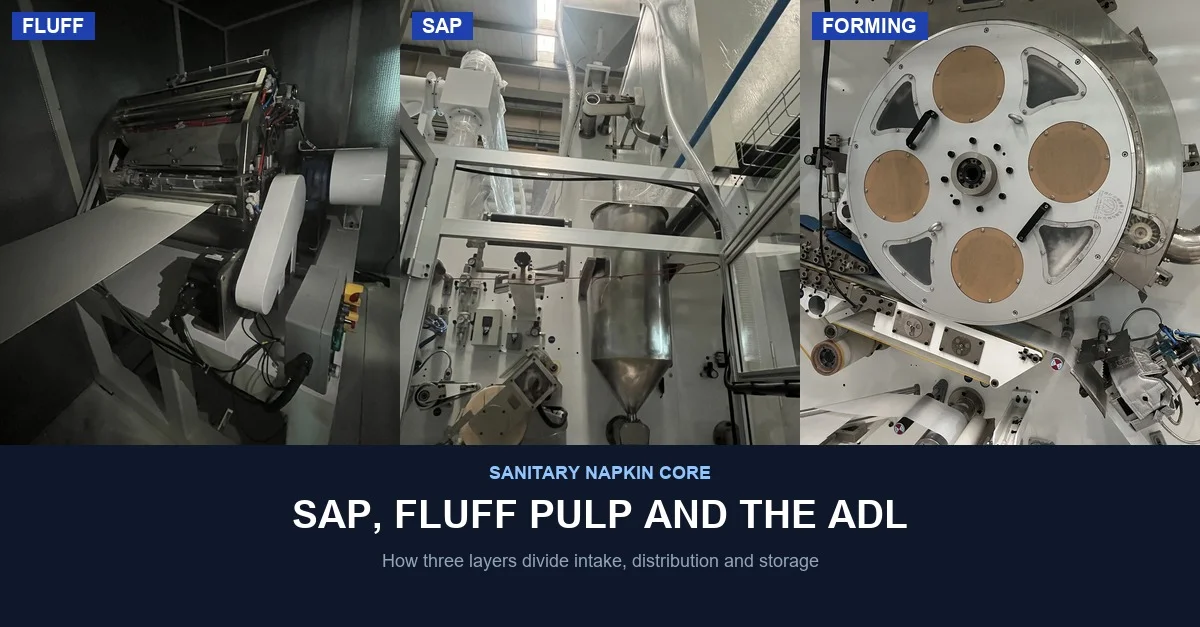
Fluff pulp enters the line as a compact roll or sheet, but it must become separated fibers before a core can be formed. The crusher opens the pulp, while the air system carries those fibers toward the forming section.
The quality issue is not simply “how much pulp.” Poor fiber separation produces dense clumps beside empty zones. Excess dust contaminates sensors and adhesive areas. A pulp batch that behaves differently from the material used during factory acceptance may force the operator to adjust crusher conditions and forming air before stable output returns.
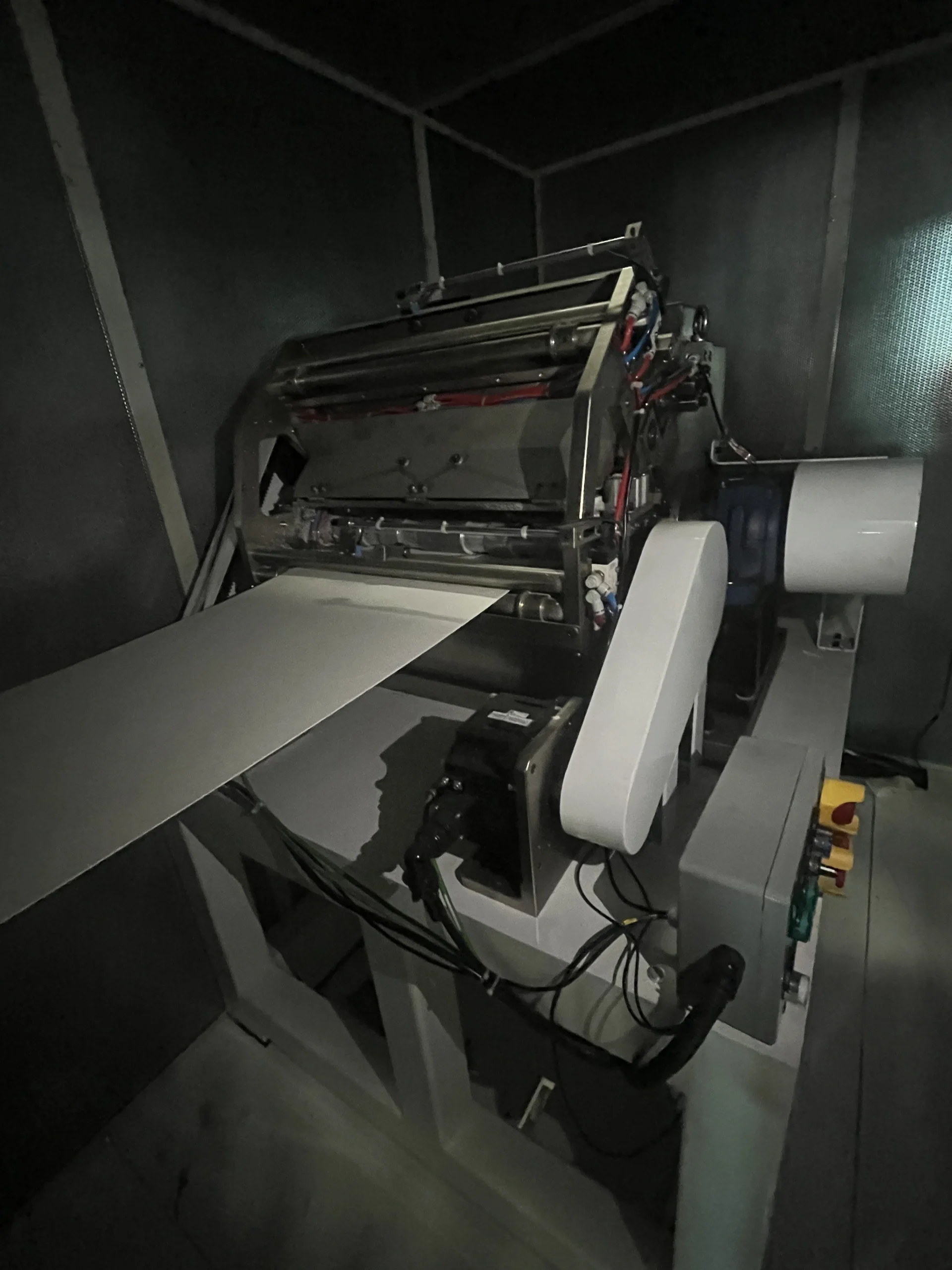
Not a paper-feed problem. A fiber-preparation problem.
SAP stores liquid — dosing stability matters first
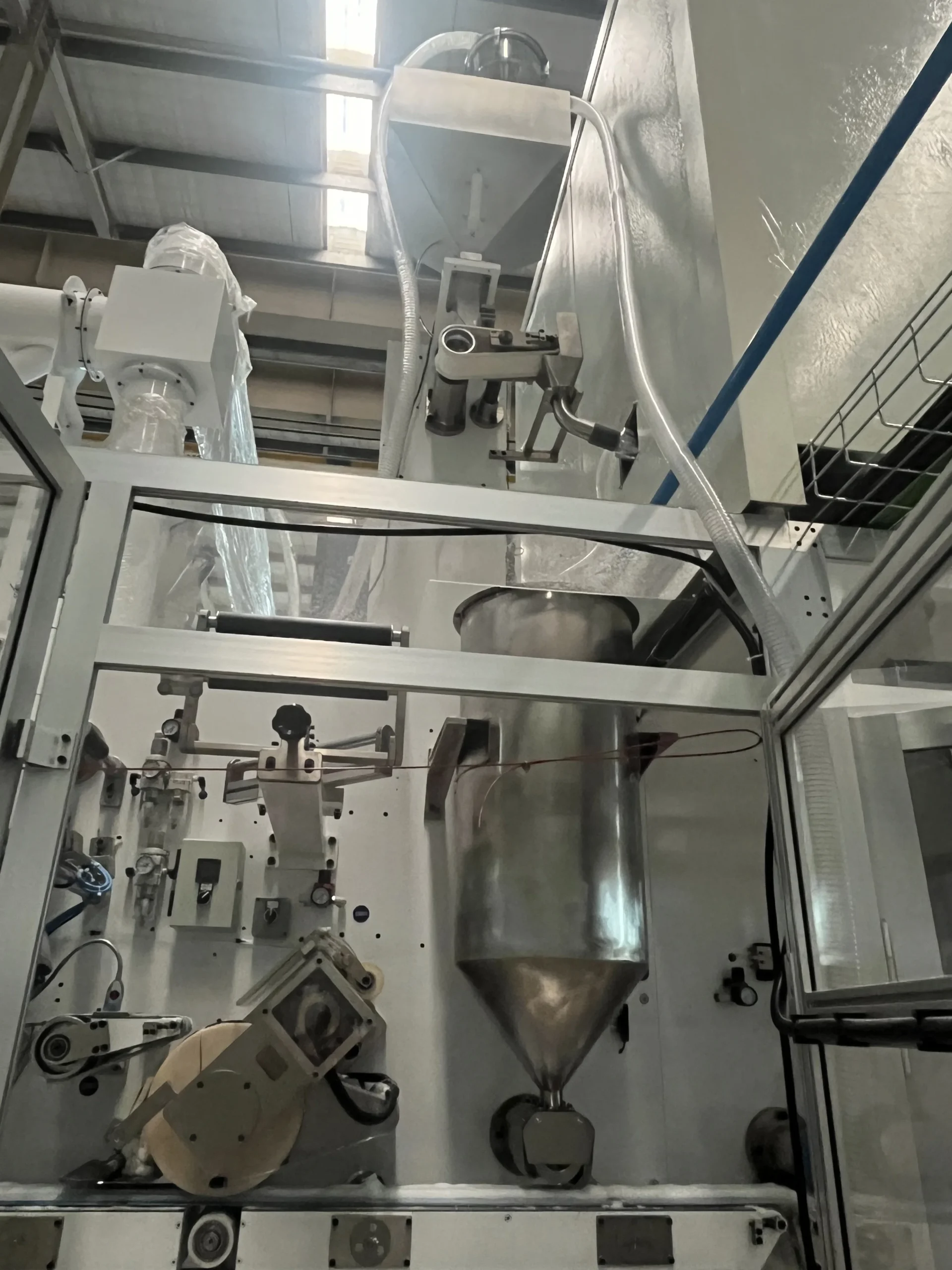
SAP is a granular storage material. Its particle size, absorption speed, retention behavior and flowability can differ between suppliers or batches, even when both materials carry the same generic name.
For the machine, flowability is the immediate concern. Material that bridges inside the hopper or feeds unevenly changes the mass delivered to the core. The product may still look correct, but pads from the same shift can behave differently in use.
The real question is not “How much SAP can the machine add?” It is “Can the dosing system hold the buyer’s target core recipe with the actual SAP grade that will run in the factory?”
ADL manages intake and distribution
The acquisition distribution layer sits between the topsheet and the storage core. Its job is to accept liquid quickly and spread it beyond the initial entry point before the fluff-and-SAP structure stores it.
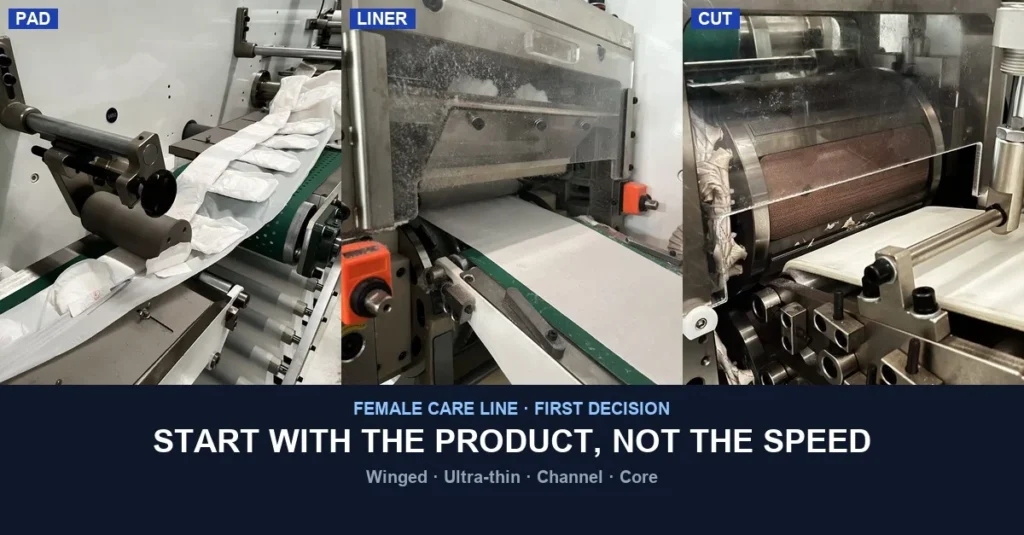
This distinction matters on the production floor. Adding an ADL changes the unwind count, web path, short-cut timing and lamination sequence. Its position must be written into the product specification because a layer placed outside the intended intake zone cannot perform the job the product designer expects.
ADL also has a process window. Under-lamination can allow the layer to shift. Excessive compression can reduce the open structure that the layer needs for distribution. The line must hold the layer without treating it like a storage sheet.
Why “more SAP” is not a complete answer
I believe buyers should reject any proposal that promises a better pad by increasing SAP alone. More storage material does not automatically improve the route liquid takes into the core.
A higher-SAP, lower-fluff design can support a thinner product, but only if the dosing system, forming path and layer structure are built for that recipe. If liquid enters faster than the core distributes it, the user may see local saturation before the unused storage area farther away contributes.
A heavier fluff structure can create more volume and softness, but it also changes forming density, compression and package bulk. The correct balance depends on product thickness, intake target, retention target, surface dryness target, material grade and local cost. There is no responsible universal percentage.
Specification boundary: this article does not prescribe a fixed SAP percentage, ADL GSM or core weight. Those values should come from the finished-product design, supplier material data and laboratory testing, then be confirmed on the actual production line.
Map the core design to the machine stations
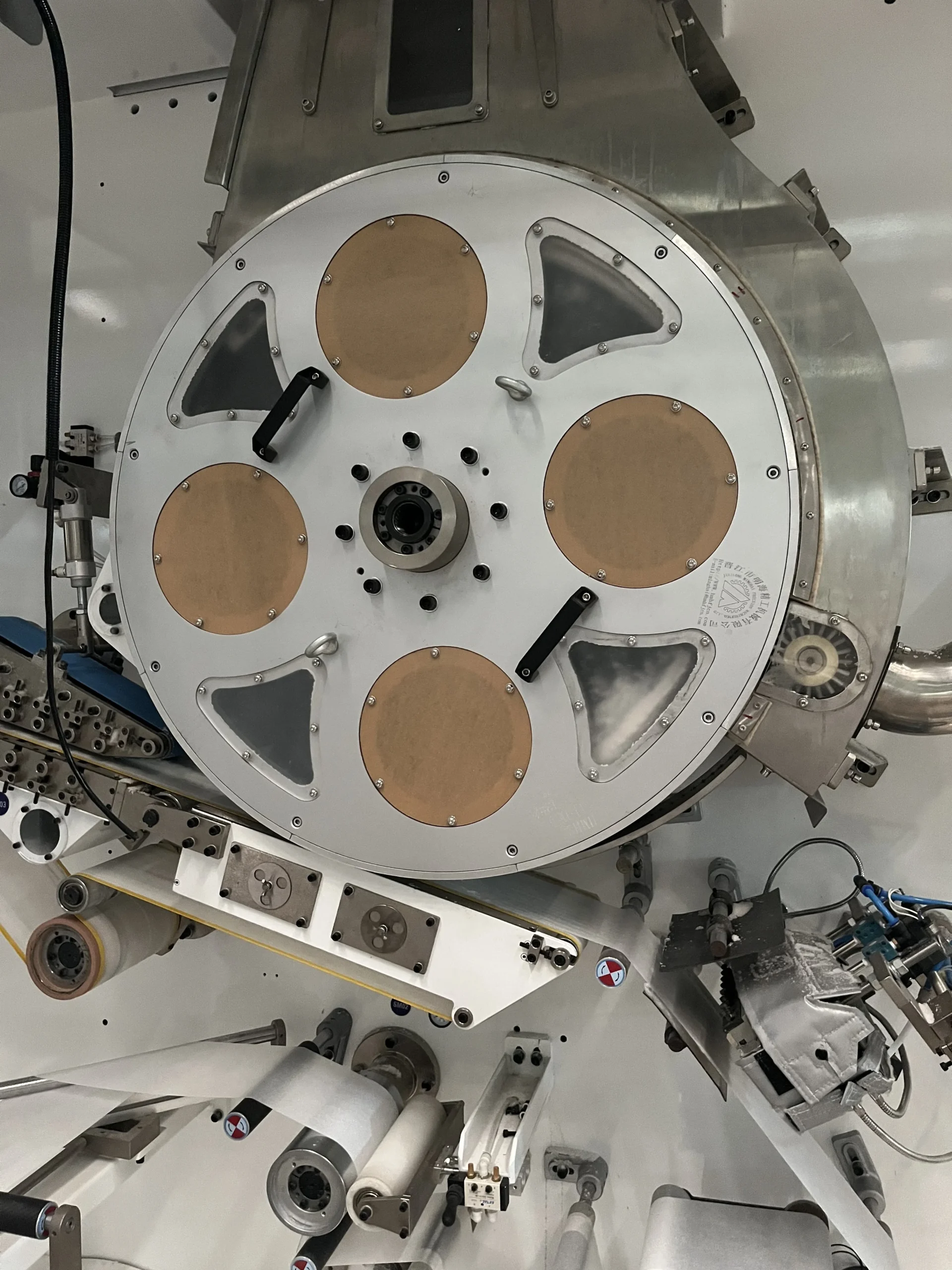
The buyer’s core description should translate into four machine questions:
- How is the pulp opened? The crusher and air system must handle the chosen fluff pulp grade without unstable fiber separation or excessive dust.
- How is SAP metered? The feeder must match the actual particle behavior and the permitted weight tolerance.
- How is the shape formed? The forming drum, mold profile and suction distribution must produce the requested core outline and thickness pattern.
- Where is ADL applied? The unwind, cutter and lamination station must place the layer at the specified position relative to the topsheet and core.
These are separate control tasks. A line can have a precise final contour cutter and still produce unstable cores if the material entering the forming drum changes. The same station-by-station logic also determines whether full servo or semi servo fits the sanitary napkin line.
Control the variation that arrives with every batch
A stable recipe can fail after installation when the local production materials do not behave like the trial materials. Two SAP grades can differ in particle distribution and flowability. Two fluff-pulp lots can create different dust levels or defiberization loads.
The correct response is not to keep one fixed machine setting and blame every new roll. Record the material batch, core target weight, dosing setting, forming-air setting and finished-product test result together. That creates a usable process window instead of a collection of operator guesses.
For a line designed around 900–1000 pcs/min stable production, small material changes repeat thousands of times before an operator sees the result at the end of the line. Batch control therefore starts at raw-material approval, not at final inspection.
Write a core specification that engineering can use
A purchase brief should separate performance requirements from construction choices. “High absorbency” is not a machine input. The following fields are.
| Specification field | What the buyer should define | Why engineering needs it |
|---|---|---|
| Finished core profile | Length, width, contour, thickness zones and whether channels are required | Determines forming mold geometry and downstream compression |
| Target core weight | Target and permitted tolerance per piece, confirmed by sample or BOM | Sets pulp feed, SAP metering and inspection criteria |
| Fluff pulp grade | Supplier data, roll size, batch tolerance and fiber-separation behavior | Affects crusher load, dust and forming stability |
| SAP grade | Supplier, particle range, absorption/retention test data and flowability | Affects hopper behavior, dosing repeatability and storage performance |
| ADL construction | Material, dimensions, position and layer count | Changes unwind, short-cut timing and lamination sequence |
| Product test criteria | Intake, rewet, retention and core-integrity methods used by the buyer | Connects machine settings to an agreed pass/fail result |
Send the material data sheets and physical samples before the machine configuration is frozen. The sanitary napkin specification checklist explains the broader product fields that should accompany the core brief.
Why Welldone
Welldone approaches the absorbent core as a machine-material-process system. The female care platform supports fluff pulp, SAP, nonwoven, release paper and adhesives, with modular forming, feeding and lamination sections.
Product-first configuration
Core geometry, material route and test criteria are reviewed before the forming and dosing sections are finalized.
Material matching
Trial materials and local production materials are compared so commissioning settings are tied to the real supply chain.
Production support
Welldone can provide overseas engineer support for installation, commissioning and training.
Conclusion
A sanitary napkin core is not a bag of SAP wrapped in pulp. Fluff forms the matrix, SAP stores liquid, and ADL manages the route into that storage structure.
The machine must keep those three jobs synchronized through defiberization, dosing, forming and lamination. If your next SAP batch flows differently or your fluff pulp creates more dust, which settings and test results will tell the operator whether the core is still inside the approved process window?
FAQ
Is there one recommended SAP ratio for every sanitary napkin?
No. The appropriate balance depends on the finished-product thickness, intake and retention targets, fluff and SAP grades, ADL design, material cost and laboratory test method. Use the sanitary napkin specification checklist to document the validated recipe instead of relying on a universal percentage.
What does fluff pulp do if SAP stores the liquid?
Fluff pulp creates the fibrous matrix that gives the core shape, carries SAP and provides liquid pathways. Its behavior also affects crusher load, dust and forming uniformity.
Is ADL part of the absorbent core?
ADL is normally a separate acquisition and distribution layer placed between the topsheet and storage core. Its application requires its own unwind, positioning, cutting and lamination controls.
Why should the SAP and pulp used for commissioning match local production materials?
Different batches and suppliers can change flowability, particle behavior, dust and fiber separation. Using the planned production materials helps the commissioning team establish settings that remain useful after installation.
Define the core before you freeze the machine configuration
Send your product sample, material data sheets and test criteria. Welldone will map them to the forming, dosing and ADL stations.
Discuss your core specificationView female care linesWebsite: www.cnwelldone.com Email: welldone@cnwelldone.com