Multi-Liquid Adult Pants Specification Guide | Welldone

Multi-Liquid Adult Pants: Freeze the Spec Before Quoting the Line
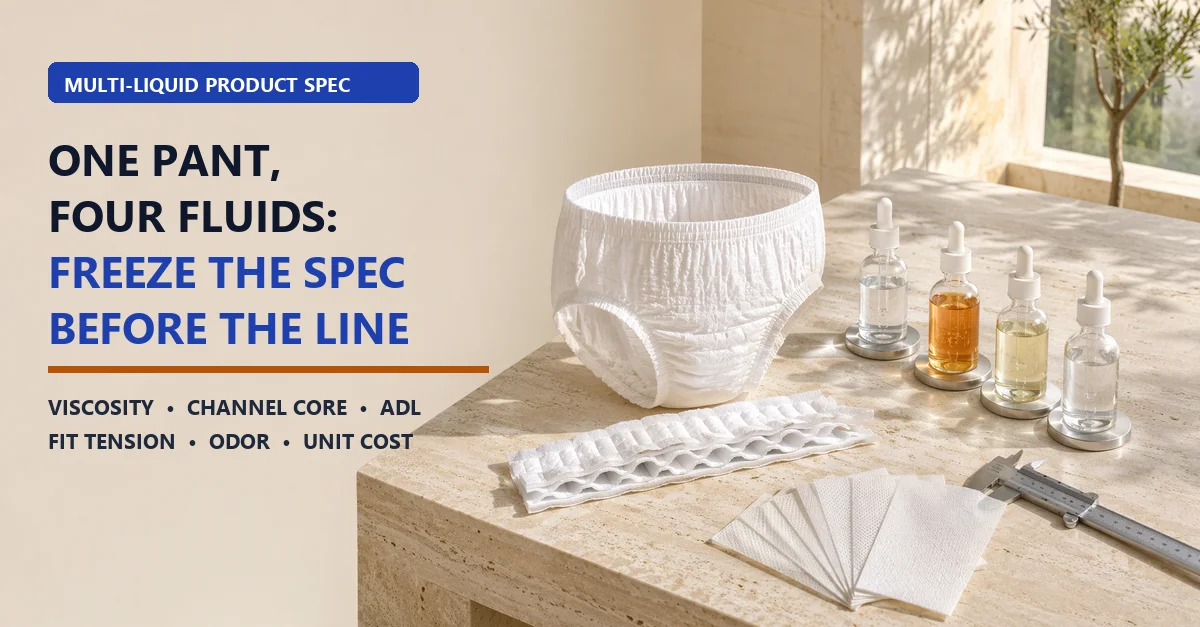
When a hygiene brand or retailer positions one disposable pant to handle bladder leaks, menstrual flow, vaginal discharge and sweat across postpartum and perimenopause stages, a conventional single-fluid diaper specification stops working. Low-viscosity urine and higher-viscosity menstrual fluid challenge the topsheet, acquisition layer and thin channeled core in opposite ways—while private-label retail pricing leaves almost no room for overbuilt materials.
1. What the November 2026 Multi-Liquid Adult Pants Launch Signals
On November 3, 2026, Belgian personal-care manufacturer Ontex announced that it is expanding its multi-liquid protection range with adult pants for European retailer own-brand programs, followed by coverage in Nonwovens Industry and Nonwovens News on November 4, 2026. According to the official release, the new pants build on the multi-liquid panty liner Ontex introduced in January 2026 and will later be joined by multi-liquid pads.
The product concept targets women whose absorbent hygiene needs overlap after childbirth and during perimenopause or menopause. Rather than forcing shoppers to choose between traditional feminine-care shelves and heavy incontinence aisles, the pants are designed to manage four distinct moisture sources within one garment: bladder leaks, menstrual flow, discharge and sweat.
The official release also published consumer survey findings from two studies that explain why European retailers are backing this cross-category format:
- Overlapping protection needs (Dynata study, 2025, 2,500 respondents in the UK and Germany): 78% of respondents reported a bladder-related change during perimenopause or menopause; 54% of women using absorbent protection experienced more than one protection need at the same time; and 62% saw strong value in a single product designed to manage different types of moisture or discharge.
- Feature and price sensitivity (Vypr Predict study, September 2026, approximately 490 women aged 45+ in the UK experiencing perimenopause or menopause): 51% identified comfort as an important product feature, 45% cited odor control, 44% highlighted affordability, and 41% reported changing their buying behavior because of cost.
- Reported structural attributes: Ontex states that the pants use its patented X-Core channel technology and combine an underwear-like fit with a thin and flexible absorbent core, softness, breathability, leak protection and odor control.
2. Keep the News Fact Boundary Separate from Engineering Translation
Evidence Boundary: The November 3, 2026 Ontex release and November 4, 2026 trade reports confirm the product positioning, the four target moisture types, the patented X-Core channel description, the European retailer own-brand model, and the Dynata and Vypr consumer survey percentages. They do not disclose Ontex's proprietary topsheet aperture size, ADL basis weight, SAP-to-fluff ratio, channel embossing geometry, odor-control additive, machine speed, converting equipment supplier, or unit manufacturing cost.
Welldone did not participate in the Ontex launch. Everything below is Welldone's independent engineering and supply-chain framework for B2B buyers who want to specify, source, or manufacture multi-liquid adult pants without guessing at line compatibility.
3. Why Four Fluids in One Thin Pant Create an Engineering Conflict
In a factory laboratory, standard adult pull-up qualification usually revolves around saline intake rate, total retention capacity and rewet under pressure. Menstrual pant qualification, by contrast, focuses on higher-viscosity fluid penetration, stain masking, central pad conformability and discreet underwear aesthetics. Combining both duties into a single garment exposes an immediate physical contradiction.
The real question is how the upper fluid-handling layers behave when a viscous discharge or menstrual event precedes a faster bladder leak. Urine behaves like a low-viscosity electrolyte solution that needs rapid vertical intake and immediate distribution along the core length so it does not pool at the crotch. Menstrual flow and thick vaginal discharge contain cellular matter and proteins with higher viscosity and surface tension; if the topsheet fibers and acquisition layer pores are too fine or overly hydrophobic, viscous fluid sits on the surface, blocks local capillaries, and causes the next gush of urine to run sideways toward the leg elastics.
Sweat adds a fourth variable: continuous water vapor and micro-moisture across the waist and hip zones. If the outer cover and waist laminate trap heat and humidity to prevent liquid strikethrough, skin microclimate humidity rises, softening the stratum corneum and making the garment feel clammy long before the absorbent core is full.
4. Freeze the Topsheet and Acquisition Layer (ADL) Pairing Window First
When buyers ask a machine supplier or OEM plant to reproduce a multi-liquid pant, they often start by asking for a heavier absorbent core. A common mistake is increasing fluff pulp or SAP dosing while leaving a standard diaper topsheet and narrow ADL unchanged. More SAP deep inside the core cannot help if higher-viscosity fluid never clears the topsheet-to-ADL interface.
To handle both viscous fluid and rapid low-viscosity releases, the buyer's specification package should lock four material-interface parameters before running a high-speed line trial:
- Topsheet open-area and hydrophilicity profile: Specify whether the topsheet uses a three-dimensional apertured nonwoven, a zoned hydrophilic treatment, or an air-through-bonded (ATB) structure that lets viscous fluid pass without collapsing under body weight.
- ADL pore gradient and width coverage: The acquisition and distribution layer must bridge the gap between open topsheet pores and denser absorbent core fibers. If the ADL is cut too narrow or shifts during high-speed web feeding, fluid hitting the front or rear transition zone bypasses the transfer layer entirely.
- Inter-layer construction adhesive pattern: Heavy full-coat hot-melt adhesive between the topsheet and ADL acts as a partial liquid barrier. Multi-liquid products require a controlled spiral, slot, or multi-stripe adhesive window with verified open area so adhesive filaments do not blind the intake zone.
- Sequential multi-fluid lab protocol (Illustrative example only): Instead of testing saline and viscous test fluid on separate samples, run a combined sequence on the same sample—first applying a viscous menstrual/discharge simulant at the center intake zone, waiting a defined dwell interval, and then applying a low-viscosity saline dose under load to measure secondary strikethrough time and surface retention.
5. Channeled Thin Core: Balancing Underwear Discretion and Wet Integrity
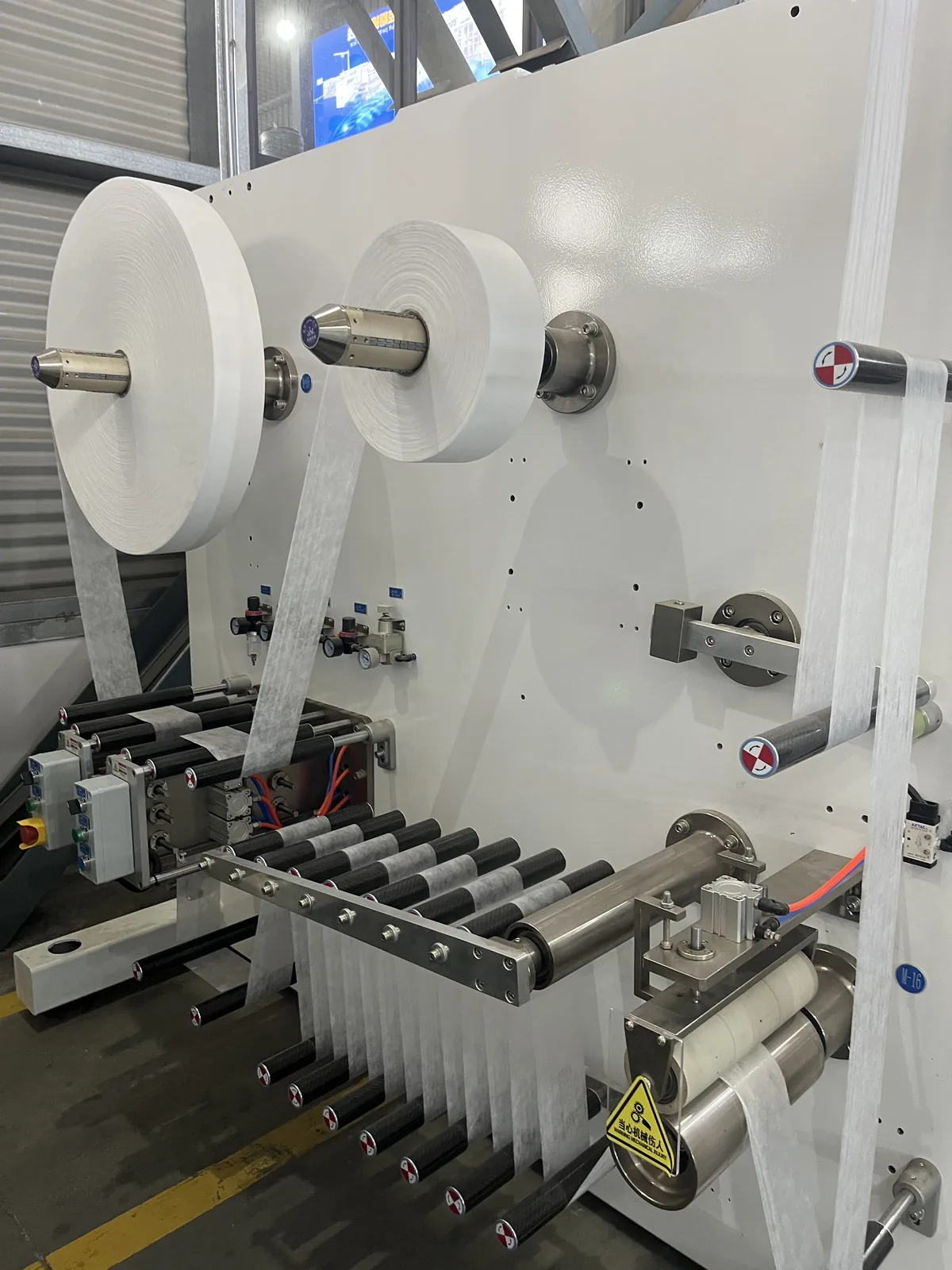
The November 2026 announcement highlights a thin, flexible absorbent core with channel technology so the pant wears like everyday underwear rather than a bulky clinical brief. From a converting-machine standpoint, a thin channeled core changes how the forming drum, core wrapping, pressing and embossing stations interact.
In a conventional thick adult brief, loose fluff pulp provides bulk cushion and temporary void volume. When the core is thinned down for postpartum or perimenopause everyday wear, SAP concentration typically rises and channel grooves must do two jobs at once: create longitudinal fluid highways and allow the crotch section to fold naturally between the wearer's thighs without bunching or cracking.
- Channel pocket definition on the forming drum: If the forming drum vacuum pockets or SAP dosing timing drift across the machine cycle, high-SAP zones can migrate into the channel seal lines, preventing clean channel formation or causing hard gel blocking when wet.
- Core wrap tension and wet-strength containment: Thin cores rely on tissue or nonwoven core wrap to hold swollen SAP in place. If core-wrap overlap or sealing glue is inconsistent, repeated movement during daytime wear causes the core to split along the embossed channel edge.
- Embossing nip pressure vs. fiber damage: Channel embossing requires enough pressure and thermal stability to keep the fluid-guiding grooves intact after wetting, but excessive nip pressure can crush the core wrap or create stiff ridges that violate the 51% consumer priority on comfort.
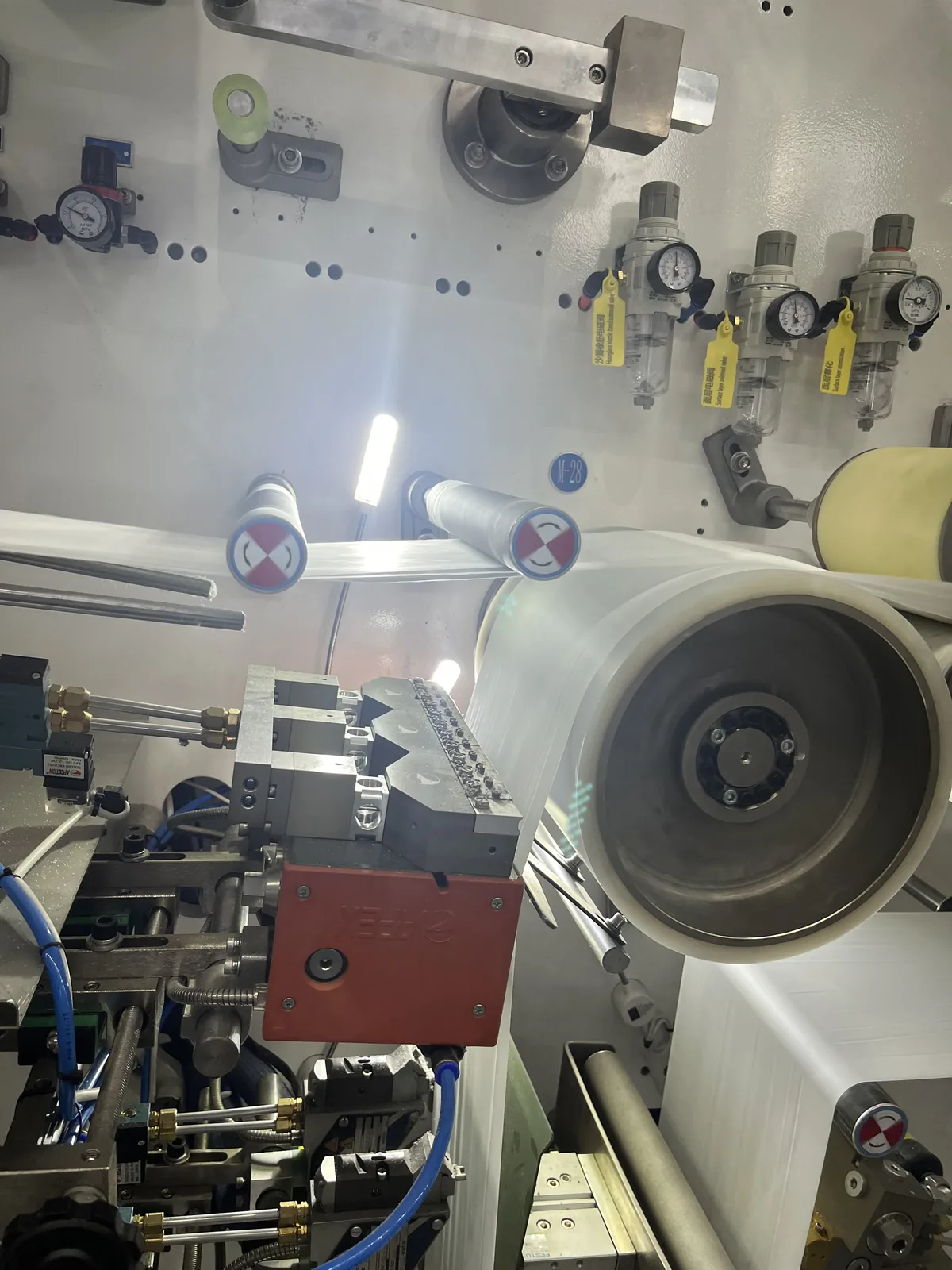
6. Underwear-Like Fit, Breathability and Odor Control Interfaces
Because multi-liquid pants are worn by active women managing overlapping postpartum or perimenopause needs—not bedbound patients—fit geometry and microclimate control directly determine whether the product leaks or feels discreet under clothing.
In most cases, edge leakage in a thin multi-liquid pant starts as a fit-recovery failure rather than a total core-saturation failure. When a wearer sits, bends, or walks, a high-viscosity release stays near the surface longer than urine. Any gap at the inner leg cuff or groin crease allows fluid to smear onto the leg elastic before vertical absorption finishes.
Four Mechanical & BOM Interfaces Behind "Underwear-Like Fit and Odor Control"
Use these four checkpoints to translate consumer comfort and odor claims into measurable machine and material specifications:
1. Zoned Waistband Elastic Pre-Stretch
Multi-strand waistband spandex or elastic film must hold the pant securely against the body during movement without leaving red pressure marks. Verify individual strand tension control and splice stability during roll changes.
2. Breathable Backsheet MVTR vs. Pinholes
Sweat management requires a breathable PE film + nonwoven laminate with verified moisture vapor transmission rate (MVTR), paired with gentle unwinding tension so thin microporous film does not stretch into liquid pinholes.
3. Odor-Control Dosing Method
Whether odor control comes from pH-buffered SAP, treated fluff pulp, or a specialized acquisition layer, freeze the exact carrier layer and dust-control requirement so dosing remains uniform at production speed.
4. Anatomically Contoured Leg Die-Cut
An underwear-like silhouette depends on clean rotary die-cutting and balanced leg-cuff height. Asymmetric die-cut trim or unstable web tension twists the crotch panel and breaks leg-gasket contact.
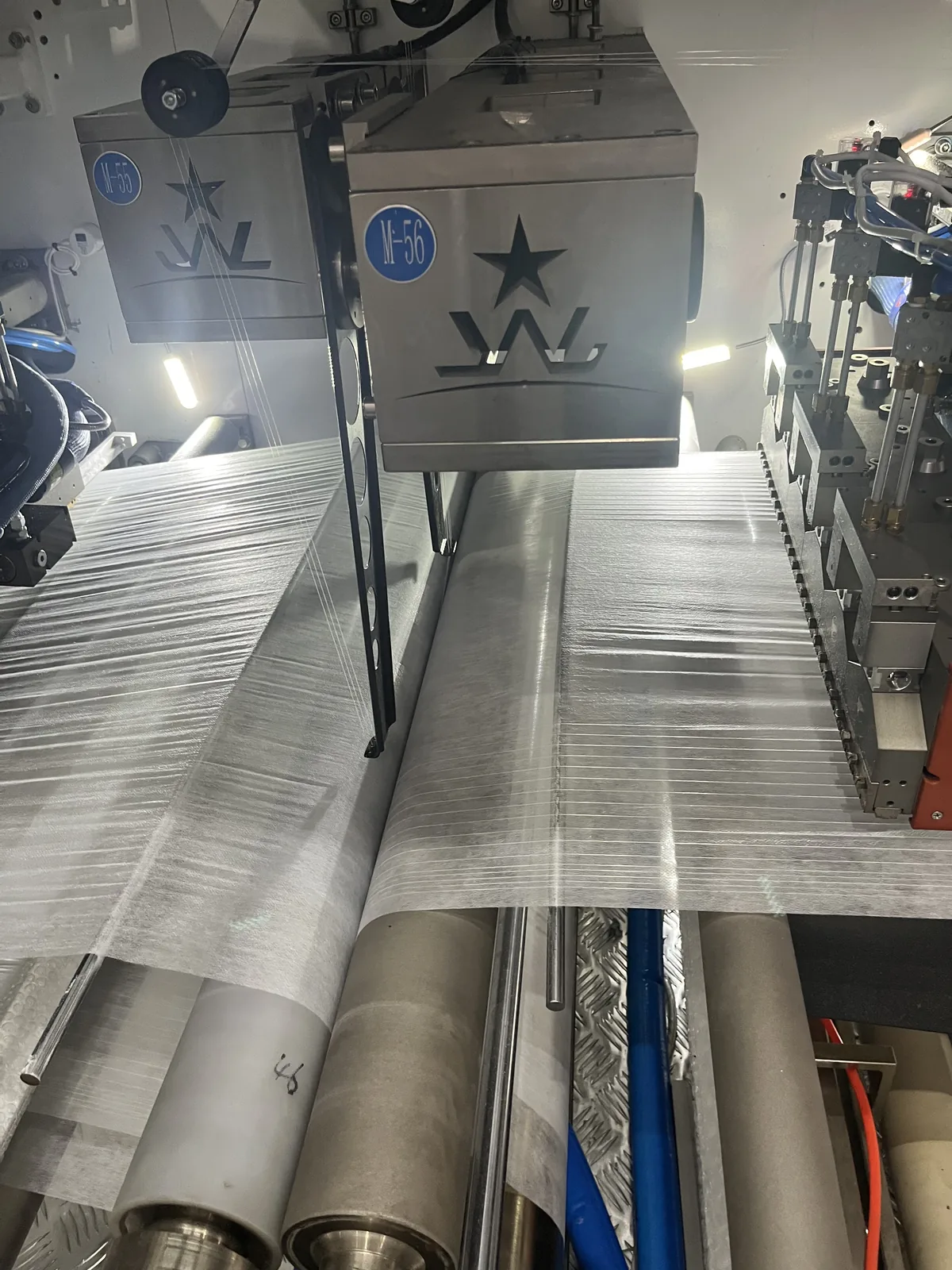
7. Existing Adult Pull-Up Line, Menstrual Pant Line, or Modular Retrofit?
One of the most practical capital decisions raised by cross-category multi-liquid pants is which machine platform should produce them. Depending on target hip-size range and core thickness, manufacturers typically evaluate three routes across their adult care machinery and female care production lines:
- Route A — Run on an existing adult pull-up diaper line: Best when the target SKU covers medium-to-plus adult hip sizes and requires moderate-to-high bladder capacity. However, standard adult pull-up lines built for thick institutional briefs may need a thinner channeled forming drum, a dedicated embossed channel roller, finer ADL tension control, and tighter folding tolerances for retail compact packs.
- Route B — Run on a menstruation pant making machine: Best when the product is ultra-thin, targets smaller-to-large retail underwear sizes, and prioritizes soft waist lamination and compact individual or retail folding. The limitation is core thickness and SAP dosing capacity if the buyer also promises heavier bladder-leak retention.
- Route C — Specify a multi-format servo line with quick-change core and embossing modules: For private-label contract manufacturers supplying multiple retail chains, a full-servo platform with recipe-controlled SAP dosing, interchangeable core/embossing molds, and precision web guiding allows one line to switch between standard adult pants and thin multi-liquid pants without rebuilding the frame.
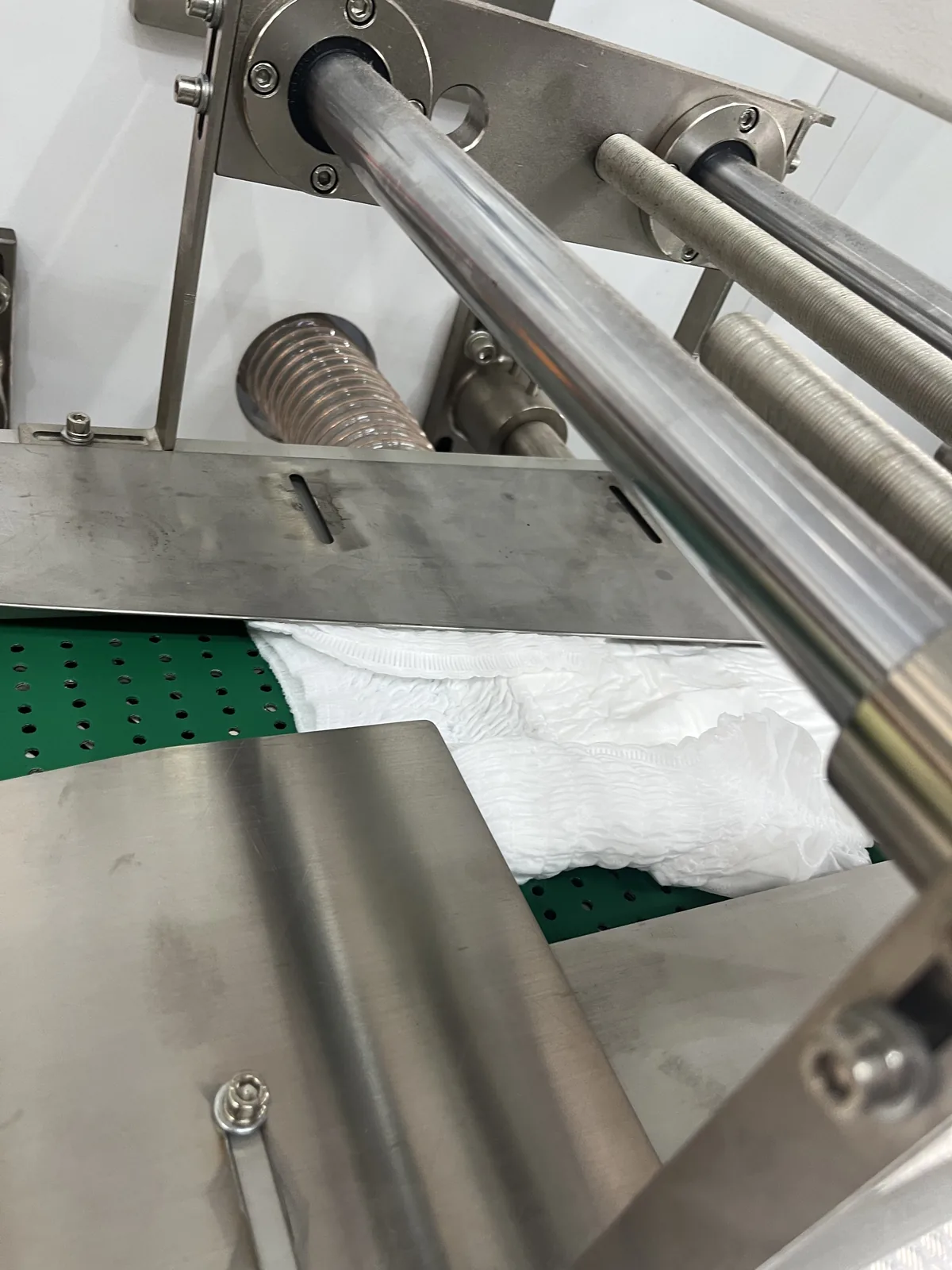
8. Protecting Retailer Own-Brand Affordability Without Creating Scrap
The Vypr survey numbers reported by Ontex should be read carefully by every private-label supplier: 44% of surveyed women viewed affordability as an important product feature, and 41% had already changed their buying behavior because of cost. In retail own-brand tenders, a technically clever pant that costs too much per piece will lose shelf space just as quickly as a pant that leaks.
I believe the most reliable way to protect private-label unit cost is to control material standardization and startup scrap rather than buying the cheapest unstable web. When a factory downgrades nonwoven tensile uniformity or backsheet film gauge without matching machine tension and splice controls, every web break or adhesive bleed event destroys dozens of high-value composite pants per minute. As we detail in our guide on raw material quality and machine stability, locking a stable middle-tier BOM with ≥98% qualified throughput almost always beats a fragile low-cost BOM that triggers frequent stops and manual sorting.
9. Multi-Liquid Adult Pants Specification & Line Compatibility Matrix
Use the matrix below during product development, OEM contracting, or machine specification to connect each multi-liquid functional requirement with its BOM parameter, machine station, and factory acceptance evidence.
| Functional Requirement | Primary Fluid & Wear Challenge | BOM & Structure Parameter to Freeze | Critical Machine Station Interface | Release & FAT/SAT Verification Evidence |
|---|---|---|---|---|
| Dual-viscosity acquisition | Viscous menstrual flow or discharge blinding topsheet pores before a fast bladder leak | Topsheet aperture/hydrophilicity + ADL basis weight, width, and open-glue window | Topsheet unwinder, ADL infeed servo tension, and spiral/slot construction glue applicator | Sequential viscous-then-saline strikethrough time and surface retention check across roll positions |
| Thin channeled core integrity | Core bunching, gel blocking, or channel collapse during active daytime movement | Channel pocket geometry, SAP-to-fluff ratio, core wrap tensile strength, and embossing depth | 3D forming drum vacuum zones, SAP dosing drive, core wrap sealer, and embossing roller nip | Dry/wet core thickness profile, channel registration tolerance, and dynamic shake/flex test |
| Underwear-like close fit | Gapping at groin or waist slip when sitting, walking, or transitioning postures | Waistband spandex decitex/pre-stretch, leg-cuff standing height, and contoured die-cut curve | Multi-strand elastic feeder, waistband lamination nip, 3D leg-cuff folder, and rotary die-cutter | Size-by-size waist extension/recovery curve, leg-cuff symmetry check, and zero-creep hold test |
| Sweat & odor management | Heat buildup, clammy skin feel, and ammonia or organic odor over multi-hour wear | Breathable backsheet MVTR, hydrohead resistance, and designated odor-control carrier layer | Low-tension film unwinder, breathable lamination bonding unit, and enclosed dust/SAP dosing zone | Laminate MVTR and hydrohead test after converting nip + sensory/pH stability check on finished lots |
| Retail own-brand cost & pack quality | Margin pressure from retail price ceilings and bag distortion in high-density retail shelving | Standardized nonwoven roll widths, splice survival rate, folded pant dimensions, and bag compression ratio | Auto-splicing unwinders, vision inspection + auto-reject, blade folding unit, and stacker/bagger handover | Sustained run yield check, splice waste audit, and post-compression recovery inspection after 48 hours |
10. Why Welldone: Equipment, BOM Matching and Supply-Chain Coordination
Developing a cross-category hygiene product for postpartum, perimenopause, or light-to-moderate adult care requires more than buying a standalone machine or ordering generic raw materials in isolation. JINJIANG WELLDONE MACHINE CO., LTD. (operating in hygiene machinery projects since 2008) supports manufacturers, private-label producers, and hygiene product buyers across three practical dimensions:
- Production Line & Mold Engineering: We supply full-servo, semi-servo, and mechanical production lines for adult pull-up diapers, menstruation pants, sanitary pads, panty liners, and underpads—including custom core forming molds, channel embossing rollers, and precision laminating units tailored to thin or high-absorbency structures.
- Raw Material & BOM Matching Support: When a project requires coordinated sourcing of nonwovens, ADL, breathable PE backsheet film, SAP, fluff pulp, spandex, or hot-melt adhesives, our team helps match incoming material specification windows to the converting line's tension, bonding, and cutting stations.
- Finished Hygiene Product & Trial Coordination: For buyers evaluating market entry through finished hygiene goods or staged local manufacturing, we can assist in aligning product structure specifications, sample verification protocols, and equipment selection. Exact machine configurations, material grades, finished-product availability, certifications, MOQs, and delivery terms are confirmed per project inquiry.
11. Actionable Buyer Checklist Before Freezing a Multi-Liquid Pant Project
8-Step Pre-Quotation & Qualification Checklist
- Define the target fluid ratio and sequence: Document whether the SKU is weighted toward light-to-moderate bladder leaks with menstrual overlap or heavy overnight incontinence, and write a two-fluid sequential lab test before comparing samples.
- Freeze topsheet + ADL + glue open area together: Never qualify the topsheet, acquisition layer, and construction adhesive pattern as separate purchasing items.
- Specify dry and wet core thickness alongside channel geometry: Lock the target dry thickness, channel width/depth, and post-wetting core integrity requirement so the forming drum and embossing roller can be quoted accurately.
- Verify odor-control location and dust containment: Confirm whether odor control resides in the SAP, core wrap, or ADL, and ensure the dosing station maintains uniform distribution without contaminating seal zones.
- Match breathable backsheet tension to hydrohead limits: Test breathable film + nonwoven laminates after passing through the machine's actual unwinder and lamination nip to ensure micro-stretching does not cause strikethrough.
- Choose the right machine platform early: Compare hip-size range, core weight, and pitch length against an adult pull-up line versus a menstruation pant line before signing equipment drawings.
- Audit splice waste and material standardization for retail own-brand targets: Standardize roll widths and nonwoven grades across sizes where possible to protect OEE and unit cost.
- Tie FAT/SAT acceptance to finished-pack recovery: Verify that thin channeled pants survive folding, stacking, and bag compression without permanent channel crease or waist-elastic distortion.
12. Source & Date
Verified News & Research Sources Used in This Article:
- Ontex Official Press Release (November 3, 2026): Ontex expands multi-liquid protection to support women through changing life stages (Aalst, Belgium) and Official PDF Release (03/11/2026).
- Nonwovens Industry (November 4, 2026): Ontex Brings Multi-Liquid Protection to Pants Product.
- Nonwovens News (November 4, 2026): Ontex expands X-Core multi-liquid protection range.
- Background Liner Launch Reference — Nonwovens Industry (January 22, 2026): Ontex Launches Multi-Liquid Liner in Europe.
13. Frequently Asked Questions (FAQ)
Q1: Why can't a standard adult incontinence pull-up simply be relabeled as a multi-liquid pant?
Standard adult incontinence pull-ups are optimized for rapid, low-viscosity saline/urine intake and often use thicker fluff-SAP cores. When higher-viscosity menstrual flow or discharge hits a tight topsheet or an unmatched ADL, it can remain on the surface and partially block local pores, slowing down the next bladder-leak absorption and increasing side-leakage risk.
Q2: Should multi-liquid adult pants be produced on an adult pull-up line or a menstruation pant machine?
It depends on the target size window and total fluid capacity. If the product requires broader adult hip sizing and higher bladder retention alongside menstrual protection, a servo adult pull-up line with a thin channeled core drum and embossing unit is typically preferred. If the product is ultra-thin and sized closer to feminine underwear with lighter bladder requirements, a menstruation pant line may fit better.
Q3: How does channel technology help in a thin multi-liquid core?
Embossed or molded channels guide liquid longitudinally across a larger core area, help prevent wet core sagging or clumping between the legs, and allow a thinner core to flex naturally with the body so the pant feels closer to regular underwear.
Q4: Can Welldone support both production equipment and raw material / BOM matching for this product category?
Yes. Welldone provides customized adult pull-up and feminine-care production lines, custom core and embossing molds, and technical support for matching raw materials (nonwovens, ADL, breathable films, SAP, spandex, adhesives) or evaluating finished product specifications. Specific supply scopes, parameters, and commercial terms are confirmed through direct project inquiry.
14. Discuss Your Adult Pull-Up or Multi-Liquid Pant Project with Welldone
Whether you are planning a new adult pull-up or menstruation pant production line, retrofitting a channeled core and embossing module, or matching raw materials and product specifications for a private-label tender, send us your target product sample, size range, and capacity goals for an engineering review.
- Contact: https://cnwelldone.com/contact-us
- Website: www.cnwelldone.com
- Email: welldone@cnwelldone.com