Baby Pull-Up Diaper Waistband System Explained | Welldone

Baby Pull-Up Diaper Waistband Systems: Elastic Feeding, Lamination and Sealing
A pull-up diaper leaves the line with an even-looking waist. Ten minutes later, an operator stretches both sides by hand and one side recovers faster. The defect may have started at the elastic rack, a changing roll diameter, a shifted web or the seam—not at the final product.
A waistband is not one station. It is a chain of synchronized material and bonding decisions.
Starting a Baby Pull-Up Diaper Manufacturing Business · Part 2 of 7
Part 1: Choose the 2-piece or 3-piece product structure.
Part 2 — this article: control elastic feeding, waistband lamination and side sealing.
Next: fluff pulp, SAP and core-forming compatibility.
Part 1: Choose the 2-piece or 3-piece product structure.
Part 2 — this article: control elastic feeding, waistband lamination and side sealing.
Next: fluff pulp, SAP and core-forming compatibility.
One waistband, five separate control tasks
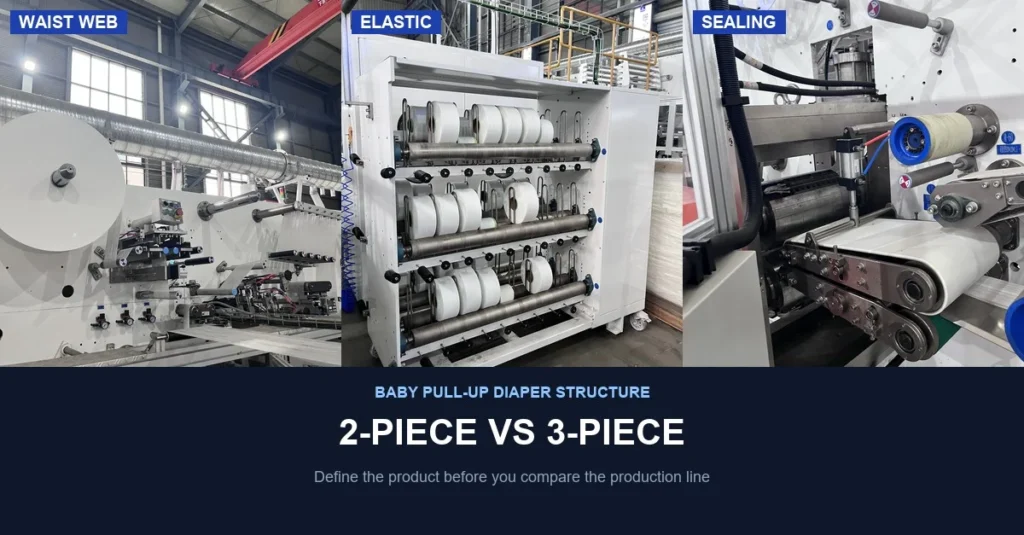
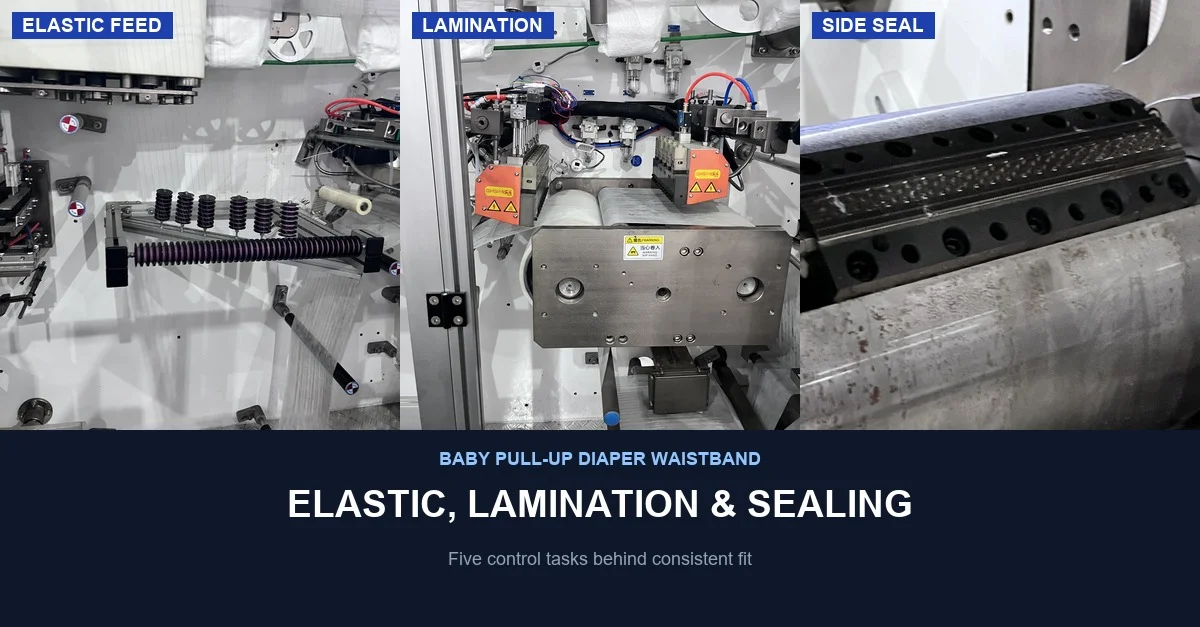
Actually, “waistband system” is too broad for a technical agreement. It can hide five different tasks: outer web feeding, elastic delivery, inner web feeding, lamination and final seam formation.
Each task creates a different defect when it drifts. A web-tracking error shifts coverage. Elastic tension changes contraction. Lamination variation creates loose zones. A sealing fault turns an otherwise correct pant into a reject after nearly all material has already been added.
| Control task | What must remain stable | Visible factory symptom | Evidence to collect |
|---|---|---|---|
| Outer web feeding | Web position and feed behavior | Waist layer shifts sideways | Roll specification and edge-position record |
| Elastic feeding | Strand path and relative stretch | Uneven gathers or asymmetric recovery | Elastic grade, layout and recovery method |
| Inner web feeding | Width, centering and tension | Elastic is exposed or coverage is uneven | Inner-web width and material data sheet |
| Lamination | Layer alignment and bond continuity | Loose channels or local delamination | Bond inspection and peel method |
| Side sealing | Seam position and bond window | Open seam, hard seam or poor tear behavior | Seam test on production materials |
The outer waistband web sets the first reference
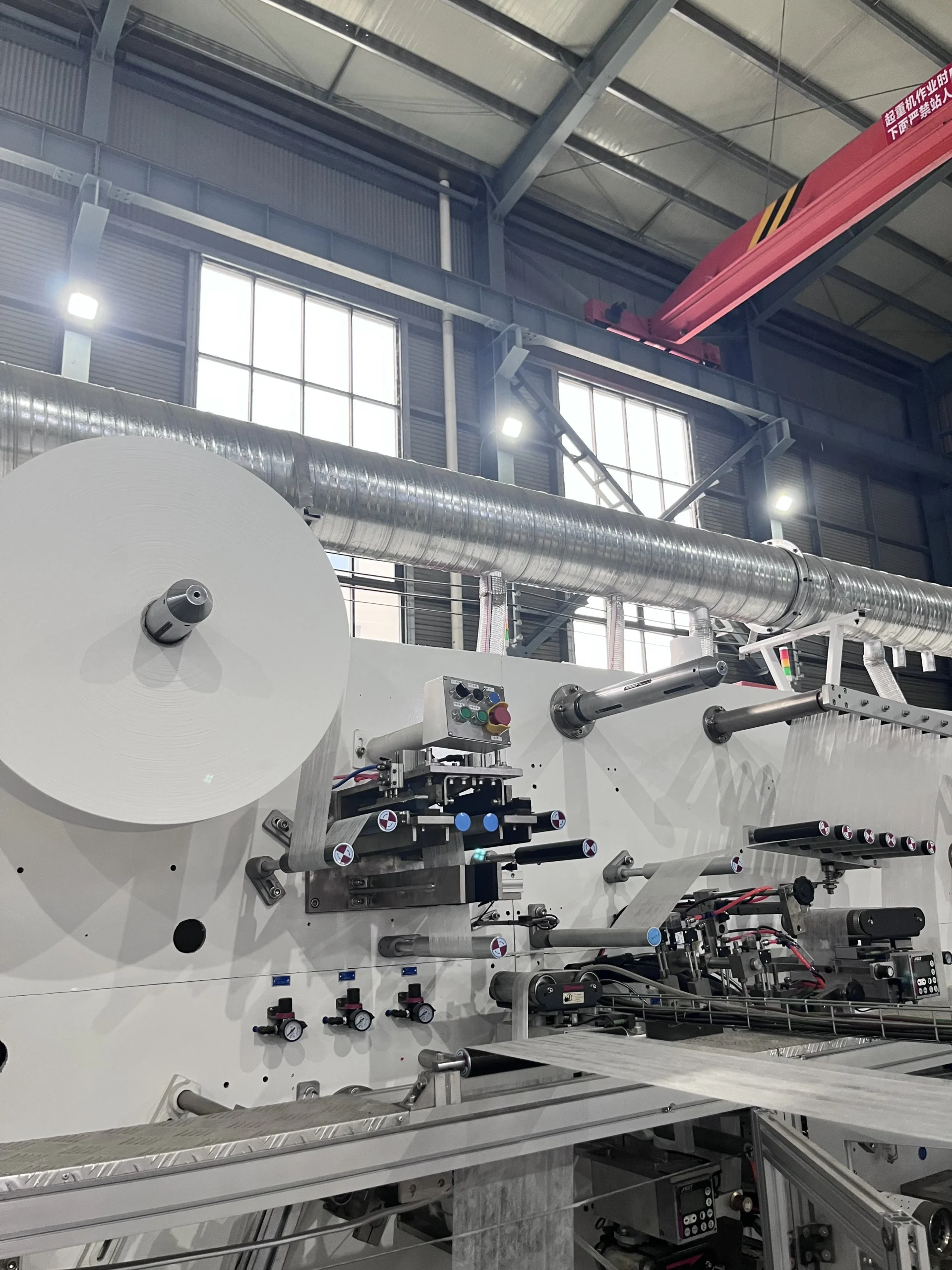
The outer nonwoven is the visible skin of the waist section. If it wanders before the elastic enters, every downstream correction becomes a compromise.
A roll can meet the ordered width and still behave differently because thickness, winding hardness or surface friction has changed. The material and the machine have to be evaluated together. Welldone’s material-matching guidance makes the same point: stable production depends on how raw material behaves inside the configured line, not only on the name printed on the data sheet.
More importantly, record what happens as the roll diameter decreases. A setting that is stable on a full roll but shifts near the core is not a stable production setting.
Elastic feeding controls fit before the waist is visible
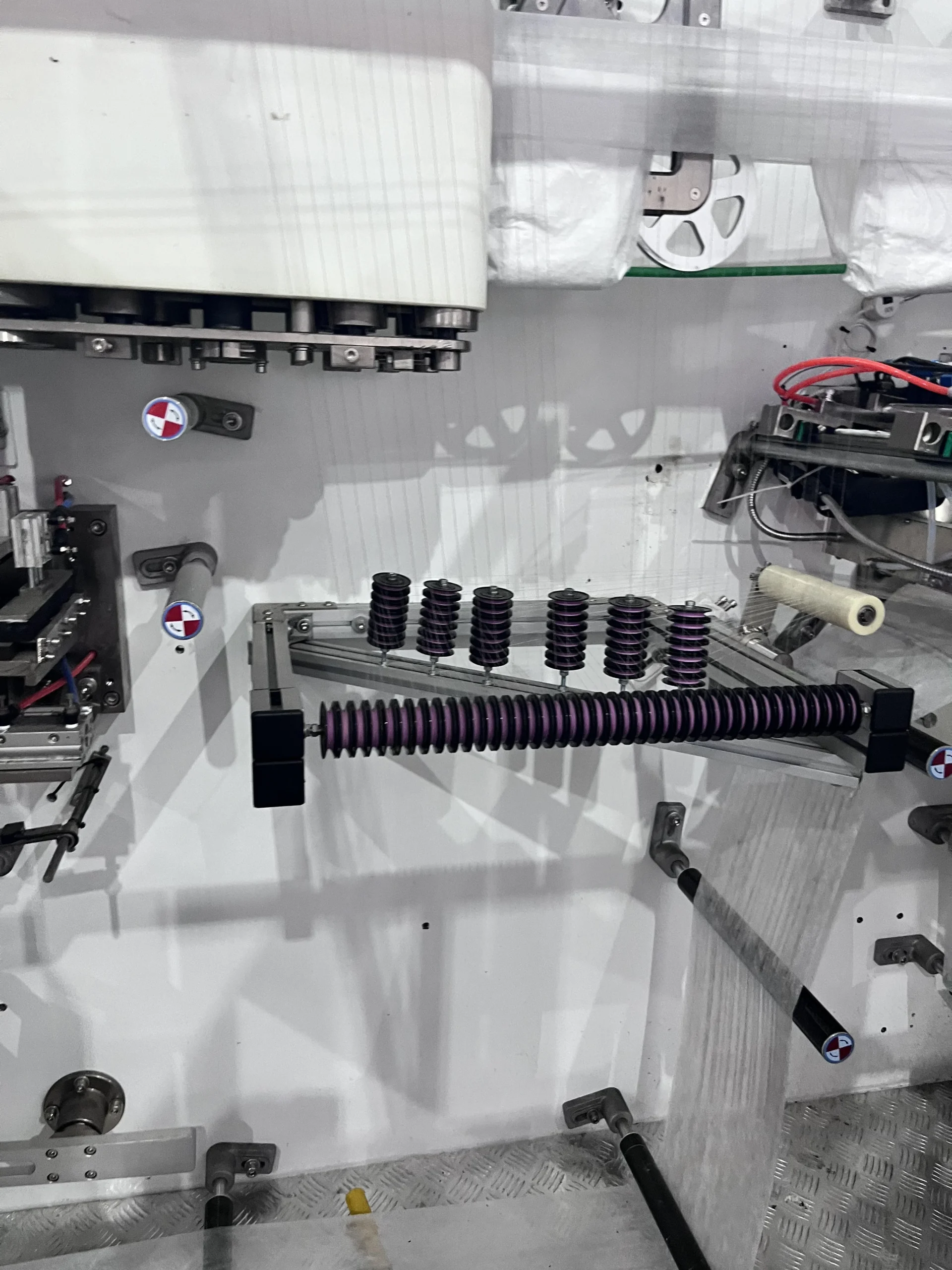
The elastic rack is where a future fit problem first becomes measurable. Multiple strands travel through separate guide paths and then enter a moving nonwoven web.
Do not specify only the number of strands. Define the elastic grade, strand map, intended waist circumference, recovery test and allowed left-right difference. Without that product test, operators can adjust tension until the pant “looks right” while changing the fit from batch to batch.
The real question is not how many elastic packages the rack can hold. It is whether all active strands reach the lamination point with repeatable behavior across startup, acceleration, roll depletion and material replacement.
The inner web must cover the elastic without fighting it
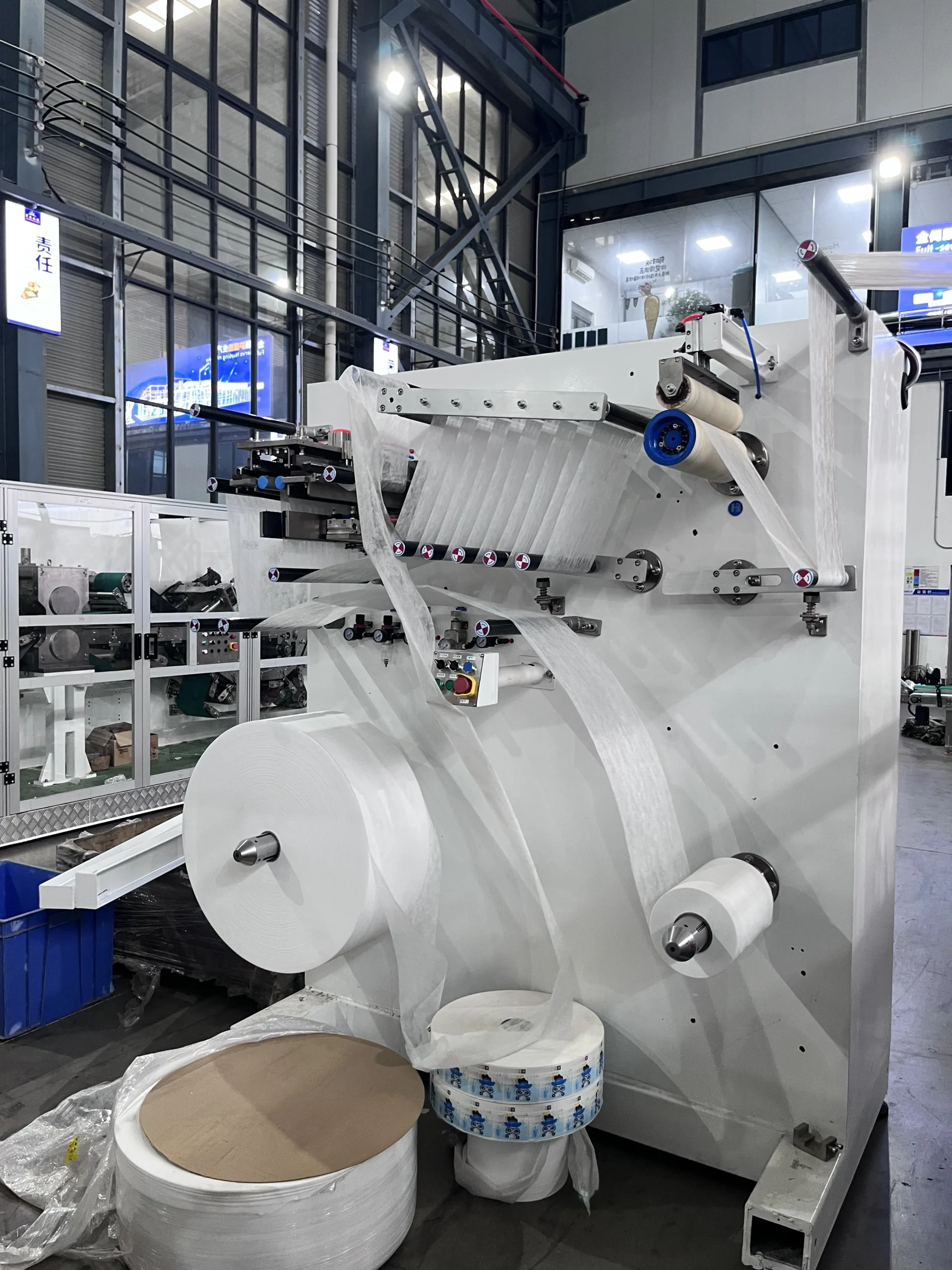
The inner waistband web closes the elastic structure against the wearer-facing side. Its job is not merely to add another layer; it must cover the elastic zone while allowing the composite to contract evenly.
If the inner web is too narrow for the approved elastic map, strands can sit close to the edge. If it is miscentered, one side receives less coverage. If the feed behavior differs from the outer web, the two layers meet the lamination station with unequal strain and may wrinkle after release.
This is why the BOM must state the actual inner and outer nonwoven grades. “Soft nonwoven” is not enough information for a production recipe.
Lamination turns separate inputs into one elastic composite
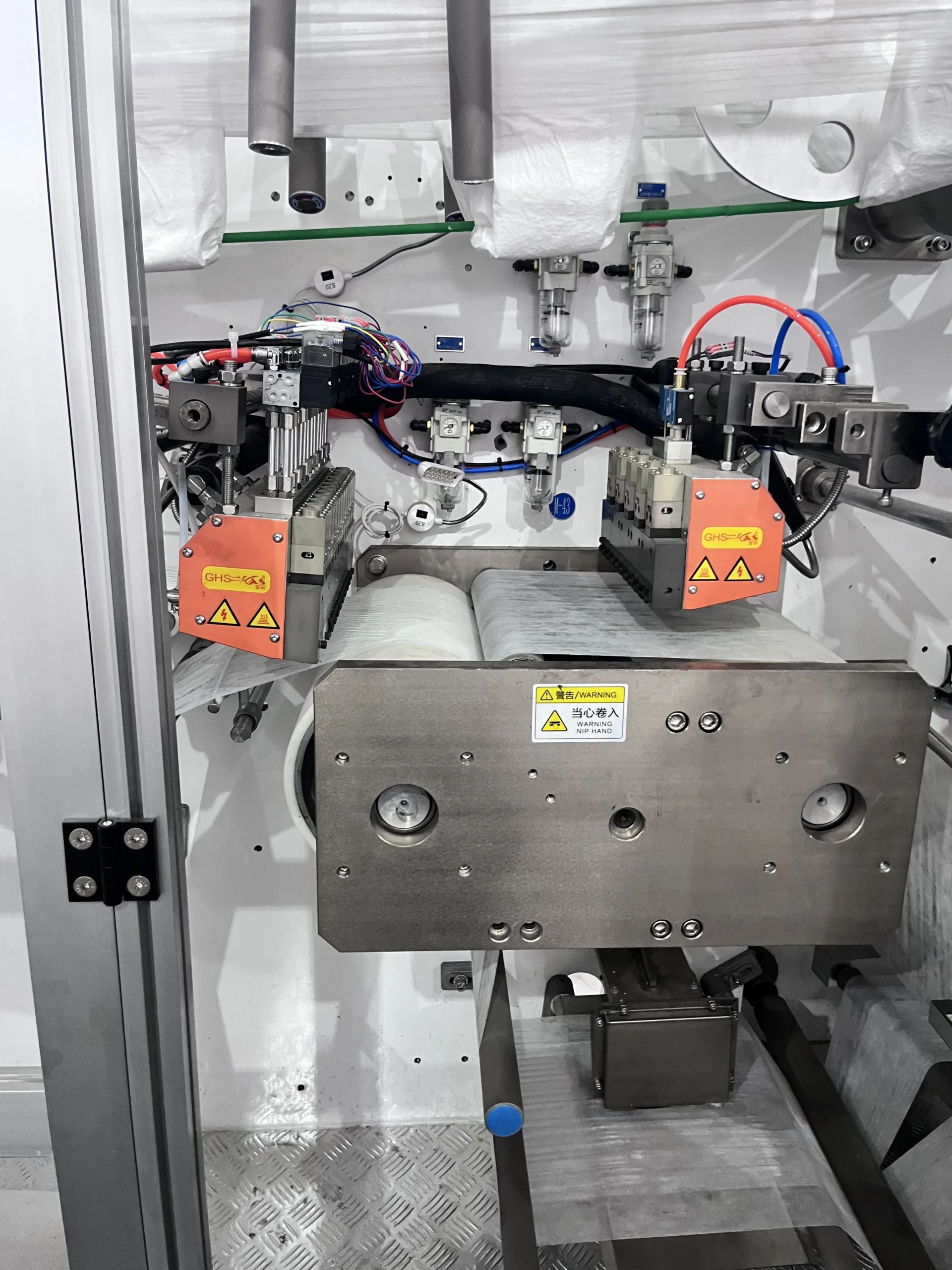
I believe lamination should be inspected after contraction, not only while the web is flat. A flat composite can hide a loose channel that opens when the elastic relaxes.
The process must coordinate adhesive application, web alignment, nip pressure and line timing. The correct settings depend on the real nonwoven, elastic and adhesive combination. A recipe developed with substitute material may not transfer cleanly to the production BOM.
Welldone’s pull-up product page confirms that waist forming and elastic application are part of the line configuration. The technical agreement should go further by defining the finished composite test and the materials used during commissioning.
Side sealing tests the whole upstream chain
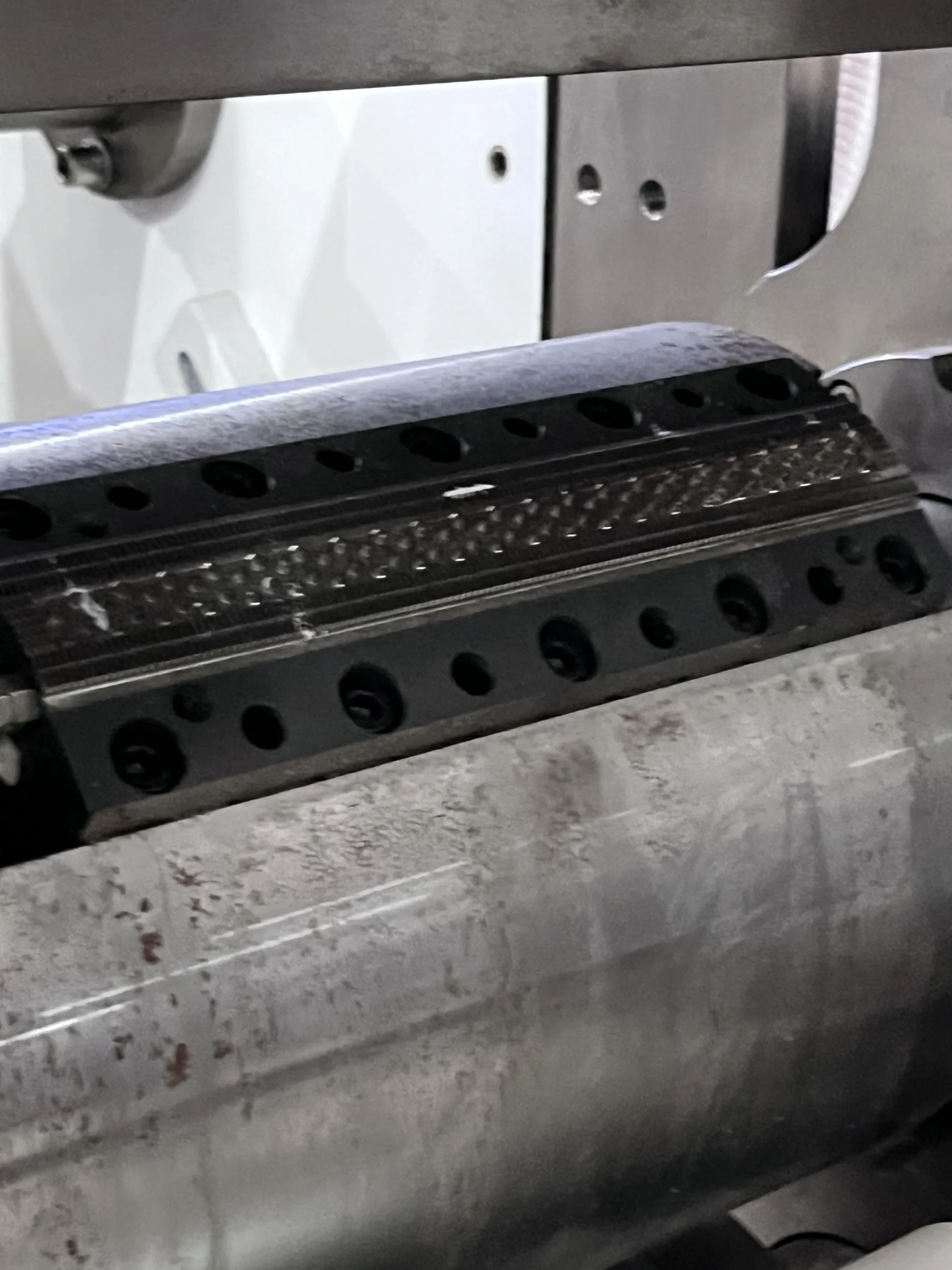
The side seam is the last major structural test of the waistband. If upstream layers arrive off-center or with uneven gathers, the sealing tool receives a different stack from one product to the next.
A seam can fail in more than one direction. It may open too easily, remain too hard to tear where tear-away behavior is intended, or form at the wrong position. These are product-definition questions as much as machine questions.
An empty-machine demonstration cannot prove seam performance. Use the production material stack and the agreed test method during trial running and acceptance.
Read the defect backward through the line
Operators often adjust the station nearest the visible defect. That is understandable, but it can move the problem rather than solve it.
| Finished-product defect | First checks | Do not assume |
|---|---|---|
| One side feels tighter | Elastic routing, feed behavior and left-right web alignment | The sealing station caused the fit difference |
| Waist wrinkles after release | Inner/outer web feed relationship and lamination continuity | More nip pressure will correct unequal strain |
| Elastic visible near an edge | Web widths, centering and elastic map | The product only needs a wider seal |
| Seam strength varies | Layer-stack consistency, seam position and actual material batch | One fixed tooling setting suits every material combination |
The Part 1 structure guide explains why the product drawing must come before the machine scope. The same drawing becomes the troubleshooting map for this five-station chain.
Write the waistband specification as inputs and tests
A useful specification is measurable without pretending that one universal recipe exists.
- Approved product samples for every launch size.
- Inner and outer waistband material grades, widths and supplier data sheets.
- Elastic grade and strand-position drawing.
- Finished waist circumference and recovery test method.
- Allowed left-right difference and visible coverage criteria.
- Lamination inspection or peel method agreed with the material combination.
- Side-seam position and pass/fail test.
- Startup, steady-run and post-roll-change sampling points.
Data boundary: strand count, pre-stretch, adhesive setting and seam acceptance values vary with product construction and materials. They must come from the approved sample and trial data, not from a generic article.
Acceptance should reproduce the difficult transitions
A steady sample taken after the line has settled does not cover the conditions that create many waistband defects. Include startup, speed changes, roll depletion, roll replacement and restart in the trial plan.
Use the same production-intent material grades that will run in the factory. Record the recipe, material lot and measurement method with each sample. If the product fails later, the team can separate material change from machine-setting change instead of guessing.
Welldone’s current baby care overview lists a platform yield of at least 98 percent and full-width vision with automatic rejection. These are platform statements. The project contract still needs to define which waistband defects are detected, how qualified rate is calculated and which materials are used during the run.
Why Welldone
Welldone configures pull-up baby diaper lines with waistband forming, elastic application and side sealing based on product structure, size range and material requirements.
Material-route review
Inner and outer webs, elastic paths and joining points are mapped before the station scope is frozen.
Production-material trials
Commissioning settings can be developed around agreed material grades and finished-product tests.
Engineering support
Welldone can provide overseas engineer support for installation, commissioning and training.
Conclusion
The waistband is a synchronized material system. Outer web, elastic, inner web, lamination and sealing must be specified as one chain while each station remains measurable on its own.
If your waistband becomes uneven only after a roll change, which variable does your current acceptance record allow the team to isolate?
FAQ
How many elastic strands should a baby pull-up waistband use?
There is no responsible universal number. It depends on the approved structure, elastic grade, strand map, waist dimensions and recovery test.
Can the waistband be accepted by visual inspection alone?
No. Appearance should be combined with dimensional, recovery, lamination and seam tests defined for the target product.
Why does the waist tighten differently after a roll change?
Check material lot, roll behavior, individual elastic paths, web centering and the stored recipe. A new roll can change feed behavior even when the nominal specification is unchanged.
Should we choose full servo before defining the waistband?
Define the critical material paths and synchronization points first. Start with the Part 1 product-structure decision, then evaluate control architecture against those tasks.
Turn the waistband sample into a station specification
Send Welldone the approved product, material data sheets, elastic map and size plan before the production route is finalized.
Request a waistband reviewView the pull-up platformWebsite: www.cnwelldone.com Email: welldone@cnwelldone.com