Top 10 Mistakes Buyers Make When Choosing a Diaper Manufacturing Machine

On May 25, 2026
Comments Off on Top 10 Mistakes Buyers Make When Choosing a Diaper Manufacturing Machine
Welldone Top Insights Series
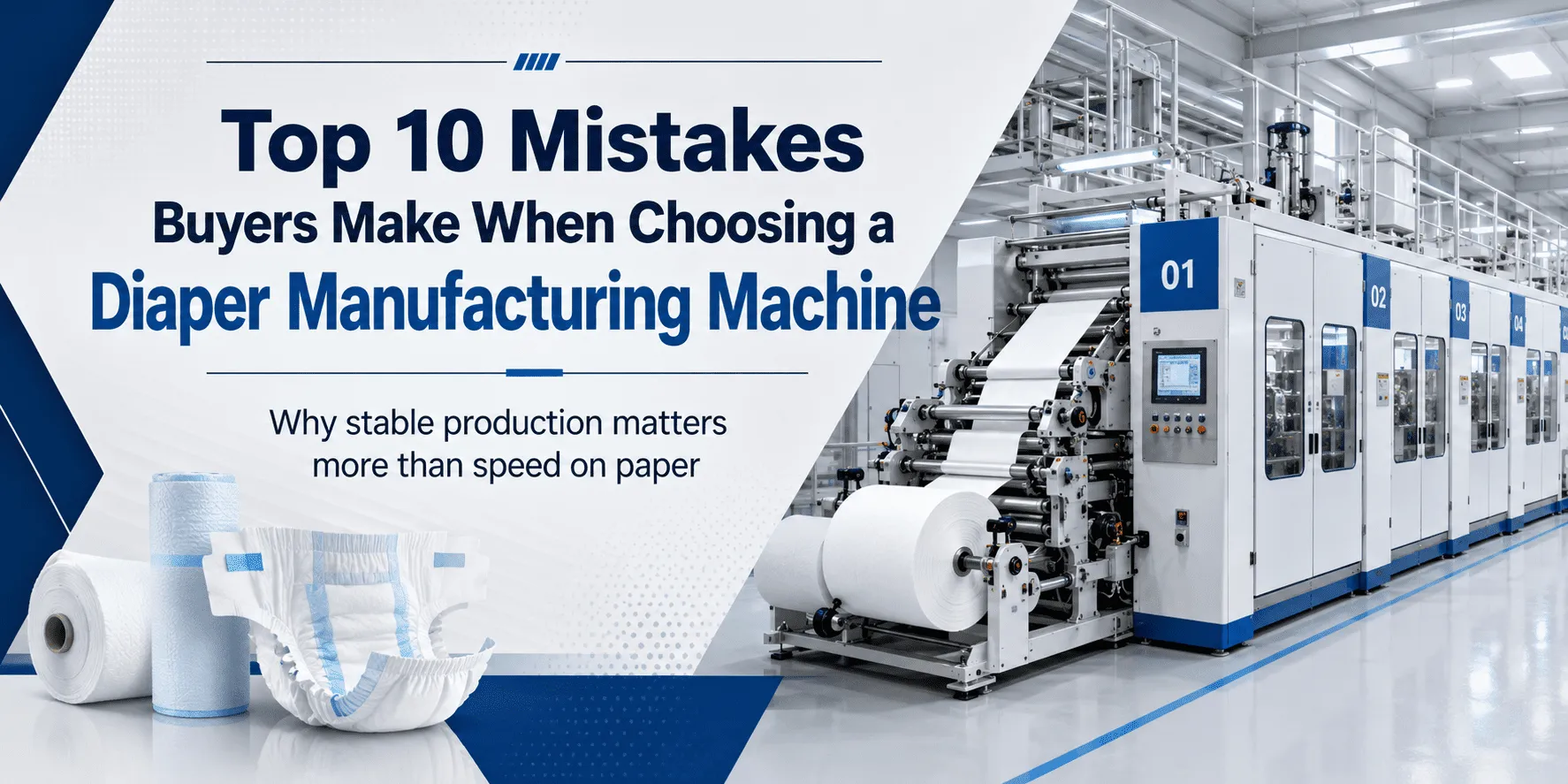
Top 10 Mistakes Buyers Make When Choosing a Diaper Manufacturing Machine
A practical buying guide for factory owners, procurement teams, and investors who want stable output, controlled waste, and long-term production value instead of only impressive machine speed on paper.
Stable output vs. design speed
Machine price vs. real factory cost
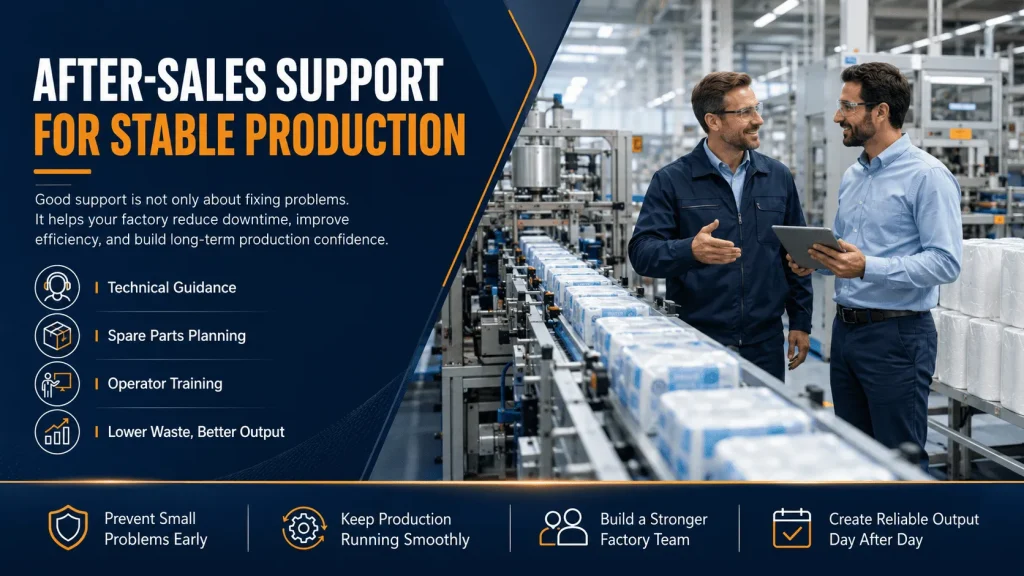
Engineer support and after-sales service
10
Buying mistakes that can affect diaper factory profit, machine stability, and future expansion.
Why Choosing a Diaper Manufacturing Machine Is Not Only About Speed
For many buyers, the first question before purchasing a Diaper Manufacturing Machine is simple: “How fast can it run?”
This is understandable. Speed looks easy to compare. Price looks easy to compare. Delivery time looks easy to compare. But in real factory operation, a Diaper Machine is not judged only by the number printed in the quotation.
It is judged by how stable it runs after installation, how much material it wastes, how easy it is for operators to manage, and how consistently it can produce qualified baby diapers every day.
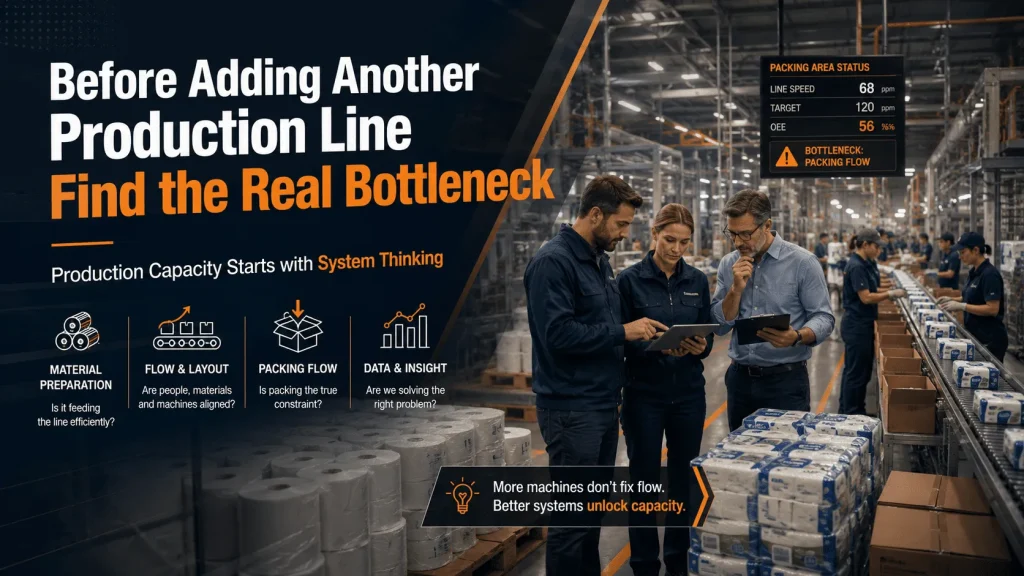
A fast Diaper Manufacturing Machine can still become a slow factory if it cannot deliver stable production in real conditions.
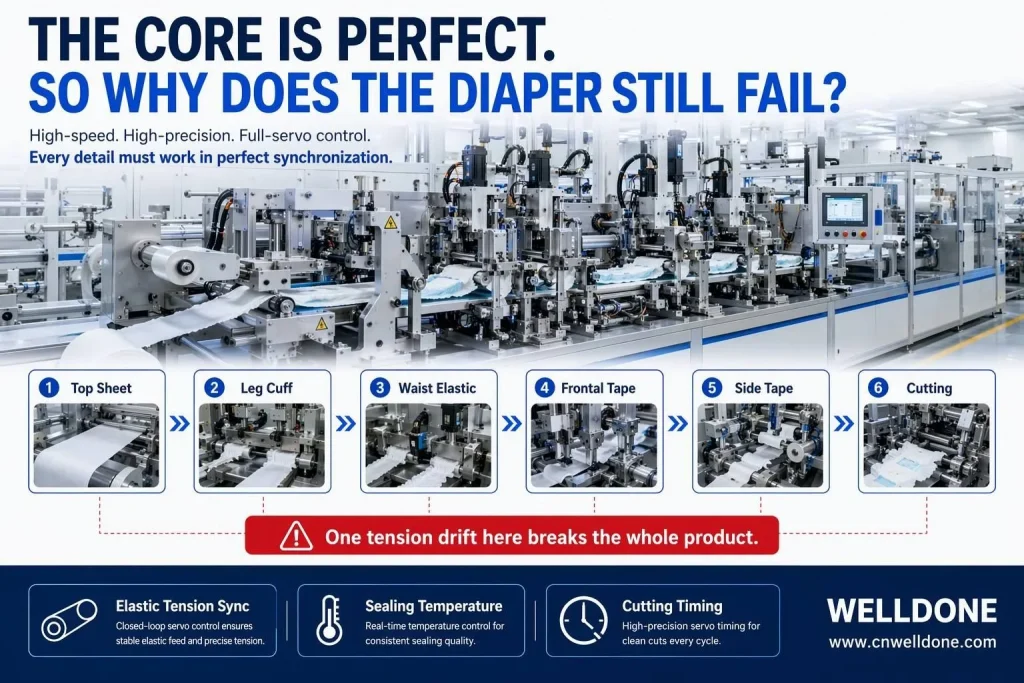
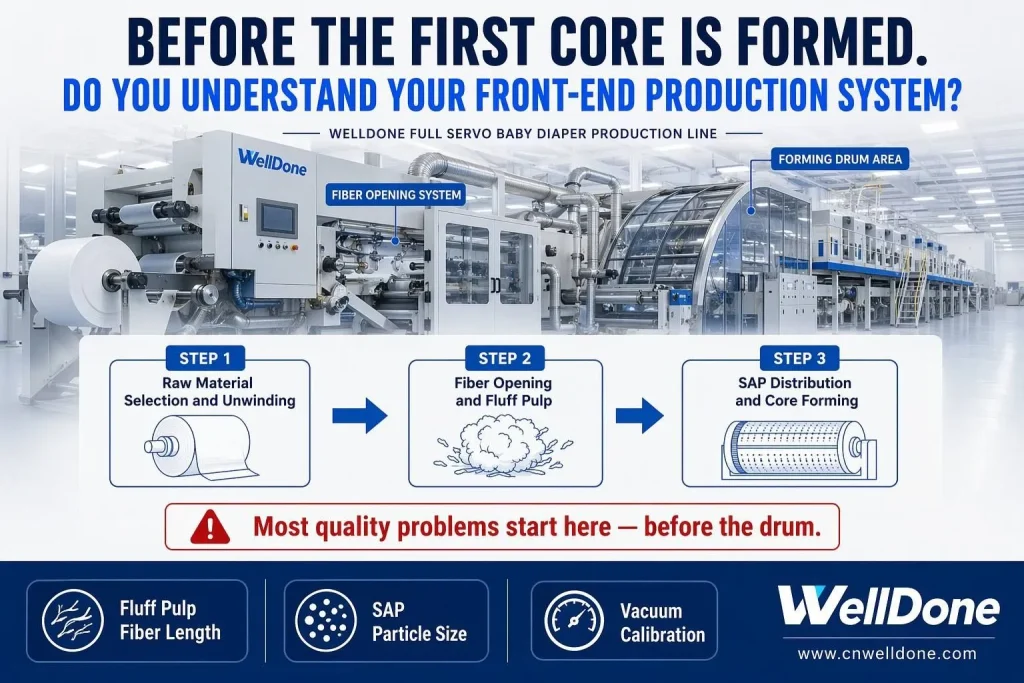
Actually, this is where many buyers make their first mistake. A high-speed Baby Diaper Machine may look attractive on paper, but if the machine cannot maintain stable tension control, clean glue application, accurate SAP distribution, and smooth material feeding, the real output may be far lower than expected.
i
Market Context
This matters even more today. Hygiene product factories are still dealing with raw material planning pressure, shipping schedule uncertainty, and labor training challenges. When pulp, nonwoven, energy, or freight costs move, every hour of downtime and every roll of wasted material becomes more expensive.
For me, the real question is not whether a Diaper Production Machine can reach a beautiful design speed during testing. The better question is:
Can this machine help your factory produce stable, qualified diapers after 3 months, 6 months, and 1 year?
01
Comparing Only the Machine Price
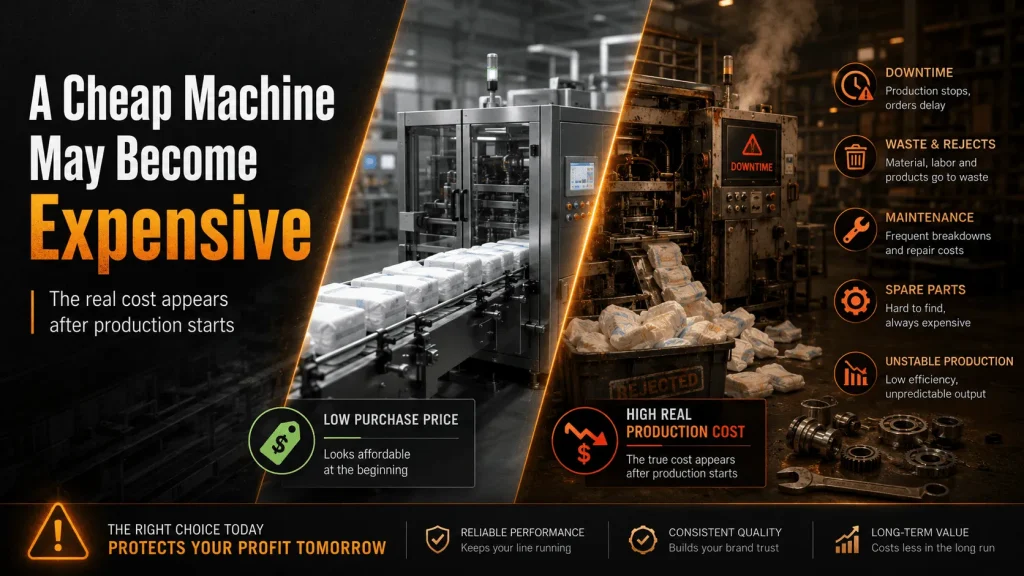
The cheapest Diaper Making Machine is not always the lowest-cost choice. A lower machine price may reduce initial investment pressure, but it can also hide future problems.
Weak tension control, unstable glue application, limited after-sales support, and lower-quality components may not be obvious during quotation comparison. But once production starts, they can become expensive.
- Unexpected downtime
- Higher material waste
- Lower qualified product rate
- Longer troubleshooting time
02
Believing Design Speed Equals Real Output
Many buyers ask for the highest possible speed when choosing a Diaper Manufacturing Machine. But design speed and stable production speed are not the same thing.
Real factory output depends on raw material quality, operator experience, glue system stability, web guiding accuracy, SAP dosing consistency, product size changeover, and daily maintenance habits.
A common mistake is thinking that a higher design speed automatically means higher profit. In reality, stable output matters more than short-term peak speed.
03
Ignoring Raw Material Compatibility
A diaper production line does not work alone. It works together with nonwoven fabric, PE film, breathable film, fluff pulp, SAP, elastic materials, tape, hot melt adhesive, and packaging materials.
If the machine is not matched with the buyer’s local raw materials, production problems may appear very quickly.
- Nonwoven variation may affect tension stability
- SAP quality may affect absorbency and core formation
- PE film thickness may affect cutting and sealing
- Hot melt adhesive may affect bonding and machine cleanliness
04
Overlooking Servo Control and Tension Stability
For a modern Diaper Production Machine, stable servo control and tension balance are critical. If the tension is unstable, the product may have material deviation, poor lamination, unstable core position, uneven cutting, and higher rejection rate.
Some buyers only ask whether the machine is full servo or semi servo. The wiser choice is to check how the servo system is designed and whether the configuration fits the factory’s product plan.
05
Not Checking Glue Application Performance
Glue application is one of the details many buyers underestimate. In real diaper production, hot melt adhesive affects bonding strength, machine cleanliness, production stability, product appearance, and maintenance workload.
If the glue system is unstable, the factory may face glue stringing, poor bonding, dirty machine parts, frequent cleaning, and product defects.
- Is the glue application accurate and clean?
- Is the system easy to maintain?
- Can it adapt to different raw materials?
- Can the supplier support glue-related troubleshooting?
06
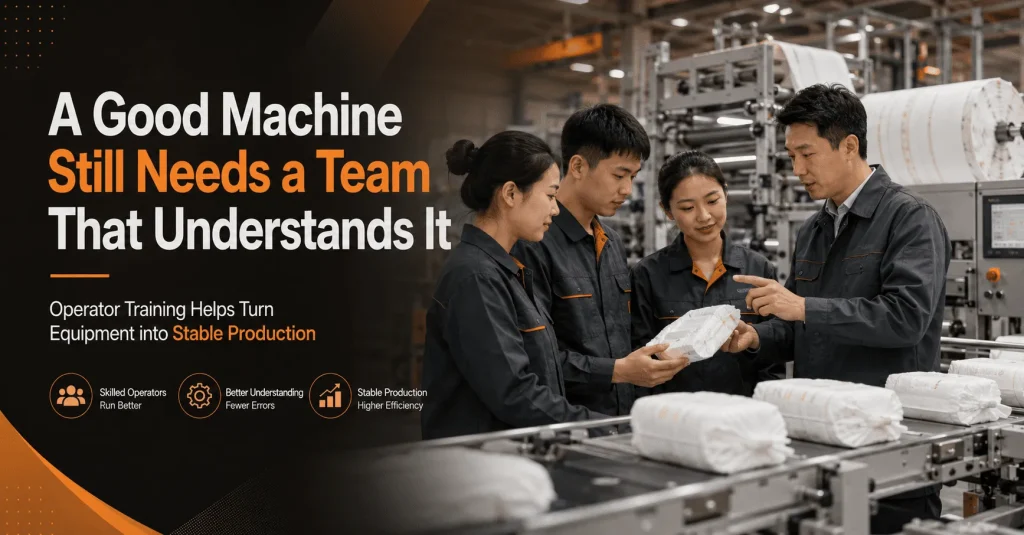
Underestimating Operator Training
Some buyers believe that once the Baby Diaper Machine is installed, production can start smoothly. Actually, machine installation is only the beginning.
Operators need to understand start-up process, material loading, tension adjustment, HMI operation, alarm handling, glue system management, size changeover, daily maintenance, and quality inspection.
This is especially important for new factories in emerging markets, where experienced diaper production operators may not be easy to find.
07
Forgetting Waste Control
Waste control is not a small issue. In diaper production, waste may come from start-up adjustment, material deviation, cutting error, poor glue bonding, unstable SAP dosing, operator mistakes, frequent machine stops, and failed changeover.
When raw material costs are stable, waste is already a problem. When raw material costs are moving, waste becomes even more serious.
A strong Diaper Machine Manufacturer should help buyers think about waste control from the beginning.
08
Choosing a Supplier Without Engineer Support
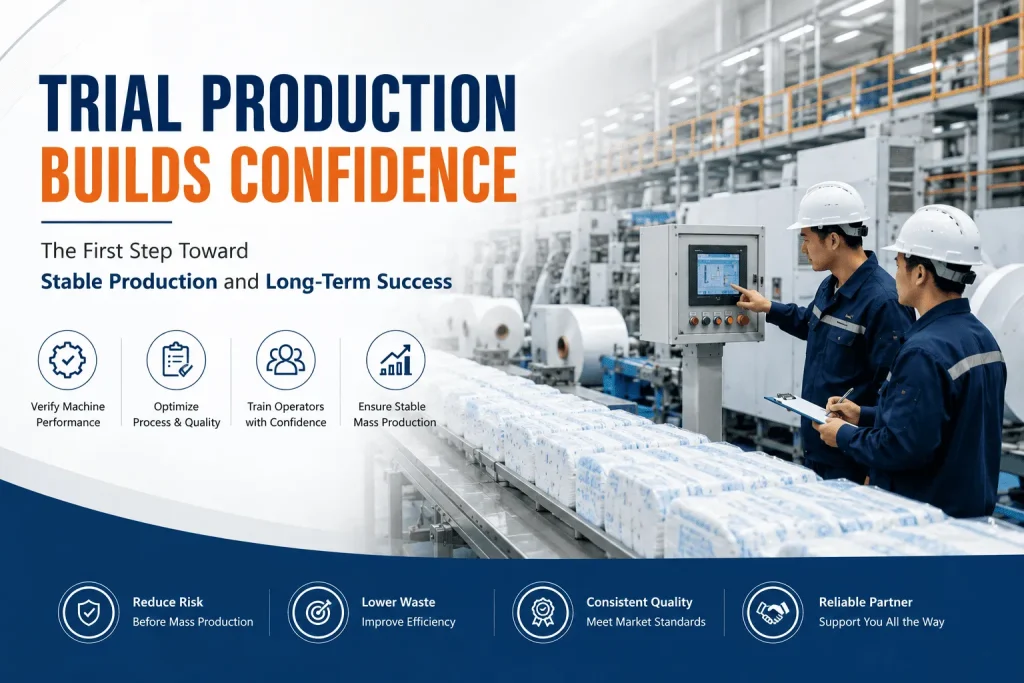
A diaper machine is not a simple product. It needs installation, commissioning, testing, adjustment, training, and long-term technical communication.
This is why choosing the right Diaper Machine Supplier is so important. A supplier who only sells equipment may not be enough for a new factory.
- Can the supplier send engineers for installation guidance?
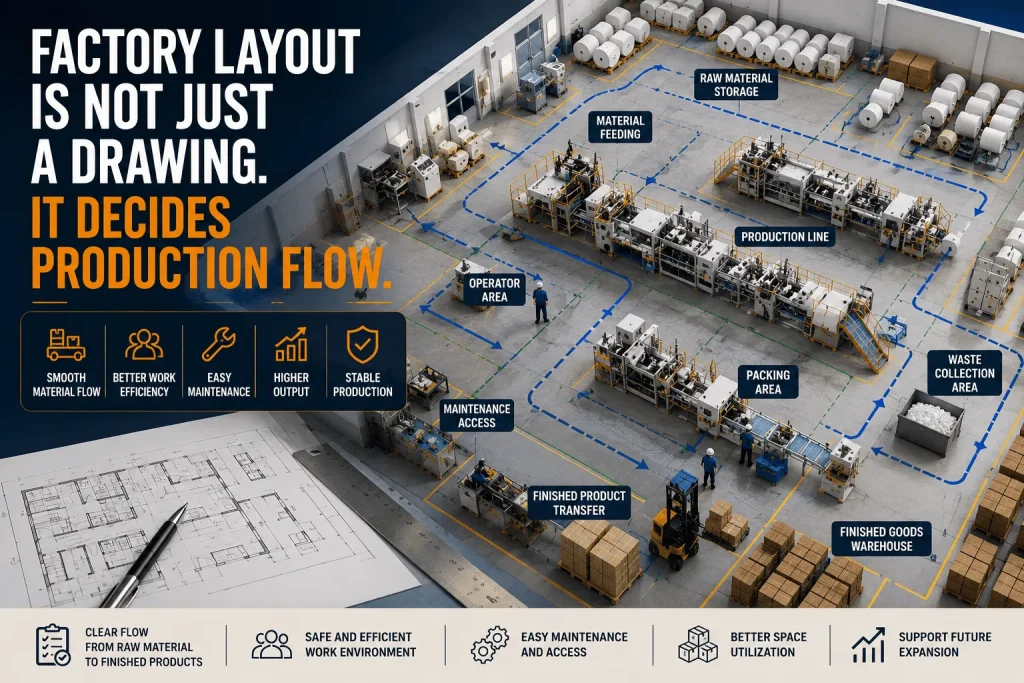
- Can they support factory layout planning?
- Can they help with raw material matching?
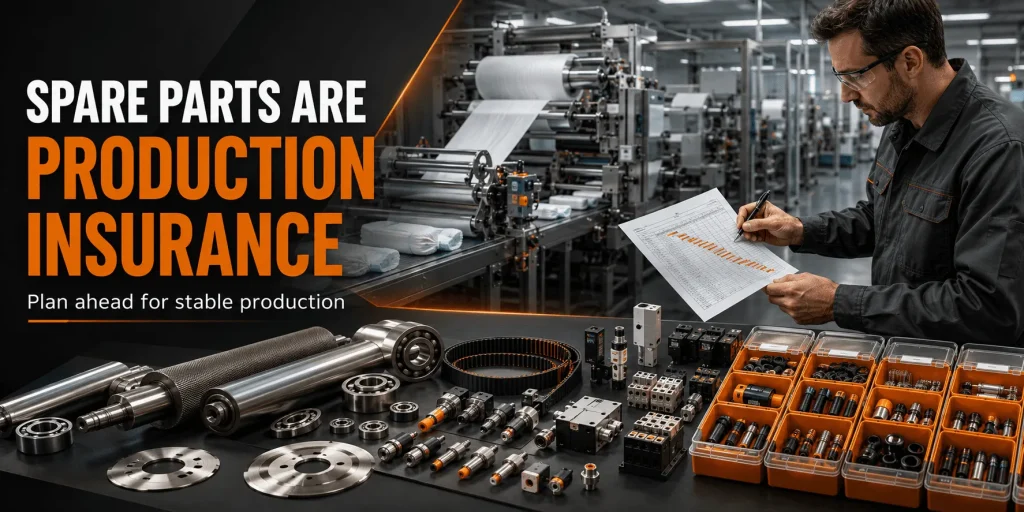
- Can they provide spare parts and troubleshooting support?
09
Ignoring Spare Parts and Long-Term Maintenance
Every production line needs maintenance. No matter how advanced the machine is, spare parts and maintenance planning will affect long-term operation.
If spare parts are difficult to get, even a small problem may stop production for days. For factories that supply local distributors, supermarkets, hospitals, or retail channels, downtime can damage both profit and customer trust.
10
Buying a Machine Without Future Expansion Planning
A new factory may start with one product size or one market segment. But after one or two years, the buyer may want to expand into more baby diaper sizes, pull-up pants, higher-end structures, better packaging, higher automation, or additional production lines.
So before buying a Diaper Manufacturing Machine, buyers should think about both today’s budget and tomorrow’s capacity needs.
The Better Buying Question
Before choosing a Diaper Machine Supplier, do not only ask: “How fast is the machine?”
Ask a more practical question: “Can this machine help my factory run stably, reduce waste, train operators, and grow in the next few years?”
Stable output
Qualified product rate
Controlled material waste
Repeatable daily production
Why Welldone
Welldone is a hygiene products machinery manufacturer under Quanzhou Shimao Weiteng Import & Export Co., Ltd. With more than 18 years of industry experience and our own factory support, Welldone provides Baby Diaper Machines, Diaper Manufacturing Machines, sanitary napkin machines, adult diaper machines, underpad machines, pet pad machines, wet wipes machines, tissue machines, and related hygiene product production solutions.
For baby diaper projects, Welldone can support buyers with full servo and semi servo diaper machine options, machine configuration advice, product structure customization, factory layout suggestions, raw material planning support, installation and commissioning guidance, free outbound engineer support, spare parts, and one-stop solutions from machine to raw materials.
If you are evaluating a Diaper Machine Manufacturer, you can also explore Welldone’s Baby Care Machines for different baby diaper and pull-up pants production solutions.
Welldone is not a distributor or wholesaler. We are a manufacturer focused on helping buyers build stable, long-term hygiene product production capacity.
Related Machines
Baby Diaper Machine
Suitable for producing different sizes of baby diapers for local brands, OEM factories, and hygiene product manufacturers.
Baby Pull-Up Pants Machine
Suitable for training pants and premium baby care products with higher market value.
T-Shape Baby Diaper Machine
Suitable for buyers who want special baby diaper structures and better material utilization.
Full Servo Diaper Production Line
Suitable for factories that need higher automation, better control, and long-term stable production.
Semi Servo Diaper Machine
Suitable for buyers who need a balanced solution between investment budget and production performance.
Sanitary Napkin Production Line
Suitable for feminine care product manufacturers or investors expanding into sanitary pad production.
Conclusion
Choosing a Diaper Manufacturing Machine is not only a purchase decision. It is a production decision, a cost decision, and a long-term business decision.
The biggest mistake is not only buying the wrong machine. The bigger risk is choosing a machine that looks good in the quotation but cannot support stable daily production in the real factory.
A reliable Diaper Production Machine should help buyers control waste, improve qualified product rate, train operators, match raw materials, and build repeatable production capacity.
Are you buying a machine only for your first production stage, or are you building a production system that can support your brand for the next 3 to 5 years?
FAQ
1. What should buyers check before choosing a diaper manufacturing machine?
Buyers should check stable production speed, raw material compatibility, servo control, glue application, waste control, operator training, spare parts supply, and after-sales engineer support.
2. Is a higher-speed diaper machine always better?
No. A higher design speed does not always mean higher real output. Stable production, qualified product rate, and low waste are more important for long-term factory profit.
3. Why is raw material compatibility important for a baby diaper machine?
Raw materials such as nonwoven, SAP, fluff pulp, PE film, and hot melt adhesive directly affect machine stability, product quality, waste rate, and production efficiency.
4. What is the difference between a diaper machine supplier and a diaper machine manufacturer?
A diaper machine supplier may only sell equipment, while a diaper machine manufacturer with factory experience can usually provide deeper support in machine design, customization, installation, training, and long-term production service.
5. Can Welldone provide complete support for a new diaper factory?
Yes. Welldone can provide diaper machines, raw material planning support, factory layout advice, installation guidance, engineer support, spare parts, and one-stop hygiene product manufacturing solutions.
Planning a Diaper Production Project?
If you are comparing a Diaper Manufacturing Machine, Baby Diaper Machine, or Diaper Production Machine, Welldone can help you evaluate machine configuration, raw materials, factory layout, and long-term production support.