Baby Pull-Up Diaper Machine Acceptance Test and Ramp-Up Plan

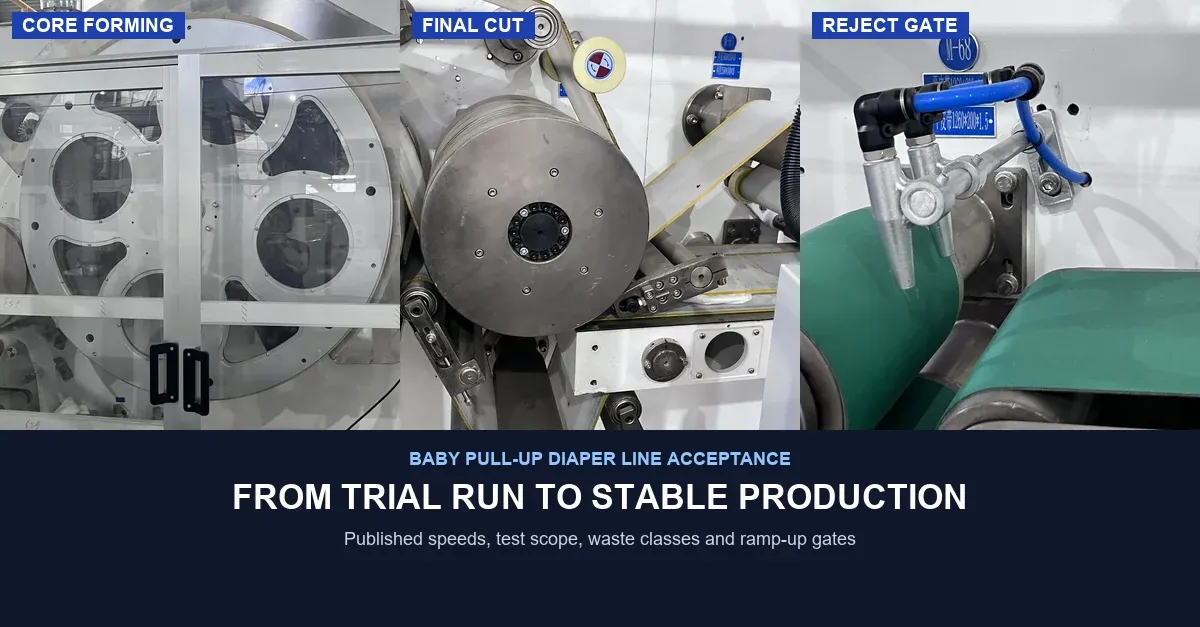
Baby Pull-Up Diaper Line Acceptance: From Trial Run to Stable Production
The line passed at the seller's plant. On your floor it has to pass again, with your nonwoven, your SAP, your compressor and your crew. Everything between those two events is the part of the project that has no owner until someone writes it down.
Acceptance is that document. Done well, it converts a machine that ran into a factory that produces. Done badly, it produces a signature and a year of arguing about whose number was right.
Starting a Baby Pull-Up Diaper Manufacturing Business - Part 7 of 7
Part 1: Choose the product structure.
Part 2: Define the waistband control chain.
Part 3: Match core forming to the production BOM.
Part 4: Select the drive architecture.
Part 5: Plan size changeover as a capacity number.
Part 6: Plan the building around the line.
Part 7 - this article: accept the line, then ramp it to stable output.
Part 1: Choose the product structure.
Part 2: Define the waistband control chain.
Part 3: Match core forming to the production BOM.
Part 4: Select the drive architecture.
Part 5: Plan size changeover as a capacity number.
Part 6: Plan the building around the line.
Part 7 - this article: accept the line, then ramp it to stable output.
What the acceptance test is actually signing off
A signature at the end of an acceptance test releases payment, closes the technical discussion and starts the clock on your warranty. It also fixes, in the only form that matters later, what the two sides agreed the line should be able to do.
That is why the document should not read like a demonstration report. Welldone's published description of installation frames the whole stage as a transfer of production capability rather than an assembly task, and it splits that transfer into three jobs: machine setup, process adjustment and team handover. Acceptance is the point at which all three are either complete or not.
There are three things the test has to prove, and they are not the same thing. The product: that the line makes a saleable piece that meets your specification, not a sample that looks right on a table. The rate: that it holds its production speed over a window long enough for the line to settle, not just at the moment the counter looks good. And the team: that the people who will run the night shift in month three can start, adjust, inspect and recover without the supplier's engineer standing next to them.
Actually, an acceptance dispute can begin without a technical disagreement. The test may prove one of those three outcomes while the contract assumes all three.
Two tests, two locations: the seller's test and yours
There are two distinct tests in a hygiene machine project, and mixing them is where expectations drift. The first happens at the seller's plant before shipment. The second happens on your floor after installation, and it is the one that decides whether your factory runs.
The test before shipment
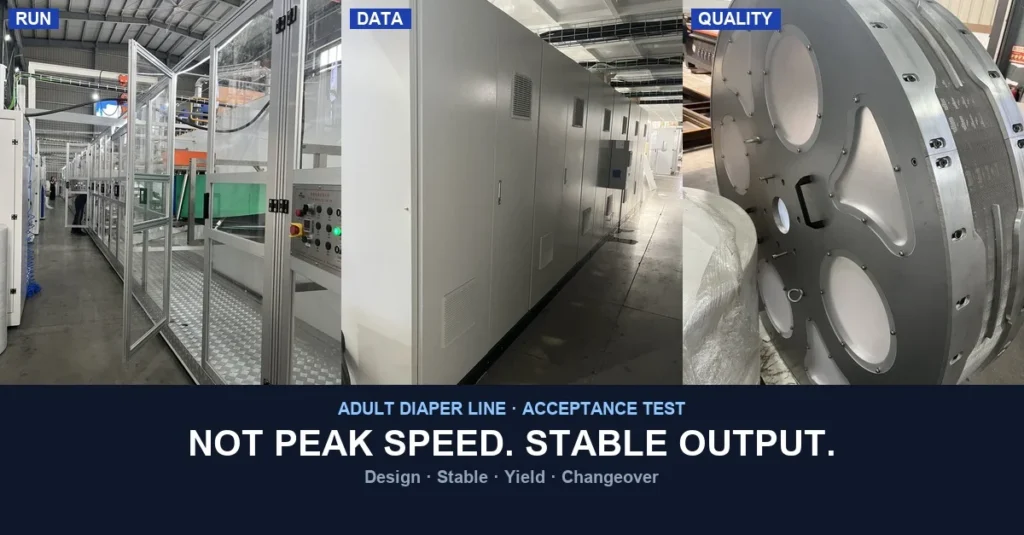
Welldone's published configuration document states that the RFS acceptance test is witnessed by the buyer's representative before shipment, and that the test runs the production section at 300 m/min for 30 minutes against minimum efficiency and maximum waste parameters.
The same document is explicit about scope. Optional items installed before RFS are tested as part of the line. Optional items deferred to post-shipment installation are not inside the RFS window. If you plan to add the stacker or the auto bagging machine after the line has shipped, those units will not be covered by the test you watched at the plant, and the agreement should say so in the same sentence.
The test on your floor
The second test depends on things the seller cannot control. Welldone's published readiness guidance lists raw materials, factory layout, stable power and air supply, and trained operators as conditions for commissioning. If those are not ready, the delay is not a machine fault, and it is not a warranty issue either.
Material is the most common source of confusion. The published installation guidance says plainly that if the buyer's materials differ from the seller's test materials, new adjustment is normal and does not automatically mean the machine has a problem. That sentence is worth keeping in the acceptance protocol, because it is the difference between a technical adjustment and a dispute.
| Test | Where it runs | What it can prove | What it cannot prove |
|---|---|---|---|
| RFS / pre-shipment test | Seller's plant, witnessed by the buyer's representative | The converting line reaches and holds its production section speed against efficiency and waste parameters | How the line behaves on the buyer's materials, crew, building or utilities |
| Site installation test | Buyer's factory, after positioning and commissioning | The assembled line runs in this building with these materials and these operators | Whether the buyer's team can hold the result across shifts, batches and size changes |
| Acceptance and ramp-up | Buyer's factory, over a defined window | The factory produces saleable output repeatedly, and the team owns the line | Nothing that matters commercially - this is the test that counts |
Read the unit before you read the number
Two published figures for the same machine look like a contradiction until the unit is read. The pull-up line is published with a design speed of 600 pcs/min and a stable speed of 450-550 pcs/min. The RFS test is published with a line speed of 300 m/min.
They are not in conflict. They count different things. A piece rate counts products per minute; a line speed counts metres of web per minute. Welldone's published forming analysis states the relationship directly: the WD-NK800I-SV runs at 600 pcs/min on L size, which corresponds to a line speed of 300 m/min at a 500 mm pitch, and the same page publishes a product length range of 360-580 mm. Turn the fraction of a second spent on each product into metres of web and the two published figures describe the same machine from opposite directions.
Buyers should distinguish between design speed and stable production speed, because these figures are not always equivalent, and they cannot be interchanged with a line speed in metres per minute. The same discipline applies at the other end of the plant. A packing machine is often rated in bags per minute, and a bags-per-minute figure cannot be placed next to a converting line's pieces-per-minute figure without a pack count in between.
Put a unit column in your protocol. It takes one line and removes the most common source of argument in the first review meeting.
The published figures you can put in a baby pull-up acceptance protocol
These are the current published figures for the baby pull-up platform and the baby care range. They are the numbers a protocol can reference; they are not a substitute for the dated specification sheet issued for your order, and they are not a guarantee for a customised build.
| Parameter | Published figure | Where it is published | Why it belongs in the protocol |
|---|---|---|---|
| Design speed | 600 pcs/min | Pull-up line product page | Defines the machine's capability ceiling, not the production target |
| Stable speed | 450-550 pcs/min | Pull-up line page; baby care platform | The figure to write into a continuous running window |
| Positioning accuracy, full servo | Plus or minus 0.02 mm | Baby care platform specifications | Sets the standard for registration and cutting repeatability |
| Passing rate | 98% or above, excluding the glue applicator and auto splicing | Pull-up line product page | Defines a good piece - and states what the figure excludes |
| Waste rate | Below 2% | Pull-up line product page | The companion figure to the passing rate |
| Throughput yield | 98% or above with defect-rejection system | Baby care platform specifications | Confirms the reject system is inside the yield definition |
| Minimum changeover time | Under 60 minutes | Baby care platform specifications | Turns a size change into a timed acceptance item instead of an assumption |
| Operators | 8-10 | Pull-up line product page | Sets the crew the rate was published against |
| Operational noise | 75 dB(A) or less | Baby care design guidelines | A measurable condition that affects operator retention |
| Power and air | 380 V / 50 Hz; 0.6-0.8 MPa | Pull-up line page; design guidelines | The utilities the figures were published against |
| Working space | 39 m x 9 m x 5 m (L x W x H) | Pull-up line page; baby care platform | Ties the acceptance window to a real floor |
| Maintenance intervals | Routine every 8 hours; preventive every 30 days; remote monitoring available | Baby care design guidelines | Becomes the buyer's ramp-up routine from day one |
One line in that table does the most work and gets read the least. The published passing rate carries a qualifier: it excludes the glue applicator and the auto splicing system. That qualifier is standard practice, because those components are supplied by third parties whose behaviour depends on materials and settings outside the line builder's control. It also means the figure describes the converting machine, not the whole production system. Write the qualifier into the protocol, and write the acceptance test for the adhesive system as a separate item with its own criteria.
If you need to understand how stable speed becomes an annual output number rather than a sheet figure, the analysis of design speed versus actual output covers that arithmetic in full.
The sequence: setup, process adjustment, handover, ramp-up
Welldone's published installation guidance describes the work in three stages, and the order matters because each one depends on the one before it.
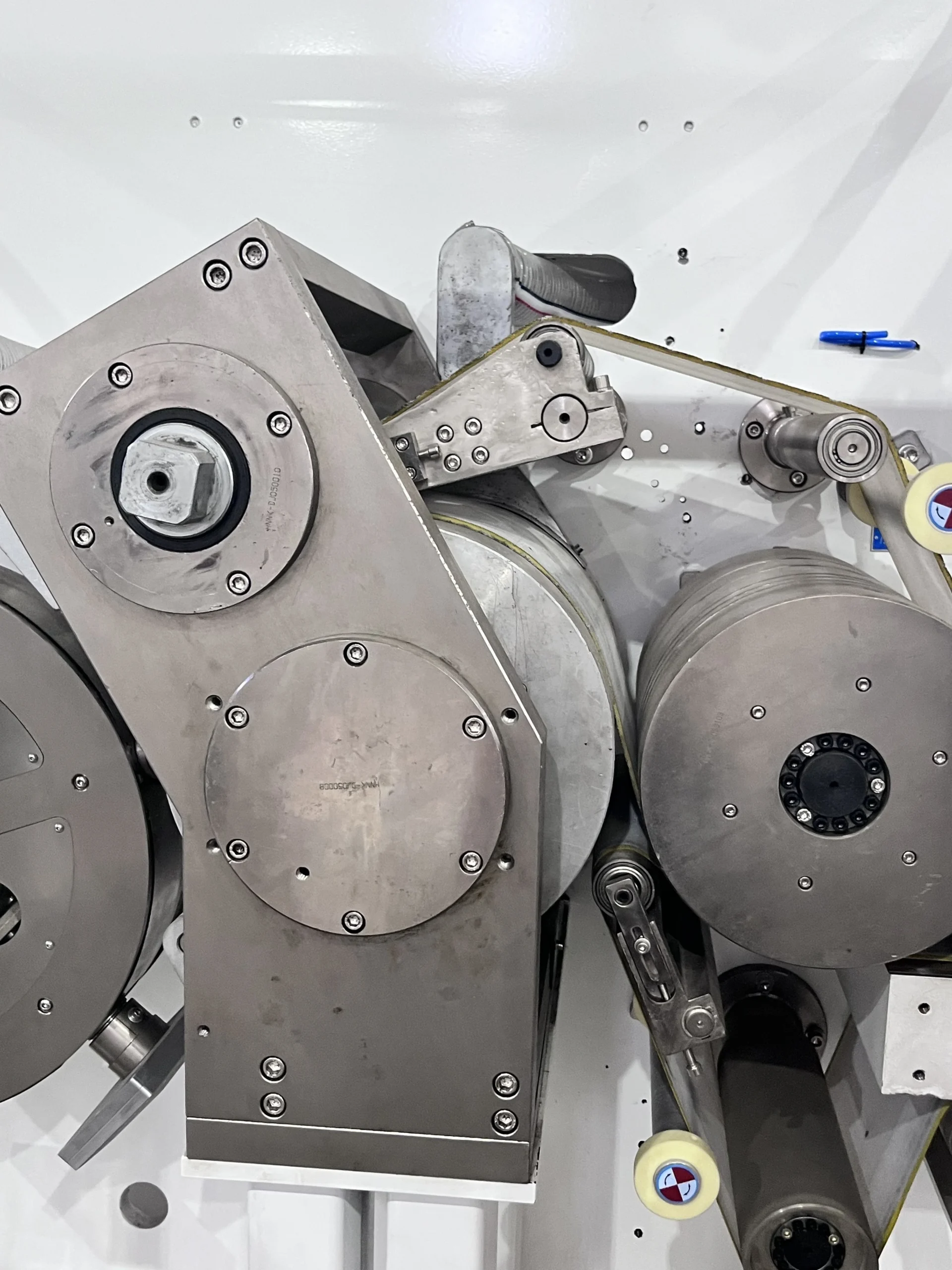
- Machine setup. Positioning, connection, safety check, initial running and basic commissioning. This is the stage where the line exists but produces nothing saleable.
- Process adjustment. Material matching, tension control, glue adjustment, product size setup and quality inspection. This is where the product becomes a product.
- Team handover. Operator training, troubleshooting logic, daily maintenance and stable production capability. This is where the factory takes ownership.
A common planning error is to treat the third stage as an appendix to the first two and schedule it in whatever days remain before the engineer's flight. That is backwards. Stages one and two create the capability; stage three is the only one that keeps it after everyone has gone home.
Then there is the fourth stage, which is rarely written down at all. Ramp-up is the period between a successful acceptance run and the point at which the line produces at its planned rate every shift. It belongs to the buyer, but it can be designed into the acceptance test, because the test is the only lever that sets the starting point.
The real question is not how quickly the line can be signed off. It is what the line has to be able to do, unassisted, on the day the acceptance team leaves the building.
One roll is not a material test
A pull-up line consumes several material streams at once: nonwoven for top sheet, back sheet and waistband, PE film, tissue and an absorbent distributing layer, fluff pulp, SAP, spandex, colour and size tape, hot melt adhesive and packing film. A test run on a single set of rolls proves the settings against that set of rolls and nothing more.
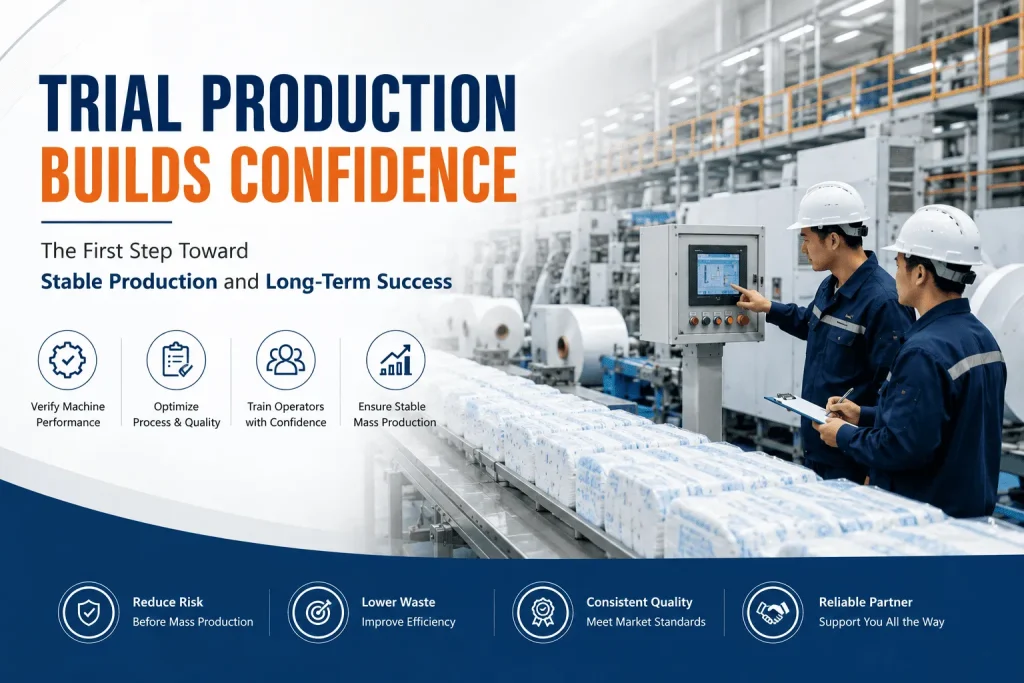
Welldone's published trial production guide names the sample types a serious test should collect: startup samples, stable running samples, size change samples, different roll samples and packed product samples. Five sample categories, five different failure modes, and only one of them is visible in a short supervised run.
Material behaviour is why. The published guidance on material matching states that different nonwoven, film, core, SAP, pulp, elastic, adhesive and release paper behave differently on the same machine, and that a product which looks good with one batch can become unstable with another. Tension control, glue bonding, core forming, cutting accuracy and packing performance all sit downstream of that variation.
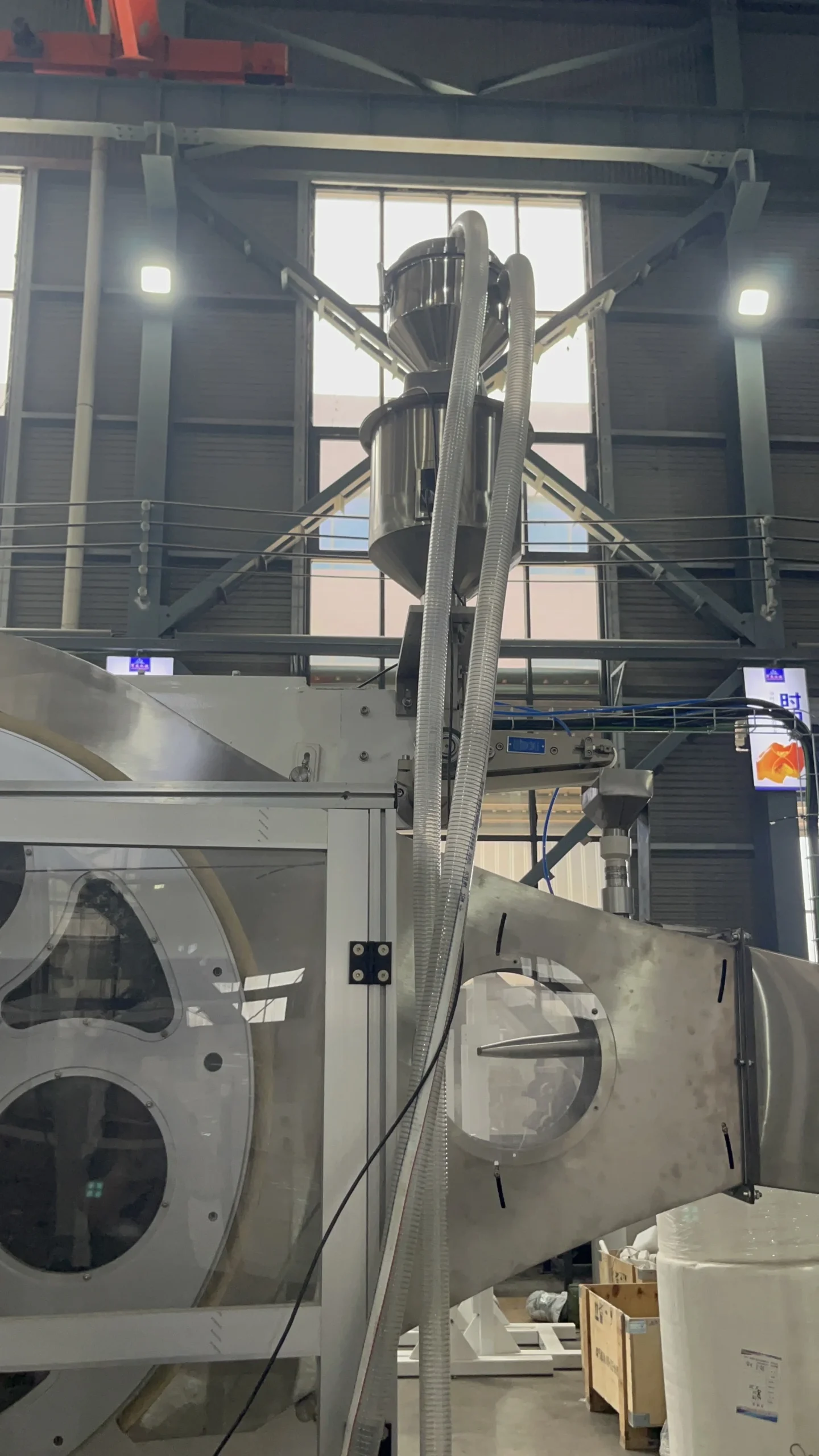
In most cases the practical fix is not a longer test but a wider one. Run at least two production batches of nonwoven and film per size, plus two SAP or pulp deliveries if they are available, and record the settings that hold for both. A setting that works on one batch and not on another is not a setting, it is a coincidence.
Classify the scrap before you argue about the percentage
The published waste figure for the pull-up platform is below 2%, with a passing rate of 98% or above. Read the two together with the qualifier that follows them: the passing rate excludes the glue applicator and the auto splicing system. The converting machine is inside the figure; the adhesive system and the splicing hardware are not.
During acceptance, a single percentage is almost useless as a discussion tool. Split it. Waste appears at startup, at every splice, at every size change, at every speed correction and at the packing end. A protocol that names the categories turns an argument about blame into a list of tasks.
| Waste category | Typical trigger | Who owns the countermeasure | What to record |
|---|---|---|---|
| Startup scrap | First pieces after a stop or a shift start | Operator, via a documented startup sequence | Pieces discarded from start to first good piece, per size |
| Splice waste | Roll change and material run-out | Shared - machine tuning and material supply discipline | Number of splices per shift and pieces lost at each |
| Size change waste | Format change from one size to another | Operator and tooling readiness | Time from last good piece to next good piece, and pieces lost |
| Running rejects | Drift in glue, tension, registration or core position | Process control - detect the drift earlier | Reject rate by defect type, with the upstream cause named |
| Packing rejects | Count errors, seal faults, film misalignment | End-of-line section and its own settings | Rejects after the converting line has passed them |
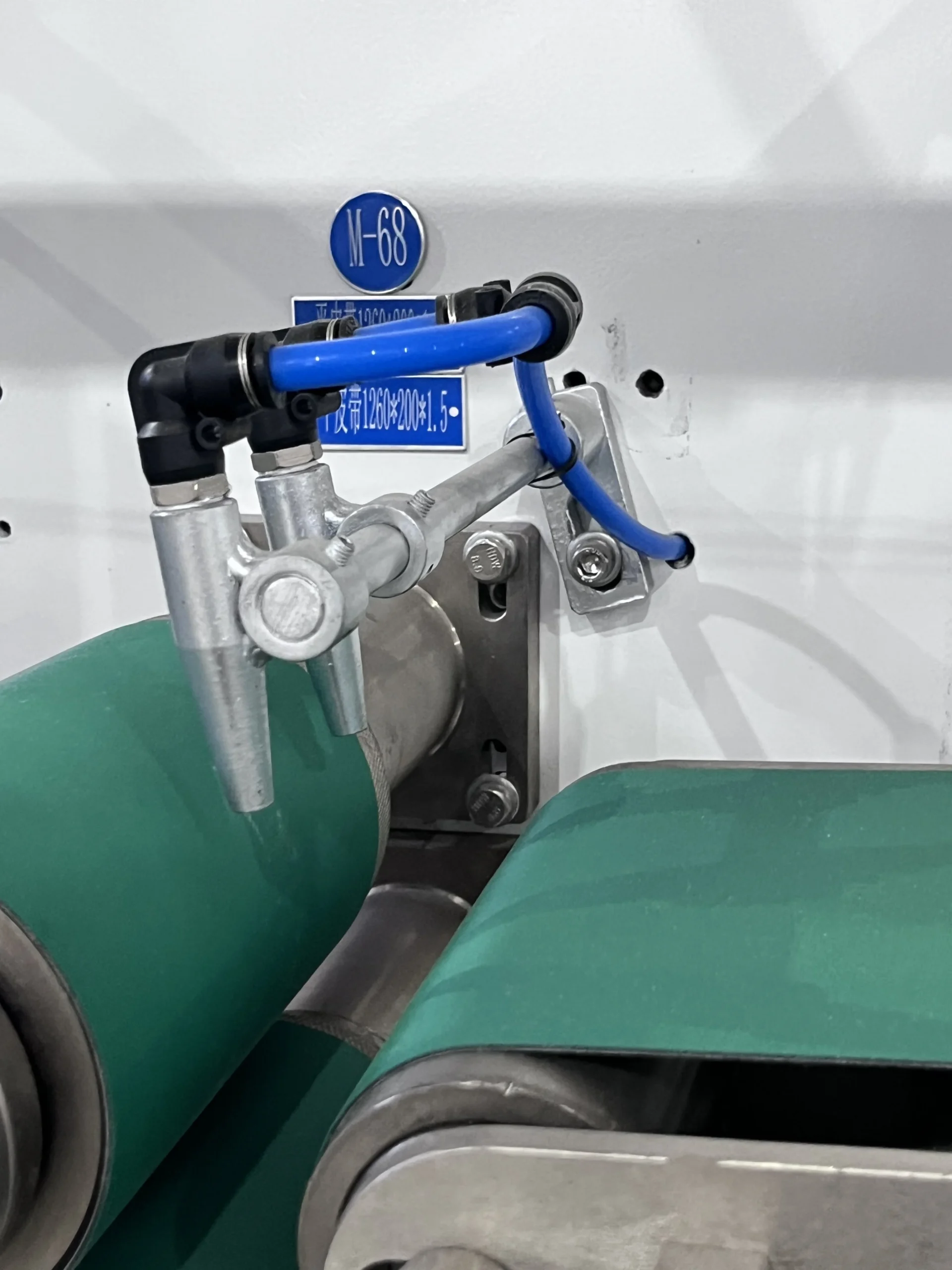
Count output after rejection, not before it. A line that reports pieces per minute at the discharge end and rejects at a separate gate can look fast while quietly filling a bin, and the production report will show it.
The record pack that ends the argument
Every acceptance test generates data and most of it disappears into a notebook. Six documents carry the project from the test into production, and all six are cheap to prepare while the engineer is still on site.
- A setting sheet per size and structure. The values that held during the test, with the material batch they were established on. Without this, the second shift rebuilds the recipe by trial.
- A defect and solution list. The published quality checklist for hygiene lines covers size consistency, weight stability, core position, SAP distribution, thickness, glue bonding, cutting accuracy, sealing quality, elastic position, packing appearance and rejected product quantity. Each item needs a named cause and a named corrective action.
- An alarm and recovery procedure. Which alarm corresponds to which station, and what the operator does in the first two minutes.
- A maintenance schedule. Welldone's published plan is routine maintenance every 8 hours, preventive maintenance every 30 days, with remote monitoring available. That schedule is the ramp-up routine, not something to be created after a breakdown.
- A spare parts and wearing parts list with quantities, matched to the maintenance intervals, so a scheduled replacement does not wait for an import shipment.
- A material specification per SKU listing the grades and batch references used during the test, because the next batch is compared against it.
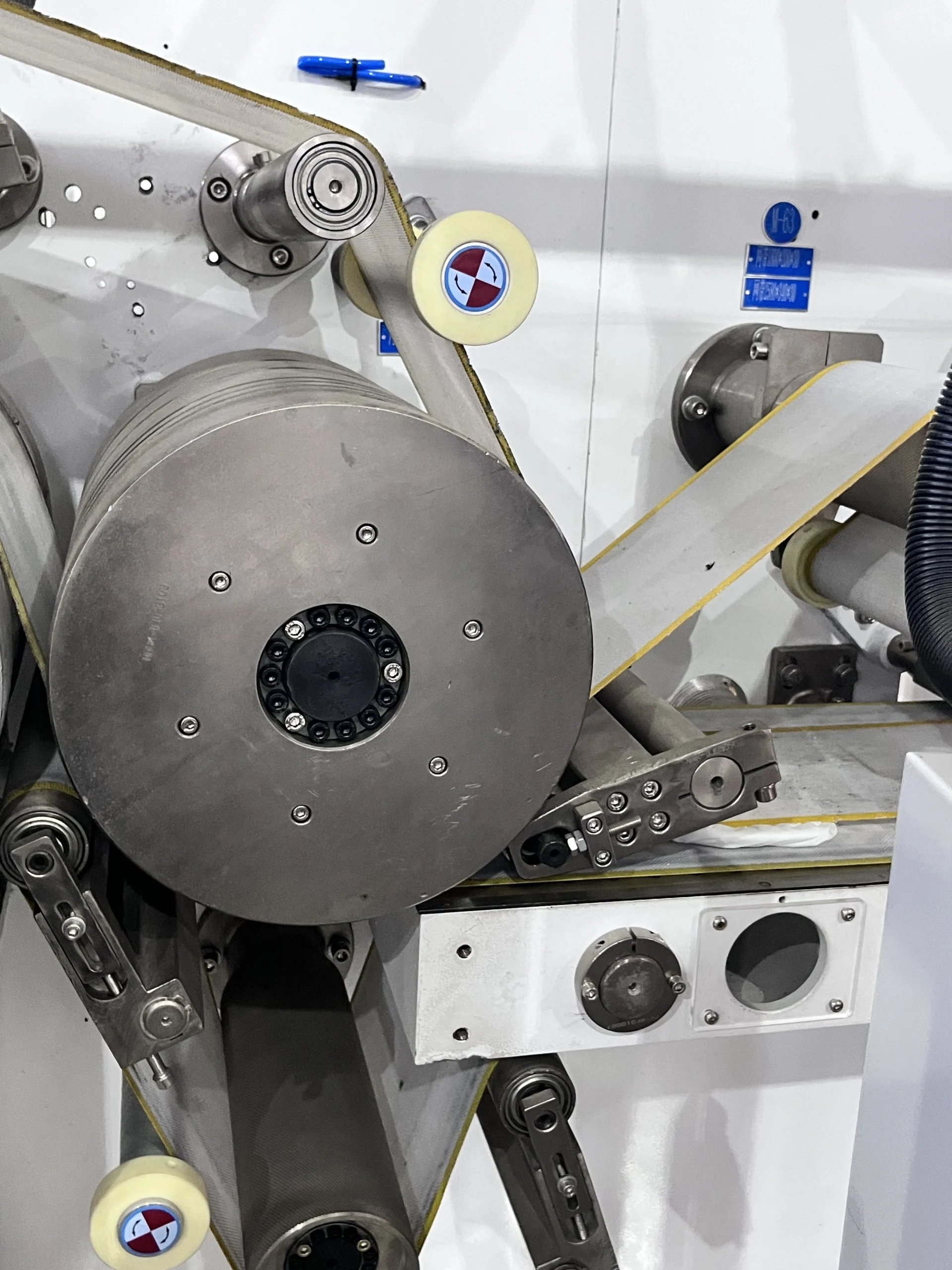
More importantly, the record pack is what makes the acceptance test transferable. A test result held in one operator's memory is a test result that ends when that operator takes leave.
Ramp-up stage gates: turn the acceptance run into a plan
Acceptance is a moment; ramp-up is a period. The difference between a project that reaches its planned output in the planned time and one that drifts is whether the period has gates.
Define them as conditions, not dates, and each gate should be a piece of evidence rather than an opinion:
- Gate 1 - the base product. One size, one material batch, stable speed held through a continuous run, good product counted after rejection, and the settings recorded.
- Gate 2 - the size ladder. Every size in your commercial range produced to standard, with a changeover timed against the published figure of under 60 minutes and the return to stable production measured.
- Gate 3 - material coverage. At least two production batches of the critical substrates accepted without re-tuning, which is the point at which the line stops being dependent on one supplier's roll.
- Gate 4 - shift coverage. The night or second shift producing to the same standard without the day-shift supervisor present. This gate is easy to skip because the day-shift team has already demonstrated the line, but it is the only gate that tests the second shift independently.
- Gate 5 - commercial run. A defined window - a week, or a production order - with availability, speed and reject data logged at the gate, so the figure is measured rather than assumed.
The constraint after handover is rarely the machine itself. It moves to the two ends of the line: material intake, because a staged material store and a roll-handling route decide how often the line waits, and packing, because a converting line rated at 450-550 pcs/min fills a discharge buffer faster than a small packing team can clear it. Both are visible in the first two weeks, and both are cheaper to fix in those two weeks than in month six.
Handover is finished when the second shift can run the line
The published description of installation handover is deliberately specific about what the buyer's team should hold by the end: machine operation, product structure, material loading, adjustment methods, common problem analysis, daily maintenance, spare parts, safety operation, quality inspection method and the communication process after installation.
That list is the acceptance criterion for the training element, and it is testable. Ask the night-shift operator, not the day-shift operator. Ask for a startup after a size change, not a startup on a line that is already running. Ask what they would check first if the side seam went weak, and listen for a station name rather than a shrug.
Welldone can provide overseas engineer support for installation, commissioning and training and for the acceptance run itself. The published configuration document is also explicit about the commercial side: the FOB Xiamen total does not include the technician travel and salary for on-site installation and commissioning, which it specifies separately. Buyers comparing totals should price that line item deliberately rather than discover it after the order.
Two model numbers, two footprints, one signature
Technical data conflict found: Welldone's public product page for the full-servo pull-up line states model WD-NK-600I-HSV at 400 KW in the product header, while the specification table on the same page states model WD-BDM-012 with a Dimension(L*W*H) of 30 x 4 x 3 and a weight of 40 T, and the details block states a working space of 39 m x 9 m x 5 m. The baby care platform page repeats the working space as 39 m x 9 m x 5 m under Machine Footprint.
These figures may describe different models, different option packages or different revisions of the same document. They must not be merged into one number, and none of them should be used as the reference for an acceptance test or for civil works without confirmation.
There is a second, softer discrepancy worth naming. The baby care platform publishes the production speed of the baby care range as a design range of 300-600 pcs/min and a stable range of 250-550 pcs/min, while the pull-up line page publishes a single model with design 600 pcs/min and stable 450-550 pcs/min. That is a range against a model figure rather than a contradiction, but it means a range taken from a category page is not an acceptance target. Only the dated specification for the ordered model is.
For a protocol that will be signed, ask for the dated technical proposal and the signed configuration sheet for the exact model, revision and option set, and make that document the controlling reference for the RFS test, the site acceptance test and the ramp-up gates.
Why Welldone
Welldone has manufactured hygiene production machinery from Jinjiang, Fujian since 2008 and configures pull-up baby diaper lines around the product structure, the size ladder, the shift pattern and the materials the buyer actually has.
Numbers stated before the test
Design speed, stable speed, passing rate, waste rate and the exclusions behind the pass rate are published on the specification, so the buyer knows what is being measured.
Pre-shipment test the buyer can witness
The RFS acceptance test runs at the seller's plant before shipment, witnessed by the buyer's representative, with the tested scope stated against the options installed at that point.
Engineering support through ramp-up
Welldone can provide overseas engineer support for installation, commissioning and training, including process adjustment, quality inspection guidance and spare parts planning.
Conclusion
The pre-shipment test proves the machine. The site test proves the installation. Neither one proves that your factory produces, and that is the only thing the project was funded for.
Write the acceptance protocol so that it measures the product, the rate and the team, in units that match the published figures, over a window long enough for the line to settle. Then carry the same discipline into the ramp-up gates, where the evidence is a setting sheet, a timed size change, a second material batch and a second shift.
The published figures give you the starting point: 600 pcs/min design, 450-550 pcs/min stable, 98% or above passing rate before the glue applicator and the splicing system, waste below 2%, and a changeover under 60 minutes. Everything after that is measured on your floor, with your materials.
Your line has passed its test. Can your second shift say the same thing without you in the room?
FAQ
What should a baby pull-up diaper machine acceptance test measure?
At minimum, three things: the product against your own specification, the production speed held over a continuous window, and the ability of your operators to run, adjust and recover the line. The published figures for the pull-up platform are 600 pcs/min design speed, 450-550 pcs/min stable speed, a passing rate of 98% or above and a waste rate below 2%, with the passing rate stated as excluding the glue applicator and the auto splicing system.
What is the RFS acceptance test and when does it happen?
Welldone's published configuration document states that the RFS acceptance test is witnessed by the buyer's representative before shipment and that it runs the production section at 300 m/min for 30 minutes against minimum efficiency and maximum waste parameters. Optional items installed before the RFS test are tested as part of the line; items deferred to post-shipment installation fall outside that test window.
Why is the RFS speed published in m/min when the machine is rated in pcs/min?
They measure different things. A line speed counts metres of web per minute; a piece rate counts finished products per minute. Welldone's published forming analysis states that the WD-NK800I-SV runs at 600 pcs/min on L size, which corresponds to a line speed of 300 m/min at a 500 mm pitch, and publishes a product length range of 360-580 mm. The unit has to be read with the figure before any two speed numbers are compared.
Does the published 98% passing rate cover the whole line?
No. The pull-up specification states the passing rate as 98% or above excluding the glue applicator and the auto splicing system. Those components are typically third-party supplied and their behaviour depends on materials and settings outside the line builder's control. Allow for their contribution when you set the acceptance target, and test the adhesive system as a separate item with its own criteria.
How long should the line hold stable speed during acceptance?
The duration is a contract decision rather than a fixed published figure, and it should be long enough to include a splice, a roll change and a recovery. The published stable speed band for the pull-up platform is 450-550 pcs/min, so the sensible structure is to name the speed, name the duration and name the events the window has to contain.
Who pays for the engineer's time during installation and commissioning?
The published configuration document states that the FOB Xiamen total does not cover ocean freight, insurance, in-land transportation at the destination, or the technician travel and salary for on-site installation and commissioning, which it specifies separately. Welldone can provide overseas engineer support for installation, commissioning and training; the commercial terms for that support are confirmed per project.
Write the acceptance test before the line is built
Send Welldone your product structure, size ladder, material specifications and shift pattern. We will map the published speed, yield and changeover figures against your protocol and identify which items belong in the pre-shipment test and which belong on your floor.
Request an acceptance and ramp-up reviewView baby care linesWebsite: www.cnwelldone.com Email: welldone@cnwelldone.com