2-Piece vs 3-Piece Baby Pull-Up Diaper Guide | Welldone

2-Piece vs 3-Piece Baby Pull-Up Diaper: Which Structure Fits Your Market?
A buyer sends two sample pants to three suppliers. One supplier calls the product 2-piece, another calls it 3-piece, and the third quotes a “big waistband pull-up line.” The prices cannot be compared because the machine scopes are not describing the same assembly route.
Choose the product construction first. Then ask the line to reproduce it.
Starting a Baby Pull-Up Diaper Manufacturing Business · Part 1 of 7
Part 1 — this article: choose between 2-piece and 3-piece construction.
Next: waistband elastic feeding, lamination and sealing.
Part 1 — this article: choose between 2-piece and 3-piece construction.
Next: waistband elastic feeding, lamination and sealing.
Why “2-piece” or “3-piece” is not a complete specification
Actually, the number in the product name is useful only when both sides count the same components. Public supplier descriptions do not always define those boundaries in the same way.
The safe starting point is a physical sample, an unfolded drawing and a bill of materials. Mark the absorbent chassis, front and back waist sections, elastic zones, joining positions and side-seam construction. The machine supplier can then map each layer to an unwind, tension zone, lamination station or sealing station.
Procurement rule: do not approve a quotation that defines the product only as “2-piece pull-up” or “3-piece pull-up.” Attach the approved sample and construction drawing to the technical agreement.
Compare assembly complexity, not marketing labels
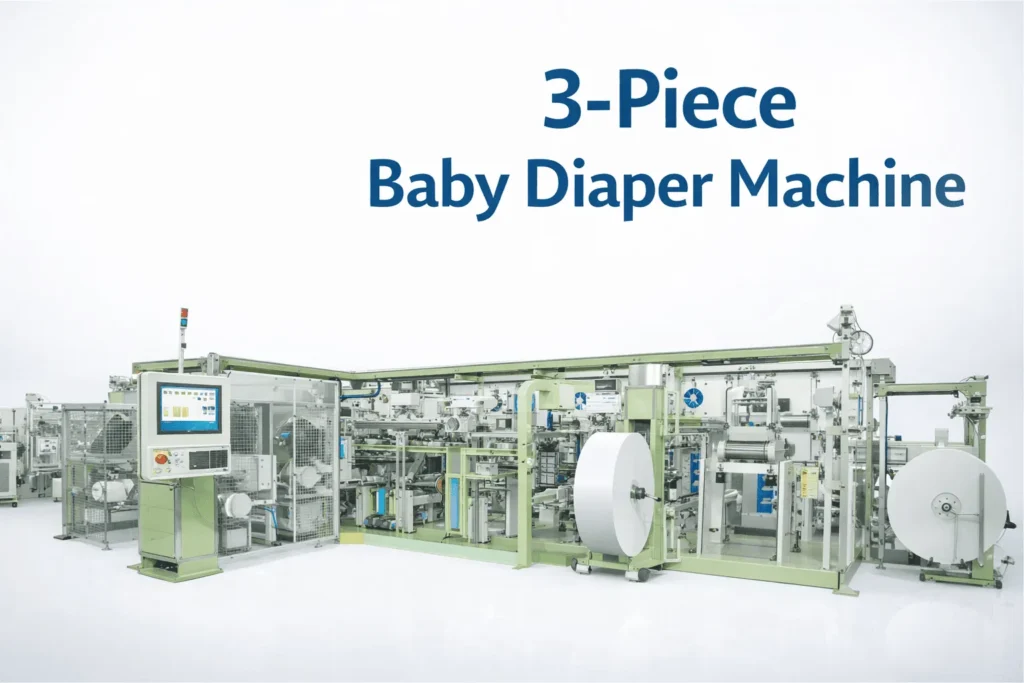
Welldone lists separate 2-piece and 3-piece pull-up baby diaper platforms. Its published comparison guidance describes the 2-piece route as using fewer assembly steps than a 3-piece build while still producing a finished pant.
That does not make one structure universally better. Fewer joining relationships can simplify setup; more separately controlled sections can support a different waist construction or product appearance. The correct choice depends on the sample your sales channel expects.
| Decision factor | 2-piece direction | 3-piece direction | Evidence to send the supplier |
|---|---|---|---|
| Assembly route | Fewer joining steps in Welldone’s published comparison | Additional assembly relationships must remain registered | Unfolded sample and layer drawing |
| Waist construction | Confirm how front and back sections are formed | Confirm how waist sections join the absorbent chassis | BOM, elastic map and material widths |
| Process control | Fewer interfaces may shorten initial setup | More interfaces increase registration and bonding checks | Tolerance and test method for every join |
| Market fit | Use when the approved market sample matches this build | Use when the approved market sample requires this build | Retail benchmark samples by size |
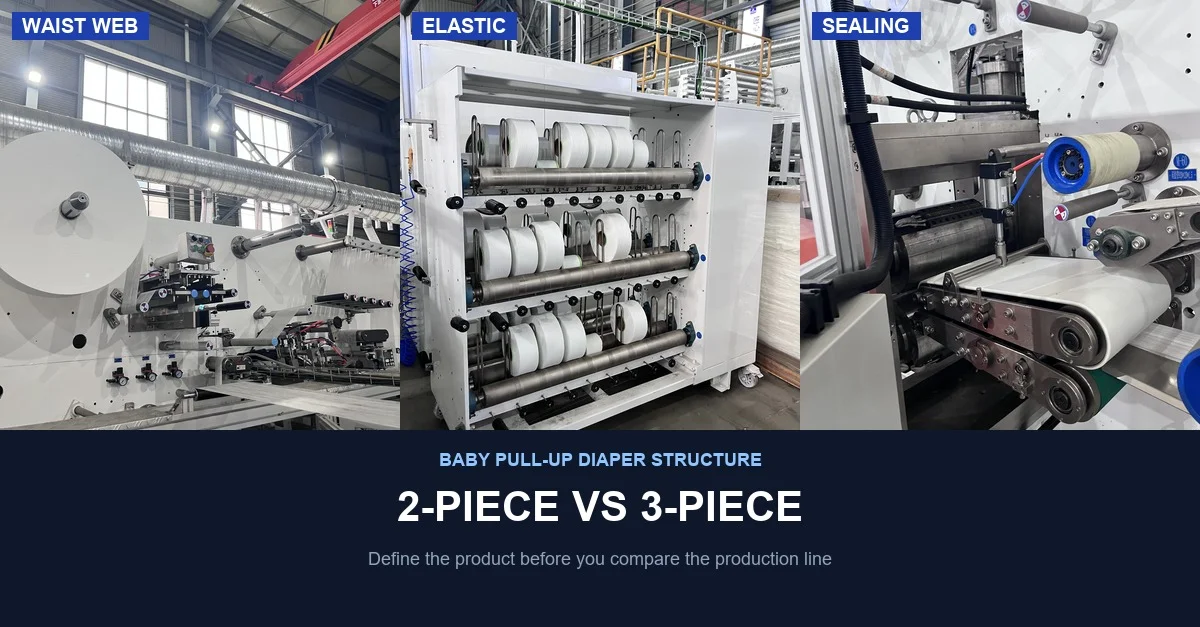
The waistband material path changes the machine scope
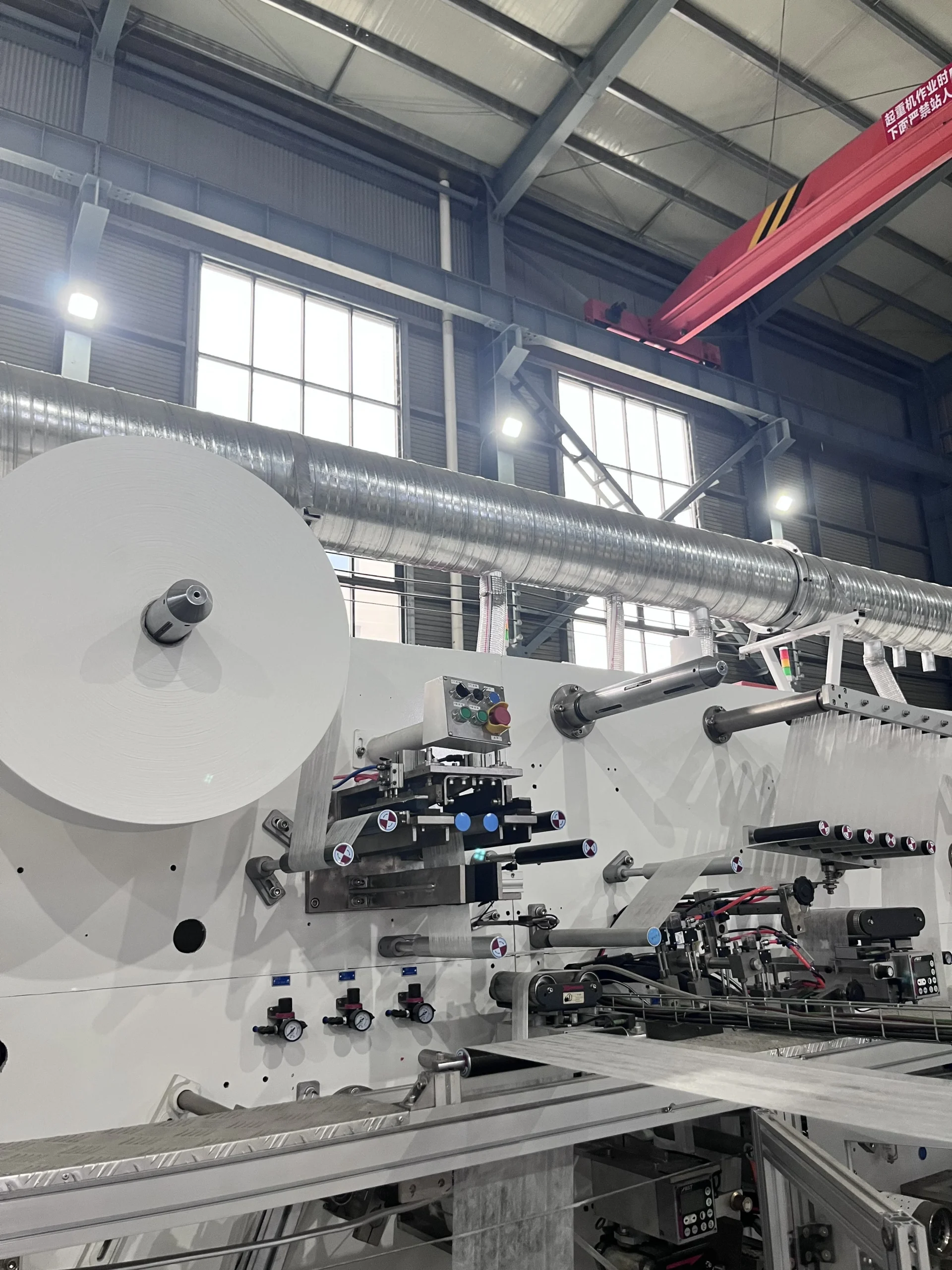
A pull-up diaper is a garment, not a tape diaper with a different name. The waist section must stretch, recover and remain joined to the absorbent chassis while the child moves.
Ask how many waistband webs enter the line, where each web is split or folded, and where it meets the chassis. A quotation that omits those paths may still list “waistband system,” but the supplied station may not reproduce your sample.
Elastic count is only the beginning
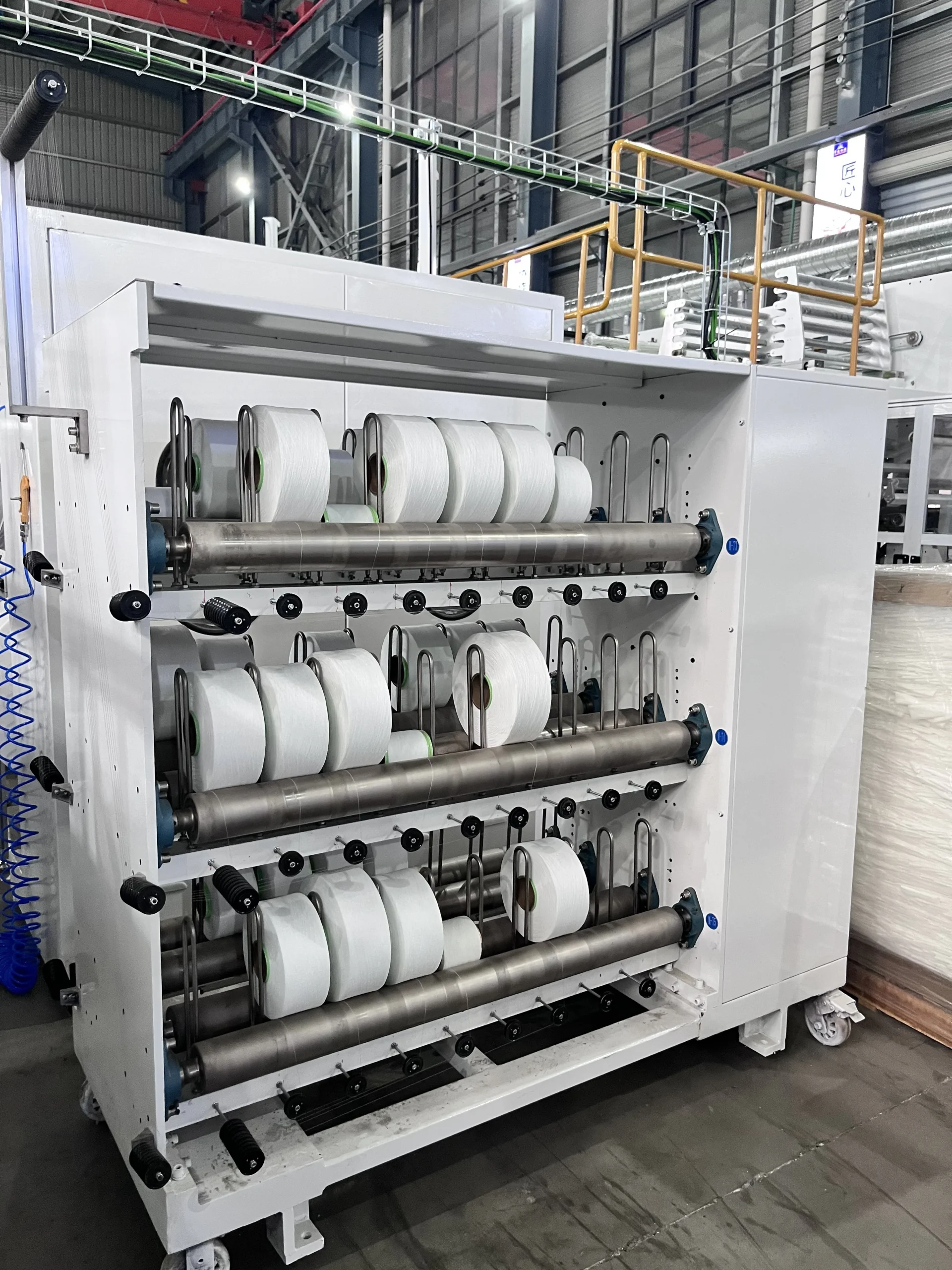
The elastic rack may carry many individual packages, but package count alone does not define product quality. Pre-stretch, strand spacing, glue pattern and the relationship between elastic speed and nonwoven speed must remain coordinated.
A common factory symptom is a waistband that looks even while flat but twists after it is stretched by hand. The defect often begins upstream, where one strand enters with different tension or one material roll changes diameter faster than the control recipe expects.
The real question is whether the line can reproduce the approved waist circumference and recovery behavior across every planned size — not whether the quotation lists more elastic positions.
Lamination and side sealing create the real structure
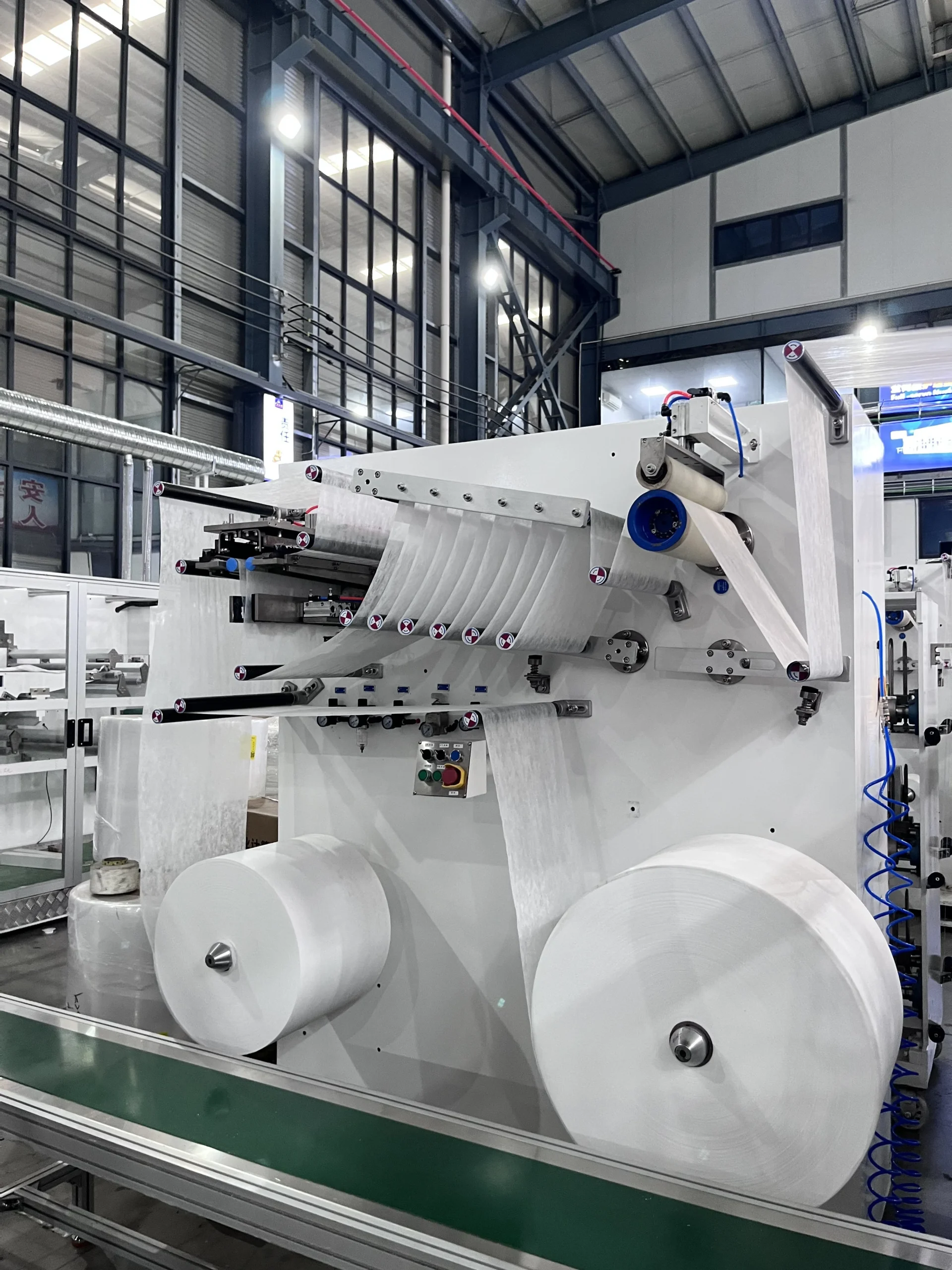
The waistband becomes a functional component only after its layers are laminated under controlled tension. That laminated web must then join the absorbent body at the correct position.
More interfaces mean more relationships to check: web centering, adhesive placement, elastic coverage and panel-to-chassis registration. If the join moves, the finished pant can be dimensionally correct on paper and still sit crooked on the wearer.
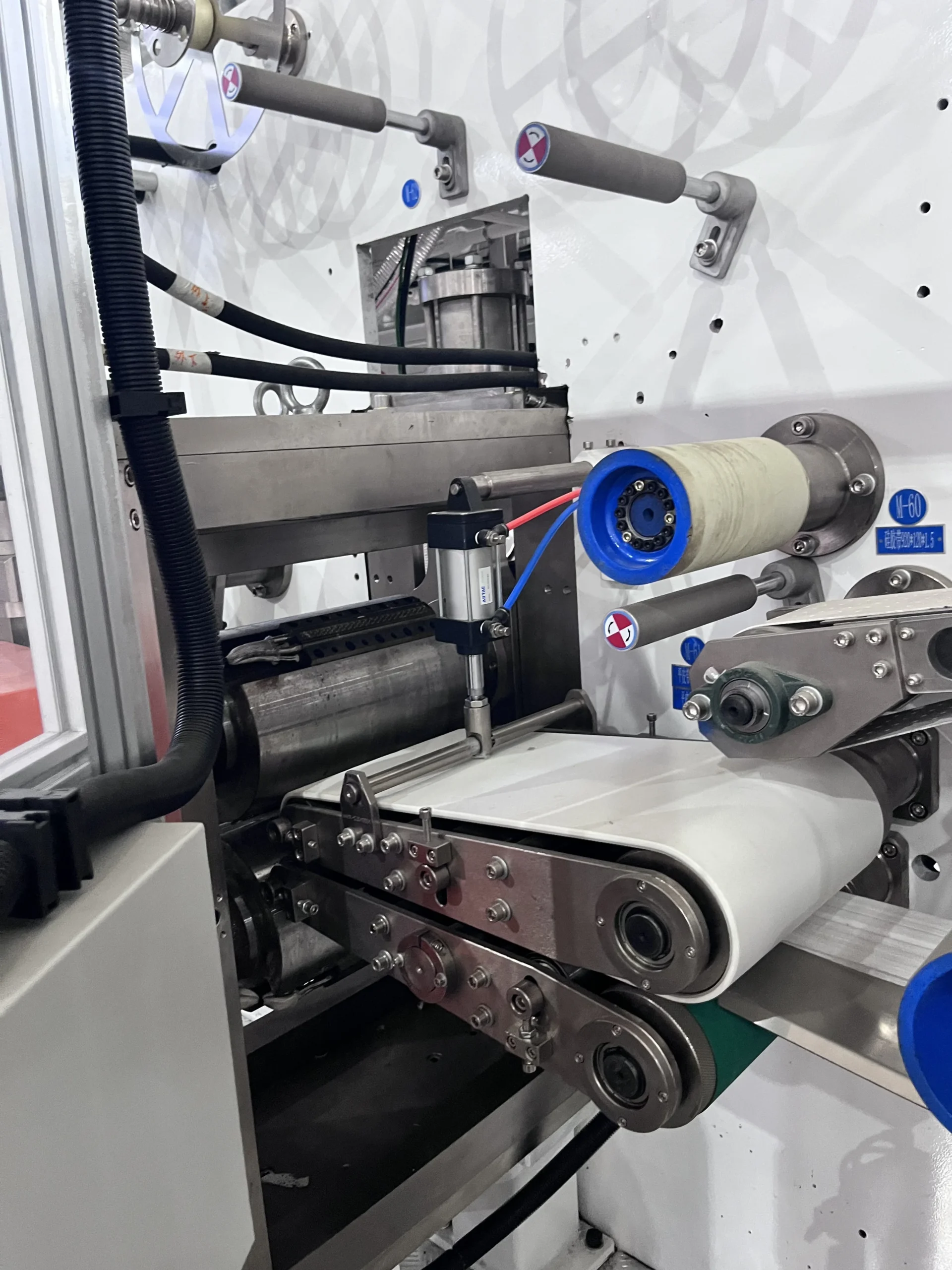
I believe the side seam should be treated as an acceptance item, not a cosmetic detail. Test it with the intended nonwoven and elastic construction, then define the pass method in the agreement.
SKU planning can overturn the first choice
A sample that works in one size does not prove that the full size range is easy to run. S, M, L, XL and XXL may require different material widths, elastic layouts, core dimensions, cutting tools and packaging counts.
Welldone’s baby care overview lists S through XXL support and a minimum changeover time below 60 minutes for the platform. Those figures are not a promise for every custom structure. Confirm which parts change, which values are recipe-controlled and what trial material is consumed during each format change.
Not catalogue flexibility. Scheduled flexibility.
A practical decision framework
More importantly, choose from the market backward rather than from the equipment forward.
- Buy three benchmark products. Select the exact quality tier and size range your distributors expect.
- Open and label every layer. Record the chassis, waist panels, elastic zones, joining lines and tear-away features.
- Build the first-year SKU list. Separate launch sizes from options that may never enter the production schedule.
- Request two station maps. Ask the supplier to show how the 2-piece and 3-piece routes would manufacture the same target performance.
- Compare change parts and tests. Evaluate what must be changed and verified, not only the total machine price.
Welldone’s current baby care overview publishes a platform range of 300–600 pcs/min design speed and 250–550 pcs/min stable speed. It does not assign a universal speed advantage to either product label. Structure and machine configuration still have to be confirmed together.
What to attach to the quotation request
| Input | Minimum detail | Machine decision affected |
|---|---|---|
| Physical samples | Front, back and unfolded photos for every launch size | Structure interpretation and finished-product route |
| BOM | Material names, widths, basis weights and supplier grades | Unwinds, guides, tension and adhesive application |
| Waist map | Elastic strand positions, stretch target and recovery test | Elastic feeding and waistband lamination |
| Join map | Panel joins, side seams and required bond test | Lamination and sealing stations |
| SKU plan | Sizes, monthly volume, pack count and changeover sequence | Change parts, recipes and downstream packing |
The T-shape versus 3-piece comparison explains why a pull-up line adds garment-assembly complexity. This week’s next article will go deeper into the waistband stations that control fit.
Why Welldone
Welldone supplies separate 2-piece and 3-piece pull-up platforms and configures baby care lines from product samples, material specifications and target formats.
Structure review
The engineering discussion starts with the sample, BOM and layer map rather than a label alone.
Station mapping
Waistband, elastic, lamination, sealing and cutting requirements are translated into a defined process route.
Project support
Welldone can provide overseas engineer support for installation, commissioning and training.
Conclusion
Two-piece and three-piece are starting labels, not complete engineering specifications. The factory decision becomes clear only when the target garment is translated into material paths, joins, elastic zones, change parts and acceptance tests.
If three suppliers use the same product name but draw three different layer maps, which quotation are you actually comparing?
FAQ
Is a 3-piece pull-up diaper automatically better?
No. Product quality depends on the approved construction, materials, process control and testing. Choose the structure that reproduces the target market sample.
Is a 2-piece line always simpler to operate?
Welldone’s published comparison describes fewer assembly steps than a 3-piece build, but actual operating complexity depends on the specified waist construction, materials, sizes and control architecture.
Can one line make both structures?
Do not assume this from the product name. Ask the supplier to provide both station maps, change-part lists and expected changeover work using your samples before treating the line as convertible.
What should be confirmed before choosing the drive system?
First lock the structure, SKU range and critical registration points. The next article in this series will connect those stations to full-servo and semi-servo control choices.
Send the sample before you compare the machine
Welldone can review your pull-up diaper sample, BOM and size plan before defining the production route.
Request a structure reviewView baby care linesWebsite: www.cnwelldone.com Email: welldone@cnwelldone.com