Diaper Machine Stable Speed at Canton Fair | Welldone Guide

Design Speed vs Stable Output: Questions to Ask at Booth 19.1I29
A buyer reads "600 pcs/min" on a quotation at a machinery exhibition. He multiplies it by the minutes in a shift and writes a monthly output target before asking which product, material set or quality rule the number assumes.
The arithmetic is easy. The definition is missing.
140th Canton Fair Hygiene Machinery Sourcing Series - Part 3 of 6
Part 1: Prepare the samples, BOM and factory data.
Part 2: Compare production-line scope before price.
Part 3 - this article: separate design speed, stable speed and qualified output.
Part 4: compare full-servo and semi-servo control scope.
Part 5: convert booth claims into material trials and FAT.
Part 6: turn meeting records into a formal proposal.
Part 1: Prepare the samples, BOM and factory data.
Part 2: Compare production-line scope before price.
Part 3 - this article: separate design speed, stable speed and qualified output.
Part 4: compare full-servo and semi-servo control scope.
Part 5: convert booth claims into material trials and FAT.
Part 6: turn meeting records into a formal proposal.
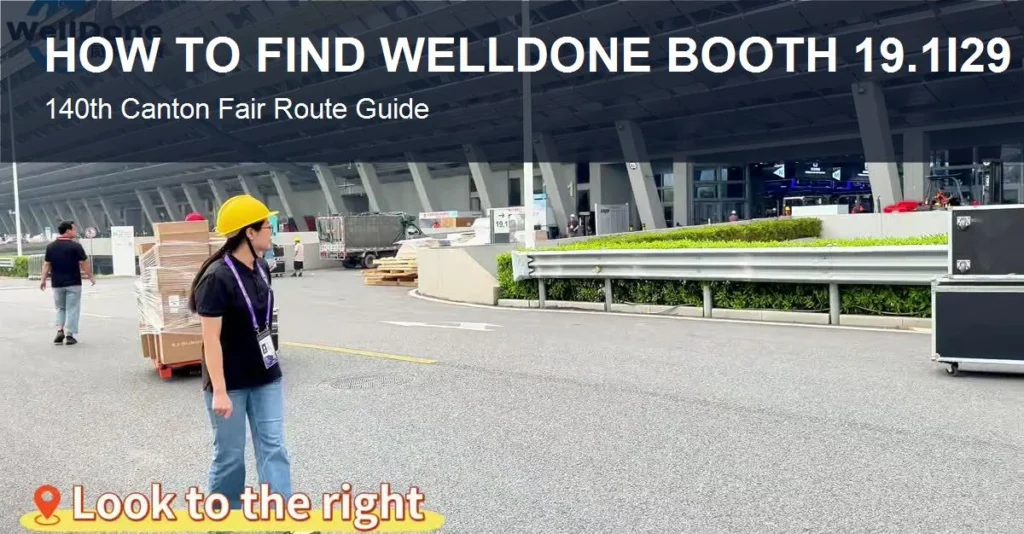
Confirmed event information: Welldone will attend Phase 1 of the 140th Canton Fair, October 15-19, 2026, at the China Import & Export Fair Complex in Guangzhou. Discuss hygiene production machinery at Booth 19.1I29.
One quotation needs three different output numbers
Design speed is the engineering ceiling stated for a defined machine configuration. Stable speed is the sustained operating range under agreed product, material and process conditions. Qualified output is the product that passes the agreed quality criteria within that run.
Actually, these numbers answer different questions. Design speed asks what the configured system is designed to reach. Stable speed asks what the full process can hold. Qualified output asks how much saleable product remains after the quality gate.
| Number | What it describes | What must be attached |
|---|---|---|
| Design speed | Configured engineering ceiling | Machine model, product structure, size and included modules |
| Stable speed | Sustained operation under defined conditions | Materials, recipe, run window, stoppage rules and operators |
| Qualified output | Accepted pieces after inspection | Defect list, sampling method, exclusions and reject records |
| Packed output | Accepted packs at the downstream boundary | Pack count, bagger scope, accumulation and packing rejection |
If one number is used for all four rows, the quotation cannot yet support a production plan.
Fix the product and material conditions before accepting a speed
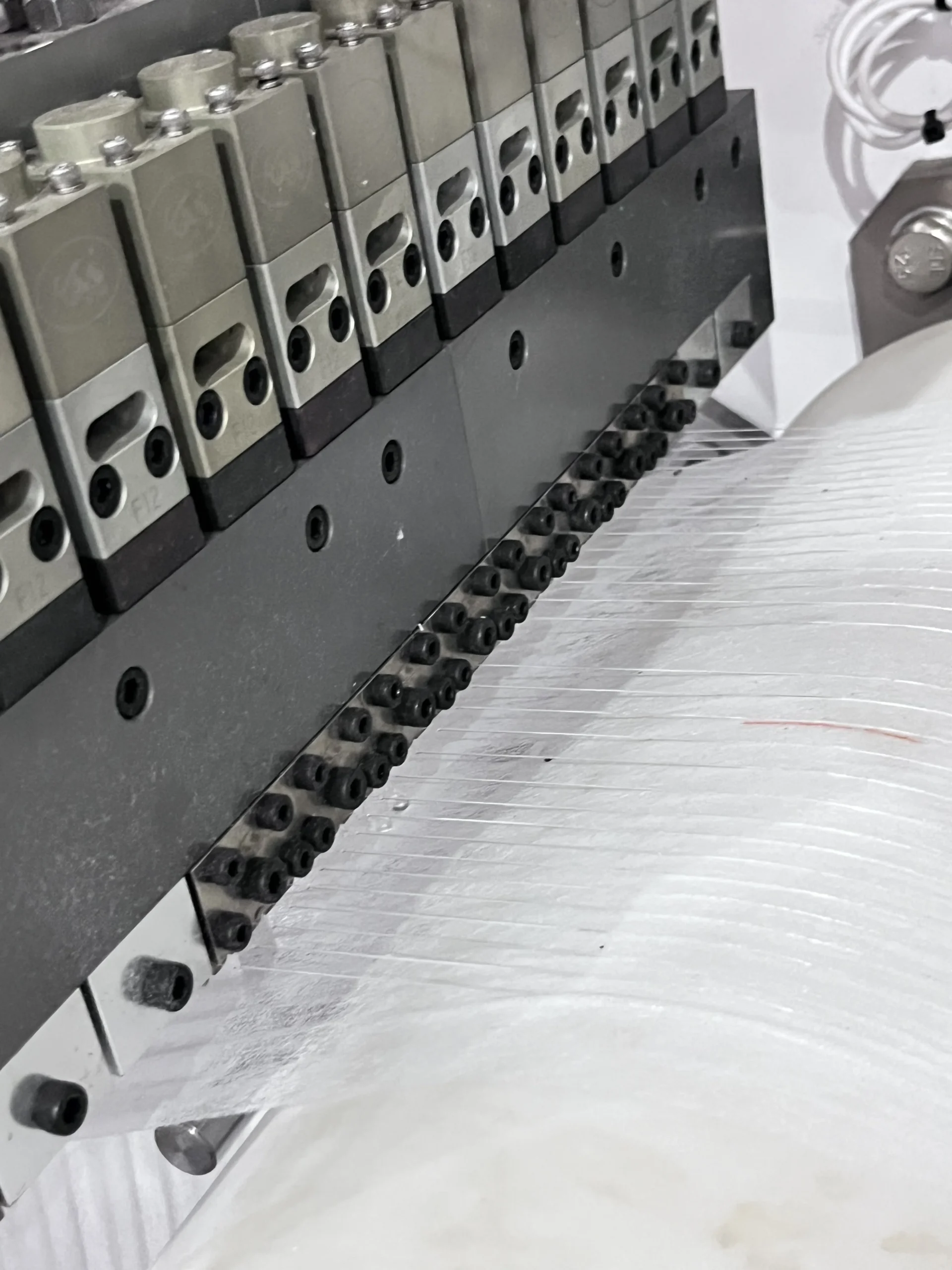
A speed statement is incomplete without the test product. Record the pull-up structure, finished size, core dimensions, waistband construction, elastic count, material grades and packing boundary.
The same machine can face different loads when web width, core weight or elastic construction changes. A result achieved on one easy SKU does not automatically define the stable range for every launch format.
The real question is simple: which signed sample and BOM will be running when the speed is measured?
Do not mix metres per minute with pieces per minute
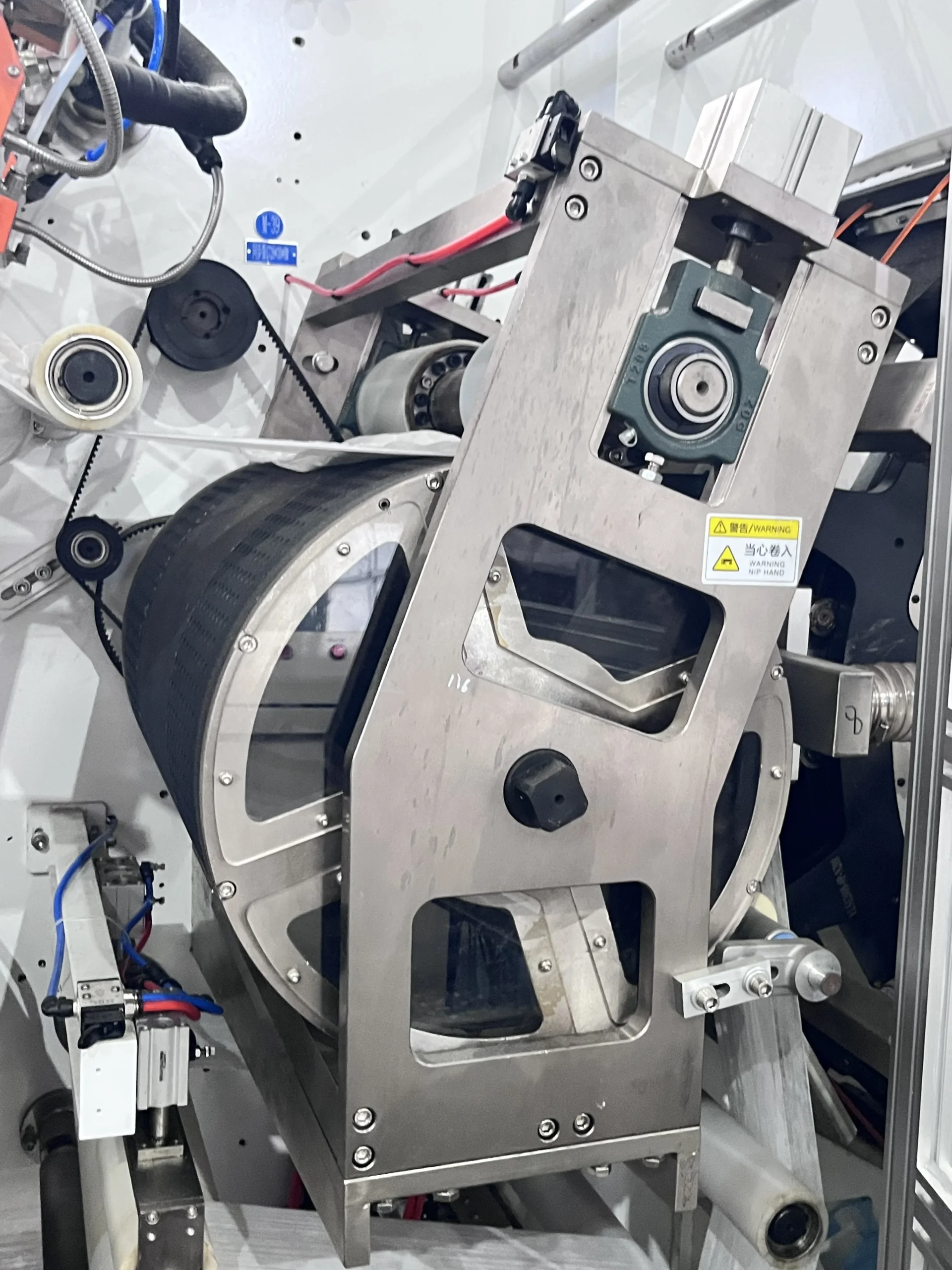
Web speed in `m/min` describes linear movement. Product output in `pcs/min` describes discrete units. Converting one to the other requires the effective product pitch and the number of products created per repeating process interval.
A 300 m/min RFS condition therefore cannot be declared equal to a particular `pcs/min` value without that missing geometry. Product spacing, transfer logic and any multi-lane arrangement must be known first.
Same minute. Different unit. No valid comparison until the product pitch is written beside it.
Calculate qualified output only after defining the quality gate
Welldone's pull-up product information states a passing rate of at least 98%, with glue application and automatic splicing excluded from that stated scope. That exclusion matters because it defines what the percentage does and does not cover.
Illustrative arithmetic only: applying 98% to the published 450-550 pcs/min stable range gives 441-539 accepted pieces per minute. This is not a customer result, quotation or universal guarantee. It assumes the stated passing-rate scope and must be replaced by the signed project's actual acceptance conditions.
I believe buyers should ask for the numerator and denominator behind every percentage. Are startup pieces counted? Are splice-related rejects included? Does the test include glue application, automatic splicing, vision inspection and downstream packing?
| Quality item | Definition to write | Evidence during test |
|---|---|---|
| Accepted piece | Dimensions, position, bond, appearance and functional checks | Approved sample and inspection sheet |
| Startup waste | Start and end points for counting | Time-stamped startup record |
| Splice reject | Included or excluded from the rate | Splice log and reject count |
| Process defect | Defect categories and responsible station | Vision/manual inspection and reject record |
| Packing reject | Inside or outside main-line acceptance | Pack count and bag-seal inspection |
Find the station that limits sustained speed
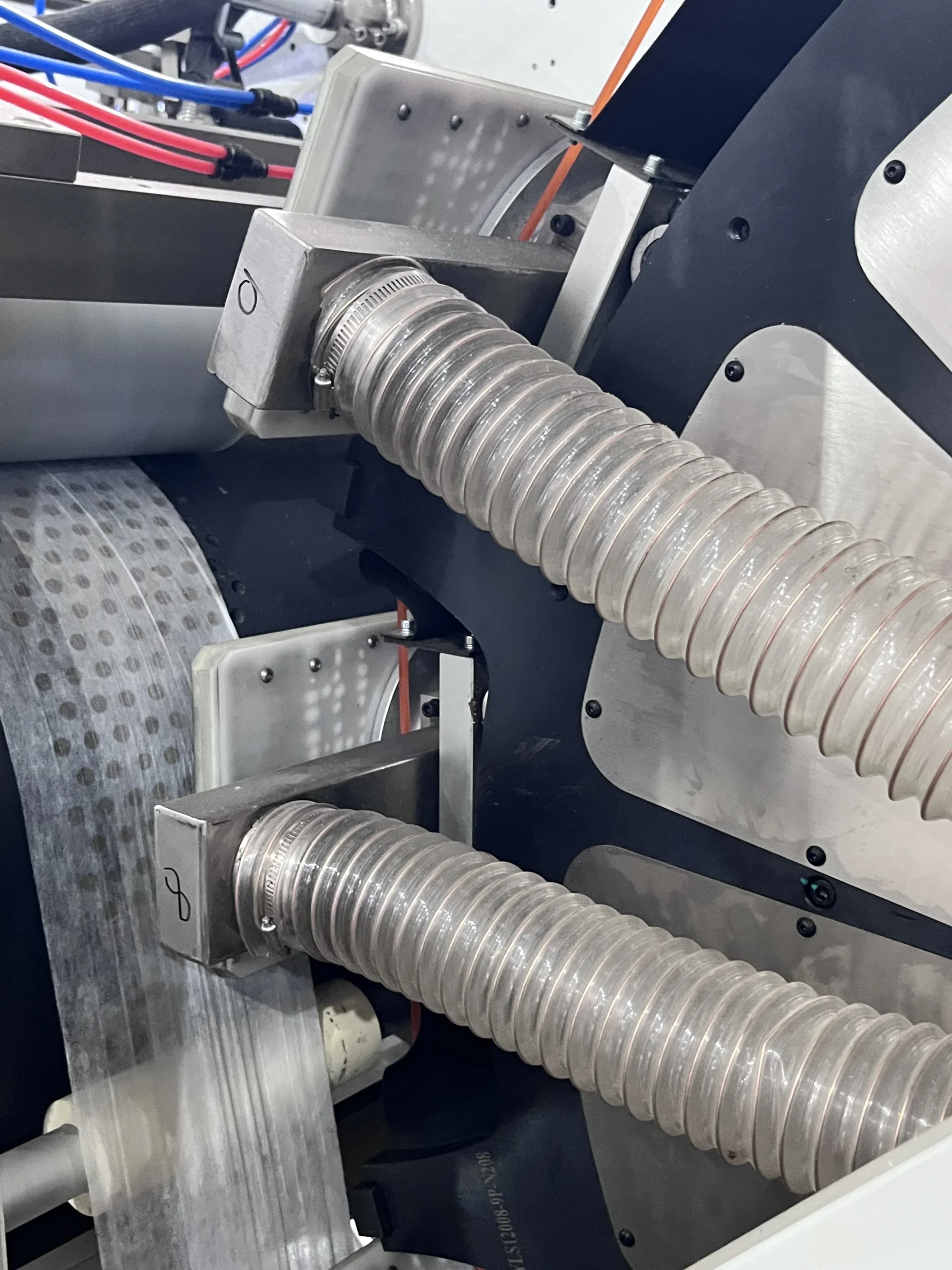
A line runs only as steadily as its tightest process window. The forming system may hold its target while waistband lamination drifts. The cutter may stay in phase while the rotary transfer loses pickup position during acceleration.
Ask which station first limits the stable run for the target SKU. Then request its alarm history, correction method and reject signature. That evidence is more useful than a video of the line touching top speed for a short interval.
More importantly, include stops and restarts. A line that is stable only after a long manual setup has a different operating profile from one that can recover its recipe after an ordinary interruption.
Check whether the downstream system can accept the main-line output
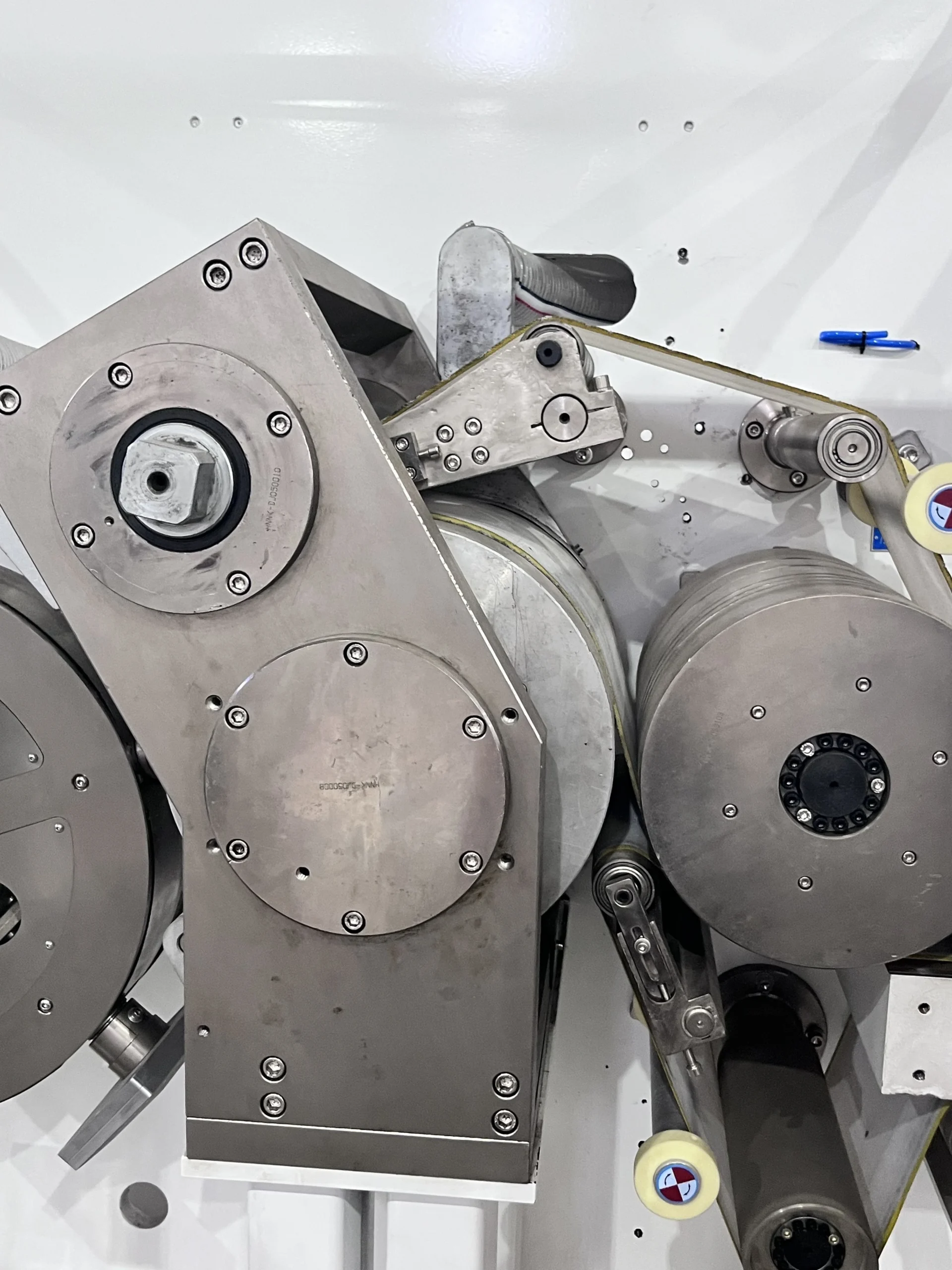
Main-line output is normally stated in pieces per minute. A bagging system is normally discussed in packs or bags per minute. Pack count and compression therefore determine whether the downstream system can absorb the qualified pieces.
Do not treat a full stacker as a main-line failure until the packing boundary is defined. Record where counting begins, how accumulation works, what happens during a bag change and whether downstream rejects are included in the acceptance total.
Replace a peak-speed demonstration with a defined run window
A short peak proves that the machine can pass through a speed. It does not prove sustained production. The test window must say when timing starts, which planned actions are allowed and what causes a restart.
Welldone configuration content describes an RFS production-section test at 300 m/min for 30 minutes against minimum efficiency and maximum waste parameters. The same content states that options installed before RFS are inside the window, while deferred options are outside it.
That is a test condition, not a universal `pcs/min` promise. Buyers should link the run window to the selected product, pitch, installed options, material lots and quality protocol.
Take this speed-verification sheet to Booth 19.1I29
| Question | Required answer | Document after the meeting |
|---|---|---|
| Which exact product is tested? | Approved sample, size and structure | Product specification sheet |
| What is the design speed? | Number, unit and configured model | Dated configuration |
| What stable range is proposed? | Range plus material and recipe conditions | Operating-condition matrix |
| How is qualified output counted? | Acceptance criteria, exclusions and count window | Inspection and reject protocol |
| Which modules are inside the test? | Main line, inspection, reject, stacker and bagger status | Included/excluded scope |
| How long must the line run? | Duration, stop rules and restart conditions | FAT or RFS procedure |
| Who signs the result? | Buyer and supplier witnesses | Signed acceptance record |
The meeting should end with owners and dates for every missing field. "Confirmed later" is not a speed definition.
Technical data conflict: keep each figure inside its source boundary
Technical Data Conflict Found: Welldone's baby-care category gives a 300-600 pcs/min design range and 250-550 pcs/min stable range across multiple platforms. Its full- and semi-servo sections state 600 pcs/min design and 450-550 pcs/min stable. A separate I-shape configuration reference states 800 pcs/min design and 600 pcs/min stable. RFS content uses 300 m/min for 30 minutes. These figures describe different products, configurations, units or test scopes and must not be merged.
The article therefore uses the pull-up product page's 600 pcs/min design, 450-550 pcs/min stable and at least 98% passing-rate figures only as a sourced example. The signed, dated configuration for the selected product must control the commercial commitment and acceptance method.
Why define speed with Welldone at Booth 19.1I29
Welldone can connect the speed discussion to the product sample, BOM, machine scope and acceptance documents instead of leaving one headline number on the quotation.
Condition first
Product, size, materials and installed modules are fixed before the run number is evaluated.
Quality included
Accepted pieces, reject categories and exclusions are written beside the output figure.
Testable handover
The booth record becomes a dated configuration and FAT or RFS procedure.
Welldone can provide overseas engineer support for installation, commissioning and training. The exact service and acceptance scope is confirmed per project.
A speed promise is only as strong as its test definition
Design speed supports engineering selection. Stable speed supports operating planning. Qualified output supports the business case. Packed output confirms whether the whole line boundary works.
If your current quotation lost every number except one, which definition would you keep to protect the factory: peak speed, stable range or accepted packed output?
FAQ
Is 600 pcs/min the expected production rate for every pull-up SKU?
No. It is a sourced design-speed figure for the referenced configuration. Stable and qualified output require the agreed product, materials, modules and test conditions.
Can 300 m/min be converted directly to pieces per minute?
No. The effective product pitch and process arrangement are required before linear web speed can be converted into discrete output.
Does a 98% passing rate mean 98% packed output?
Not automatically. The cited pull-up figure excludes glue application and automatic splicing, and packing may sit outside the stated scope. Define all exclusions in writing.
What should be written into FAT or RFS?
Specify product, size, material lots, installed modules, target range, run duration, stop rules, quality criteria, exclusions, reject categories and signatories.
Where can we review these conditions with Welldone?
Bring the quotation, sample, BOM and output target to Booth 19.1I29 during Phase 1 of the 140th Canton Fair, October 15-19, 2026.
Turn the speed line into an acceptance sheet
Bring your target product, materials, shift plan and quotation to Booth 19.1I29. Define the unit, conditions, quality gate and test window before using any speed in a capacity model.
Book a technical meetingPrepare your meeting packWebsite: www.cnwelldone.com
Email: welldone@cnwelldone.com