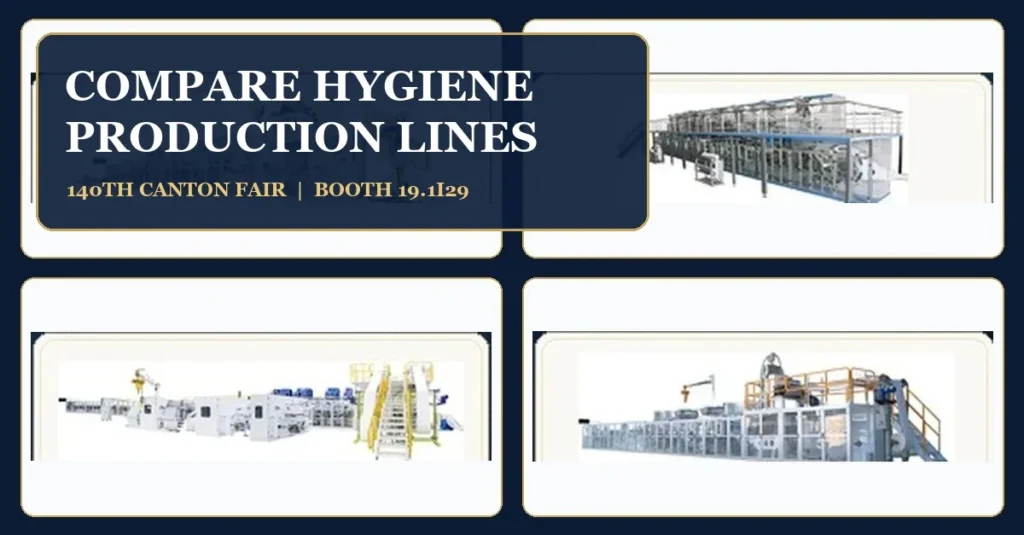
Full Servo Hygiene Machine Axis Map at Canton Fair | Welldone

Full Servo, Semi Servo and Axis Maps at the 140th Canton Fair
Two hygiene machinery quotations both say "Full Servo." One lists more motors. The other costs more. Neither tells the buyer which axis controls the waistband, which station follows a mechanical train or what signal restores registration after a stop.
Counting motors feels objective. It is not yet a control comparison.
140th Canton Fair Hygiene Machinery Sourcing Series - Part 4 of 6
Part 1: Prepare the project pack.
Part 2: Compare line scope before price.
Part 3: Separate design speed from qualified output.
Part 4 - this article: compare control responsibility through an axis map.
Part 5: convert claims into material trials and FAT.
Part 6: turn meeting records into a formal proposal.
Part 1: Prepare the project pack.
Part 2: Compare line scope before price.
Part 3: Separate design speed from qualified output.
Part 4 - this article: compare control responsibility through an axis map.
Part 5: convert claims into material trials and FAT.
Part 6: turn meeting records into a formal proposal.
Confirmed event information: Welldone will attend Phase 1 of the 140th Canton Fair, October 15-19, 2026, at the China Import & Export Fair Complex in Guangzhou. Discuss hygiene production machinery at Booth 19.1I29.
Why "full servo" is not a complete specification
A drive label describes an architecture direction, not every control responsibility. The buyer still needs to know which stations have independent motion, which groups share a reference and which adjustments remain mechanical.
Actually, the important number is not the motor count. It is the number of product relationships that can be measured, corrected and restored without losing the approved sample.
| Quotation label | What it may indicate | What it does not prove |
|---|---|---|
| Full servo | Independent electronic axes and no common main shaft in the published platform description | Every station has feedback, every parameter is recipe-controlled or every material variation is compensated |
| Semi servo | Main-shaft transmission with selected key stations under servo control | Which relationships are electronic, which remain mechanically phased or how changeover is executed |
| Mechanical | Cam, gear, belt and inverter-based control | Poor output; suitability depends on product stability, maintenance capability and change frequency |
The real question is which architecture matches the factory's products, operators, maintenance skills and changeover schedule.
Read the axis map as a responsibility document
An axis map should connect each controlled motion to the physical station, master reference, feedback device, recipe item and fault response. A motor list without these columns is an inventory, not an operating model.
| Axis-map field | Question to ask | Factory consequence |
|---|---|---|
| Physical function | Which web, cutter, sealer or transfer does this axis move? | Links an alarm to the actual product feature |
| Master reference | What position or speed does the axis follow? | Shows how station timing stays related to product pitch |
| Feedback | Encoder, registration mark, tension signal or operator setting? | Reveals whether the system measures the error it claims to correct |
| Recipe | Which settings change automatically with the SKU? | Separates stored parameters from manual setup |
| Recovery | How is phase restored after stop, splice or drive fault? | Defines restart waste and technician workload |
Ask for the axis map before comparing servo brands. Brand matters for service and spares, but it cannot repair a missing control relationship.
Start at the unwinds: control begins before forming
Welldone's published baby-care architecture describes all unwinds as servo-driven in both full-servo and semi-servo directions, while the semi-servo line retains mechanical main-shaft transmission for other functions. This is why one label cannot describe the entire line.
For each unwind, request the material name, braking or drive method, web-guiding point, tension feedback and splice logic. A lighter roll, a new material batch or a splice introduces a disturbance before the product reaches the forming station.
I believe an axis map that starts at the cutter is already too late. The first drifting material can create the defect that becomes visible several stations downstream.
Waistband lamination exposes relative-speed errors
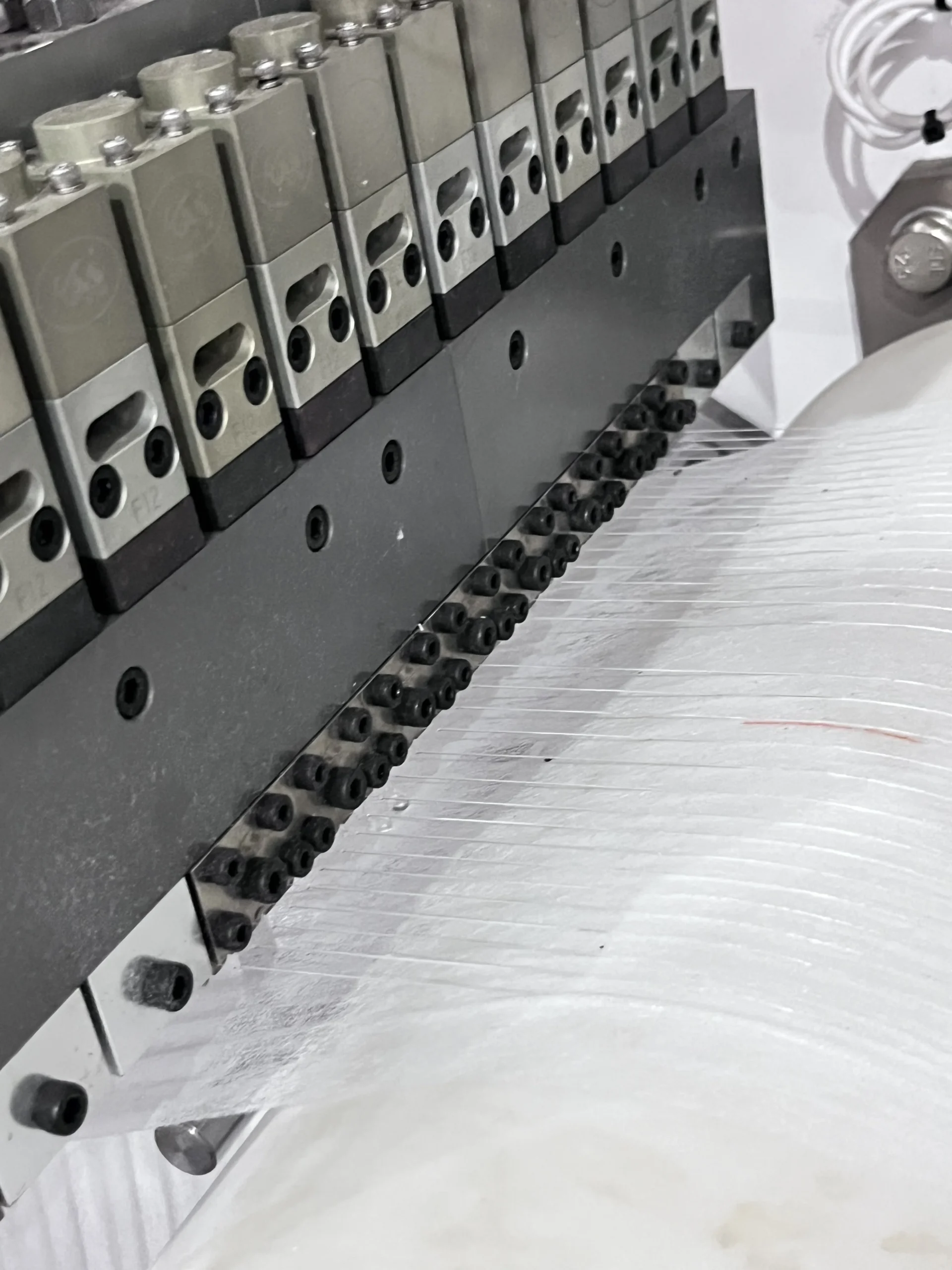
The waistband combines nonwoven webs, elastic and bonding at one point. A small feed-ratio difference may stay hidden while the composite is flat and appear only after contraction.
Ask whether elastic feed, inner web, outer web and pull roll are independent axes or grouped functions. Then ask which relationships enter the recipe and which still require physical adjustment.
A servo motor does not prove tension control. The feedback signal and correction logic do.
Pad cutting and rotary transfer need one position story
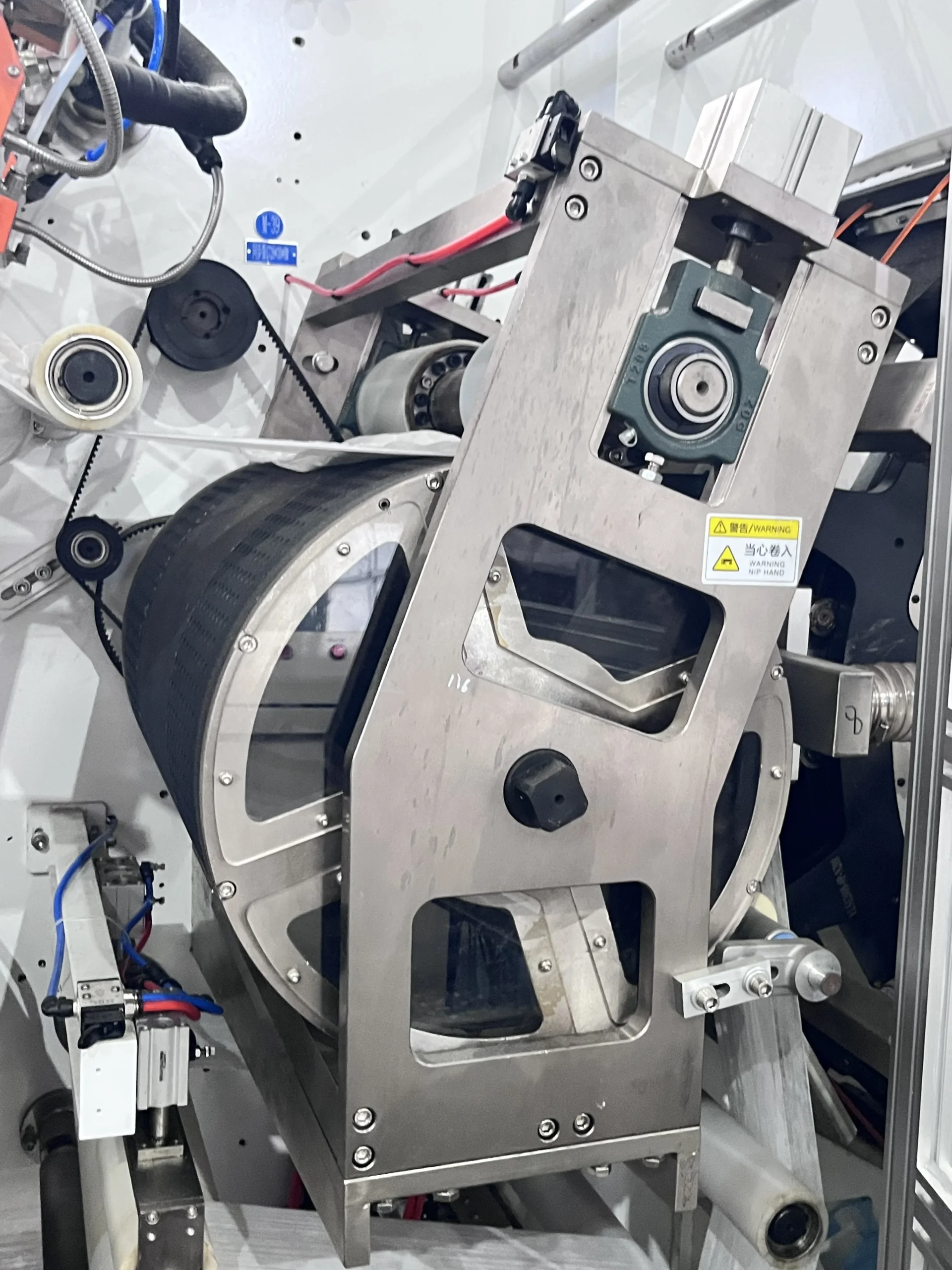
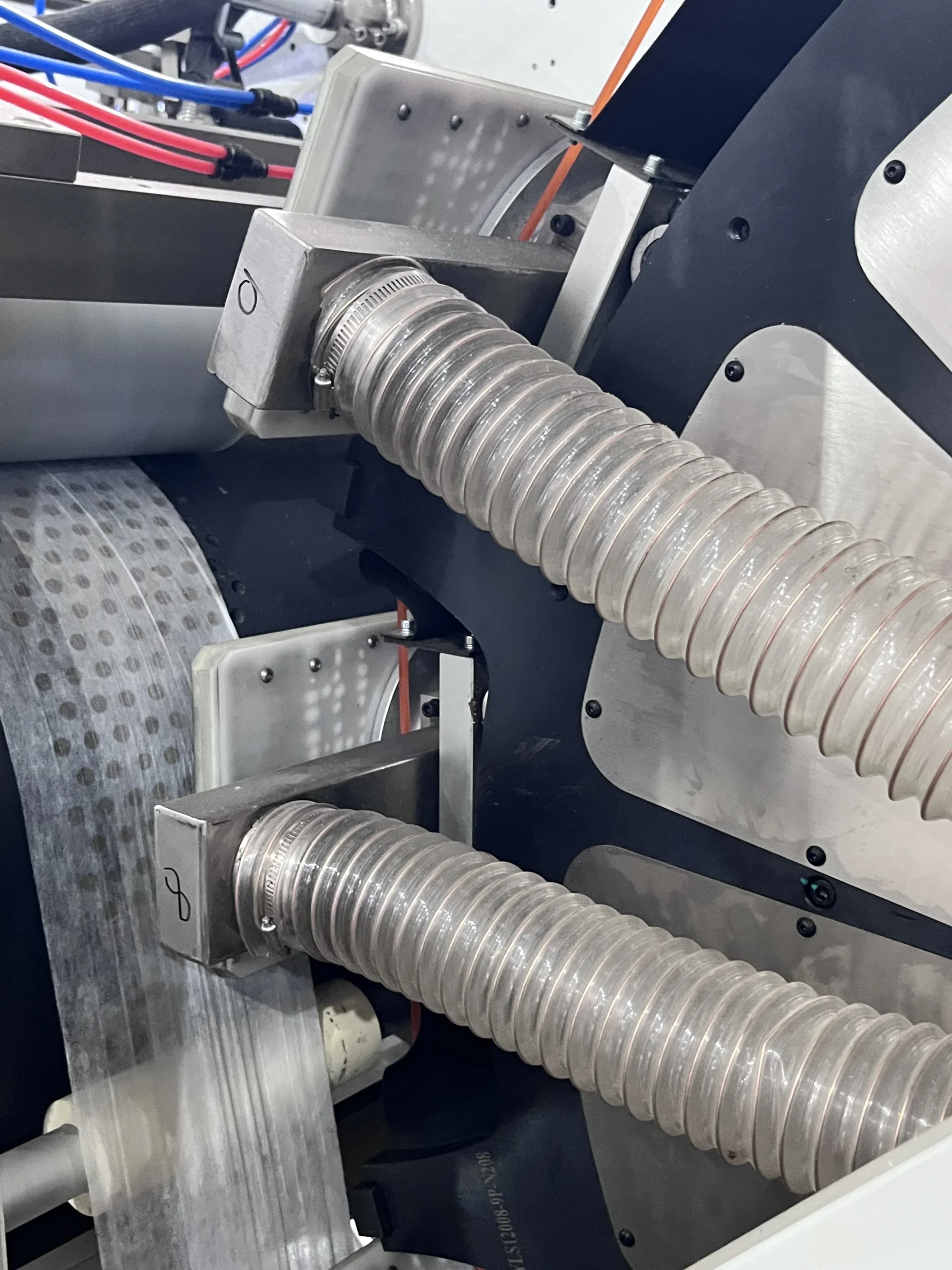
The cutter and transfer cannot be evaluated as isolated high-speed components. The cut body must arrive at the pickup point, rotate and leave at the receiving position without losing its relationship to the waistband path.
More importantly, ask how phase error is detected. If the operator only notices a bad product after final cutting, the axis map must show how the team traces the error back to cut timing, transfer phase or upstream web movement.
Final cutting reveals drift accumulated upstream
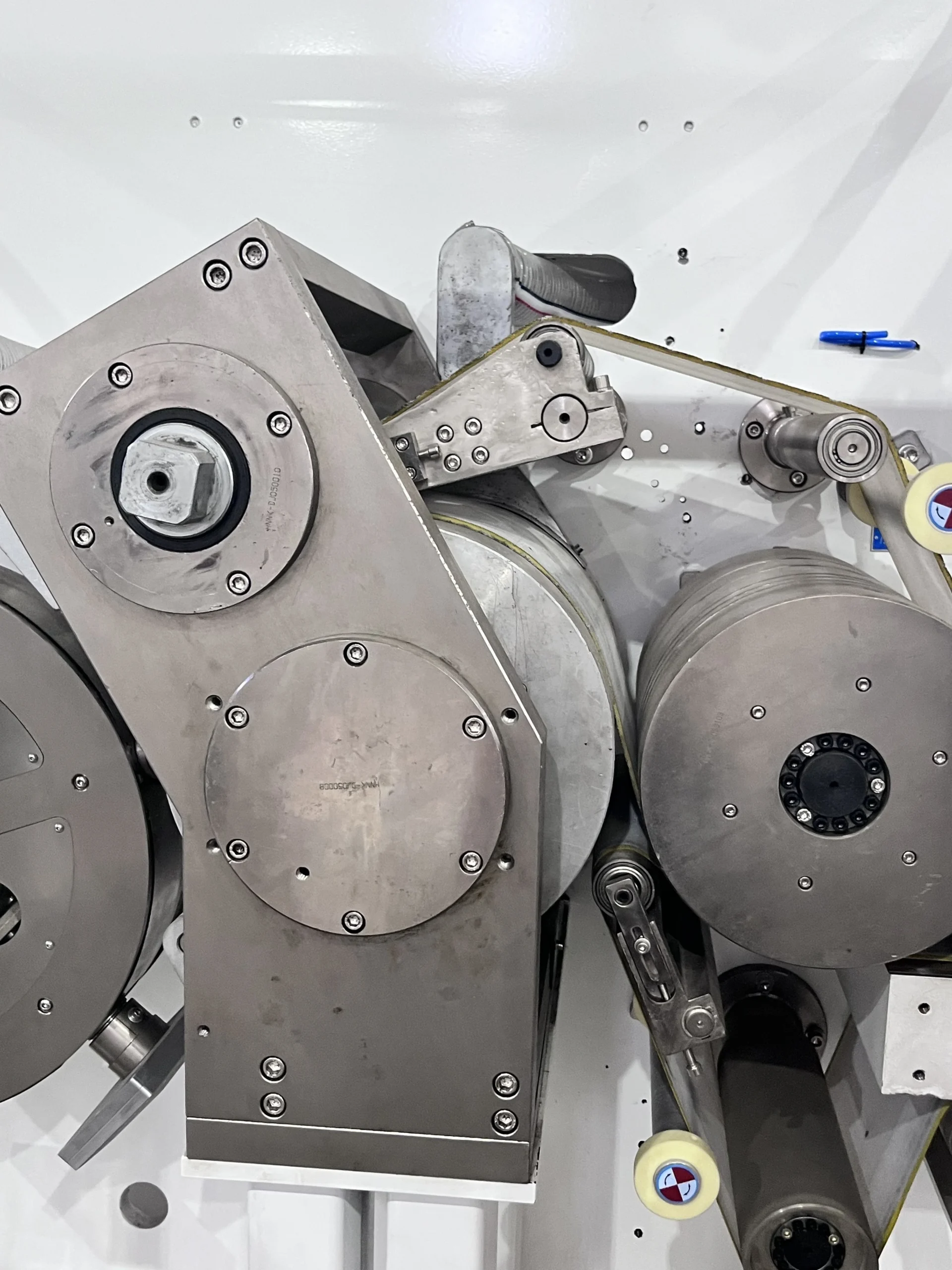
The final cutter is blamed because the defect is visible there. Yet the cutter may follow its reference correctly while the product feature reaches it early or late.
Request registration marks, dimensional checks and alarm history that distinguish cutter phase from upstream drift. Changing the final-axis offset without finding the first wrong relationship can move the defect rather than remove it.
Automatic rejection needs product identity, not only motion
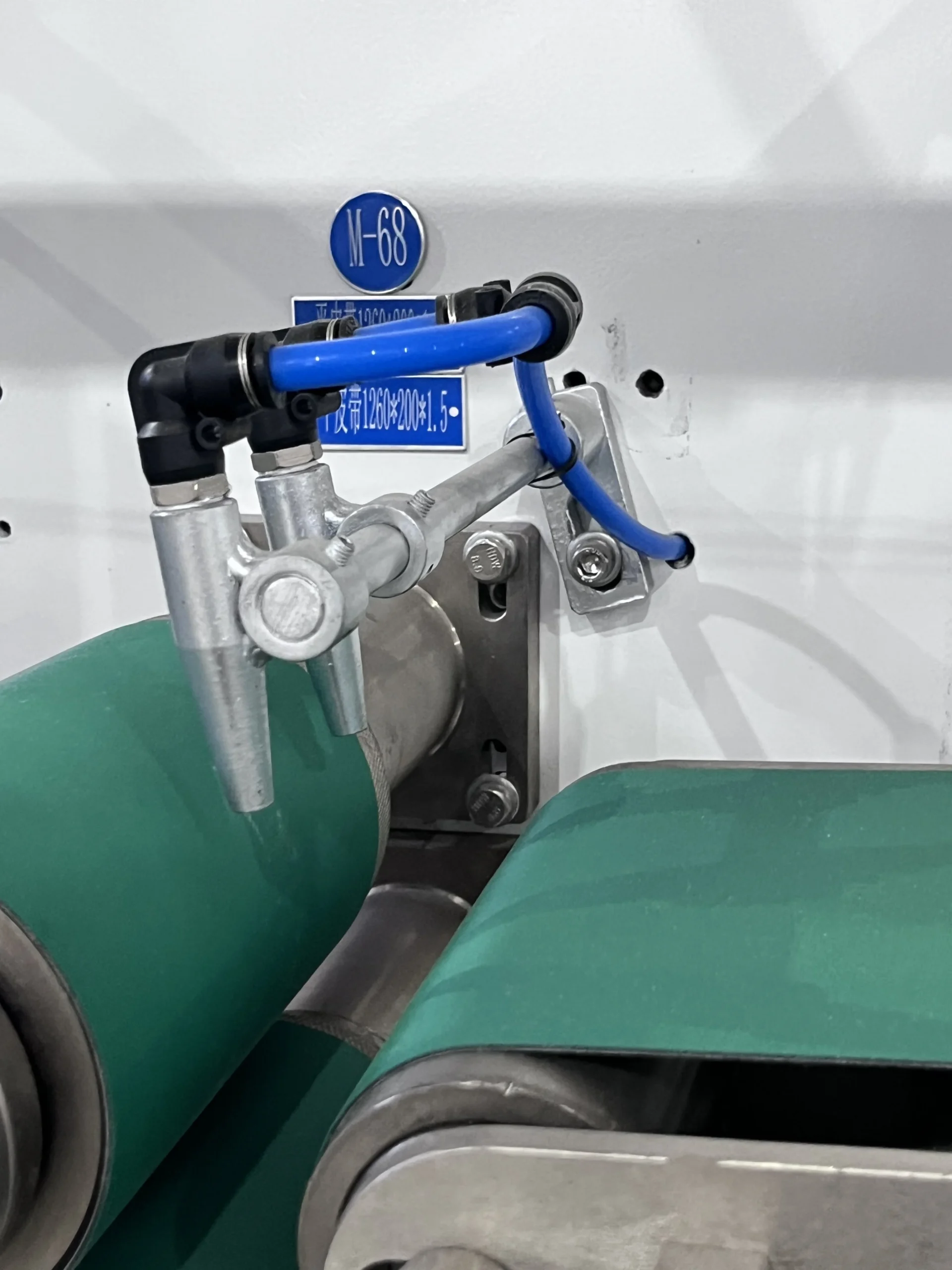
A detector can identify a defect several product pitches before the reject gate. The control system must retain that product's position until ejection.
Ask what happens to the tracking queue during deceleration, an emergency stop and restart. If product identity is cleared, the procedure must define how the unverified section is removed before good output resumes.
Separate recipe-controlled settings from change parts
A recipe can store electronic values such as ratios, phases and selected positions. It cannot replace a mold, knife, guide or mechanical spacer that changes with product geometry.
| Change item | Possible control form | Evidence to request |
|---|---|---|
| Web feed ratio | Electronic recipe if independently controlled | Before/after recipe values and sample check |
| Cutter phase | Electronic phase or mechanical adjustment | Axis map and changeover instruction |
| Guide width | Manual or powered positioning | Adjustment points and verification method |
| Mold or knife geometry | Physical change part | Tooling list, storage and replacement time |
| Inspection window | Vision recipe plus reference sample | Defect list and approved thresholds |
A quotation that says "quick changeover" should therefore carry two lists: stored parameters and physical tasks. Without both, the automation claim is incomplete.
Choose the architecture your maintenance team can recover
Full servo shifts more troubleshooting toward drives, encoders, networks, recipes and electronic position relationships. Semi servo retains more dependence on main-shaft transmission, belts, gears, differential joints and physical phase condition.
Neither model removes maintenance. They demand different skills, spares and diagnostic evidence. Request the alarm list, backup method, drive replacement procedure, mechanical inspection points and remote-support boundary.
A factory with limited electrical capability may need training and critical drive spares. A factory with strong mechanical technicians still needs a disciplined inspection plan for shared transmission components.
Take this axis-map checklist to Booth 19.1I29
- Mark every unwind, feed, cutter, sealer, rotary transfer and reject function.
- Assign each function to an independent axis, grouped drive or mechanical train.
- Write the master reference and feedback signal beside every critical relationship.
- Separate recipe-controlled parameters from manual settings and physical change parts.
- Record what happens after splice, stop, emergency stop, restart and drive replacement.
- Connect every alarm to the affected product feature and inspection evidence.
- Carry the final map into FAT, training, spare-parts planning and handover.
The output of the booth meeting should be a marked control map and an open-item list, not a handwritten motor count.
Technical data conflict: architecture must stay tied to the exact model
Technical Data Conflict Found: The full-servo pull-up product content uses header model WD-NK-600I-HSV and 400 kW, while an internal table uses WD-BDM-012 with 30 × 4 × 3 dimensions and 40 T. A separate full-servo 3-piece case page uses WD-LLK-600-SV, 350 kW installed power, approximately 300 kW consumption, 35.0 m × 2.30 m × 3.5 m and approximately 80 tons.
These may be different machines, versions or option packages. This article does not merge them into one specification. Buyers should require a dated axis map, model reference and signed configuration for the exact quoted line.
Why review the control map with Welldone at Booth 19.1I29
Welldone can connect the architecture label to physical stations, product features, material paths and the factory's first-year SKU plan.
Station responsibility
Each critical motion is linked to its function, reference, feedback and fault response.
Changeover boundary
Recipe parameters are separated from manual settings and physical tooling.
Handover evidence
The axis map supports FAT, training, diagnostics and spare-parts decisions.
Welldone can provide overseas engineer support for installation, commissioning and training. The exact service scope is confirmed per project.
A servo label cannot replace a control map
Full servo, semi servo and mechanical architectures can only be compared when the controlled relationships are visible. The axis map shows where the line measures, corrects, stores and recovers product position.
If one critical relationship failed during the night shift, could your team identify the responsible axis, feedback signal and recovery procedure from the documents supplied?
FAQ
Does more servo motors always mean better production?
No. Motor count does not show which product relationships are measured, corrected or recipe-controlled. Review the axis map and feedback logic.
What is the most important column in an axis map?
The master reference and feedback fields are critical because they explain what the axis follows and how the system detects error.
Can a recipe replace all change parts?
No. Electronic recipes can store control values, but product geometry may still require molds, knives, guides, spacers or other physical tooling.
Should FAT include stops and restart?
Yes. Controlled stops, restart and speed transitions reveal whether phase, product tracking and recipes recover without hidden manual correction.
Where can we review our axis-map requirements?
Bring your sample, SKU plan and quotation to Booth 19.1I29 during Phase 1 of the 140th Canton Fair, October 15-19, 2026.
Replace the servo count with an axis map
Bring your product structure, SKU plan and quotation to Booth 19.1I29. Mark the function, reference, feedback, recipe and recovery method for each critical station.
Book a technical meetingPrepare your meeting packWebsite: www.cnwelldone.com
Email: welldone@cnwelldone.com