
Baby Pull-Up Diaper Core Forming and Materials | Welldone

Baby Pull-Up Diaper Core Forming: Fluff Pulp, SAP and Material Compatibility
Two pull-up diapers leave the line with the same outline and thickness. One core holds together when opened; the other sheds fiber near the edge and shows an uneven SAP pattern during dissection.
The finished shape did not create that difference. The material-to-core process did.
Starting a Baby Pull-Up Diaper Manufacturing Business - Part 3 of 7
Part 1: Choose the 2-piece or 3-piece product structure.
Part 2: waistband feeding, lamination and sealing - publication URL pending.
Part 3 - this article: connect fluff pulp, SAP and carrier tissue to the forming, wrapping and pressing stations.
Next: full servo versus semi servo drive architecture.
Part 1: Choose the 2-piece or 3-piece product structure.
Part 2: waistband feeding, lamination and sealing - publication URL pending.
Part 3 - this article: connect fluff pulp, SAP and carrier tissue to the forming, wrapping and pressing stations.
Next: full servo versus semi servo drive architecture.
The core is a process chain, not a material list
Actually, listing fluff pulp and SAP in a BOM does not define an absorbent core. The line must open the pulp, meter SAP, form the mixture, support it with tissue, compact it and transfer it without losing the intended shape.
Each station receives the result of the previous one. A dense fiber clump entering the forming drum cannot be corrected by adding pressure later. An uneven SAP feed cannot be made uniform by wrapping the core more tightly.
| Process stage | Primary input | What must remain stable | Finished-core symptom |
|---|---|---|---|
| Pulp feeding and opening | Pulp board grade and condition | Fiber opening and feed continuity | Dense spots, thin zones or loose fiber |
| SAP dosing | Actual SAP grade | Metering and distribution | Local concentration or inconsistent retention |
| Drum forming | Opened fiber and SAP stream | Shape filling and release | Weight or profile variation |
| Tissue support | Carrier tissue specification | Centering and continuous support | Edge loss or poor transfer |
| Pressing | Formed and supported core | Thickness and handling integrity | Excess bulk, collapse or distortion |
Pulp grade changes how the crusher feeds the line
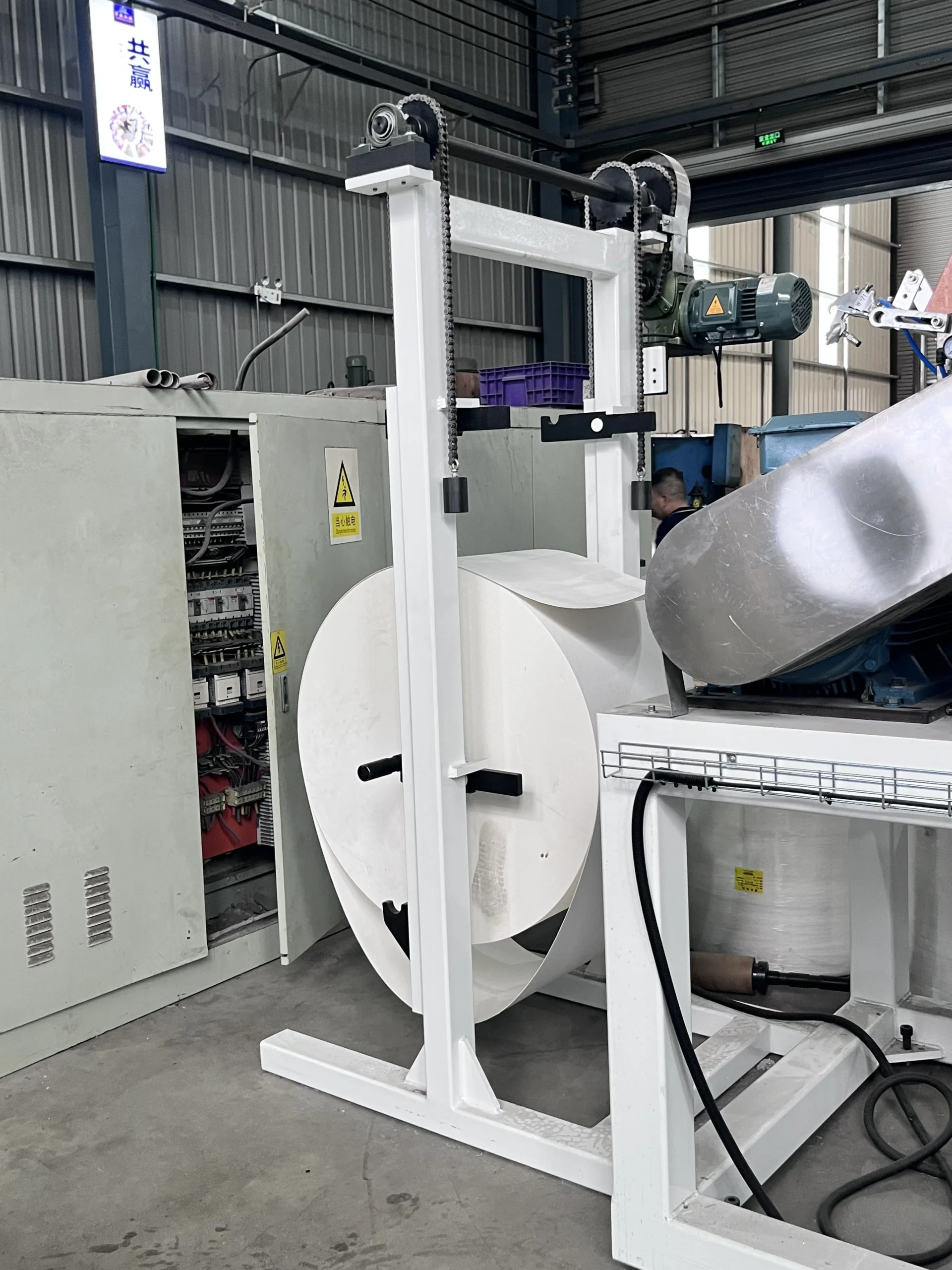
Fluff pulp arrives as compressed board and must be separated into fibers before forming. The machine setting has to match how that board opens, not simply its supplier name.
Welldone's material guidance identifies fiber length, bulk density and moisture content as relevant pulp properties. A supplier change can alter the feed behavior even when the purchase document still says "fluff pulp."
More importantly, preserve the incoming-material record with the production batch. When operators see a gradual core change, they need to know whether the material lot changed before they adjust the machine.
The forming drum converts flow into shape and weight
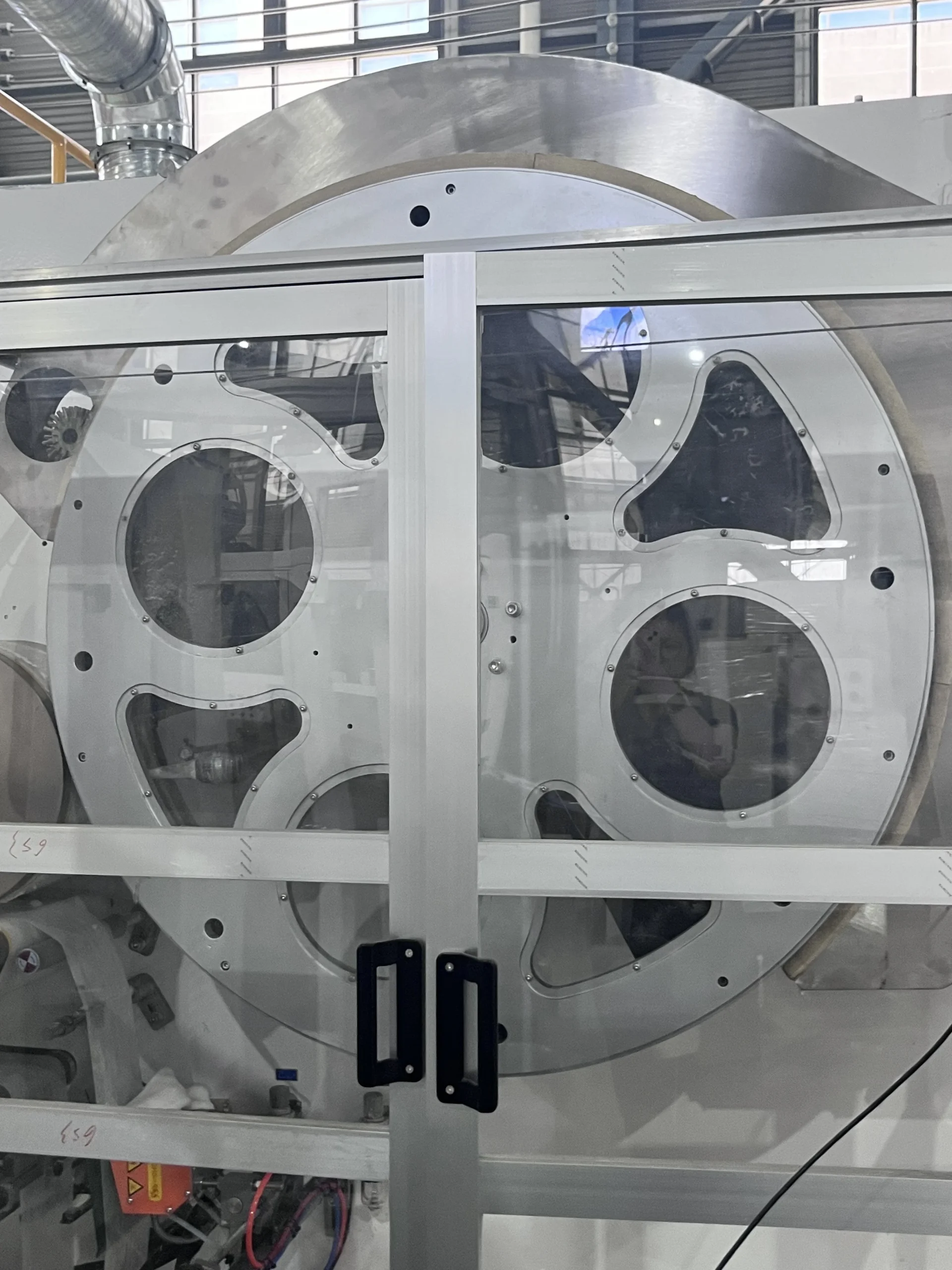
The forming drum is where loose material becomes a repeatable core profile. Vacuum draws the material into shaped cavities, and the formed core then releases to the transfer path.
The real question is whether the drum receives a stable material stream. If fiber opening, SAP delivery or airflow changes, the same cavity can produce a different result without any visible change to the mold.
Do not approve the core only by outline. Record individual core weight, sectional weight where required, thickness and visible edge integrity using an agreed sampling method.
SAP dosing must follow the product recipe and line state

SAP provides liquid storage, but "more SAP" is not a complete performance strategy. Distribution inside the fiber matrix and compatibility with the selected grade matter alongside total quantity.
Welldone's raw-material guide notes that particle-size distribution and absorption behavior affect how SAP integrates into the fluff matrix. Different supplier lots with similar commercial descriptions can still require verification.
I believe SAP acceptance should include product dissection and section-based weighing where the specification requires a distribution pattern. Surface appearance cannot prove what is happening inside the core.
Carrier tissue protects the formed core during transfer
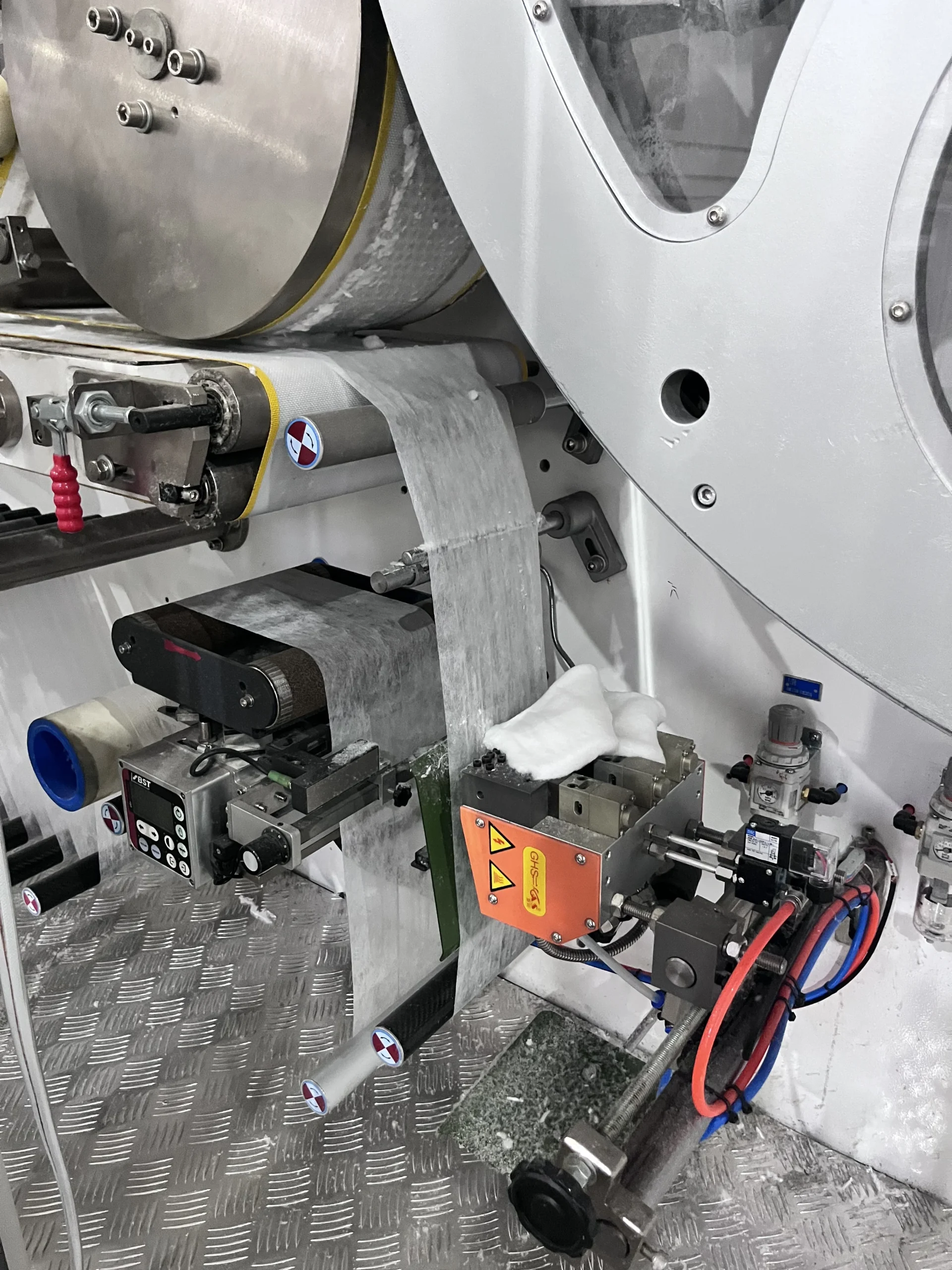
The tissue layer is easy to treat as a minor consumable. On the line, it supports a loose structure that has not yet gained enough handling integrity for later assembly.
If the tissue is off-center, narrow, wrinkled or incompatible with the process, the core edge may lose support during transfer. The symptom appears later as fiber shedding, distortion or poor registration with the next layer.
Specify the actual tissue grade, width and roll data. "Wrapping tissue" is a material category, not a machine setting.
Pressing prepares the core for handling, not for marketing thinness

The pressing station reduces bulk and improves handling before the core enters the assembly section. Its task is controlled consistency, not simply maximum compression.
Too little consolidation can leave a loose core that shifts during transfer. Too much can change thickness and the structure the product team intended to validate. The acceptable window must therefore come from the approved sample and test method.
Not the thinnest core. The repeatable core.
Material compatibility must be proven with the real BOM
A factory acceptance test run on convenient substitute materials proves only that the line can run those substitutes. It does not prove that locally sourced pulp, SAP and tissue will behave the same way.
Welldone's official material-matching guidance recommends supplying data sheets and physical samples before the machine configuration is frozen. Use the intended grades for trials whenever practical, then retain the lot details with the settings and test results.
Data boundary: SAP ratio, core weight, density, compression setting and vacuum values vary with product design, material properties and test method. This article does not prescribe universal numbers.
| Material input | Document before trial | Line behavior to observe | Product check |
|---|---|---|---|
| Fluff pulp | Grade, condition and supplier sheet | Feed and fiber-opening continuity | Core weight and visible uniformity |
| SAP | Grade and supplier data | Dosing repeatability and retention in forming | Distribution and agreed absorbency tests |
| Carrier tissue | Width, basis weight and roll details | Web tracking and support continuity | Edge integrity and transfer condition |
| Adhesive, if used in the core route | Application window and supplier data | Application stability on actual substrates | Bond without damaging core function |
Trace the symptom backward before changing a setting
Operators can lose hours by correcting the last station they can see. Use the finished symptom as a starting point, then move upstream through the process chain.
- Core weight drifts: check the material lot, pulp feed, opening behavior, SAP delivery and forming conditions before changing pressing.
- SAP appears near an edge: inspect dosing timing, distribution and fiber retention rather than adding more tissue.
- Core deforms during transfer: review release, carrier support and pressing consistency before changing the final cutter.
- Fiber sheds after dissection: compare pulp opening, tissue coverage and pressing against the approved trial record.
The Part 1 structure decision defines the finished garment route. This core analysis supplies the absorbent body that must remain stable inside either approved construction.
Write core inputs before asking for machine settings
A useful technical package links material identities to finished-product tests.
- Provide approved samples for every launch size.
- List pulp, SAP, tissue and relevant adhesive grades.
- Define core outline, target weight and tolerance by size.
- State whether SAP distribution is uniform or zoned.
- Specify thickness, integrity and absorbency test methods.
- Identify locally sourced materials that differ from trial materials.
- Agree on sampling after startup, steady running and material changes.
The official raw material and core-forming guide provides broader process context. The project specification should convert that context into product-specific inputs and acceptance criteria.
Accept the core across transitions, not one stable sample
One good core taken after the line has settled is not enough. Sample after startup, after a material roll or pulp-board change, during steady running and after a controlled restart.
Keep the material lot, recipe, time and measurement with every sample. If a later batch changes, the team can compare evidence instead of adjusting several stations at once.
Welldone's baby care overview lists material compatibility with nonwoven, SAP, fluff pulp and adhesives, together with inline rejection capability. Project acceptance still needs to define the specific core defects, sampling plan and calculation method used for this line.
Why Welldone
Welldone configures baby pull-up diaper lines from the target product structure, intended raw materials and agreed quality checks.
Material review
Pulp, SAP and tissue data are reviewed before forming and transfer settings are finalized.
Station mapping
Feeding, defibration, dosing, forming, support and pressing are treated as one connected process.
Engineering support
Welldone can provide overseas engineer support for installation, commissioning and training.
Conclusion
Core quality is created by a sequence: material condition, pulp opening, SAP dosing, drum forming, tissue support and controlled pressing. The line cannot separate machine performance from material behavior.
If your next pulp or SAP lot changes the core, does your production record show which input moved first?
FAQ
Is there one recommended SAP ratio for baby pull-up diapers?
No. The appropriate recipe depends on the target core, material grades, absorbency tests, thickness and cost conditions. Validate it with the actual product design.
Can we use local pulp and SAP during commissioning?
Yes, if the materials are available and documented. Send data sheets and samples early so the trial can evaluate the production-intent BOM.
Why can core weight change when the forming mold is unchanged?
The cavity may be unchanged while pulp feed, fiber opening, SAP delivery, material condition or forming airflow has changed.
Should product structure be decided before the core specification?
They should be developed together. Start with the 2-piece versus 3-piece structure comparison, then define the core that fits the approved product route.
Build the core specification around real materials
Send Welldone the approved samples, BOM, material data sheets and test methods before the forming route is finalized.
Request a core-forming reviewView baby care linesWebsite: www.cnwelldone.com Email: welldone@cnwelldone.com