Compare Hygiene Production Lines at Canton Fair | Welldone

How to Compare Hygiene Production Lines at the 140th Canton Fair
Four machinery brochures lie on the table at a trade fair. Each shows a long frame, multiple unwinds and a finished product at the discharge. One quotation is lower. Another lists more servo motors.
Neither fact tells you whether the lines are being quoted for the same manufacturing task.
140th Canton Fair Hygiene Machinery Sourcing Series - Part 2 of 6
Part 1: Prepare samples, BOM, capacity and factory data for the meeting.
Part 2 - this article: compare four machinery projects on a common technical basis.
Part 3: separate design speed from stable and qualified output.
Part 4: compare full-servo and semi-servo control scope.
Part 5: convert discussion points into material trials and FAT.
Part 6: turn meeting records into a formal proposal.
Part 1: Prepare samples, BOM, capacity and factory data for the meeting.
Part 2 - this article: compare four machinery projects on a common technical basis.
Part 3: separate design speed from stable and qualified output.
Part 4: compare full-servo and semi-servo control scope.
Part 5: convert discussion points into material trials and FAT.
Part 6: turn meeting records into a formal proposal.
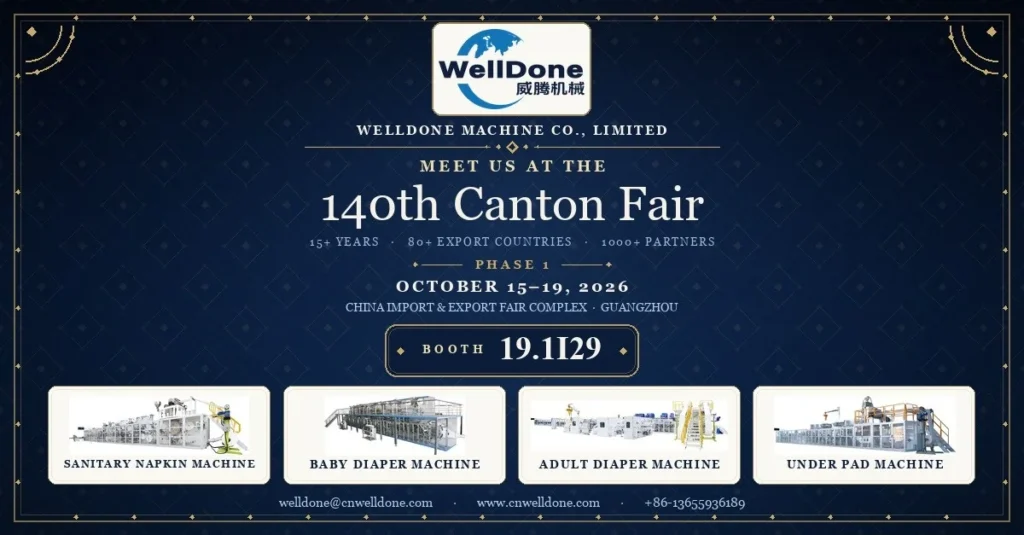
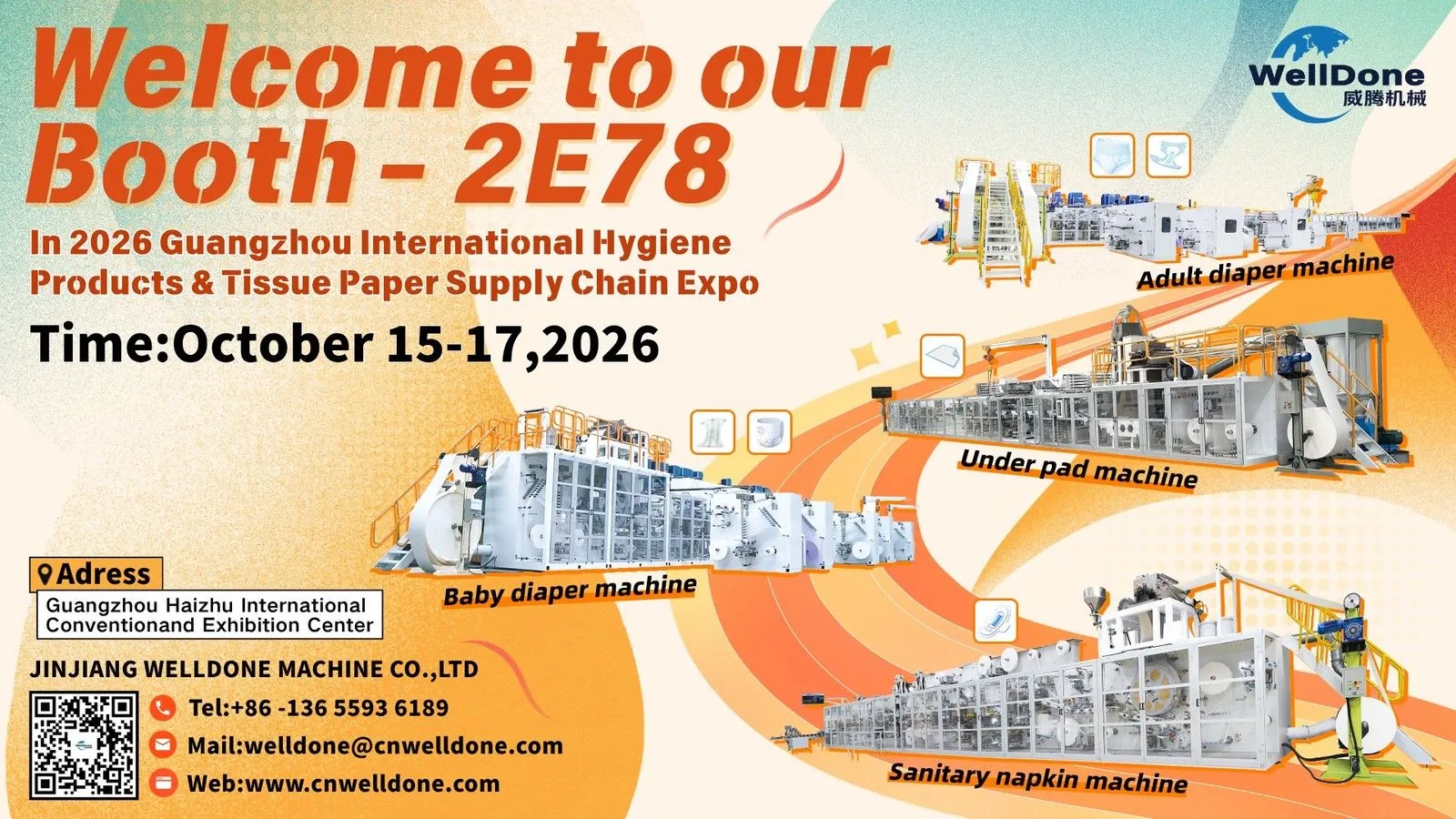
Confirmed event information: Welldone will attend Phase 1 of the 140th Canton Fair, October 15-19, 2026, at the China Import & Export Fair Complex in Guangzhou. Discuss sanitary napkin, baby diaper, adult diaper and underpad machinery projects at Booth 19.1I29.
Why different hygiene lines can look similar at a fair
From several metres away, the visual pattern repeats: roll stands, forming sections, enclosed frames, cutting stations and discharge conveyors. The similarity is structural. It is not proof that the machines make comparable products.
Actually, the decisive differences are often hidden inside the material path. A waistband may require elastic feeding and lamination. A winged sanitary pad needs release-paper and wing-forming logic. An underpad remains a flat rectangular product but introduces its own layer, folding and cutting requirements.
Compare the manufacturing task before comparing the machine length, servo count or headline price.
Start with the finished-product architecture
Place the target products side by side and open them. Identify which layers must be formed, positioned, bonded, cut, folded and packed. That sequence becomes the first draft of the station map.
| Project family | Product architecture to confirm | Quotation risk if undefined |
|---|---|---|
| Baby diaper | Tape type, I-shape, T-shape, pull-up, 2-piece or 3-piece; core, cuff and waist construction | Wrong waist, ear, sealing or turning process |
| Sanitary napkin | Winged or wingless, pad shape, core route, release paper, individual wrapping and pack format | Missing shape, folding or release-paper stations |
| Adult diaper | Open type or pull-up; core width, side panel, waistband, cuff and size range | Incorrect web width, elastic route or change parts |
| Underpad | Layer count, finished dimensions, absorbent zone, edge seal, folding pattern and pack count | Incorrect forming width, cut length or folding scope |
The real question is not which machine category appears on the brochure. It is whether the proposed station map can reproduce the approved sample without adding unquoted modules later.
Map the material route before discussing speed
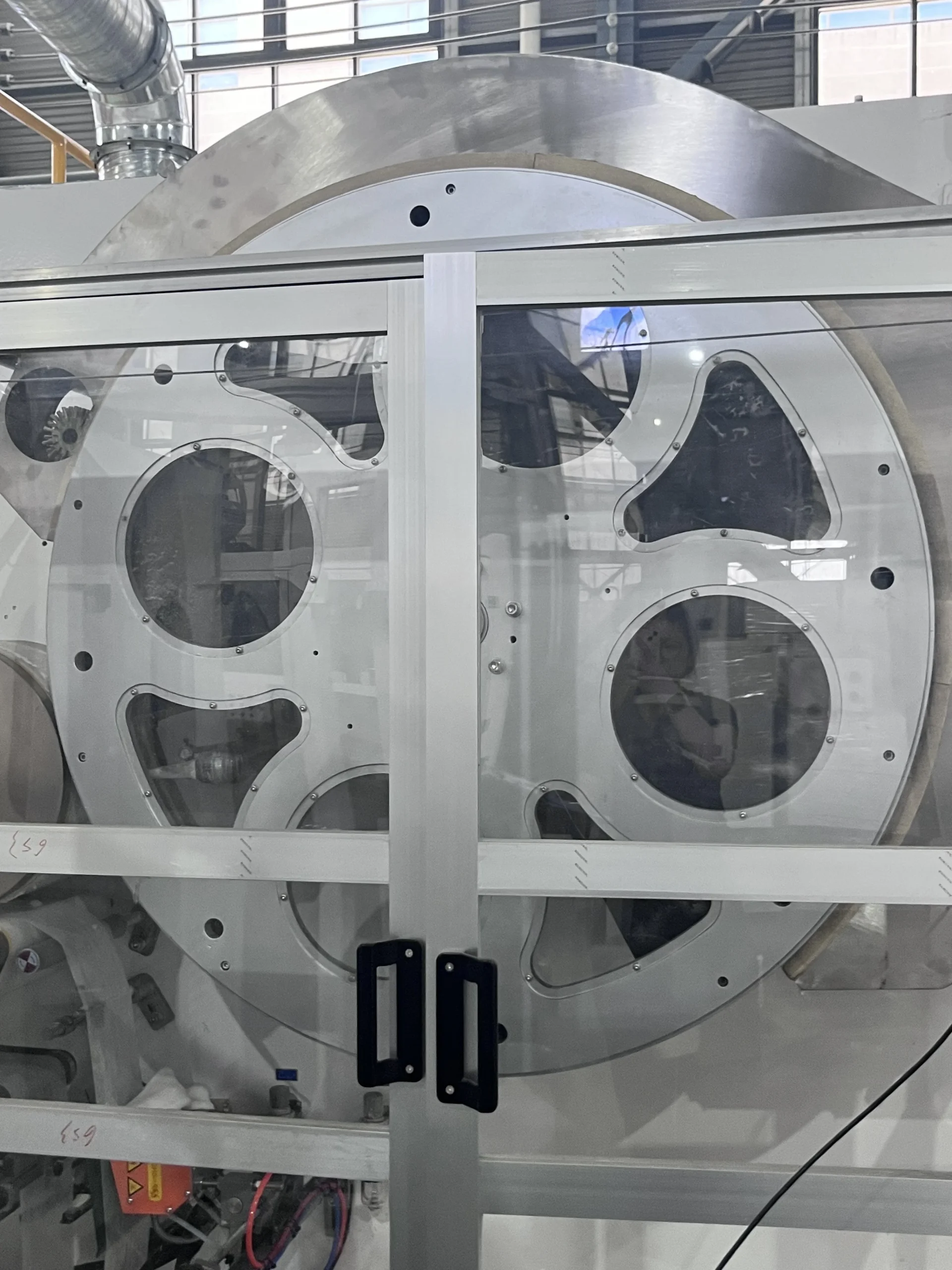
Ask every supplier to mark the path of each material on one process drawing. The drawing should show the unwind, web direction, tension or metering point, bonding method and the station where the material enters the product.
For baby and adult diapers, this includes the absorbent core, topsheet, backsheet, cuffs, elastic components and fastening or waistband system. Sanitary napkins add shape, release-paper and individual-wrap decisions. Underpads shift the focus to web width, layer count, absorbent-zone control, edge sealing and folding.
A list of raw-material names is not a process route. The route must explain what the machine does when a roll diameter changes, a splice passes through or the material grade behaves differently.
Compare the launch SKU matrix, not the longest size list
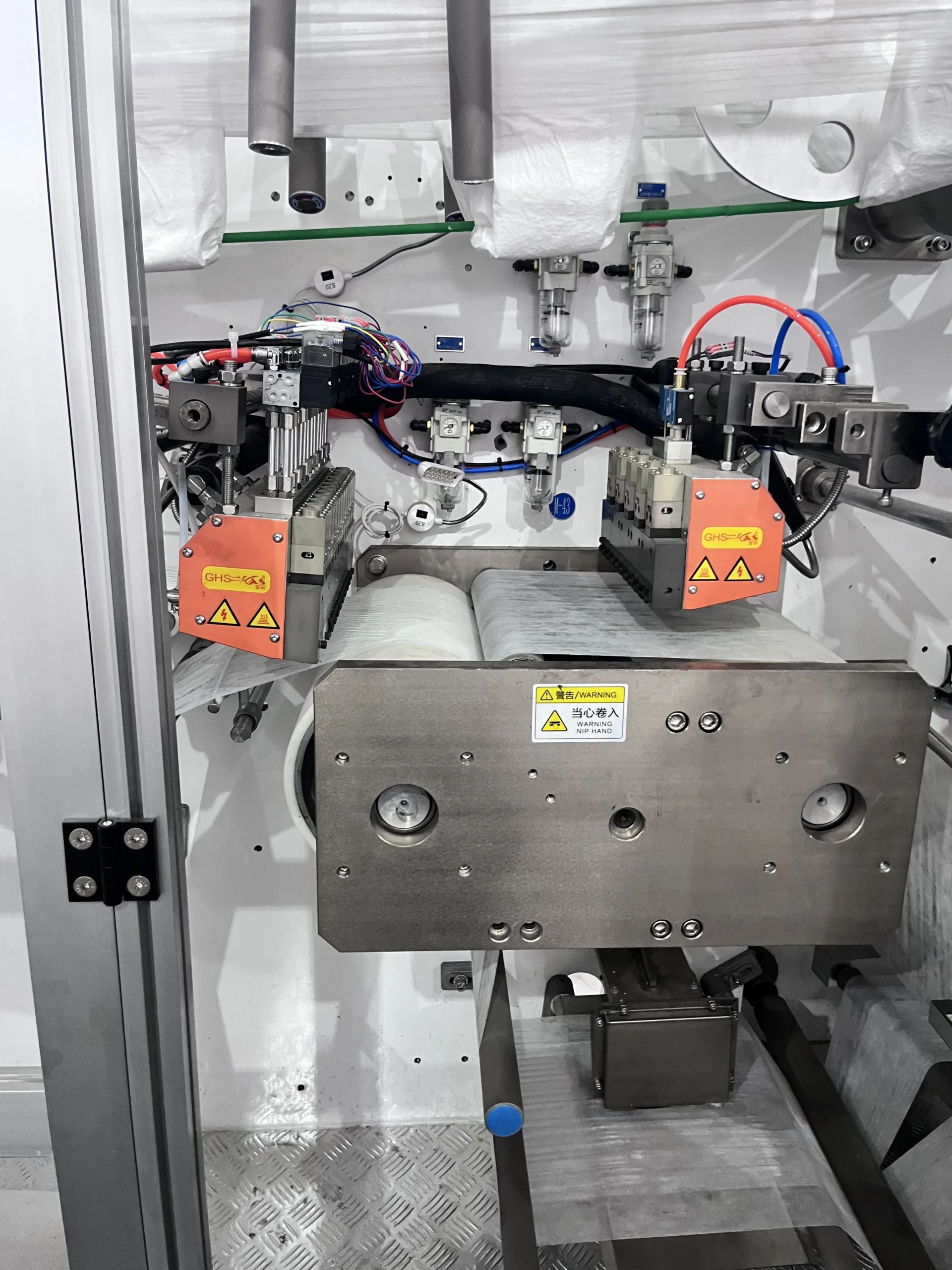
Write the first-year SKU matrix in rows. Use finished dimensions, construction, core dimensions, pack count and expected share of output. Brand labels such as M, L or XL are not engineering dimensions.
I believe a smaller verified launch matrix is more valuable than a quotation claiming broad flexibility without a changeover definition. Each SKU should identify which settings are recipe-controlled and which require tools, guides, molds or knives.
Ask for the change-parts list next to the SKU matrix. If the supplier cannot connect each format to a specific change action, the flexibility claim is not yet testable.
Define the automation boundary station by station
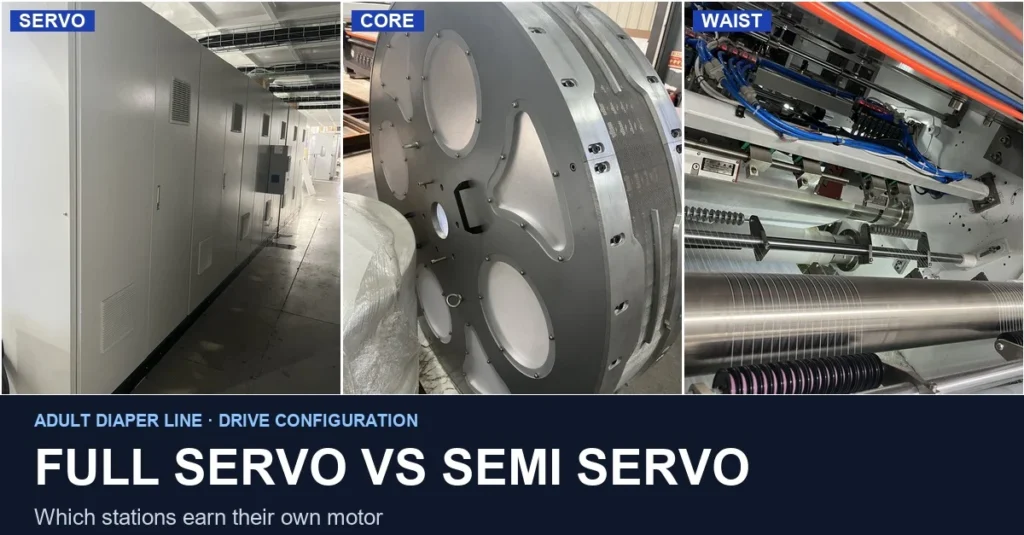
Full servo, semi servo and mechanical drive labels are not enough for comparison. Request an axis map showing which unwinds, metering devices, registration points, cutters, sealers and transfer units have independent control.
| Automation question | Weak answer | Evidence to request |
|---|---|---|
| Web control | All materials are automatic | Unwind list, tension-feedback method and splice handling |
| Registration | High precision | Reference marks, sensors, controlled axes and alarm logic |
| Quality inspection | Vision is available | Defect list, detection point, reject action and data record |
| Changeover | Quick size change | Recipe items, manual tasks, change parts and verification sample |
A higher servo count can still leave a critical station mechanically linked or manually adjusted. The axis map reveals where automation changes the process and where operator skill remains part of the result.
Fix the line boundary before comparing total price
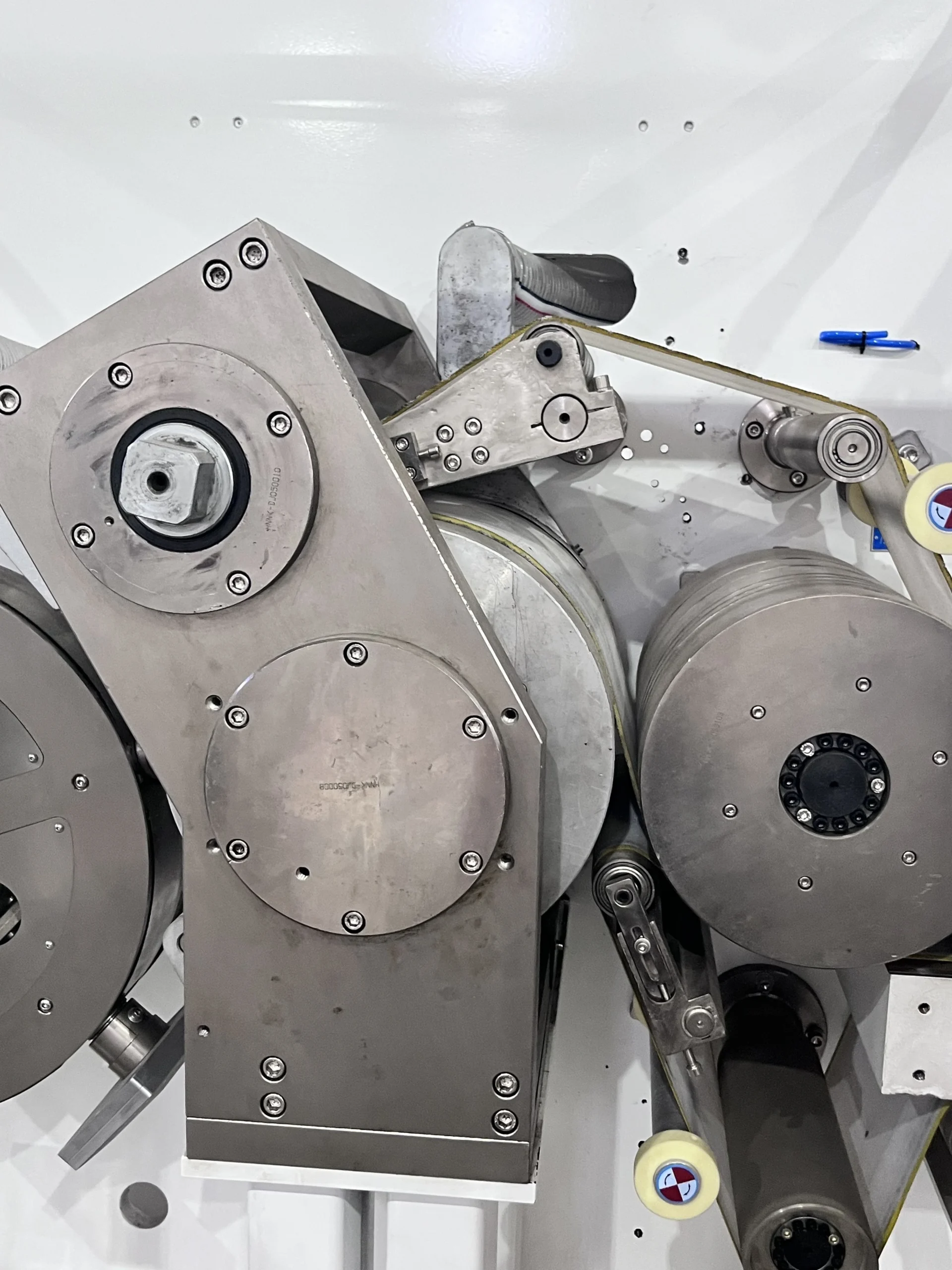
One quotation may end at individual-product discharge. Another may include counting, stacking and bagging. A third may include interfaces but not the downstream machine. These totals cannot be compared as if the scopes were equal.
More importantly, specify the output unit at every boundary. The manufacturing line usually reports products per minute; a bagger reports packs or bags per minute. The units describe different production stages.
Bring the bag sample, pack count, compression requirement and sealing style. If packaging will be added later, record transfer height, accumulation requirement, product orientation and signal interface now.
Check whether the machine fits the factory task
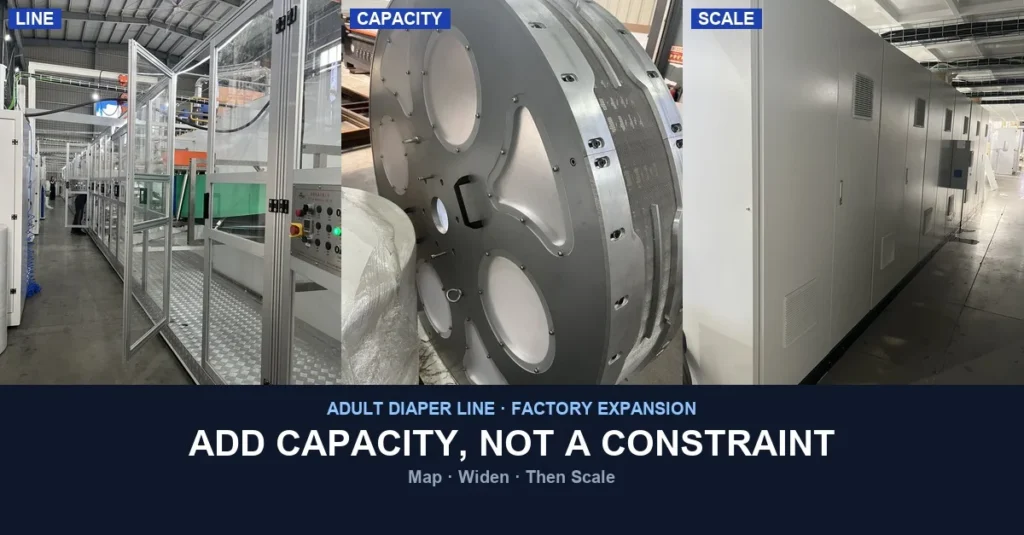
Ask for a preliminary layout with operator side, material-loading side, maintenance access and product discharge direction. Then place it on the buyer's actual building drawing.
Machine footprint alone does not show roll handling, pulp storage, adhesive supply, dust collection, control cabinets or the aisle needed to remove a mold. Utilities must also match the destination factory rather than a default reference project.
For an existing manufacturer, the comparison should include integration constraints: current packing equipment, warehouse flow, spare-parts practice, technician capability and the shutdown window available for installation.
Build one comparison sheet for all four projects
| Comparison layer | Required document | Decision it supports |
|---|---|---|
| Finished product | Approved samples, drawings and SKU matrix | Confirms what the line must manufacture |
| Process route | Station map and material-flow drawing | Reveals missing or duplicated modules |
| Automation | Drive and axis map, sensor list, reject logic | Makes control scope comparable |
| Format range | Recipe list and change-parts schedule | Tests the claimed SKU flexibility |
| Line boundary | Included/excluded equipment and interfaces | Normalizes the quoted total |
| Factory input | Layout, utility and environmental requirements | Tests whether the project can be installed |
| Acceptance | Material, run, changeover and defect criteria | Turns promises into testable obligations |
Do not score a supplier until the same columns are completed. A blank cell is not a small detail. It is an unresolved cost, interface or acceptance risk.
Use a 30-minute structure at Booth 19.1I29
- Minutes 0-5: show the target samples and confirm the product architecture.
- Minutes 5-10: review the BOM and mark material data that still need confirmation.
- Minutes 10-15: compare the proposed station map with the sample features.
- Minutes 15-20: define launch SKUs, changeover scope and packaging boundary.
- Minutes 20-25: record factory constraints, utilities and integration points.
- Minutes 25-30: assign owners and dates for the technical proposal, drawings and open items.
The booth conversation should not end with “send me your best price.” It should end with a shared list of facts, assumptions and missing evidence.
Why headline speed is reserved for the next comparison
Welldone's official category pages publish different speed ranges for different product families and drive configurations. The adult-care category also groups adult diapers and underpads while the dedicated underpad page provides only a high-level product description.
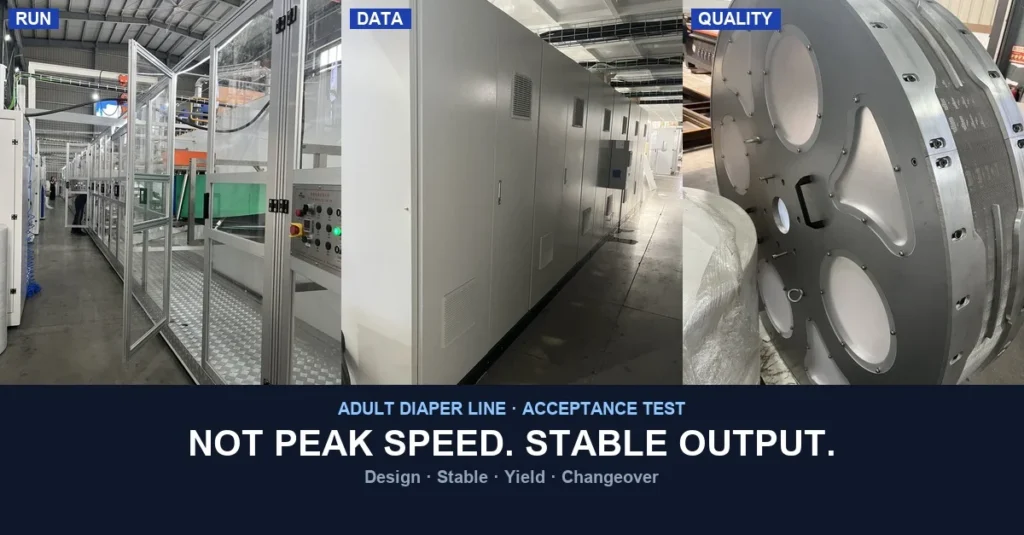
Technical comparison rule: do not copy one category-level speed into another product quotation. Verify design speed, stable speed, qualified-output basis, product size, material set and packing interface against the dated configuration for the selected machine.
That is why this article compares process scope first. Part 3 will examine how to compare design speed, stable speed and qualified output without mixing unlike conditions.
Why compare the project with Welldone at Booth 19.1I29
Welldone's official Canton Fair material presents machinery directions for sanitary napkins, baby diapers, adult diapers and underpads. The discussion can start with one product sample and expand into a documented line scope.
Sample-to-process review
Product layers and structures are mapped to forming, applying, sealing, cutting and packing tasks.
Comparable configuration
Station, automation and interface boundaries are recorded before commercial totals are evaluated.
Project continuation
Open items move into material confirmation, layout review, technical proposals and acceptance planning.
Welldone can provide overseas engineer support for installation, commissioning and training. The exact service scope is confirmed per project.
Make unlike quotations comparable before ranking them
The lowest price is meaningful only after product architecture, process route, automation scope, line boundary and acceptance basis match. Until then, the difference may be missing equipment rather than better value.
If four suppliers completed the same comparison sheet today, which blank cell would create the largest risk for your factory?
FAQ
Can we compare four hygiene line types by price per metre?
No. Machine length does not normalize product architecture, station scope, automation, packaging or acceptance conditions. Compare the process and deliverables first.
Should the fastest line receive the highest score?
Not before design speed, stable speed, qualified output and product conditions are separated. Part 3 of this series covers that comparison.
What is the minimum document set to request after the fair?
Request a dated station map, configuration list, axis or drive map, included/excluded scope, layout inputs, utility requirements and open-item list.
Can one line make baby diapers, adult diapers, sanitary napkins and underpads?
These product families use different structures, widths, material paths and finishing operations. Treat them as separate machinery projects unless a specific shared process is technically documented.
Where can we compare our target project with Welldone?
Bring samples, BOM, SKU matrix and factory information to Booth 19.1I29 during Phase 1 of the 140th Canton Fair, October 15-19, 2026.
Bring one comparison sheet to Booth 19.1I29
Use the same product, process, automation, packaging and factory columns for every supplier discussion at the 140th Canton Fair.
Book a technical meetingPrepare your project packWebsite: www.cnwelldone.com
Email: welldone@cnwelldone.com