Full Servo vs Semi Servo for Adult Diaper Lines | Welldone

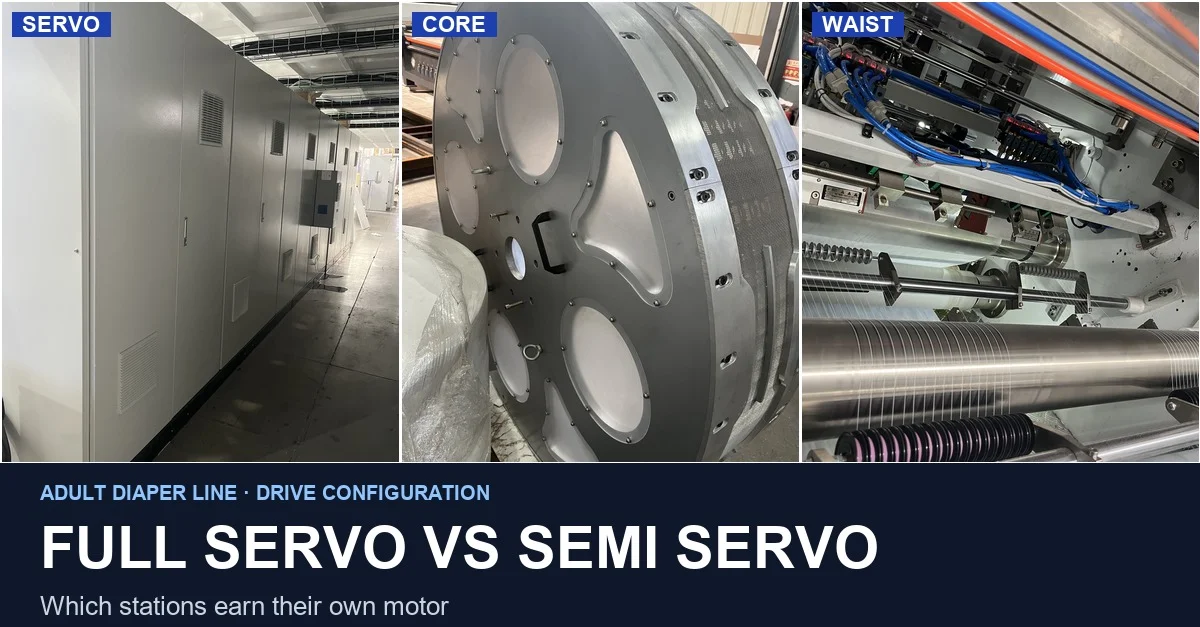
Full Servo vs Semi Servo for Adult Incontinence Lines: Which Configuration Should You Specify?
Two quotations for an adult diaper line land on your desk. One says "full servo," the other says "semi servo." The price gap is large enough to fund a second machine. If you cannot say what that gap is buying, you are negotiating against a label instead of a configuration.
Planning an Adult Incontinence Products Factory · Part 3
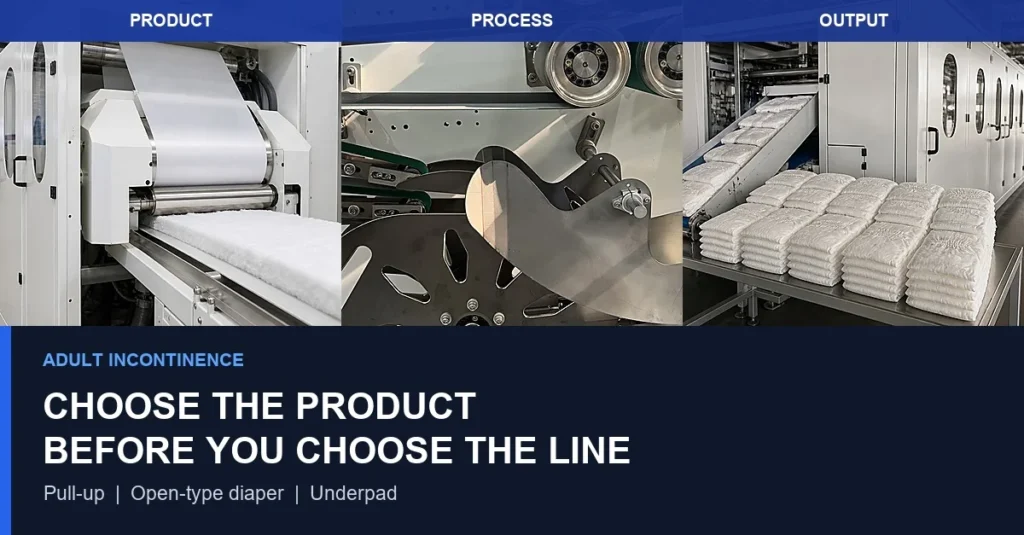
Part 1: Adult Pull-up vs Open-type Diaper vs Underpad: Which Line Should You Start With? — pick the product format first.
Part 2: Define the Product Before Requesting an Adult Diaper Machine Quote — write the product specification.
Part 3 — this article: choose the drive configuration before you sign.
Part 1: Adult Pull-up vs Open-type Diaper vs Underpad: Which Line Should You Start With? — pick the product format first.
Part 2: Define the Product Before Requesting an Adult Diaper Machine Quote — write the product specification.
Part 3 — this article: choose the drive configuration before you sign.
What "full servo" actually changes on the line
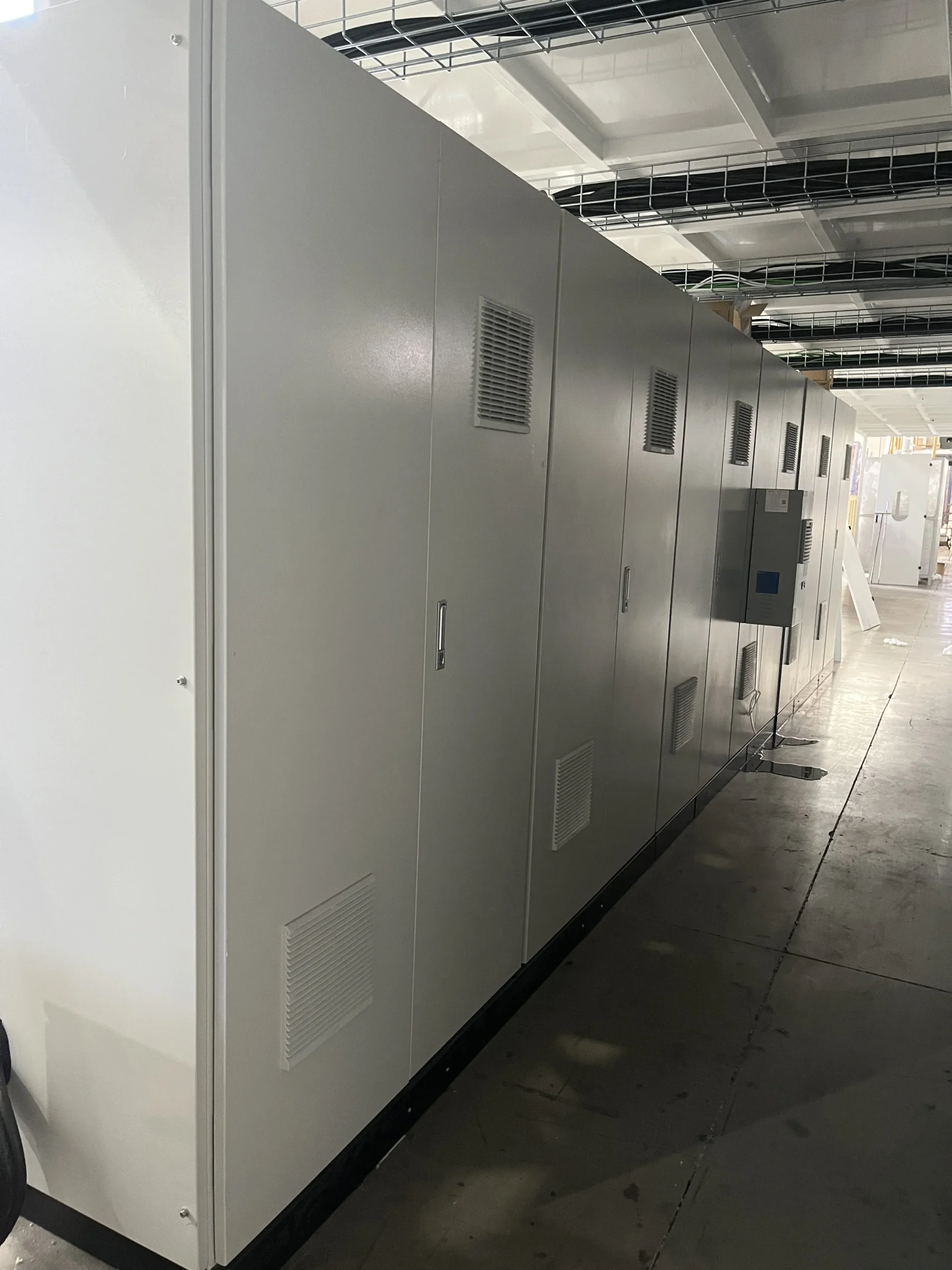
A servo motor is a motor that knows where it is. It reports position back to a controller, which corrects it thousands of times per second. On an adult diaper line, that closed loop is what lets one station place a SAP core exactly where the next station expects it.
The difference between full servo, semi servo and mechanical is not "better motor." It is how many stations are driven by their own closed-loop motor, and how many are driven by a central main shaft through cams, gears and timing belts.
Actually, the price gap between two quotations often traces to a single decision: whether the elastic waist forming, SAP dosing and core positioning stations each carry an independent servo motor, or share the machine's mechanical heartbeat. Everything else on the line is largely the same.
Three drive systems at a glance
Welldone offers all three configurations on its adult care lines, and the figures below come from the machine specification table on the adult care overview page. Note the stable speed, not just the design speed — that gap is where buyers overestimate capacity.
| Drive system | Design speed | Stable speed | Positioning | Best for |
|---|---|---|---|---|
| Full-Servo | 300 pcs/min | 250 pcs/min | ±0.02 mm | Premium pull-up, high-end open-type |
| Semi-Servo | 250 pcs/min | 200 pcs/min | ±0.05 mm | Standard adult diapers, underpads |
| Fully Mechanical | 200 pcs/min | 150–180 pcs/min | ±0.1 mm | Entry-level markets |
The speed difference is real but modest — roughly 25% from full servo to semi servo at stable speed. What you are really buying is not raw pcs/min. It is the precision and changeover flexibility at three specific stations.
The three stations that genuinely earn their own motor
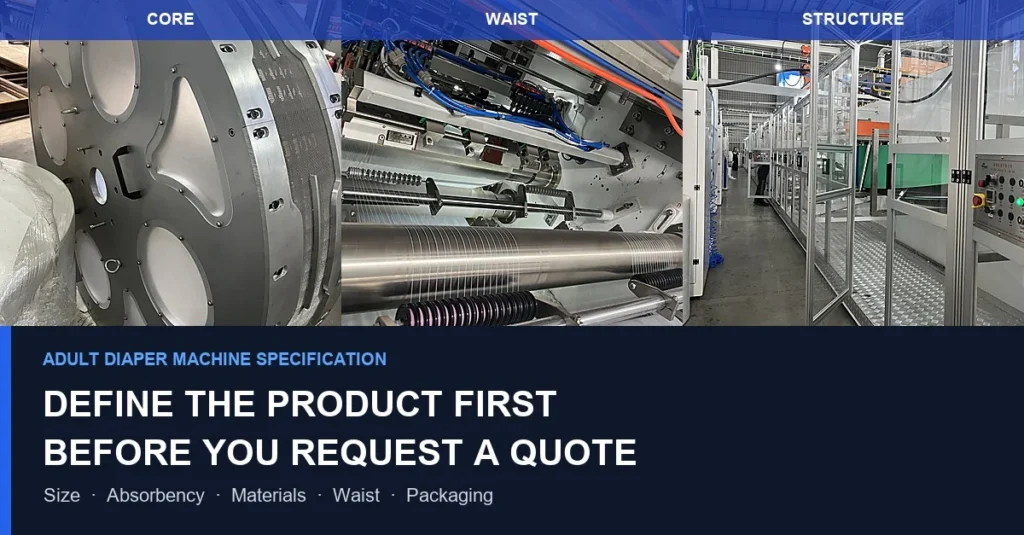
On a full-servo line, each key section runs its own independent servo motor. The specification sheet names three where that independence matters most: elastic waist forming, SAP dosing and core positioning.
Elastic waist forming is where a pull-up product wins or loses its fit. Dozens of fine elastic strands are applied under controlled tension. A servo-driven application can adjust that tension per product and recipe; a mechanical cam cannot change strand tension on the fly. When you move from a size L to a size XL waist, the servo re-profiles in seconds.
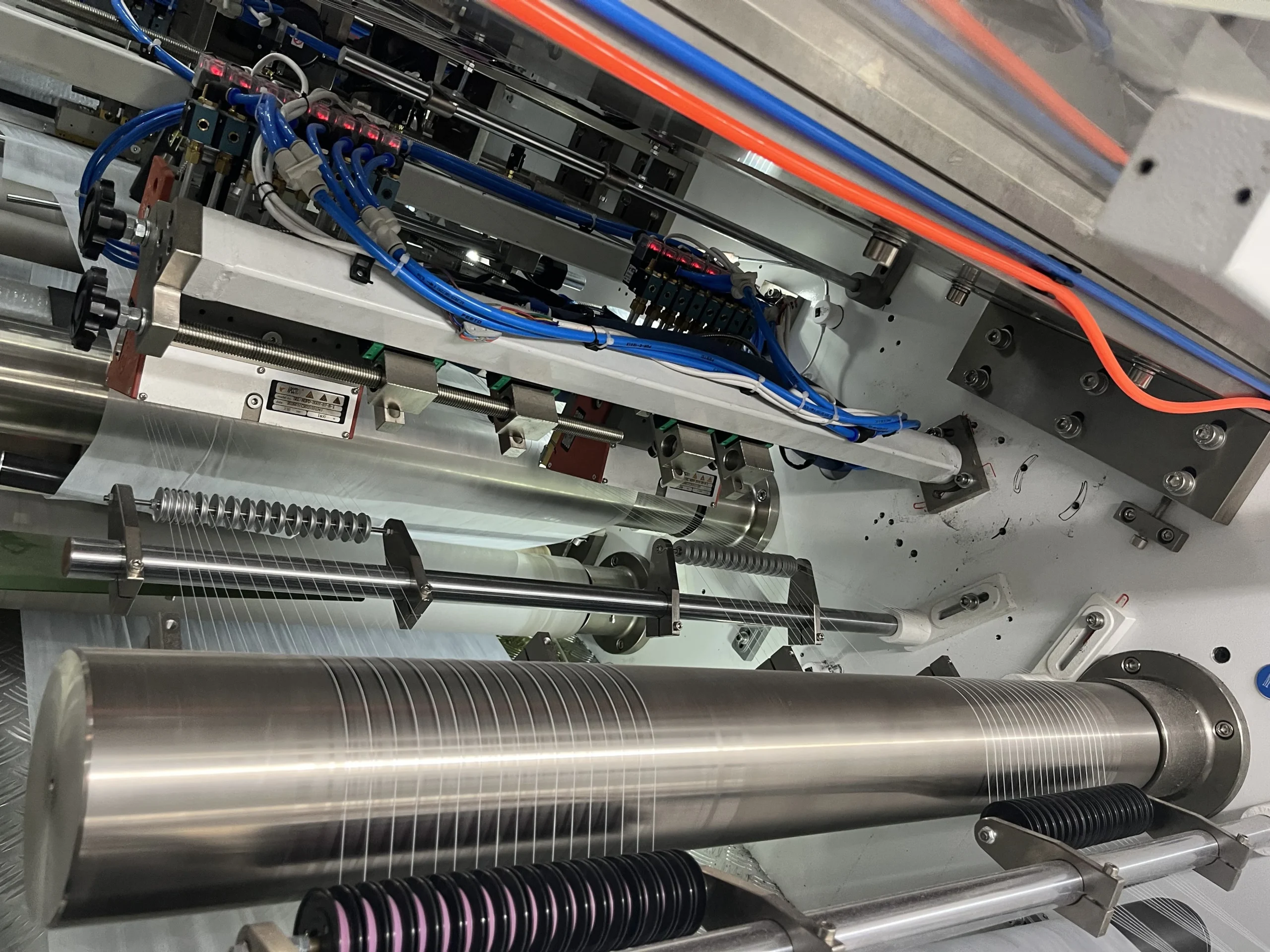
SAP dosing controls how much super-absorbent polymer goes into each core. Too little and the product leaks; too much and you pay for material that ends up as waste. Servo dosing meters SAP against the line speed continuously, which matters when you run the line slower for a heavier core or faster for a light pad.
Core positioning places that formed core on the web within fractions of a millimetre. A misaligned core shows up as leakage at the leg cuff, and it is the kind of defect a customer notices on the first carton, not the last.
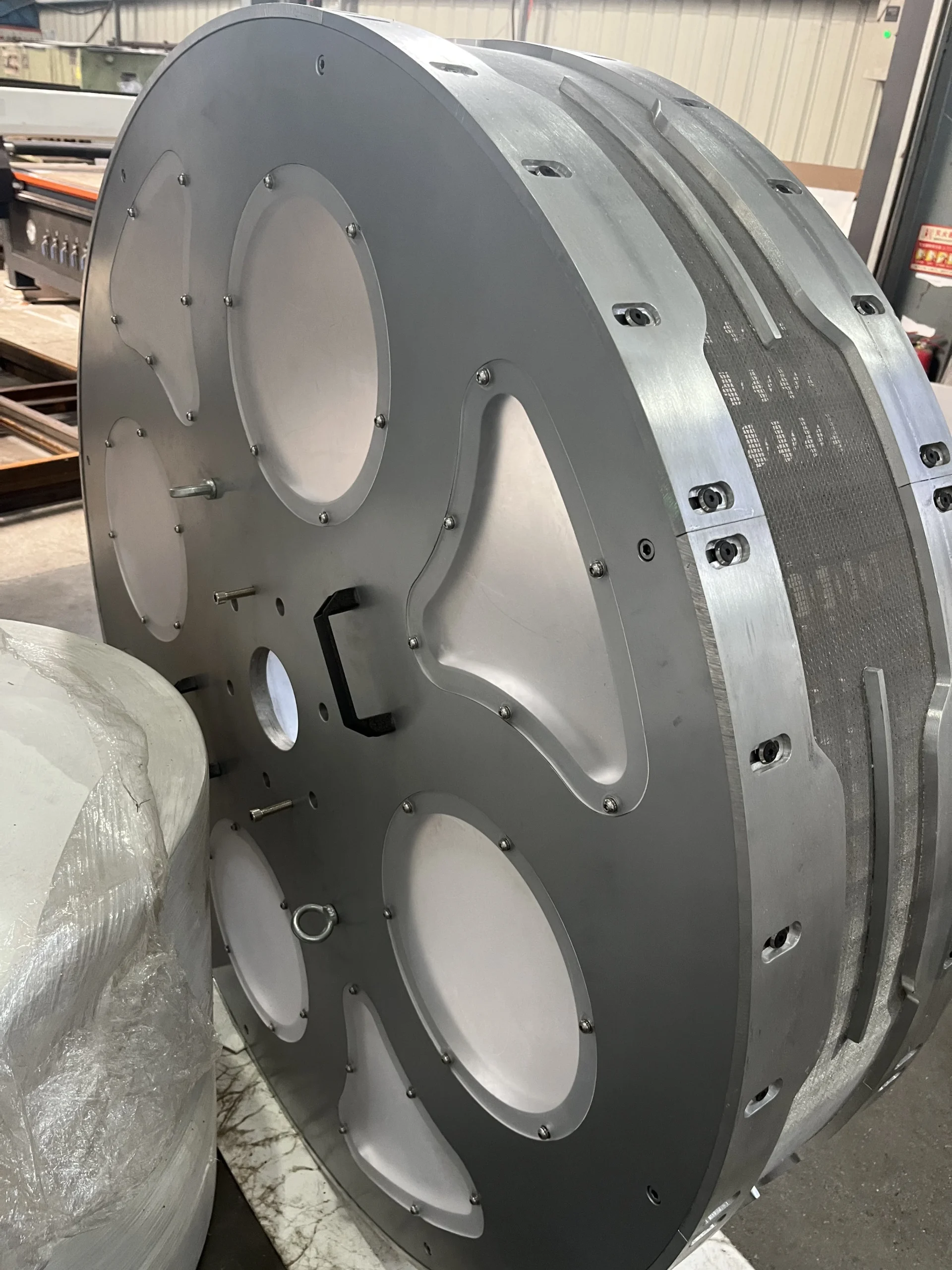
These three stations are exactly where a semi-servo line concentrates its limited servo budget — because they are the ones that break first when you cut corners.
What the main shaft still does well
A semi-servo line drives its key units with servo motors, then lets a main-shaft mechanical transmission carry the rest: the web unwinding, the folding plates, the stacking and some of the cutting. That is not a defect. It is a deliberate cost allocation.
The reason this works is that not every station needs closed-loop feedback. A folding plate does not need to know its position to within ±0.02 mm. It needs to open and close at the right time, and a cam driven by the main shaft does that reliably for years.
The main shaft is also what keeps a semi-servo line mechanically synchronised. Every cam, gear and belt derives from one rotation, so stations physically cannot drift out of phase with each other. On a full-servo line, that synchronisation is electronic instead, and it has to be programmed correctly.
The precision numbers and where they matter
The positioning tolerance drops from ±0.02 mm on full servo to ±0.05 mm on semi servo and ±0.1 mm on a mechanical line. Read those numbers in the context of the product, not in isolation.
A ±0.1 mm tolerance on an adult diaper core is about the thickness of a sheet of paper. For a standard open-type product with a generous absorbent core, that is invisible to the end user. For a premium pull-up with a thin core, a tight leg cuff and a demanding retail buyer, half a millimetre is the difference between a leak complaint and a repeat order.
In most cases, the precision argument only becomes decisive when the product itself is thin, fast or heavily elasticised. A basic underpad does not need the same positioning budget as a high-end pull-up, and paying for precision you cannot perceive is waste.
The real question: your stable speed, not the label
A quotation sells you the design speed. Your factory runs at the stable speed. The two are never the same, and the gap widens as you push a cheaper drive system.
The real question is not which label is on the machine. It is how many pcs/min you can hold for eight continuous hours without the line drifting out of spec. On the specification sheet, that is 250 pcs/min for full servo, 200 pcs/min for semi servo and 150–180 pcs/min for mechanical.
If your market needs 1.8 million pieces a month, a semi-servo line at 200 pcs/min across three shifts is already inside that envelope. Paying for full servo to chase a number you cannot sell does not improve your payback period — it lengthens it.
What must be itemized in the quotation
Configuration is where two suppliers can quote the same headline speed and deliver different machines. The only way to compare them is to force the quotation into a line-by-line specification.
I believe a useful quotation should list, for each station, whether it is servo-driven or mechanically driven, along with the servo motor brand and the number of axes. If a station is listed as "servo," ask which function the servo performs — a servo that only cuts is not the same as a servo that positions a core.
- Elastic waist application — servo-driven strands, or cam-driven?
- SAP dosing — metered against line speed, or fixed rate?
- Core forming and positioning — independent servo, or main-shaft?
- Changeover — full recipe switching by servo re-profile, or manual adjustment?
- Control system — Mitsubishi or Siemens, and how many axes total?
Every one of these lines should appear in writing before you sign. A quotation that cannot answer them is not a specification; it is a price with a marketing word attached.
The "full servo" label trap
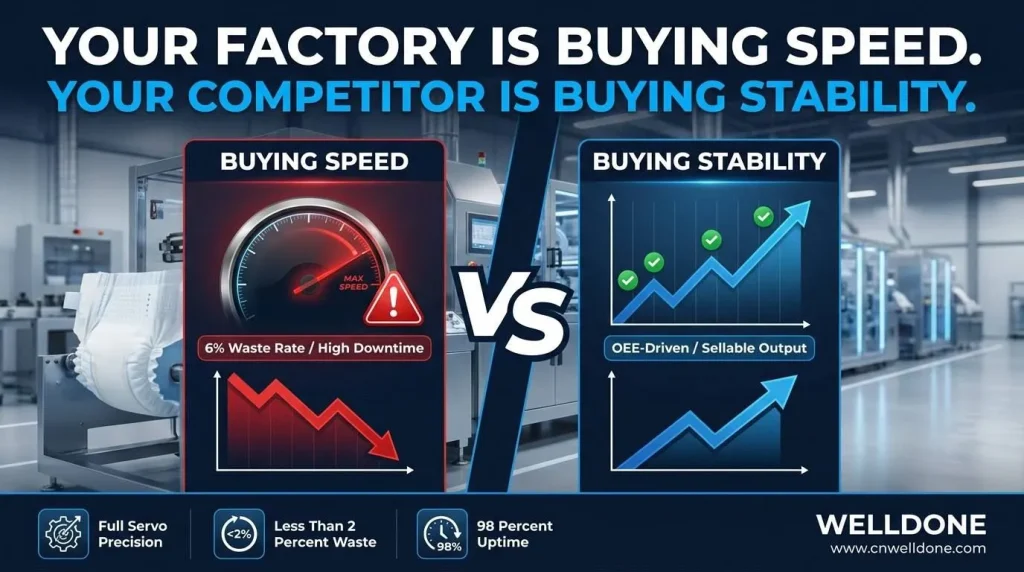
Buyers over-pay for full servo more often than they under-pay for semi servo. The reason is a labelling problem: some quotations use "full servo" to mean "the key stations are servo-driven," while others use it to mean "every rotating assembly has its own motor." The two are not the same machine.
A line described as full servo may still carry a main shaft for the folding and stacking section. That is not wrong — it is how most adult lines are built. But if you priced the quotation expecting every axis to be independent, you paid for a level of servo coverage the machine does not have.
This is why the itemized list in the previous section matters. The label tells you the marketing position. The line-by-line drive list tells you the machine.
When full servo pays for itself
Full servo earns its premium when three conditions overlap. First, you run a premium pull-up or high-end open-type product where fit and thin-core integrity decide repeat orders. Second, you change sizes frequently, so servo re-profiling saves hours of mechanical adjustment per week. Third, you need data traceability — servo controllers log position and torque, which is the closest thing to a built-in quality record for an automated line.
If your product is a standard adult diaper or underpad sold on volume, none of those three conditions is usually present, and the full-servo premium is harder to justify.
When semi-servo is the right call
Semi servo is the balanced option for medium-scale production: servo-driven key units for elastic, SAP and core, with a main shaft carrying the rest. It holds a stable 200 pcs/min, which covers most standard adult diapers and underpads, and it keeps the changeover simple enough for a line that runs two or three SKUs.
The mechanical option, at 150–180 pcs/min stable, suits entry-level markets where simplicity and durability beat peak output. A cam-gear line has fewer controllers to maintain and no servo tuning to go wrong, which matters when your technicians are still learning the equipment.
Choosing between them comes back to the product you defined before you requested the quote. That specification — format, absorbency, waist construction, size range — is what tells you which stations need the closed loop, and which ones can ride the main shaft.
Why Welldone
Welldone builds adult care lines in all three drive configurations — full servo, semi servo and fully mechanical — so the recommendation follows your product, not the other way around. The engineering team configures each line against the finished-product specification, then itemizes the drive system station by station in the quotation.
Overseas engineer service is available. Welldone can provide overseas engineer support for installation, commissioning and training, so the servo parameters and recipe management are set up correctly before handover rather than left to trial and error.
Configured to product
The drive system is matched to your format, absorbency and SKU plan — not sold as a one-size upgrade.
Itemized quotation
Each station's drive type and servo axes are listed in writing, so you compare real configurations.
Verified acceptance
Stable speed, positioning tolerance and changeover are defined before delivery, not discovered after.
Conclusion
Full servo and semi servo are not a good-or-bad choice. They are an allocation of closed-loop control across the stations where it changes the product, and a main shaft across the stations where it does not. The mistake is to buy the label before you know which stations your product actually needs independent.
Start from the product specification. If the elastic waist, SAP dosing and core positioning decide your product's quality, budget the servo there. If your product is a standard, high-volume diaper, a semi-servo line at 200 pcs/min stable is frequently the sharper financial decision.
Before you sign the quotation, ask yourself one question: can the supplier show you, station by station, which assemblies are servo-driven and which ride the main shaft? If the answer is no, you are not comparing configurations — you are comparing prices for the same three words.
Frequently asked questions
Is full servo always faster than semi servo?
Not by much. The specification lists 250 pcs/min stable for full servo against 200 pcs/min for semi servo — about 25%. The bigger difference is precision and recipe-driven changeover, not raw output.
Which stations need a servo motor on an adult line?
Elastic waist forming, SAP dosing and core positioning are the three the full-servo specification names. If your product relies on those stations for fit and absorbency, that is where the servo budget belongs.
Can I upgrade a semi-servo line to full servo later?
Not economically. A line is engineered around its drive architecture — main-shaft cams, gears and control hardware. Buying the configuration you need up front is cheaper than retrofitting axes afterward. See how the product specification drives this decision in Define the Product Before Requesting an Adult Diaper Machine Quote.
What does "full servo" cover in the quotation?
It depends on the supplier. Ask for a station-by-station drive list showing which assemblies are servo-driven and the motor brand and axis count. The label alone does not tell you the machine.
Planning an adult incontinence line?
Send your product specification and we will configure the drive system station by station — full servo, semi servo or mechanical — against what you actually manufacture.
Request a configuration View adult care machines
Website: www.cnwelldone.com | Email: welldone@cnwelldone.com