Hygiene Backsheet Film Qualification Guide 2026 | Welldone

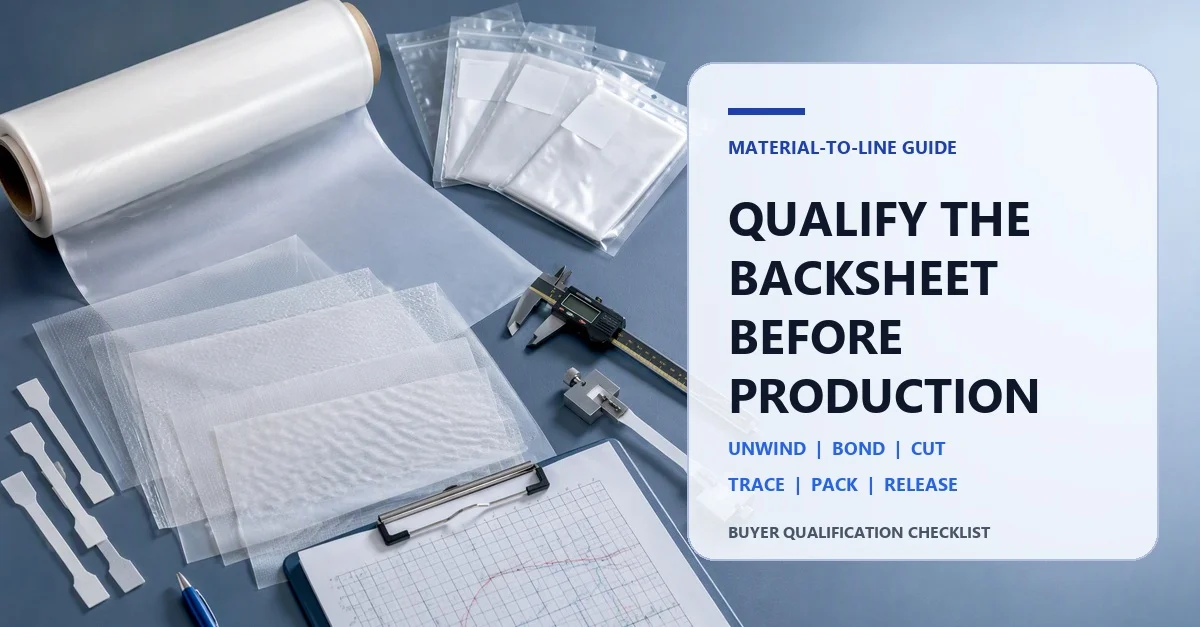
How Should Hygiene Factories Qualify a New Backsheet Film?
A new film roll is waiting beside the diaper line. Purchasing has a supplier data sheet. Quality has an incoming-inspection result. Production has one question: will the material run through unwinding, bonding, cutting and packing without moving the process outside its stable window?
That question became more relevant after Magnera announced the commissioning of a five-layer blown-film line in Dombuhl, Germany. The news is about a material platform. For a hygiene factory, the decision is about production qualification.
Source & Date
Primary source: Magnera, "Magnera Commissions New Blown Film Line in Dombuhl, Germany", published October 6, 2026.
Industry source: Nonwovens Industry, "Magnera Commissions New Blown Film Production Line in Germany", published October 6, 2026.
Primary source: Magnera, "Magnera Commissions New Blown Film Line in Dombuhl, Germany", published October 6, 2026.
Industry source: Nonwovens Industry, "Magnera Commissions New Blown Film Production Line in Germany", published October 6, 2026.
The news signal: film development is becoming more configurable
Magnera says its new five-layer line expands its lightweight and elastic film capabilities for personal-care and healthcare applications. The official release states that the architecture can tailor surface characteristics, bonding performance, tactile properties and elastic functionality. Commissioning began in August 2026, product verification and qualification were still progressing, and commercial production was expected in October 2026.
Those are source-confirmed facts. The following production analysis is Welldone's engineering interpretation for hygiene buyers; Magnera did not state that Welldone participated in the project.
A configurable film platform increases options, but it also increases the number of material-process combinations a converter may have to evaluate. A supplier can qualify film production on its own equipment. A diaper or sanitary-pad factory still has to qualify how that film behaves inside its own BOM and converting route.
Material approval confirms the roll. Production qualification confirms the whole route from roll loading to released pack.
Define the qualification boundary before the first roll is loaded
A common mistake is to call one successful run a material approval. If the trial covers one roll, one recipe and one short operating period, it does not show what happens at a splice, after a stop, across normal roll variation or after finished packs have been compressed and stored.
Start by defining the exact product family, SKU, line, recipe version, adhesive system, inspection method and packaging format covered by the decision. A film approved for one baby-diaper structure should not automatically release every size, every care category or every sealing condition.
The qualification boundary should also say what is outside scope. If elastic-film functionality is not used in the trial product, do not present the result as evidence for an elastic application. If a claim depends on a certification or environmental end-of-life route, verify that claim separately; do not infer it from the number of film layers.
Incoming inspection must preserve material identity
The production team needs the roll identity that purchasing and quality reviewed: supplier, material code, lot, roll number, width, declared construction and the approved data-sheet revision. Without that link, a later defect cannot be separated into material, setup or equipment causes.
Check visible roll condition, edge quality, winding condition, core integrity and label consistency before the roll reaches the unwind. Any additional laboratory or dimensional checks must follow the buyer's agreed specification. This article does not invent acceptance limits; those limits belong in the commercial material specification and trial protocol.
Illustrative framework only. The fields below are a planning structure, not Magnera specifications, Welldone machine parameters or a supplier acceptance standard. Replace them with the approved material and product requirements for the actual project.
| Evidence group | Record before trial | Why the line needs it |
|---|---|---|
| Roll identity | Supplier, code, lot, roll and data-sheet revision | Connects process results to the exact material received |
| Physical condition | Edges, winding, core and visible surface condition | Separates delivery damage from process behavior |
| Trial configuration | Product, size, recipe, adhesive and packaging format | Prevents an approval from expanding beyond tested scope |
Use a staged trial matrix, not one headline speed
Load the new film under controlled conditions and record the change from the currently approved material. Begin at a conservative operating condition, observe web tracking and tension response, then move through the planned operating window. The point is not to chase the fastest number. It is to find a repeatable window with qualified output.
Include normal disturbances: roll acceleration, deceleration, splice passage, short stop, restart and recipe recovery. If the line only looks stable during uninterrupted steady running, the qualification has missed the conditions operators face during a real shift.
In most cases, both production and quality should sign the observations. Maintenance or controls personnel should join when the material requires tension, sensor or tracking changes. Purchasing then receives a decision based on usable process evidence rather than price and supplier paperwork alone.
| Trial stage | What to observe | Release evidence |
|---|---|---|
| Roll loading and setup | Web path, edge position, threading and recipe identity | Setup record tied to material lot |
| Operating window | Tracking, tension response, wrinkles and process alarms | Stable qualified output across agreed conditions |
| Disturbance recovery | Splice, stop, restart and recipe recovery | Defined recovery method and segregated product |
| Pack review | Appearance, compression, seal and traceability | Approved pack sample and lot record |
Bonding qualification must use the real surface pairing
A multi-layer film may be engineered for specific surface and bonding behavior, but the hygiene factory joins that surface to its own nonwoven, adhesive pattern and process condition. Approval therefore belongs to the actual material pairing, not to the film in isolation.
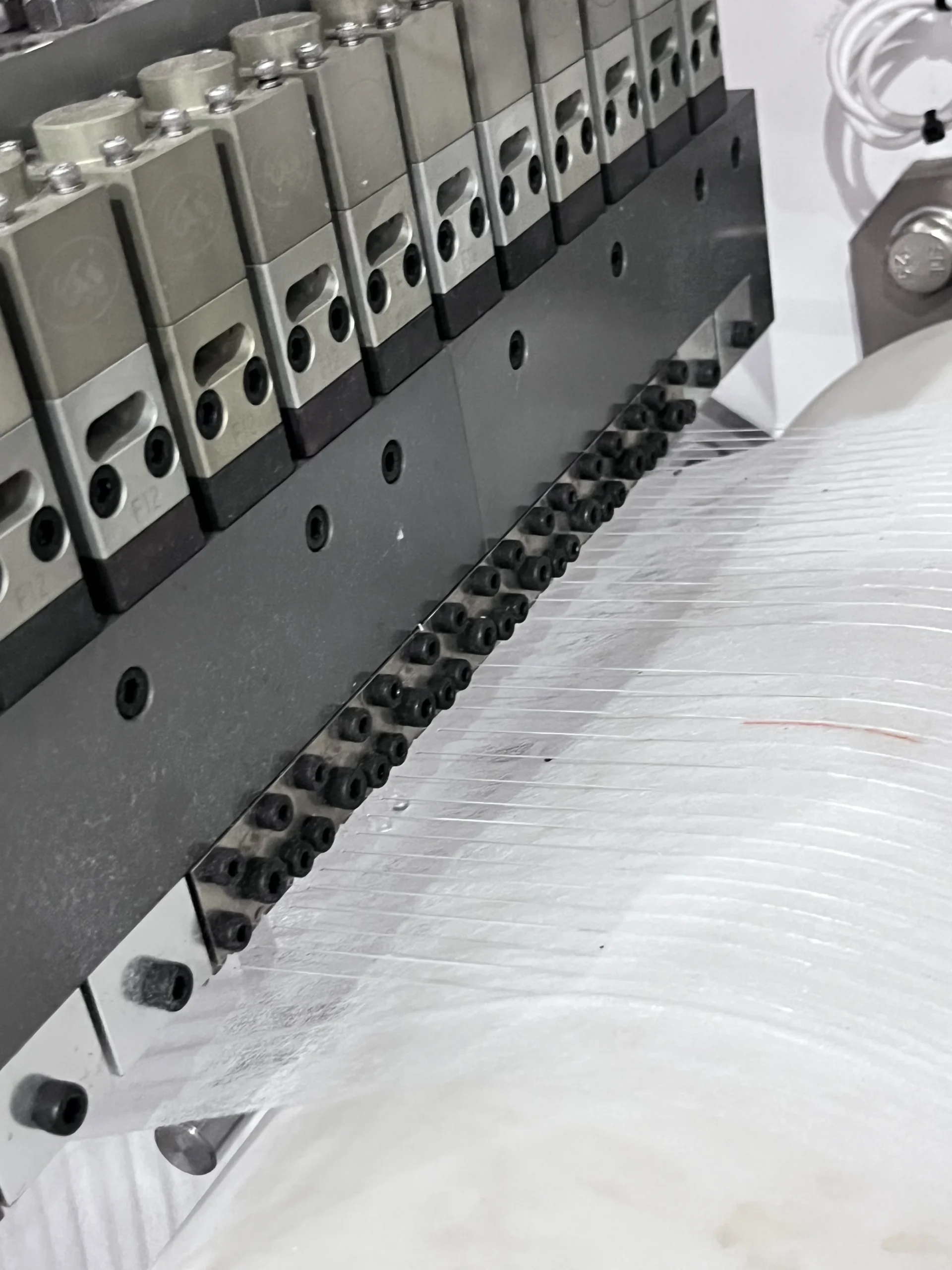
Observe whether the film stays flat through the bonding zone, whether adhesive transfer remains controlled and whether the joined web survives downstream handling. Do not solve every symptom by increasing adhesive or temperature. That can hide an interface problem while changing cost, cleanliness or product feel.
The real question is which process setting is essential for the new film and which setting is compensating for unstable material behavior. Record both the accepted window and the settings that produced defects.
Cutting evidence shows whether the material survives conversion
Film behavior at the unwind is only the beginning. Downstream pulling, registration and final cutting reveal whether the material holds its relationship to the rest of the product. Look for edge movement, wrinkling, stretched geometry, contamination or inconsistent cut presentation under the approved recipe.
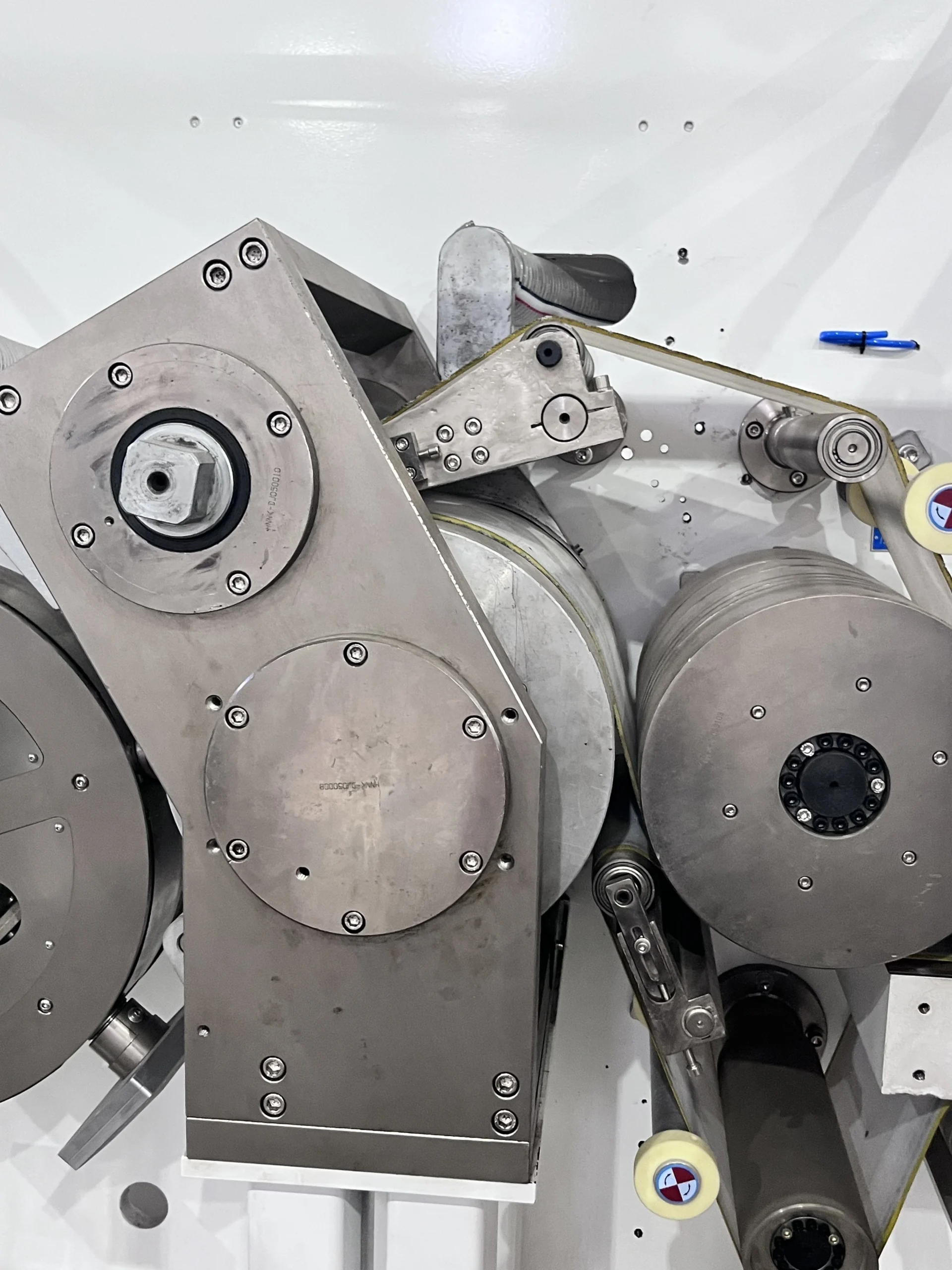
If a defect appears at final cutting, trace it upstream before changing the knife or registration setting. A material that stretches differently may shift the product relationship long before the cutter makes the defect visible.
Build a defect dictionary before deciding what to reject
The trial needs named defects that operators, quality staff and the control system interpret in the same way. Examples may include wrinkle, edge drift, delamination, visible damage or registration loss, but the actual list must come from the product specification and process risk review.
I believe the most useful trial record connects each defect to material lot, recipe, time, detection point, action and final disposition. A count without identity cannot tell the team whether one roll, one setup or the whole material family caused the loss.
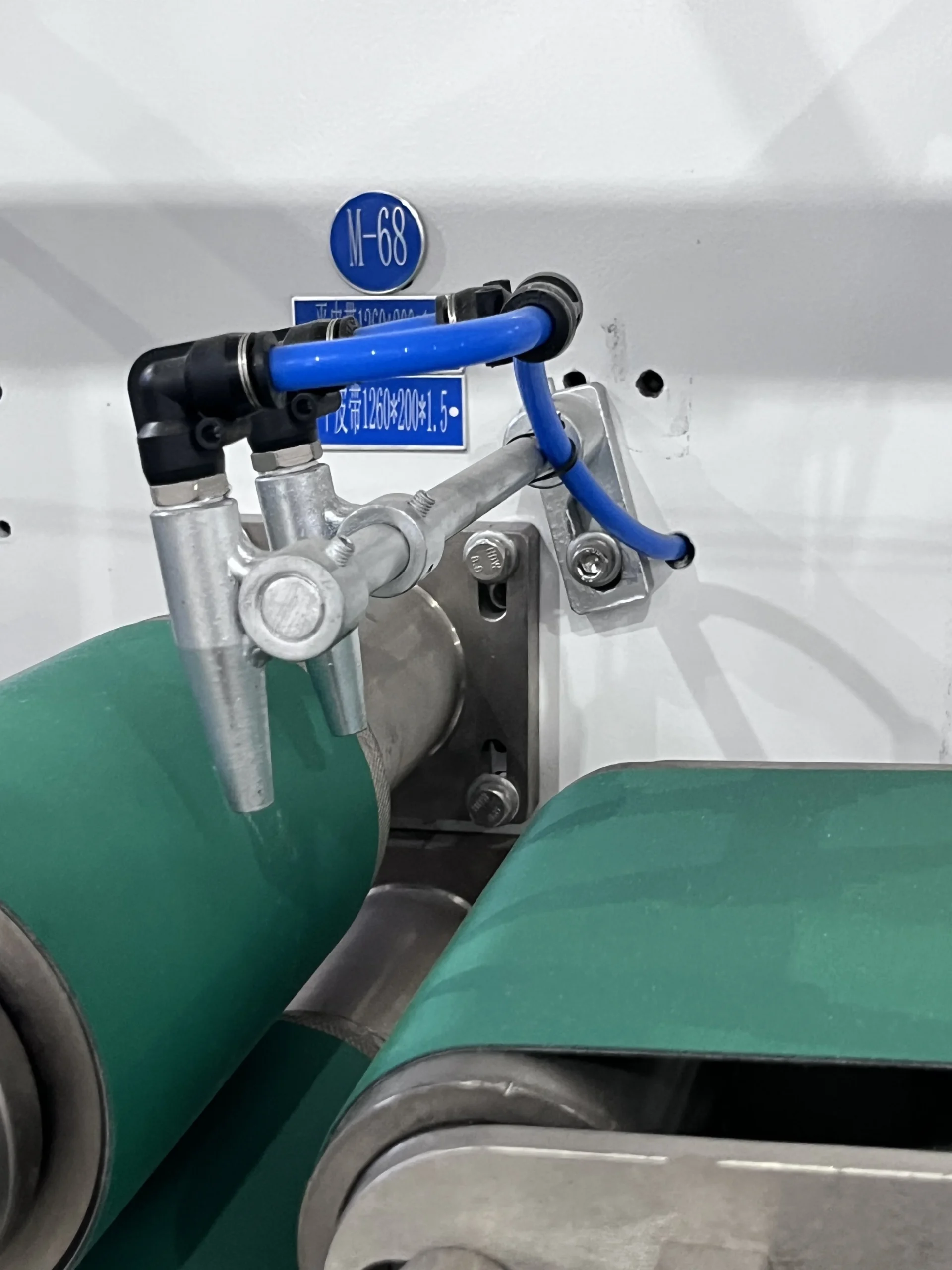
Online inspection may contain observable defects. Offline checks may still be needed for properties the installed line cannot measure. The qualification plan must state which evidence comes from the machine, which comes from the laboratory and who owns the release decision.
Release the material by product and process scope
A production release should identify the approved supplier code, product families, recipes, operating window, inspection plan, packaging format and change-control requirement. It should also state what triggers requalification: a film construction change, supplier-site change, surface change, relevant process change or expansion to a new product route.
Keep a retained sample and the approved trial record according to the factory's quality system. Link the first commercial lots to enhanced review until normal performance is demonstrated under routine shifts. This is not a universal regulatory rule; it is a practical risk-control structure that each buyer should adapt to its own quality obligations.
For factories planning material replacement, the article How Material Quality Affects Machine Stability explains why similar-looking rolls can behave differently. The guide on machine and material matching provides further context for stabilizing the full process rather than adjusting one station in isolation.
Why Welldone starts with the finished-product and material boundary
Welldone supports hygiene projects as a machine and supply-chain partner. The work begins with the target sample, BOM, material route, required evidence and packaging result. It does not begin by declaring a film compatible before the actual product and line are defined.
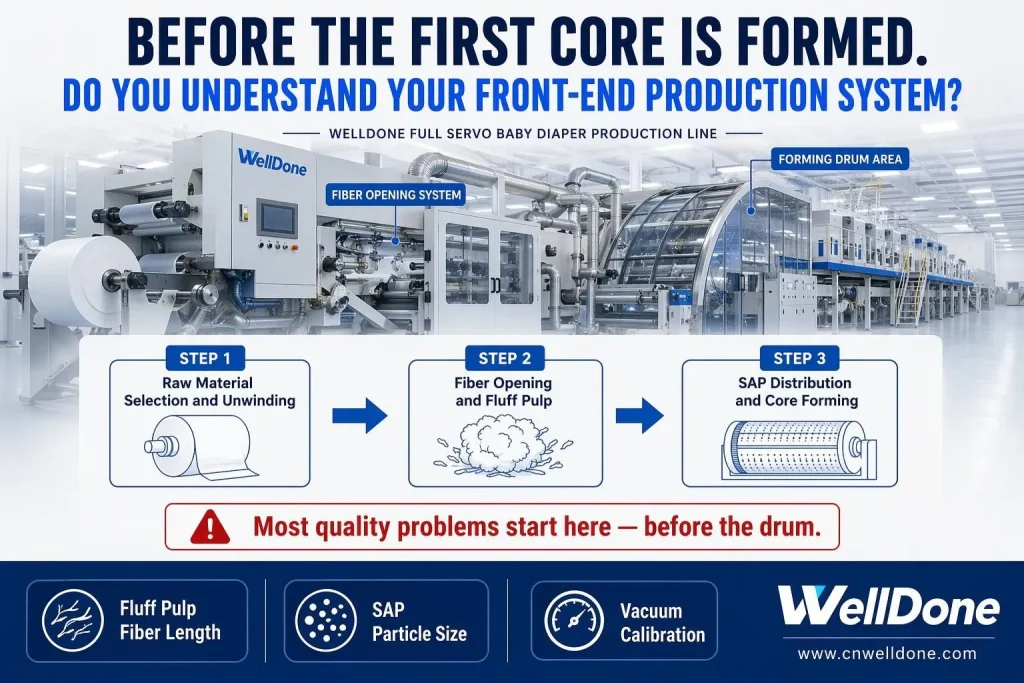
Production-line reviewMap unwind, tension, bonding, cutting, inspection and packaging boundaries for the selected product.
Material trial planningBuild a qualification matrix around the buyer's sample, BOM, lots and release evidence.
Supply coordinationDiscuss machinery, raw-material samples and finished-product requirements; commercial conditions remain subject to project confirmation.
Buyers evaluating baby-care conversion can review Welldone's verified baby care machinery category. Specific material grades, certifications, MOQ, price, delivery and inventory must be confirmed through a project inquiry; none are implied by this article.
Buyer checklist: evidence to request before production release
- Freeze the exact film code, revision, supplier site, lot and approved product scope.
- Link every trial roll to product size, recipe, adhesive, inspection and packaging records.
- Test normal running as well as splice, stop, restart and recipe recovery.
- Define film-related defects before the trial and assign detection ownership.
- Verify bonding with the real paired materials and downstream handling route.
- Review cutting, appearance and pack condition before releasing commercial production.
- Record the approved operating window and the conditions that require requalification.
- Separate source-confirmed material facts from factory-specific acceptance limits.
Before the next material change, ask one practical question: can your team trace a failed packed product back to the exact film roll, recipe and trial evidence without reconstructing the shift from memory?
Frequently asked questions
Does a supplier data sheet prove film compatibility?
No. It describes the supplied material, but production compatibility also depends on the product BOM, web path, tension response, bonding, cutting, inspection and packaging conditions.
Should a new film be tested only at target speed?
No. The trial should cover the agreed operating window and normal disturbances such as splice passage, short stops and restart. Use buyer-approved conditions rather than a universal speed claim.
Can one approval cover every diaper size?
Only when the qualification protocol and evidence explicitly cover those sizes, recipes and packaging formats. Otherwise, release the material within the tested scope.
Can Welldone support raw-material matching?
Welldone can discuss production-line configuration, material samples, BOM matching and trial requirements. Exact grades, supply terms and commercial conditions require project confirmation.
Where should a buyer start?
Send the target finished-product sample, BOM, film information, intended product sizes, current machine status and required pack format with your Welldone project inquiry.
Conclusion
Magnera's five-layer film investment shows that personal-care film development is becoming more configurable. That creates useful options for hygiene brands and converters, but every new option must still pass through the buyer's real production route.
Do not approve the roll and assume the process will follow. Qualify the interaction: identity, unwind, tension, bonding, cutting, defect handling, packaging and traceability. Then release the material only within the scope the evidence actually proves.
Qualify the material before it becomes a shift problem
Website: www.cnwelldone.com | Email: welldone@cnwelldone.com
Discuss your line, material or finished-product requirement