Packaging Seal Integrity: Why Export Packs Fail at Sea

Packaging Seal Integrity: Why Packs That Pass Factory QC Still Fail at Sea
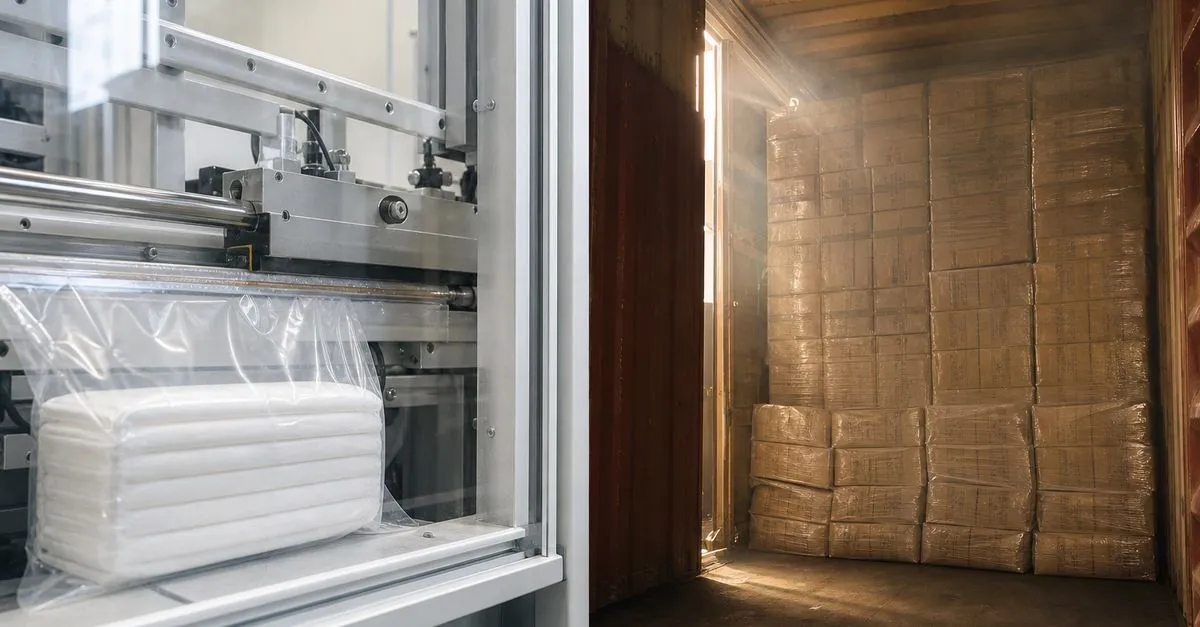
A customer in West Africa opened his first container and found roughly one pack in forty had split along the seal. The QC report was clean. Those packs left the factory sealed.
This article covers what happens to a hygiene product pack between the discharge conveyor and the customer's warehouse, why seal temperature drift is the most common root cause, and what to verify during factory acceptance so the problem does not travel with your shipment.
Packaging Machine Series · Part 3 of 3
Part 1: In-Line Bag Making vs Pre-Made Bags — where the bag comes from.
Part 2: Rated Speed vs Actual Output — how fast it really runs.
Part 3 — whether the seal holds.
Part 1: In-Line Bag Making vs Pre-Made Bags — where the bag comes from.
Part 2: Rated Speed vs Actual Output — how fast it really runs.
Part 3 — whether the seal holds.
One Pack in Forty
Two and a half percent. On a single container that is a few hundred packs, a complaint email, and a conversation about who pays.
The first response is usually to blame the freight forwarder. Sometimes that is fair. Most of the time it is not, because the same forwarder moved the previous three containers without incident.
What changed was not the transport. It was the seal — and the seal was already marginal when it left the factory. It just had not been asked to prove it yet.
A seal that holds on the discharge conveyor and a seal that holds after six weeks at sea are two different specifications. Most factories only test the first one.
What the Journey Does
Between your line and your customer's shelf, a pack faces three loads that do not exist in your factory.
Heat
A container crossing the equator sits well above 50°C for days. Polyethylene softens. A seal with marginal bond strength at 25°C behaves differently at 55°C.
Sustained compression
Pallets are stacked. The bottom cartons carry the weight of everything above them for the entire voyage. This is not impact — it is constant pressure over weeks, which finds any weakness in a seal line.
Humidity cycling
Containers breathe. Warm humid air condenses on cool surfaces overnight and evaporates during the day. For wet wipes especially, a seal that lets moisture migrate turns a saleable pack into a complaint.
Temperature Is Not a Setting
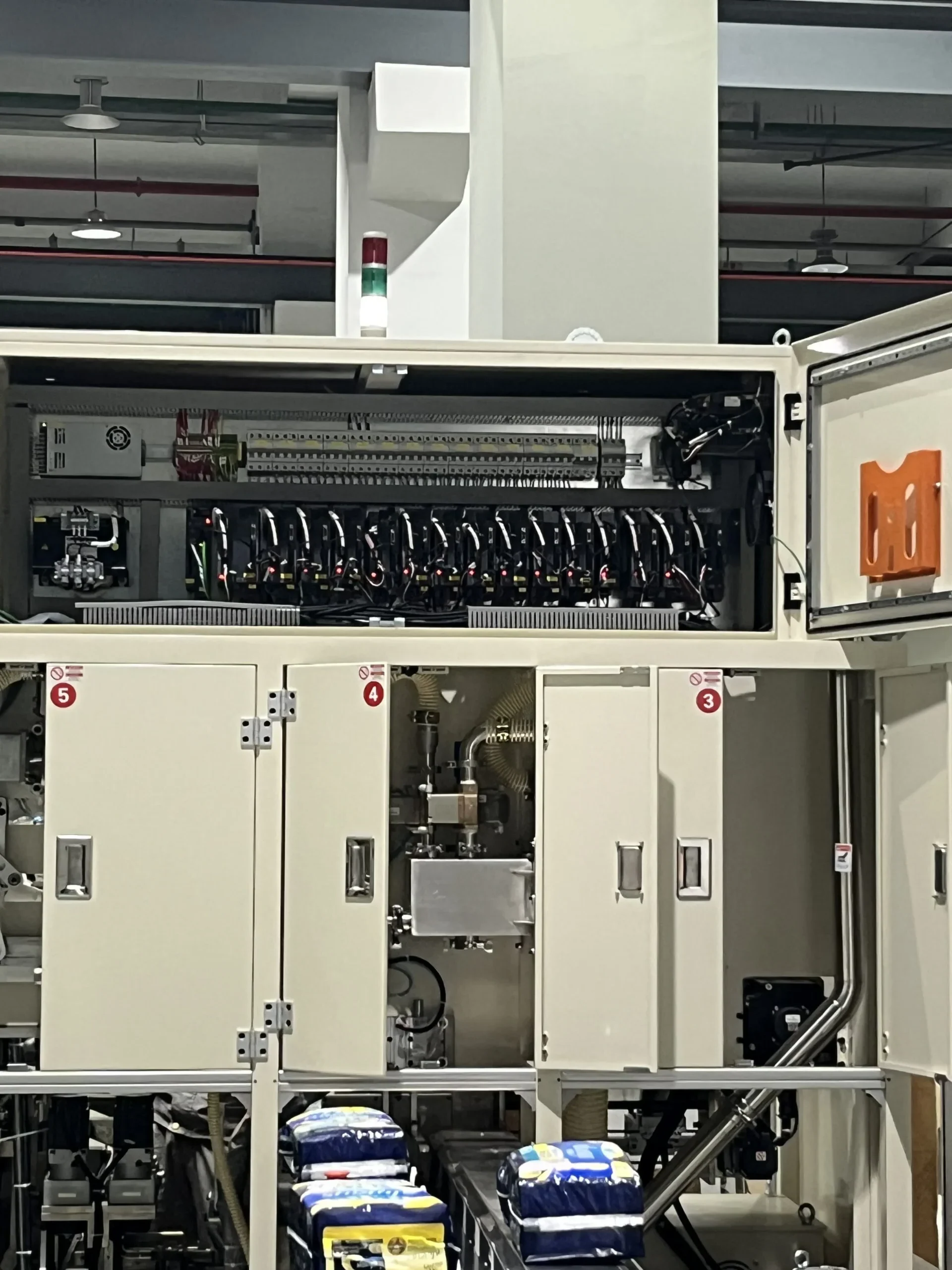
Here is the part that surprises most buyers: the number on the HMI is a target, not a measurement of what the film is experiencing.
As the machine runs, the seal bar assembly heats up beyond the element itself. Ambient temperature in the packing hall rises through the day. Line voltage fluctuates, which matters a great deal in factories running on unstable grid supply. Each of these shifts the actual seal temperature away from the setpoint.
Drift of a few degrees is enough. Too cool and the bond is incomplete but looks closed. Too hot and the film thins at the seal line, producing a seal that is visually perfect and mechanically weak.
This is why a closed-loop temperature controller with a current transformer measuring the actual heating element behaviour is not an optional upgrade for export production. It is the difference between a specification and a hope.
The Four Seal Defects
| Defect | What It Looks Like | Root Cause | When It Shows Up |
|---|---|---|---|
| Cold seal | Closed but peels apart cleanly | Actual temperature below bonding threshold | Under stacking load in transit |
| Burn-through | Thinned or perforated seal line | Temperature drift upward at speed | Immediately or at first handling |
| Contaminated seal | Product fibre trapped in the seal | Uneven stack, product edge in the seal path | Random, worsens under heat |
| Incomplete closure | Gap or channel at one end | Bag over-filled or misaligned at insertion | Moisture loss over weeks |
Only one of these four is really a sealing station problem. The other three are created upstream and cashed in at the seal bar.
Contamination Starts Upstream
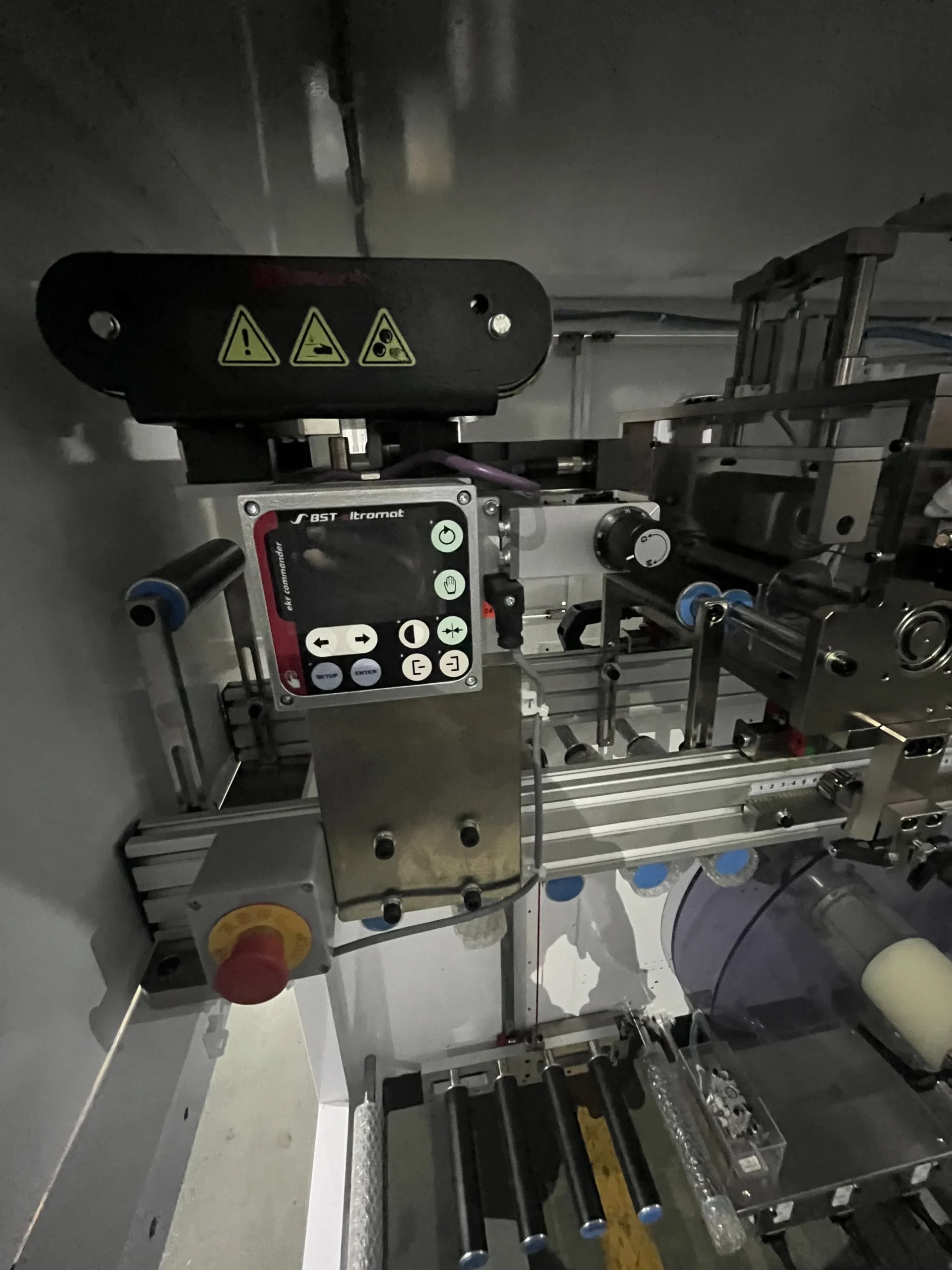
We covered stack squareness in Part 1 as a speed and appearance issue. In export it becomes a durability issue.
A product edge caught in the seal line creates a fibre bridge through the bond. In the factory that pack looks acceptable. Under sustained compression at 50°C, that bridge is where the seal opens.
In most cases when a factory tells me their seal bar is unreliable, the reject samples show contamination rather than a temperature fault. The seal bar was doing its job on material that should never have reached it.
Hour One vs Hour Three
Most in-line quality checks happen at the start of a run. The operator pulls a pack, checks the seal, signs the sheet, and the shift proceeds.
That is exactly the wrong sampling point.
At hour one the machine is close to its setpoint because it has just been brought up to temperature under supervision. By hour three the assembly has soaked, ambient has risen, and the actual seal temperature has moved. The packs that reach your customer with marginal seals were made in the middle of the shift, not at the start.
- Sample at intervals, not at startup. A check at hour one, hour three and hour six tells you whether you have drift.
- Test destructively. A visual check catches burn-through. It does not catch a cold seal.
- Record ambient temperature. If failures correlate with afternoon shifts, you have found your variable.
- Keep retained samples per batch. When a complaint arrives eight weeks later, you need something to compare against.
Stacking Load in the Container
Seal strength is usually quoted as a peel force. That number is measured by pulling a seal apart in one direction, quickly, at room temperature.
A container does none of those things. It applies a lower force, continuously, at elevated temperature, for six weeks. Materials that pass a peel test can still creep under sustained load.
The practical implication is about carton design and stacking height as much as the seal itself. If your cartons are sized so the bottom layer carries the full stack, the packaging machine is being asked to compensate for a palletising decision. Where possible, let the carton carry the load rather than the pack.
Testing at Rated Speed

A factory acceptance test run at a slow, comfortable speed will produce excellent seals. It will also tell you almost nothing.
Seal dwell time is a function of cycle rate. Run the machine slower and the seal bar stays closed longer, which hides a marginal temperature setting. Bring it to rated speed and the same setting may no longer produce a full bond.
As covered in Part 2 of this series, rated speed is measured under one specific condition. Seal verification has to happen under that same condition, using your film, your bag size and your pack count.
What to Ask For at FAT
| Request | Why It Matters |
|---|---|
| Run at full rated speed, not reduced | Dwell time at reduced speed masks a marginal temperature setting |
| Use your own film specification | Film thickness and grade change the bonding window entirely |
| Continuous run of at least two hours | Thermal drift does not appear in a ten-minute demonstration |
| Destructive seal tests, sampled over time | Visual inspection cannot detect a cold seal |
| Test both your pack formats | A different pack count changes fill volume and seal alignment |
| Voltage tolerance confirmed for your grid | Supply fluctuation directly shifts actual seal temperature |
None of these requests are unusual, and any manufacturer confident in their machine will accept them. We offer video FAT so buyers who cannot travel still observe the machine running at rated speed with their own bag specification before it ships.
The Mistake Buyers Make
I understand why seal quality rarely appears on a comparison sheet. It is not a single number, it is hard to verify remotely, and every supplier says their sealing is reliable.
So the specification gets reduced to "constant temperature sealing" as a bullet point, and nobody asks what closes the loop.
A common mistake is treating seal integrity as a quality department problem rather than an equipment specification. By the time your QC team is finding failures, the machine has already been bought. The real question at purchase is not whether the machine can produce a good seal — it is whether it can produce the same seal in hour six that it produced in hour one.
Why Welldone
We have manufactured hygiene product machinery in Jinjiang, Fujian since 2008 and delivered to more than 60 countries — most of it destined for ocean freight rather than domestic distribution. That shapes how we specify sealing systems.
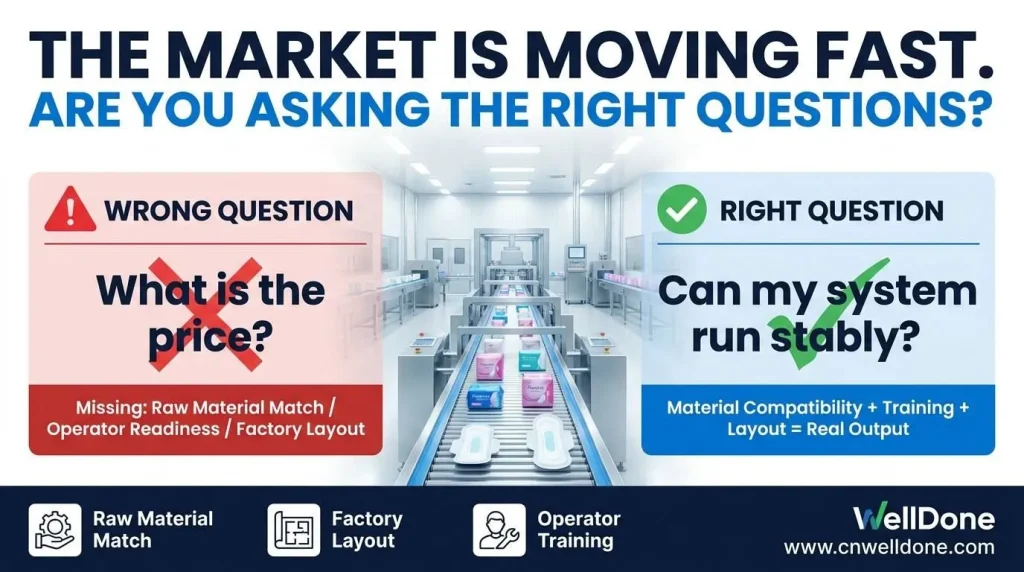
Closed-loop seal controlDedicated temperature controller with current transformer feedback, so actual element behaviour is measured rather than assumed.
Grid-tolerant specificationFor markets with unstable supply we specify wider input tolerance and advise on stabiliser sizing before commissioning, not after.
Verified at rated speedVideo FAT with your film and pack format, run at full speed with destructive seal sampling — not a slow demonstration.
Related Machines
Conclusion
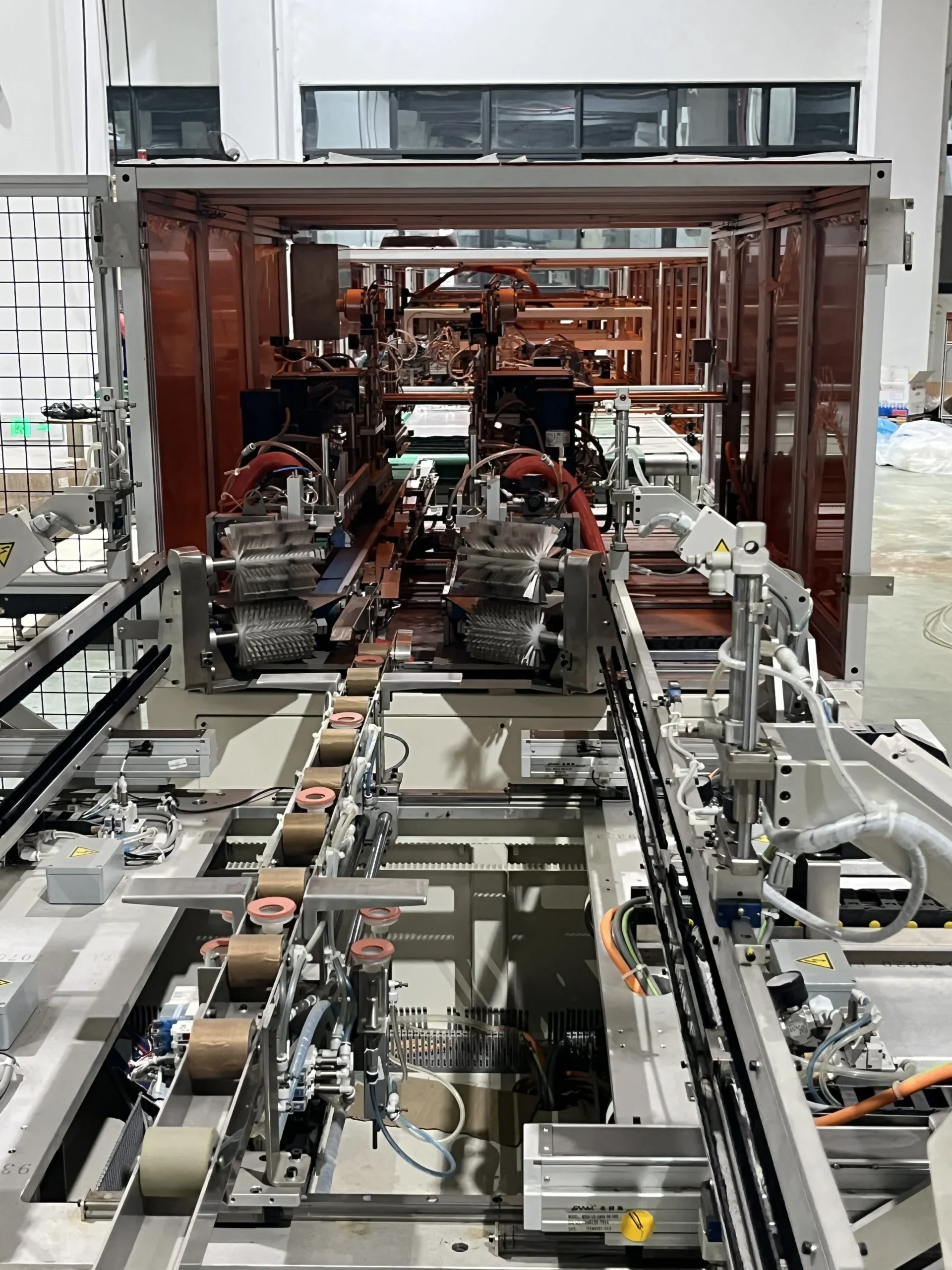
Across this series the packaging section has come up three times as something buyers underestimate: the bag supply chain limits what you can sell, the speed rating rarely matches what you get, and the seal decides whether the product survives the journey.
That last one carries the most commercial risk, because the failure appears at your customer rather than in your factory. By then you are not managing a quality issue — you are managing a relationship.
So the question to take back to your own line: when was the last time someone pulled a pack at hour six of a shift and pulled the seal apart by hand?
Frequently Asked Questions
Our seals look fine but customers report split packs. Where do we start?
Start with sampling timing rather than the seal bar. Pull packs at hour one, hour three and hour six of the same shift and test them destructively by hand. If the later samples peel more easily, you have thermal drift rather than a machine fault. Also check whether failures correlate with your hottest shifts — that usually confirms it.
What is the difference between constant temperature sealing and a normal heater?
A basic heater holds a setpoint on the controller. A closed-loop system measures the actual behaviour of the heating element through a current transformer and corrects for drift caused by machine warm-up, ambient change and voltage fluctuation. The visible difference is minimal in hour one and significant in hour six.
Does unstable grid voltage really affect seal quality?
Yes, directly. Heating output varies with supply voltage, so a fluctuating grid means a fluctuating seal temperature. For factories in markets with unstable supply we specify wider input tolerance and recommend stabiliser sizing during technical consultation. It is far cheaper to address at specification than to diagnose after a container of complaints.
Should we test seal strength ourselves or rely on the supplier's FAT?
Both. The FAT proves the machine is capable under your conditions; your own routine sampling proves it stays capable. Ask for the FAT to run at full rated speed with your film for at least two hours, with destructive sampling over that period, then build the same sampling pattern into your own shift routine.
Does the bag type change how the seal behaves?
It does. Roll-fed film sealed in-line has a consistent, controlled seal path, while pre-made bags introduce variability from handling and opening before the seal bar closes. The trade-offs between the two approaches are covered in Part 1 of this series.
Tell Us Where Your Product Ships To
Send your product type, destination markets, transit time and current seal complaint rate. We will come back with a sealing configuration recommendation and the FAT protocol we would run for your specific film and pack format.
Request a Seal Specification Review