Adult Diaper Machine Acceptance Test Criteria | Welldone

How to Write Acceptance Criteria for an Adult Incontinence Line
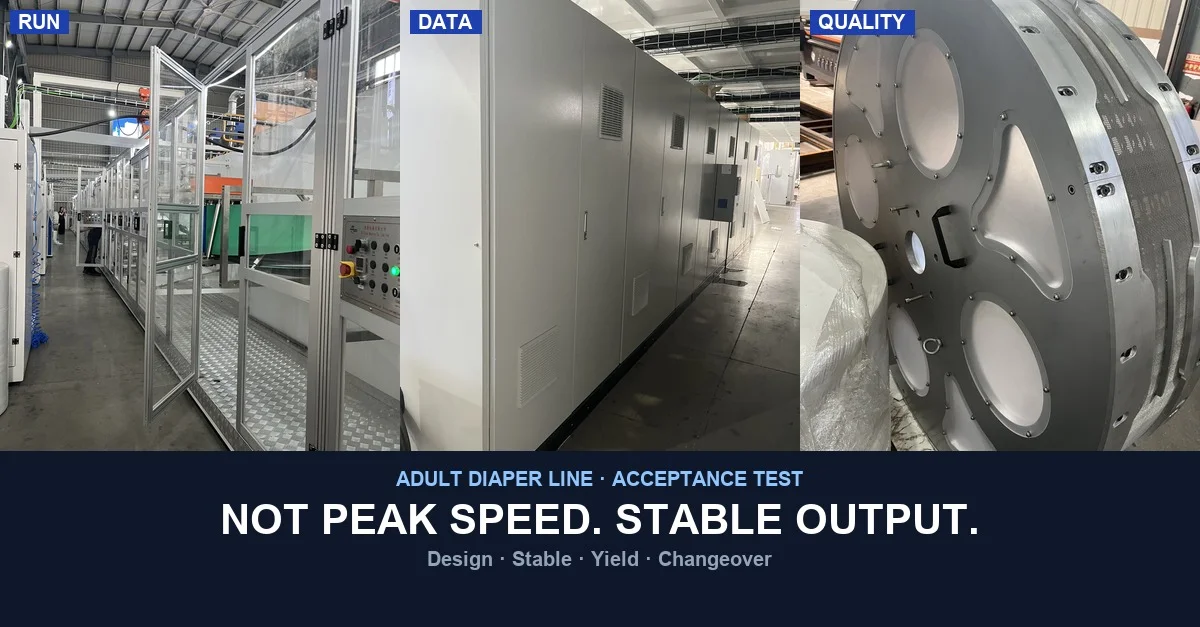
A machine runs at 300 pieces a minute for ten minutes during the factory acceptance test. The supplier points at the counter and says the line is proven. The buyer signs. Six weeks later, on a night shift, the same line averages 210 and stops twice an hour for splices.
Nothing changed in the machine. What changed is that the acceptance test measured the wrong thing. This guide breaks the acceptance criteria for an adult incontinence line into the parts that actually predict production: stable speed, test duration, good-product definition, changeover and abnormal stops.
Planning an Adult Incontinence Products Factory · Part 5
Part 1: Adult pull-up vs open-type vs underpad — the product decision.
Part 2: Define the product before requesting a quote — the demand brief.
Part 3: Full servo vs semi servo — the configuration decision.
Part 4: Factory utilities and layout — the building that receives the line.
Part 5 — this article: the acceptance test that proves it.
Part 1: Adult pull-up vs open-type vs underpad — the product decision.
Part 2: Define the product before requesting a quote — the demand brief.
Part 3: Full servo vs semi servo — the configuration decision.
Part 4: Factory utilities and layout — the building that receives the line.
Part 5 — this article: the acceptance test that proves it.
Design speed is a target, not a guarantee
On the adult care specification sheet, an open-type or pull-up line carries a design speed of 250–300 pcs/min and a stable speed of 200–260 pcs/min. Underpads run far faster: 700–900 pcs/min design against 600–800 pcs/min stable. These are two different numbers, and only one of them should anchor your acceptance test.
Actually, a machine can hit its design speed for ten minutes on a clean roll with a tuned product and a fresh crew. Design speed is what the mechanics are capable of at their best moment. It is not what the line will deliver across a shift, a size change and a splice.
The number to write into the FAT is stable speed
Stable speed is the figure the line can hold in real production: 200–260 pcs/min for an adult diaper line, depending on configuration. A full-servo line is specified for a stable 250 pcs/min, a semi-servo line for 200 pcs/min. That gap is the difference between the two configurations, and it is why the acceptance number must follow the configuration you actually bought.
The real question is not whether the line can reach 300. It is how long it can hold 250 without the crew compensating for the machine. If your acceptance test only records the peak, you have proven the machine can sprint, not that it can run. Link the test number to the configuration you specified, so a semi-servo line is not accepted against a full-servo speed.
How long must the line hold stable speed?
A ten-minute burst proves nothing. Write a duration into the test that covers the failures a real shift meets: a splice, a roll change, a size switch and a jam recovery. A common structure is a continuous run measured in hours, with the stable speed held for a defined portion of that window.
Whatever the exact hours, the duration should be long enough that the operator stops hovering and the machine has to run on its own adjustments. A line that only behaves while two technicians stand over it has not passed acceptance; it has passed an assisted demo.
What counts as a good product?
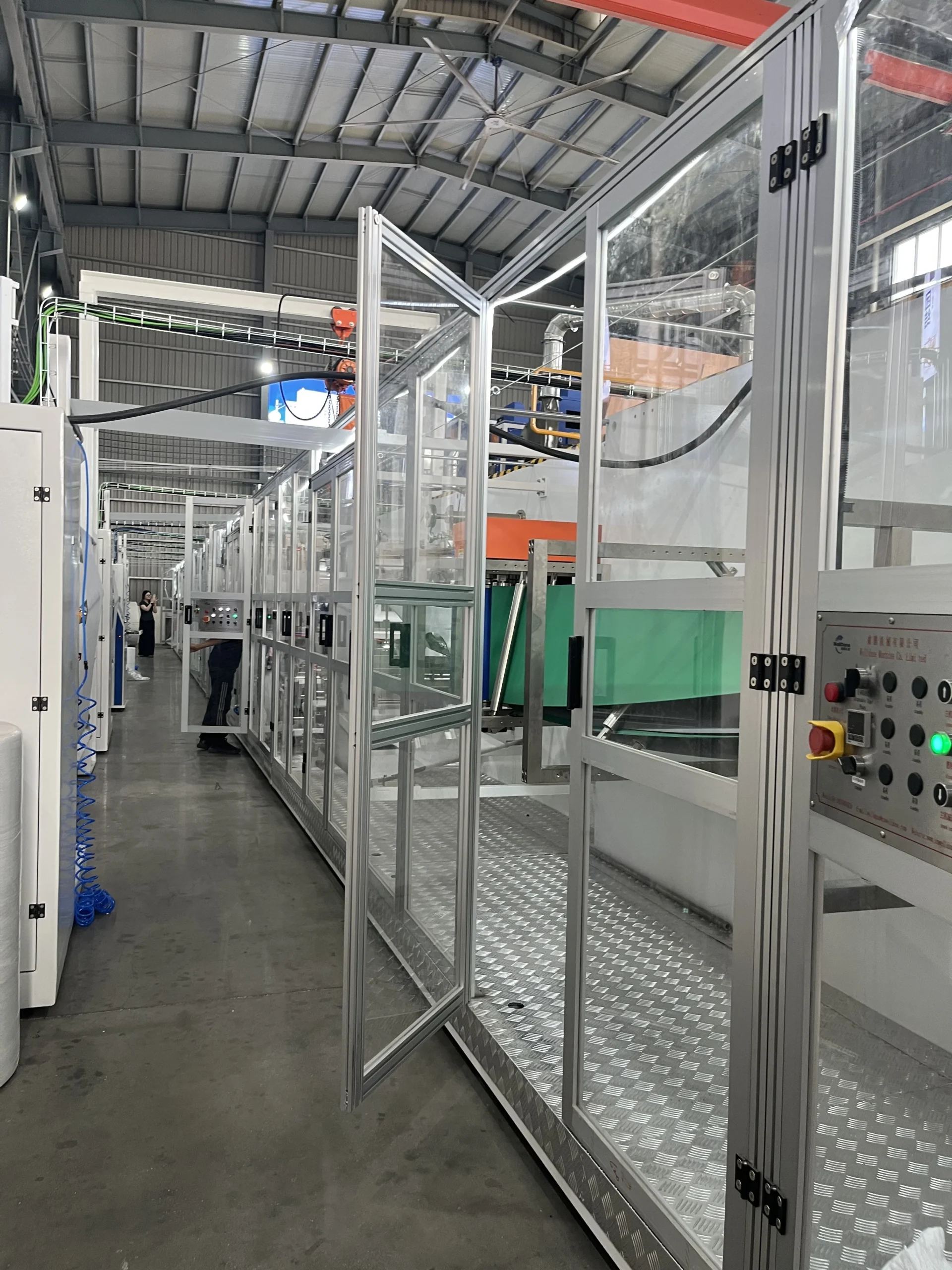
Speed is meaningless without a definition of a good piece. Welldone's adult care lines are specified for a throughput yield of at least 98% with automatic defect rejection, and the banner states a qualified rate of 98% or higher. Write that definition into the test: a good product passes visual and weight checks and is not rejected by the line's own detection.
If the test only counts pieces per minute and ignores rejects, a line can look fast while quietly filling the reject bin. The acceptance test must count output after rejection, not before it. Otherwise you are buying speed at the discharge end and paying for scrap at the reject end.
Changeover belongs in the acceptance test
Welldone specifies a minimum changeover time of under 90 minutes for size or product switching on a diaper or underpad line. That number is easy to read and easy to forget at acceptance, because most tests are run on one product. A line that holds speed on one size has not proven it can change.
Write a changeover into the test: switch from one size to another, time it, and then confirm the line returns to stable speed without a long tuning period. A machine that needs an hour of adjustment after every size change will not hold its output across a mixed production week.
How to treat abnormal stops
Every line stops. The acceptance test has to agree in advance which stops are the machine's fault and which are the operator's or the material's. A jam caused by a misaligned cutter is the machine; a stop because a roll ran out is material; a stop because the crew loaded the wrong core is operation.
Agree a rule before the run, not during it. Define how many unscheduled stops are allowed in the test window, and what counts as a recovery. Without that rule, every stop gets argued about in real time, and the acceptance becomes a negotiation instead of a measurement.
The two numbers buyers confuse: pass rate and efficiency
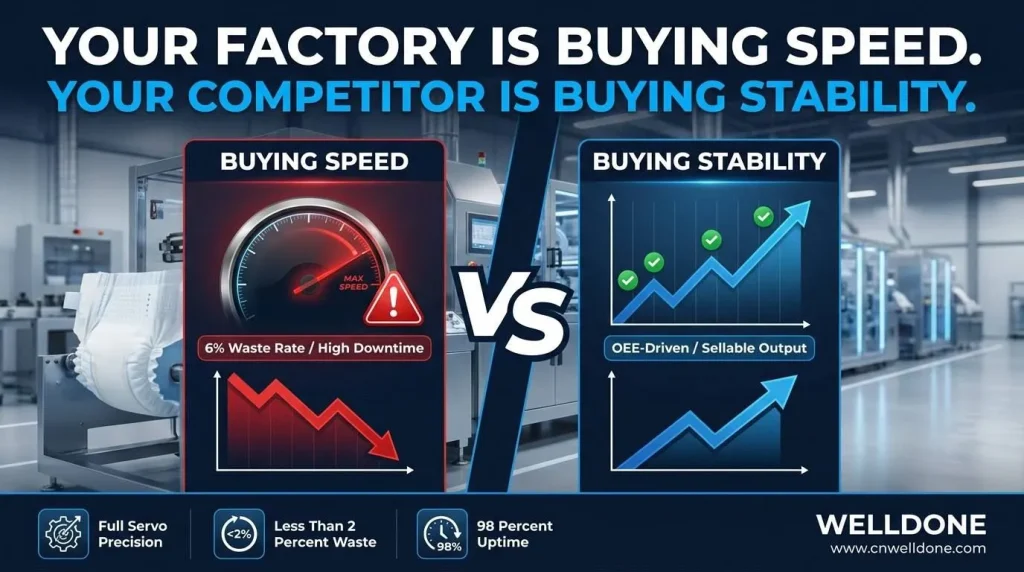
There are two different percentages in any acceptance test, and buyers frequently read them as one. The first is product pass rate: how many pieces meet the quality standard. The second is time efficiency: how much of the scheduled run time the line was actually producing. They are not the same number.
In most cases, a buyer accepts the line on peak speed because that is the number in the quotation, and never separates the product pass rate from the time the line spent running. A line that passes 98% of product but only runs 85% of the time produces far less than either figure suggests. Write both into the test and multiply them to see the real output.
Write the acceptance test before you sign
The worst place to agree on acceptance criteria is the factory floor on the day of the test. By then the machine is built, the engineers are waiting and the pressure to sign is on the buyer. The criteria belong in the contract, before the order is placed.
I believe the acceptance test should be written into the contract, not improvised at the factory. List the stable speed, the test duration, the good-product definition, the changeover target and the abnormal-stop rule, and let the supplier confirm each one before production starts. A supplier who will not commit to those numbers up front is one to think twice about.
Why Welldone
Welldone builds adult pull-up, open-type and underpad lines with a specified stable speed and a qualified rate of 98% or higher, and can provide overseas engineer support for installation, commissioning and training. That support extends to the acceptance run, so the test is performed against agreed criteria rather than a rushed demonstration.
Defined numbers
Design speed, stable speed and yield are stated on the specification sheet, not left to the demo.
Configured to your product
The acceptance number follows the drive configuration and product you actually ordered.
Engineer support
Welldone can provide overseas engineer support for installation, commissioning and training.
Conclusion
A well-written acceptance test protects the buyer more than it protects the supplier. It forces the conversation from a peak-speed demo to the numbers that predict a working line: stable speed held over time, good product after rejection, a timed changeover and a fair rule for stops.
Before your next adult line is built, ask one question: which single number in the acceptance test would you refuse to compromise on? If you cannot answer, you have not finished writing the test.
FAQ
What is the difference between design speed and stable speed?
Design speed is the machine's peak capability, 250–300 pcs/min for an adult diaper line. Stable speed is what it holds in real production, 200–260 pcs/min. The acceptance test should be written against stable speed, not the peak.
What qualified rate should I write into the acceptance test?
Welldone's adult care lines are specified for a throughput yield of at least 98% with automatic defect rejection. Write the good-product definition and the rejection rule into the test so output is counted after rejects, not before.
Should changeover time be part of acceptance?
Yes. Welldone specifies a changeover of under 90 minutes for size or product switching. Include a timed size change in the test and confirm the line returns to stable speed afterwards, otherwise the line is only proven on a single product.
When should the acceptance criteria be agreed?
Before the order is placed, in the contract. Agreeing criteria on the factory floor on test day puts the buyer under pressure to sign. See the adult care machines page for the specified speed and yield figures.
Write the acceptance test before the machine is built
Get the stable speed, yield and changeover figures for your adult care line from the team that builds it.
Talk to an engineer See adult care machinesWebsite: www.cnwelldone.com Email: welldone@cnwelldone.com