Facial Tissue vs Napkin vs Handkerchief: One Line or Three?

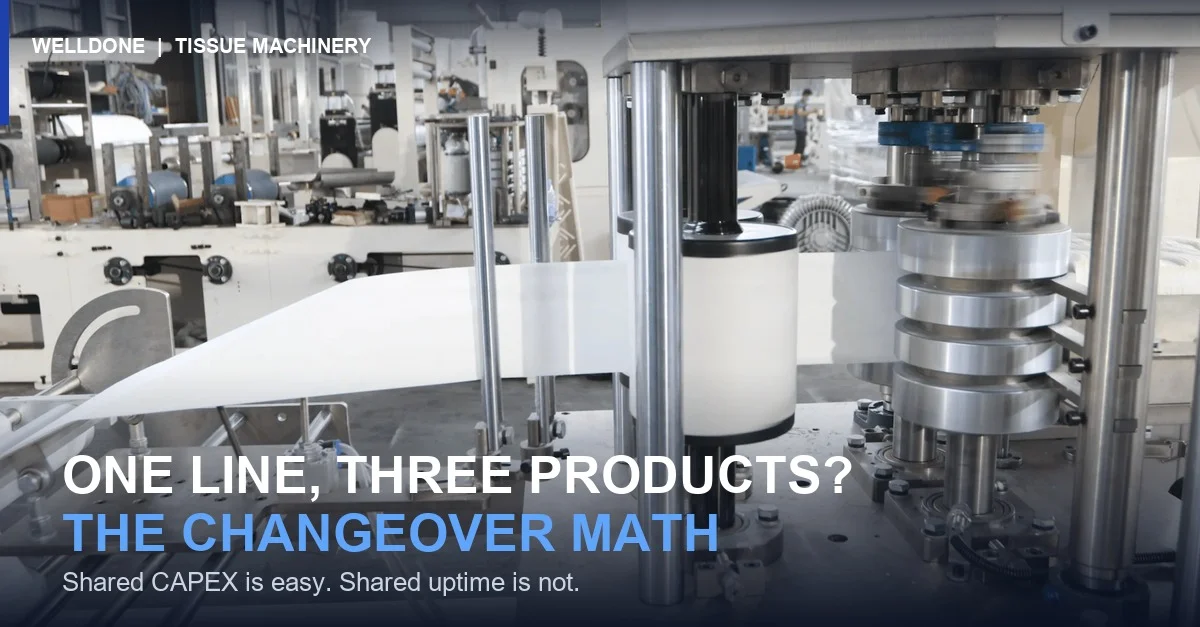
Facial Tissue, Napkin, Handkerchief: Can One Line Make All Three?
Tissue Machinery Series · Part 2
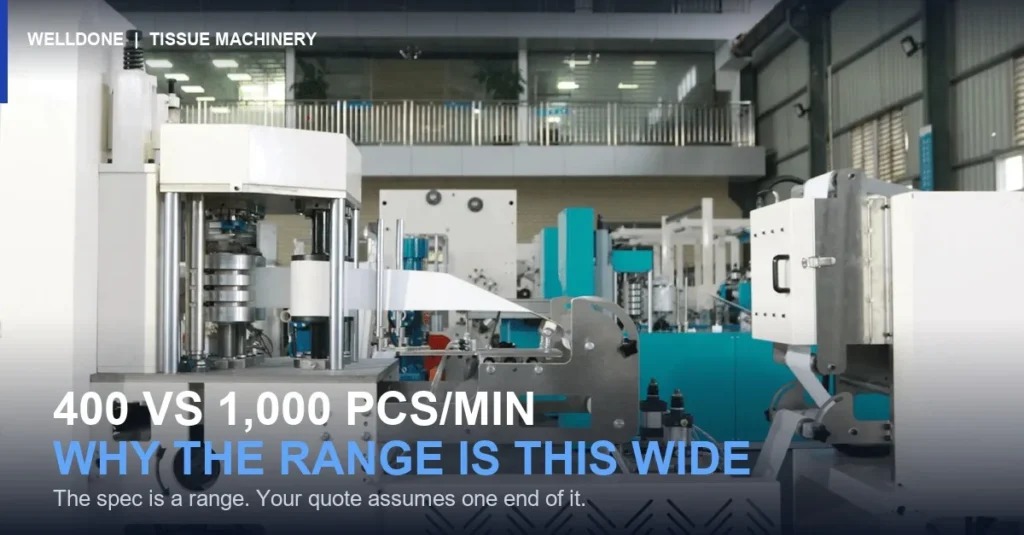
Part 1: 400 vs 1,000 pcs/min — why tissue speed is quoted as a range — how fold type, ply count and paper weight place you inside the quoted range.
Part 2 — whether one line should cover three product families, and what the changeover count does to that decision.
Part 1: 400 vs 1,000 pcs/min — why tissue speed is quoted as a range — how fold type, ply count and paper weight place you inside the quoted range.
Part 2 — whether one line should cover three product families, and what the changeover count does to that decision.
They are all folded paper. Same base material, same embossing principle, same counting and stacking logic at the discharge end. A buyer looking at three separate quotations naturally asks whether one machine could cover all three and save two thirds of the capital.
Sometimes the answer is yes. The part that decides it is not on the specification sheet, and it is not the machine's fault when the answer turns out to be no.
The question behind the question
When someone asks whether facial tissue, napkins and handkerchief tissue can share a line, they are usually asking one of two very different things.
The first is a technical question: is the equipment physically capable of producing all three? The second is a commercial question: will running all three on one line actually leave me better off?
Those have different answers. The technical answer is largely yes. The commercial answer depends entirely on how many times a month you intend to switch, and that is a number only your own order book can supply.
Shared CAPEX is easy to calculate. Shared uptime is the number nobody puts in the model.
What genuinely overlaps
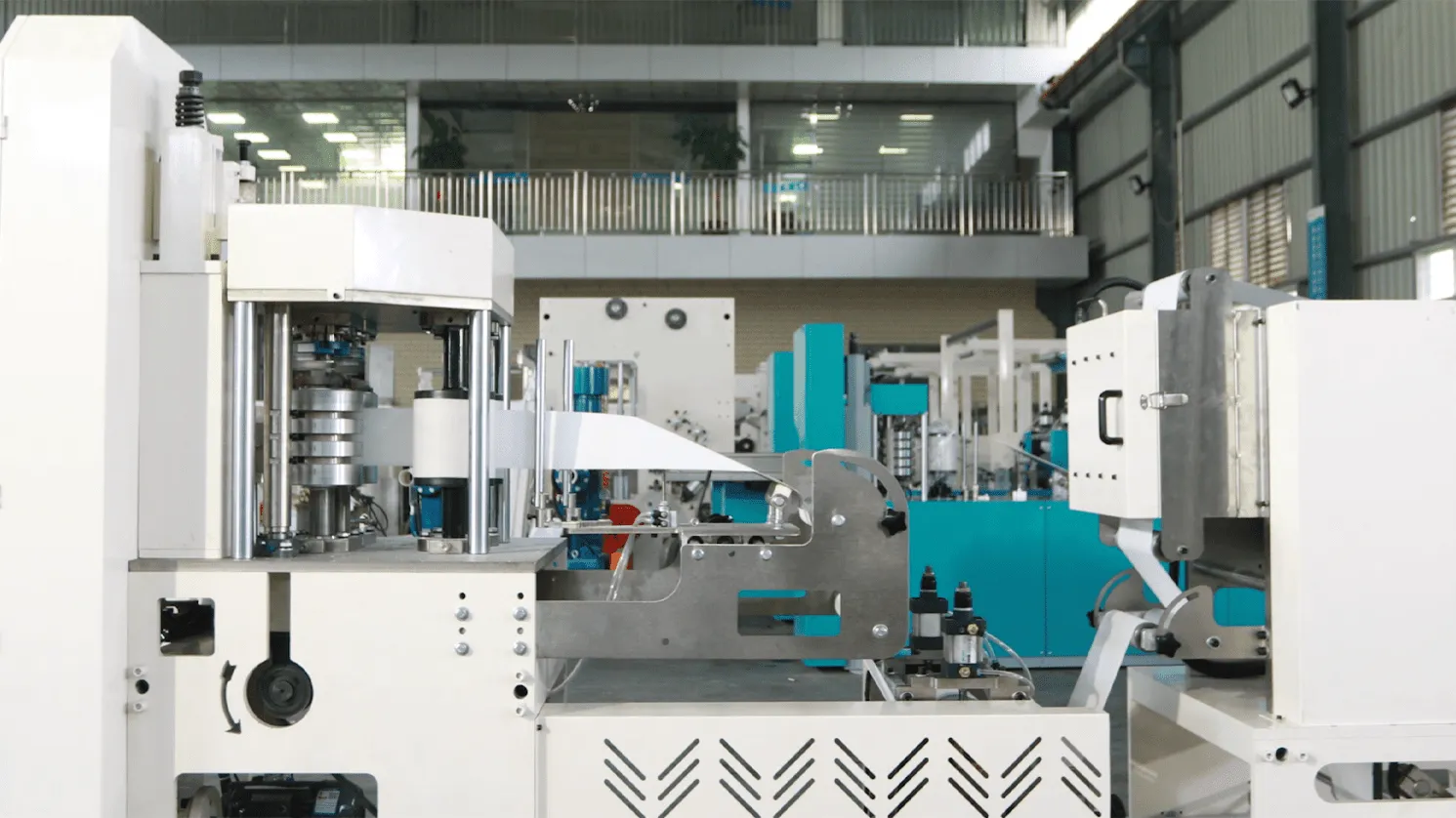
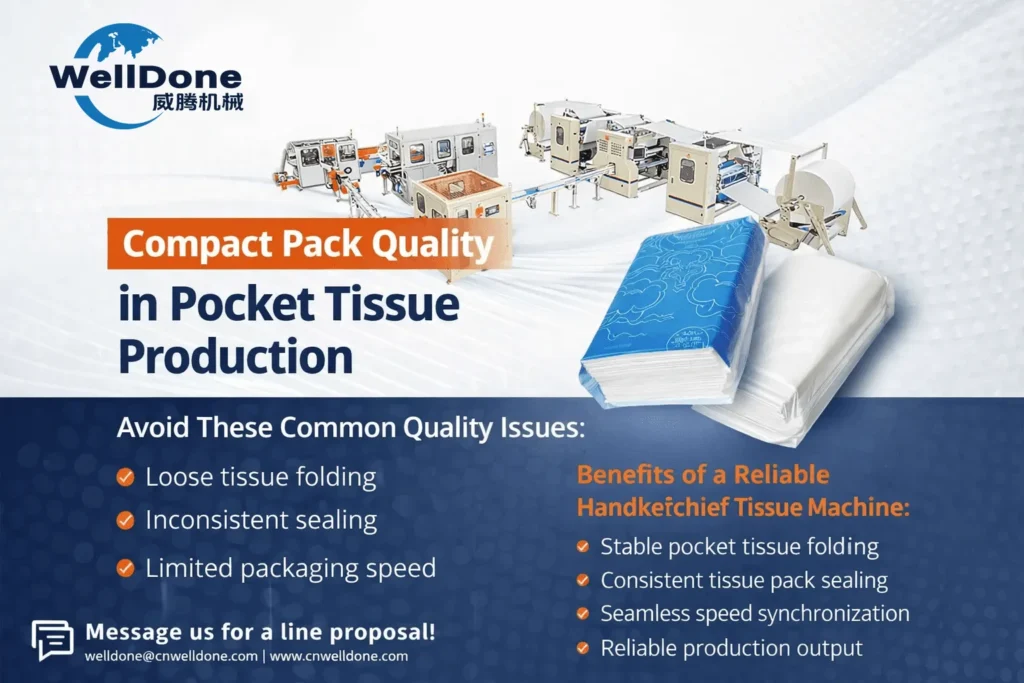
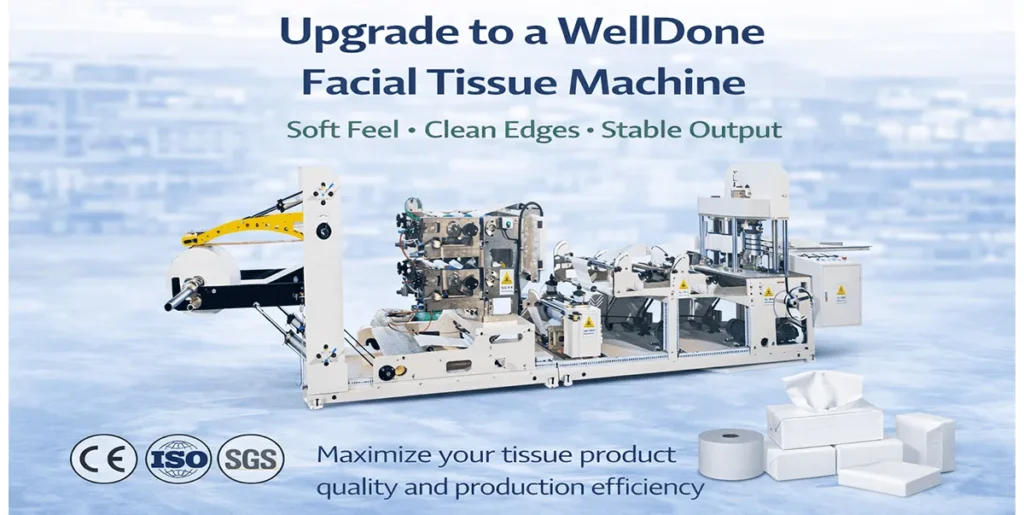
Our product pages list the process chain for each of the three families, and the overlap is real. Facial tissue is described as embossing & lamination, automatic folding, cutting, counting, stacking, and integration with tissue packing machines. Handkerchief tissue uses the same list, ending at pocket tissue packing machines. Napkin production is described as paper feeding, embossing, folding, cutting, and counting, integrated with napkin packing.
Read those three lists side by side and the first half is effectively identical. Raw paper comes in, gets embossed, gets bonded if it is multi-ply. Nothing in that upstream section cares whether the finished product ends up in a box, a soft pack or a pocket sleeve.
All three pages also state the same flexibility claim: the line supports different sheet sizes, ply options and folding styles. That claim is accurate for what it covers. It is worth noticing what it does not say — none of the three pages states that a single machine produces all three product families, and none uses the words same line or also produce about the other two.
Where the three products actually split
The divergence starts at folding and widens all the way to the pack.
| Aspect | Facial tissue | Napkin | Handkerchief |
|---|---|---|---|
| Fold described on site | Interfold; V-fold and N-fold on related lines | Folded napkins, fold types not specified | Folding styles, not specified |
| Typical architecture | Single or multi-lane interfolder | Multi-channel, e.g. four-channel and eight-channel lines | Compact folding, small format |
| Pack format on site | Boxed tissues | Single pack wrapping | Pocket tissues, travel packs |
| Downstream packer | Tissue packing machine | Napkin packing machine | Pocket tissue packing machine |
Note on sourcing: the fold types and pack formats above are taken from the product page descriptions and related line names on our own site. None of the three tissue product pages currently publishes a specification table with sheet dimensions, ply counts or speeds. For numerical parameters, the Paper & Wet Wipes overview is the only source, and figures there are given for the product family as a whole rather than per format.
Multi-channel and interfold are different machines
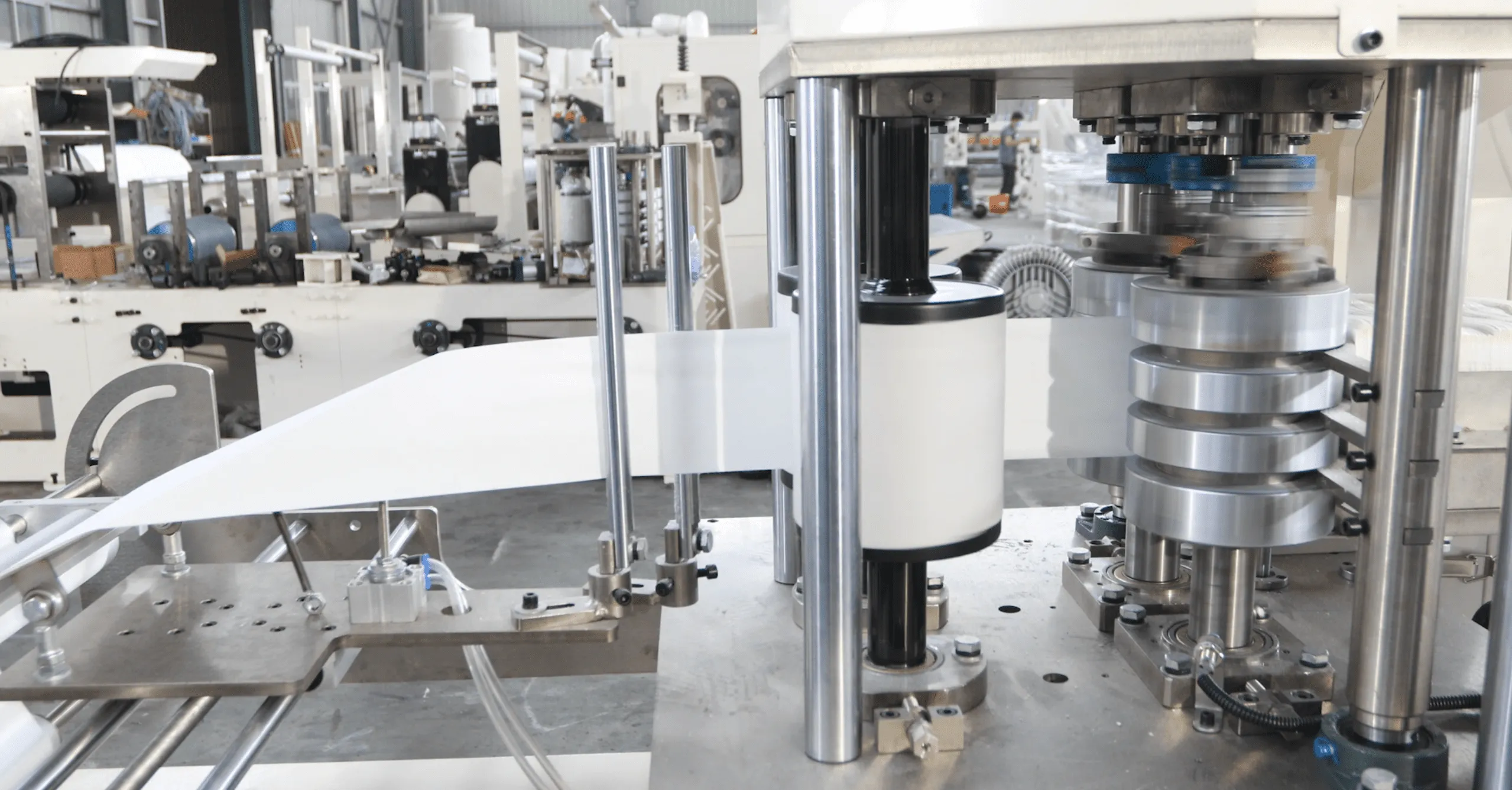
This is the structural point that most buyers miss, and it explains more than any other single factor.
Our napkin range includes a Double Output Four Channel line and a Four Output Eight-Channel line. Those names describe parallel production: several lanes of napkins produced simultaneously across the web width. Throughput comes from multiplying lanes.
Facial tissue and pocket tissue work differently. Interfolding means each sheet has to be laid so that pulling one lifts the next. That is a sequential mechanical relationship between sheets, not a parallel one.
A machine optimised for parallel channels and a machine optimised for interfolding are not the same machine wearing different tooling. In most cases, converting between the two architectures is not a changeover at all — it is a rebuild.
The packing end decides more than the folding end
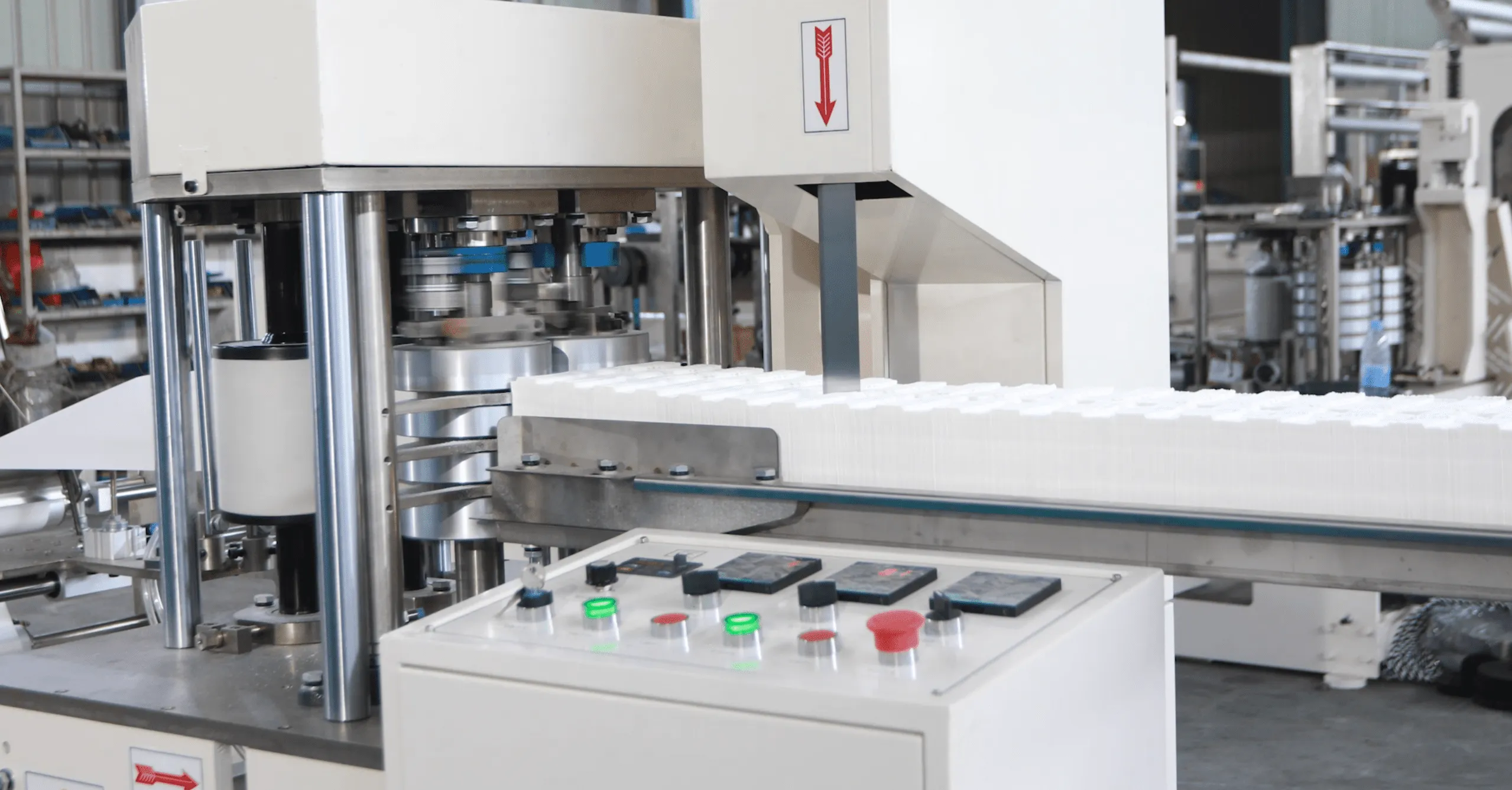
Three product families, three different packers. Boxed tissue, single pack wrapping and pocket packs are separate machines on our own site, and this is where a shared-line plan usually runs into trouble.
You can share the converting section and still need three packing solutions. At that point the capital saving is smaller than the original comparison suggested, because you were comparing complete lines but only sharing part of one.
More importantly, each pack format brings its own count, stack height and product orientation. Even where the tissue is identical, switching pack format is a real changeover with real minutes attached.
Doing the changeover arithmetic
Welldone specifies changeover at under 60 minutes. Take that figure and multiply it by a realistic monthly count.
| Changeovers per month | Hours per month | Hours per year | Equivalent 8-hour shifts lost per year |
|---|---|---|---|
| 2 | 2.0 | 24 | 3.0 |
| 4 | 4.0 | 48 | 6.0 |
| 8 | 8.0 | 96 | 12.0 |
| 10 | 10.0 | 120 | 15.0 |
Illustrative example only. The table applies the published under-60-minute figure to hypothetical changeover counts. It is arithmetic, not a customer case study, and it excludes start-up waste and the ramp back to stable speed. Replace the changeover count with your own order-book figure before drawing any conclusion.
Two changeovers a month costs roughly three shifts a year — negligible against the capital saved by sharing. Ten changeovers a month costs about fifteen shifts before you count a single sheet of start-up waste, and that is where the arithmetic turns.
Note also what the table leaves out. Every restart consumes material before the product stabilises, and the operator attention absorbed by a changeover is attention not spent on the running line.
When sharing genuinely works
Sharing tends to work when the products are close neighbours rather than distant cousins.
- Facial tissue and pocket tissue. Both interfold. Our facial tissue page explicitly describes production of boxed tissues and interfold/handkerchief tissue formats, which is the one same-line statement anywhere in the three pages.
- Facial tissue and hand towel. Related lines on our site are named for both together, reflecting shared V-fold and N-fold architecture.
- Same family, different sizes or ply. This is what the flexibility claim on each page actually refers to, and it is well supported.
When it does not
Sharing tends to disappoint in the opposite situation.
- Multi-channel napkin plus interfolded tissue. Different folding architecture, as covered above.
- High changeover frequency. Above roughly eight switches a month the lost hours start to rival the interest on a second machine.
- Contractual delivery windows. If one customer's shipment cannot wait while you run someone else's SKU, a shared line converts a scheduling problem into a delivery risk.
- Three distinct pack formats. Three packers means you were never really sharing a complete line.
The misconception that costs money
I believe the most common error here is treating a shared line as a way to defer a decision. The reasoning goes: buy one flexible machine now, see which product sells, specialise later.
It sounds prudent and it usually is not. A line configured to do three things adequately rarely does any of them as well as a line configured to do one thing properly, and the flexibility is paid for continuously in changeover hours rather than once in capital.
The buyers who handle this well tend to do the opposite. They pick the product that will carry the volume, specify the line properly for that, and treat the second and third products as candidates for a second machine once the volume justifies it.
A decision sequence that works
Four questions, answered from your own numbers rather than from a catalogue.
- Which product carries the volume? Specify the line for that one first.
- Do the secondary products share its folding architecture? Interfold with interfold, multi-channel with multi-channel.
- How many changeovers per month does the combined plan require? Apply the table above to your own count.
- How many packers do you actually need? If the answer is three, recalculate the capital saving before committing.
Why Welldone
Welldone has manufactured hygiene converting equipment in Jinjiang, Fujian since 2008, incorporated in 2013, supplying tissue, wet wipes, baby care, female care, adult care and pet care lines to factories across Asia, Africa, the Middle East and Latin America.
Dedicated and shared options
Multi-channel napkin lines and interfold facial and pocket tissue lines are built as distinct architectures rather than sold as one machine with claimed universal coverage.
Changeover under 60 minutes
Specified across the paper and wet wipes platform, with recipe management on a bilingual HMI so the figure holds across different operators.
Engineering support
Commissioning, operator training and remote diagnostics from the team that builds the line, with standard delivery in 60–90 days.
Related machines
Conclusion
One line for three tissue products is a real option, not a marketing fiction. It works best when the products share folding architecture and when switching is occasional rather than routine.
It works badly when a multi-channel napkin plan is bolted onto an interfolding tissue plan, or when the monthly changeover count quietly consumes more production time than the saved capital was worth.
So before comparing three quotations against one, work out a single figure from your own order book: how many times a month will this line change format, and what is an hour of stopped line worth to you? That number, not the price difference, is what should decide it.
Frequently asked questions
Can one machine really produce facial tissue, napkins and handkerchief tissue?
The upstream sections overlap substantially, and our facial tissue line is described as producing both boxed tissues and interfold handkerchief formats. Napkin production commonly uses a multi-channel architecture, which is structurally different from interfolding. Confirm the specific combination with the engineering team rather than assuming full coverage.
What is the difference between multi-channel and interfold?
Multi-channel produces several lanes side by side across the web, so output scales with lane count. Interfolding lays each sheet so that removing one lifts the next, which is a sequential relationship between sheets. They are different machine architectures rather than different settings.
How much does changeover frequency actually cost?
At the published under-60-minute figure, two changeovers a month is about three eight-hour shifts a year, while ten a month is about fifteen — before start-up waste. Apply your own changeover count to that arithmetic; it usually matters more than the speed difference between quotations.
Do I need a separate packing machine for each product?
Boxed tissue, single pack wrapping and pocket packs are listed as separate packing solutions on our site. A shared converting section with three packers is a partial saving, not a full one, so recalculate the capital comparison on that basis.
Where can I find the actual speed and tolerance figures?
The individual tissue product pages do not currently publish specification tables. Numerical parameters are on the Paper & Wet Wipes overview, and Part 1 of this series explains how to locate your own product inside the quoted 400–1,000 pcs/min range.
Planning a multi-product tissue line?
Send us your product mix, target pack formats and expected monthly changeover count. We will tell you honestly which products belong on one line and which deserve their own.
Website: www.cnwelldone.com
Email: welldone@cnwelldone.com