Tissue Machine Speed: Why 400 to 1,000 pcs/min Is a Range

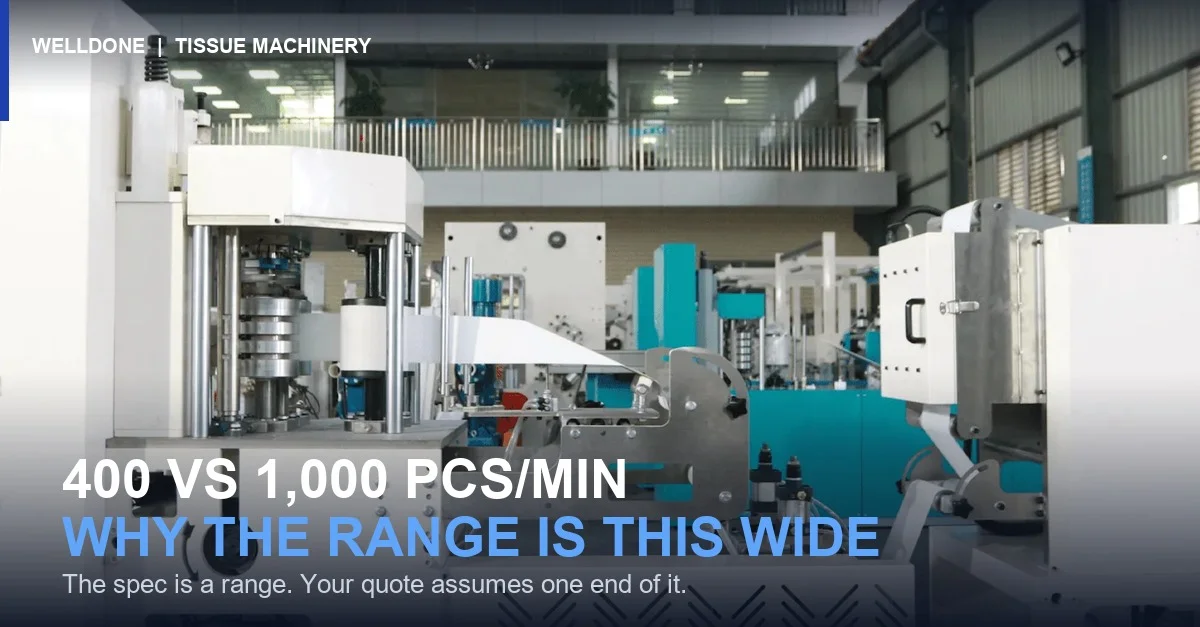
400 vs 1,000 pcs/min: Why Tissue Machine Speed Is Quoted as a Range
Open any tissue machine specification and you will find a speed figure that spans more than double. Ours reads 400 to 1,000 pieces per minute design, 350 to 900 stable. That is a 2.5x spread on the headline number a buyer uses to build an entire investment case.
Most people read the top of the range. The finance model gets built on 1,000, the payback period comes out attractive, and the machine gets ordered. Then the line settles at 450 and the model is wrong by a factor of two.
Why it is a range and not a number
A tissue machine is not one product. The same frame, the same servo drives and the same control system can be configured to produce a two-ply napkin, a three-ply embossed handkerchief, or a V-fold hand towel. Those are different products with different mechanical demands.
A wide-quoted range is honest. A single number would not be. If a supplier quotes you one speed with no conditions attached, that number describes one specific product on one specific paper grade, and it is unlikely to be yours.
The spec sheet is a range because your product decides where inside it you land.
Four things move you along that range: fold type, ply count, paper weight and how often you change over. None of them are machine faults. All of them are decisions you make before the machine arrives.
Design speed and stable speed are different promises
| Product family | Design speed | Stable speed |
|---|---|---|
| Facial tissue / napkin / handkerchief | 400–1,000 pcs/min | 350–900 pcs/min |
| Wet wipes | 600–1,200 pcs/min | 500–1,000 pcs/min |
Design speed is the mechanical ceiling — what the drives and the frame permit under ideal conditions. Stable speed is what the line holds across a shift with real paper, real operators and real splices.
The gap between the two is roughly ten percent at every point in the range, which is a reasonable and honest margin. What catches buyers out is not that gap. It is picking the wrong point in the range to begin with.
When you receive a quotation, ask two questions: which product family and fold type is this speed based on, and is it design or stable? A supplier who cannot answer both immediately is quoting you a catalogue number rather than a line configuration.
Fold type sets the ceiling before anything else
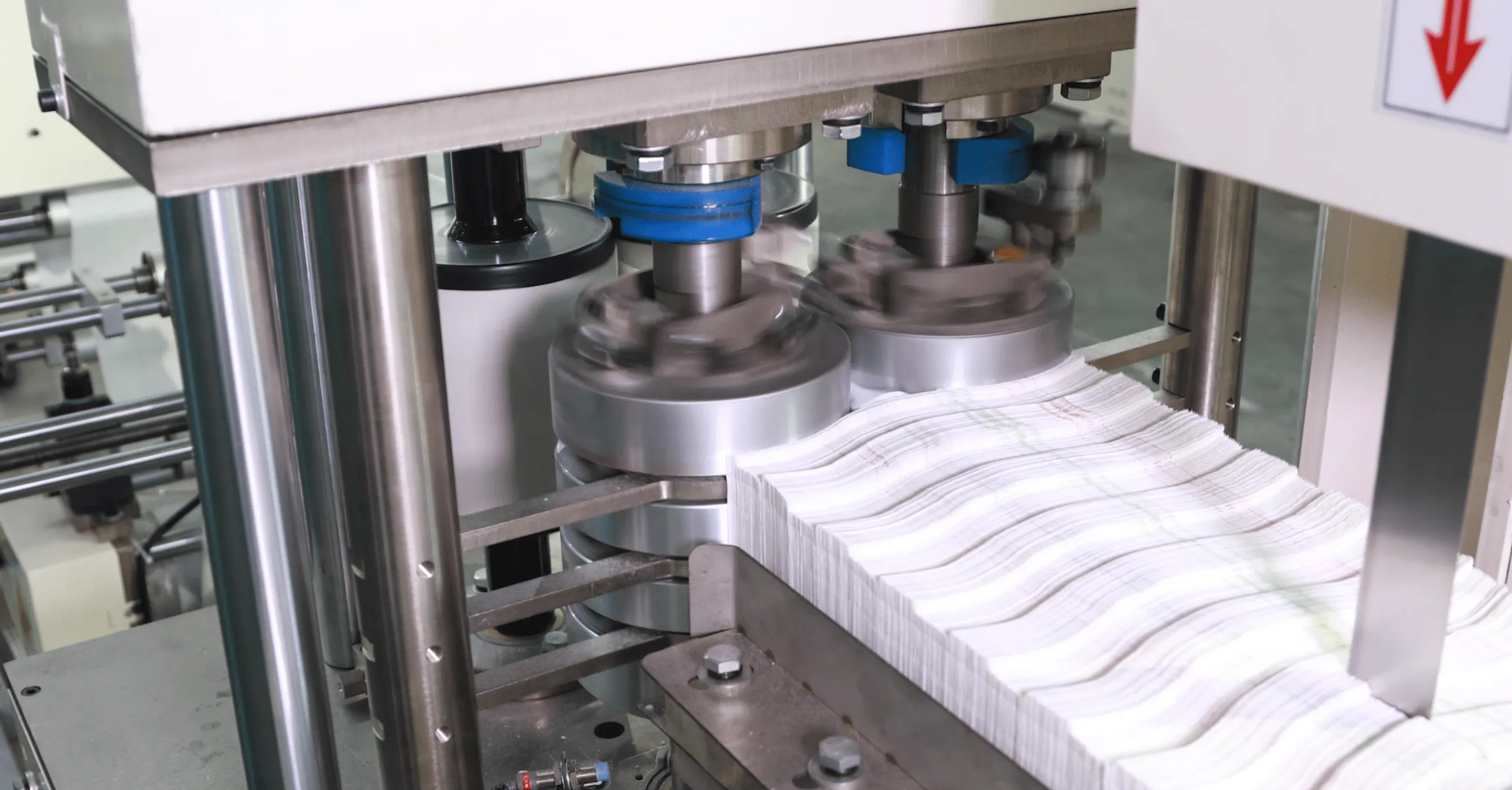
A single-fold napkin requires one folding event. A V-fold hand towel requires the sheet to be interfolded with its neighbours so the next sheet lifts when one is pulled. An N-fold adds another operation on top.
More folds mean more mechanical events per piece, and every event has to complete before the next sheet arrives. This is a hard physical limit, not a tuning issue. It is why the same machine platform can be genuinely fast on simple napkins and genuinely slower on interfolded towels without anything being wrong.
In most cases the fold type alone explains more of the speed variance than any other single factor.
Ply count and the lamination step
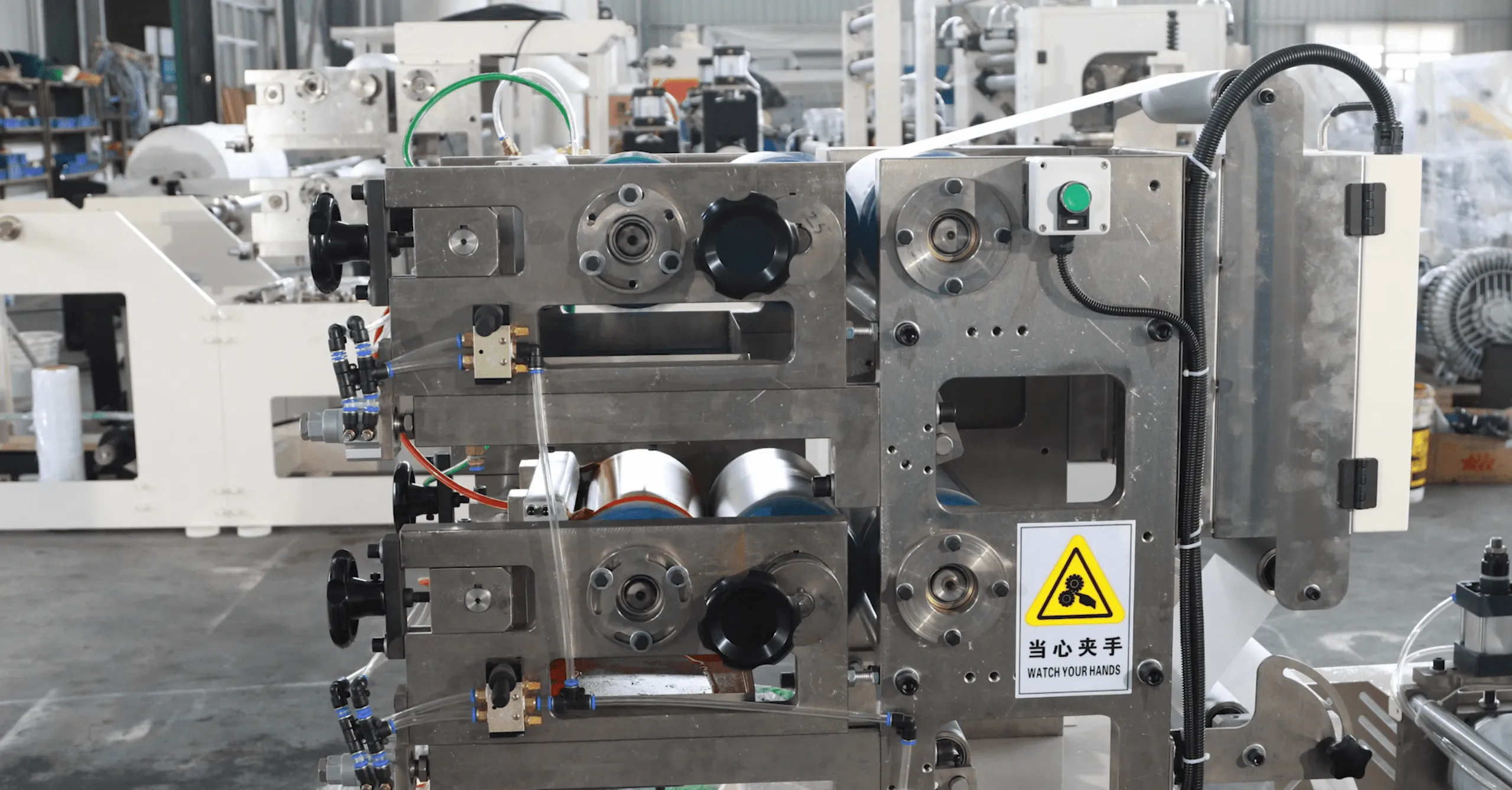
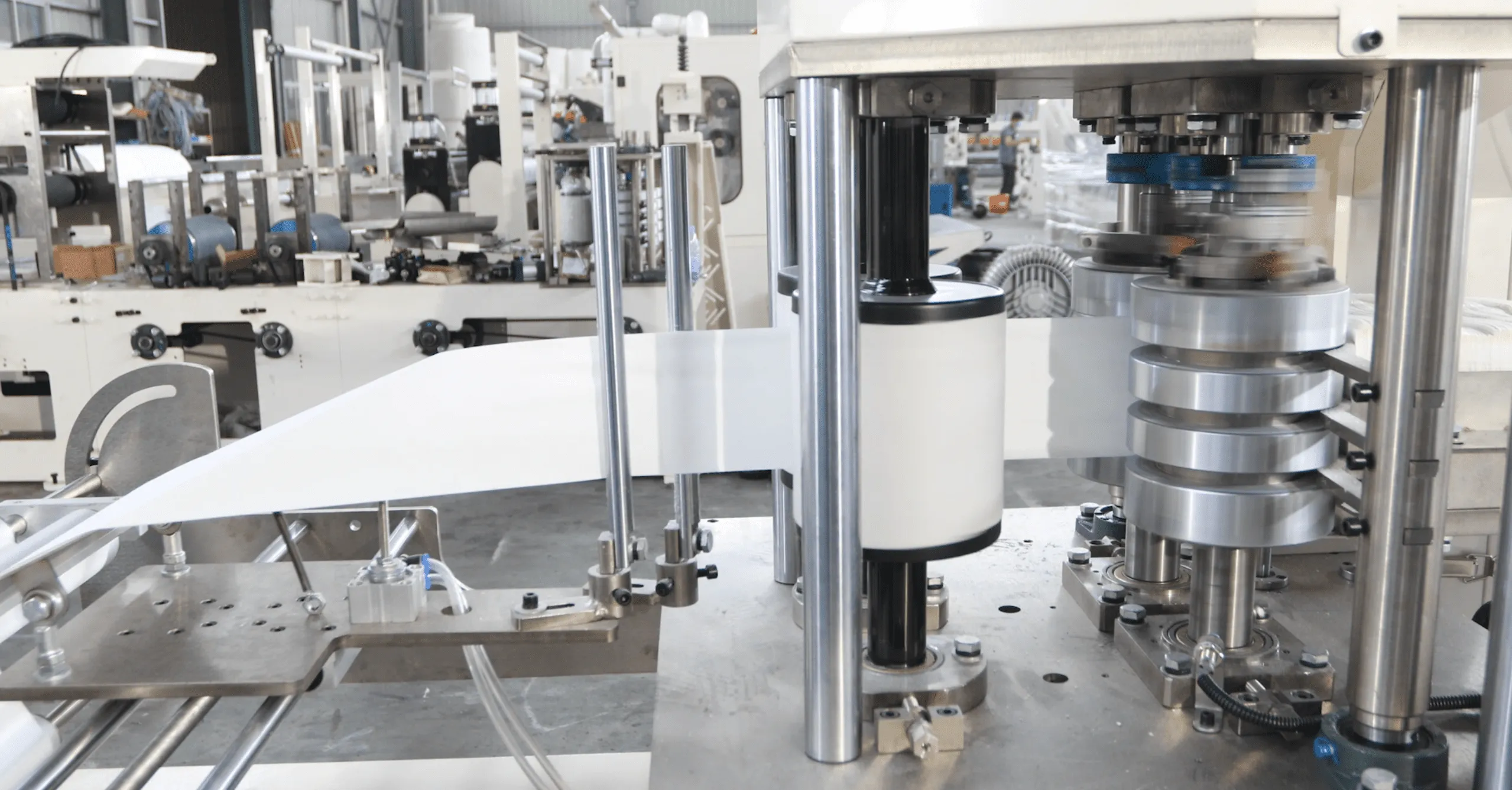
Every additional ply is another web running through the machine. Two-ply means two unwinds to keep in tension. Three-ply means three, plus a lamination step that has to bond them without crushing the embossed pattern.
Register is the constraint. The plies have to arrive at the embossing nip aligned within tolerance, and the faster the web runs, the less time the servo system has to correct a drift. Welldone specifies positioning at ±0.02 mm on full servo, ±0.05 mm on semi servo and ±0.1 mm on mechanical drive.
Discrepancy worth flagging: the banner on our overview page states ±0.03 mm servo precision, while the specification table states ±0.02 mm for full servo. These two figures do not agree. Treat the table value as the one to confirm in writing when you request a quotation, and ask the engineering team to state the tolerance for your specific configuration.
Paper weight and tension behaviour
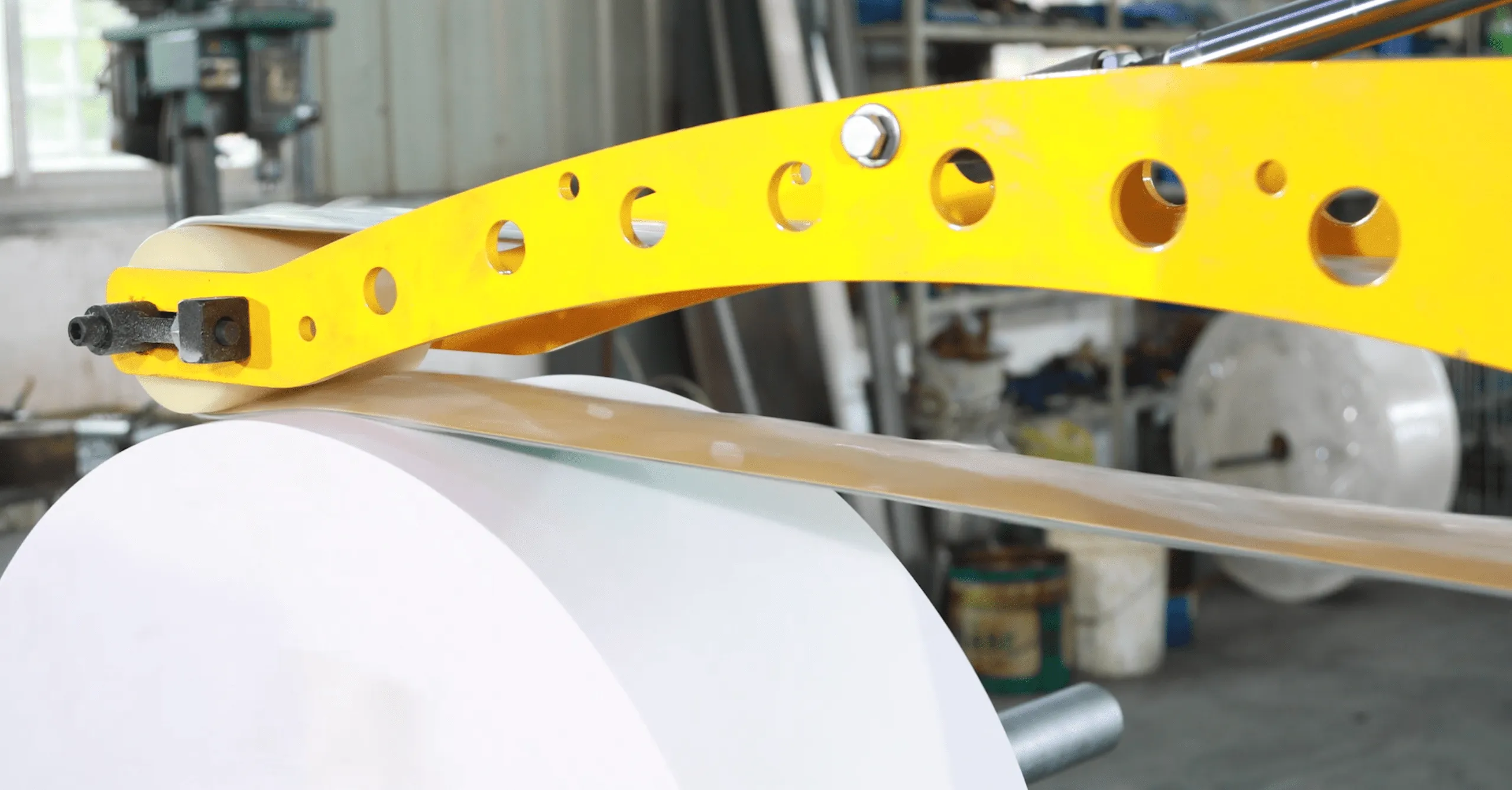
Lightweight tissue is unforgiving. A 13 gsm base sheet has a narrow window between too loose, where the web wanders, and too tight, where it tears at the splice.
Heavier grades tolerate more tension variation and let you run closer to the design ceiling. Lighter grades save material cost per piece and give some of it back in reduced speed and higher break frequency. Actually this trade-off is one of the most common reasons a line underperforms its quotation — the buyer specified the machine on one grade and then sourced a cheaper, lighter one.
Changeover quietly eats the difference
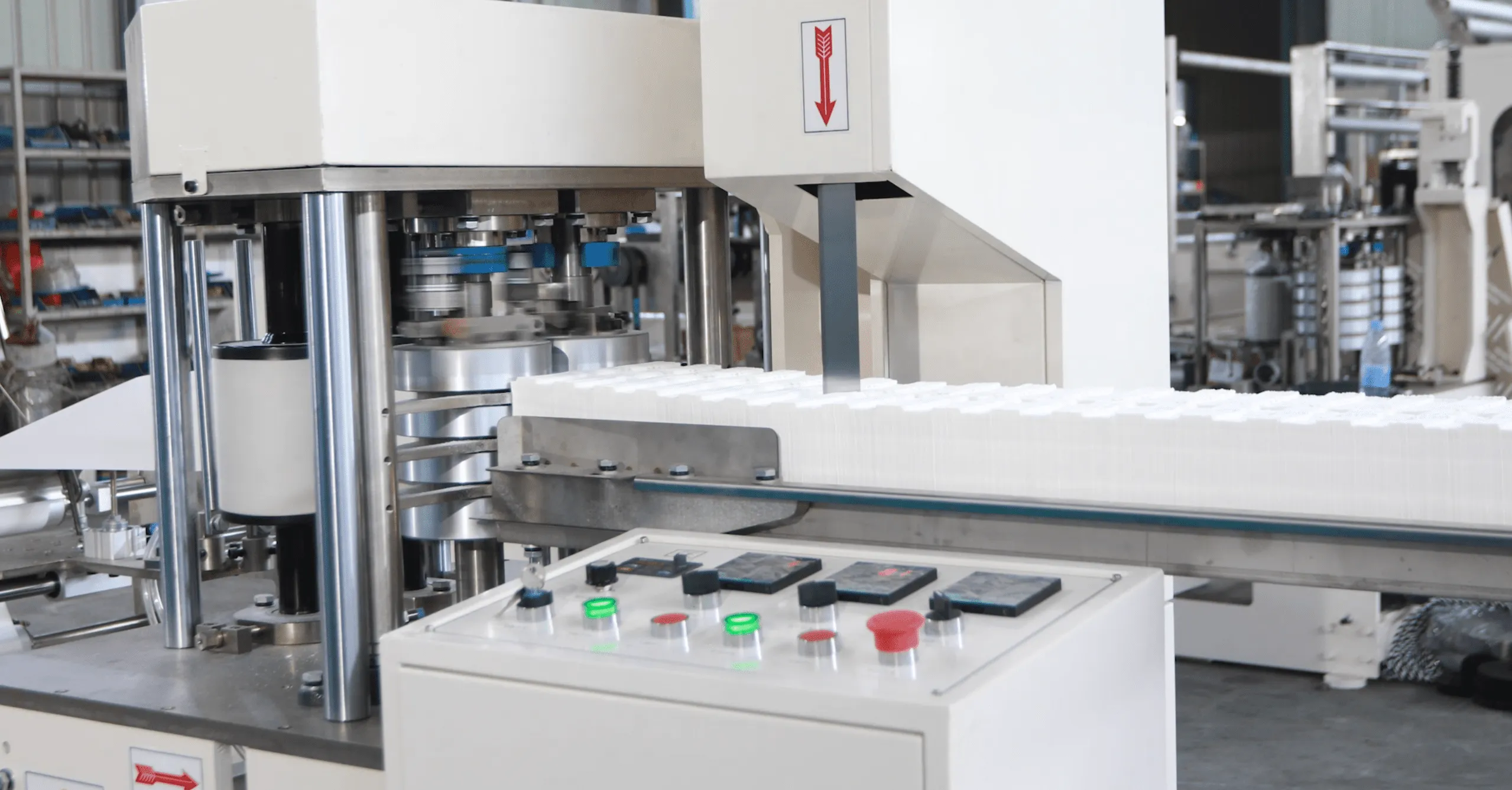
Welldone specifies changeover at under 60 minutes. That is a good figure. It is also a figure that gets multiplied by something buyers rarely count.
A single-SKU plant might change over twice a month. A contract manufacturer running facial tissue, napkins and hand towels across several pack formats can easily hit eight or ten. At under 60 minutes each, plus the start-up waste before the product stabilises, that is a meaningful share of available production time that never appears anywhere in the speed comparison.
More importantly, changeover frequency is knowable before you buy. Your own order book tells you. Speed is the number everyone compares; changeover is the number that decides whether the comparison meant anything.
Dust is a speed problem, not a housekeeping problem
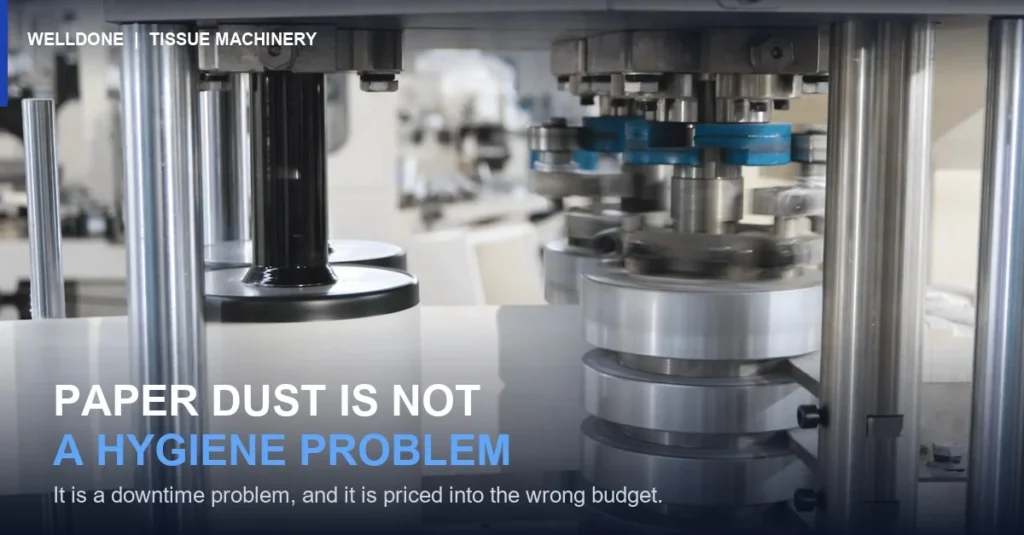
Paper dust accumulates on folding plates, guide rollers and cutting blades. As it builds, web guiding degrades, sheets begin to wander, and reject rates climb. The line is still capable of its rated speed; it simply cannot hold it cleanly.
This is why the Welldone design specification includes dedicated suction hoods and dust ducting rather than treating extraction as an accessory. A line specified without adequate dust control does not fail dramatically. It just quietly settles into a lower sustainable speed and a higher scrap rate, and the cause is hard to see because nothing is broken.
Working out your own number
Before comparing quotations, write down four things about your own product. Together they place you inside the range with reasonable accuracy.
- Fold type — single fold, V-fold, N-fold or Z-fold. This sets your ceiling.
- Ply count — each additional ply adds an unwind and a register constraint.
- Base paper weight — and whether you are committed to that grade or likely to switch on price.
- Changeovers per month — from your order book, not from an estimate.
Send those four to the supplier and ask for a stable-speed figure for that specific combination. A serious supplier will give you a narrower range. A supplier who repeats the catalogue figure has not engaged with your project.
The misconception that costs money
I believe the most expensive mistake in this category is treating the top of the quoted range as a target and the bottom as a worst case. It is not a confidence interval. It is a map of different products.
If you make three-ply embossed handkerchiefs on lightweight base paper with weekly format changes, the bottom of the range is not pessimism — it is your number. Building a payback model on 900 pcs/min when your configuration lands near 400 does not make the line underperform. It makes the model wrong.
The buyers who plan well do the opposite of what feels natural. They start at the conservative end, confirm the business case still works there, and treat anything above it as upside rather than as the plan.
Why Welldone
Welldone has manufactured hygiene converting equipment in Jinjiang, Fujian since 2008, incorporated in 2013, supplying tissue, wet wipes, baby care, female care, adult care and pet care lines to factories across Asia, Africa, the Middle East and Latin America.
Ranges, stated honestly
Design and stable speeds are quoted separately across product families, with positioning tolerance stated per drive tier rather than as a single marketing figure.
Configured to your product
Fold type, ply count and pack format are specified before quotation, so the speed figure you receive reflects your product rather than a catalogue maximum.
Engineering support
Commissioning, operator training and remote diagnostics from the team that builds the line, with standard delivery in 60–90 days.
Related machines
Conclusion
A 2.5x speed range is not vagueness. It is the honest consequence of one machine platform serving several genuinely different products.
The work is to locate yourself inside it before you sign anything. Fold type, ply count, paper weight, changeover frequency — four answers you already have, which turn a catalogue range into a number you can actually build a plan on.
So here is the question worth answering first: if your line ran at the bottom of the quoted range instead of the top, would the investment still make sense? If yes, you are planning properly. If no, the plan needs work before the machine does.
Frequently asked questions
What is the difference between design speed and stable speed?
Design speed is the mechanical ceiling under ideal conditions. Stable speed is what the line sustains across a production shift with normal material variation and operator intervention. Welldone quotes 400–1,000 pcs/min design and 350–900 pcs/min stable for facial tissue, napkin and handkerchief products. Plan capacity on the stable figure.
Why is the quoted range so wide?
Because the same platform produces different products. A single-fold napkin and a three-ply interfolded handkerchief place very different demands on the folding and lamination sections. The range covers all of them; your configuration determines where you sit inside it.
Which factor affects speed the most?
Fold type usually accounts for the largest share, because each additional fold adds a mechanical event per piece. Ply count and base paper weight follow. Changeover frequency does not change the running speed but often has the biggest effect on monthly output.
What positioning tolerance should I expect?
Welldone specifies ±0.02 mm for full servo, ±0.05 mm for semi servo and ±0.1 mm for mechanical drive. Note that our overview banner currently shows ±0.03 mm, which does not match the specification table — confirm the figure for your configuration in writing at quotation stage.
How long does a changeover take?
Specified at under 60 minutes. The figure that matters for planning is that time multiplied by your monthly changeover count, plus start-up waste. Our comparison of 3-layer and 5-layer under-pad lines covers the same trade-off in a different product family.
Want a speed figure for your actual product?
Send us your fold type, ply count, base paper weight and monthly changeover count. We will come back with a stable-speed range for that configuration rather than a catalogue maximum.
Website: www.cnwelldone.com
Email: welldone@cnwelldone.com