Compressed Towels: The Tissue Category That Ships Small

Compressed Towels: The Tissue Category That Ships Small
Tissue Machinery Series · Part 5
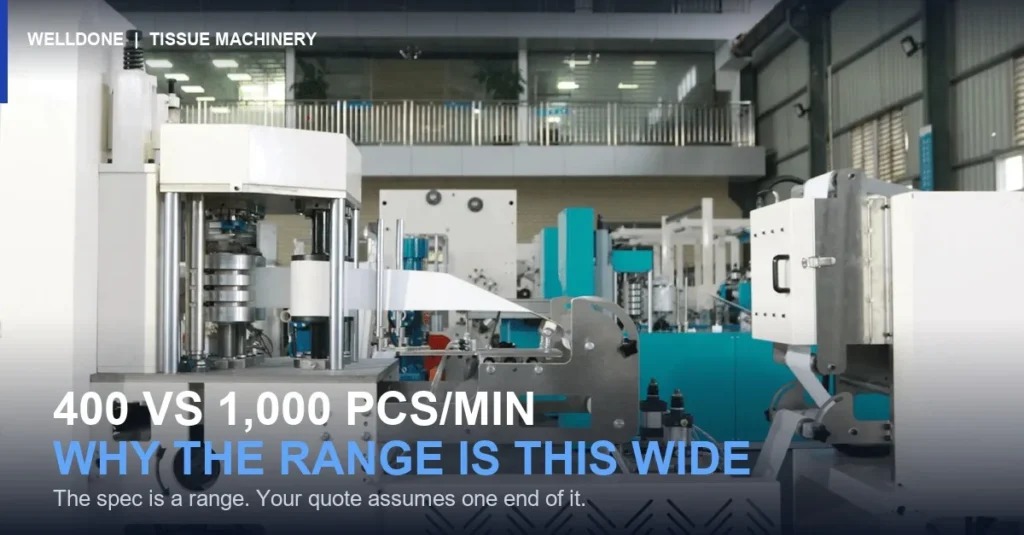
Part 1: 400 vs 1,000 pcs/min — why tissue speed is quoted as a range — how fold type, ply count and paper weight place you inside the quoted range.
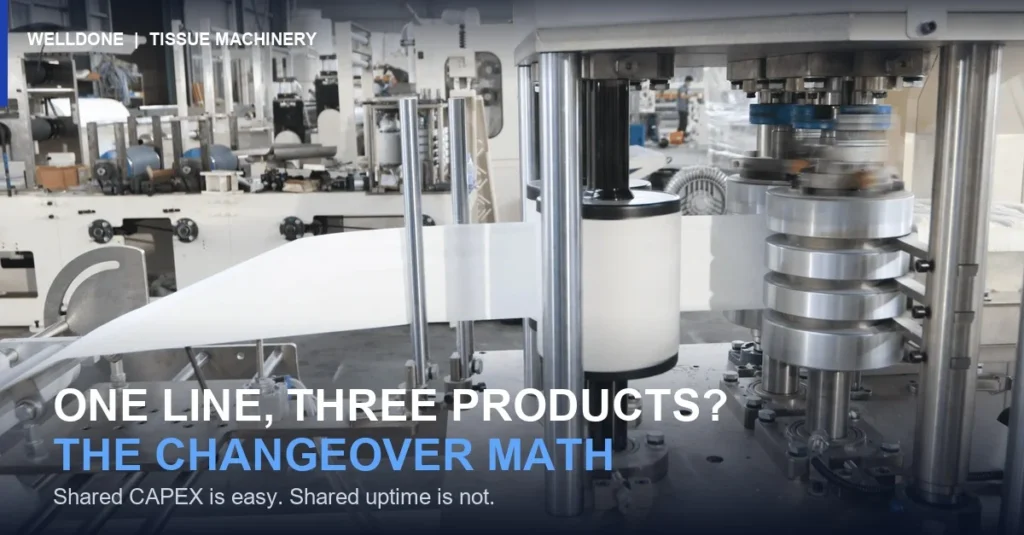
Part 2: Facial tissue, napkin, handkerchief — one line or three? — where the three product families share stations and where they split.
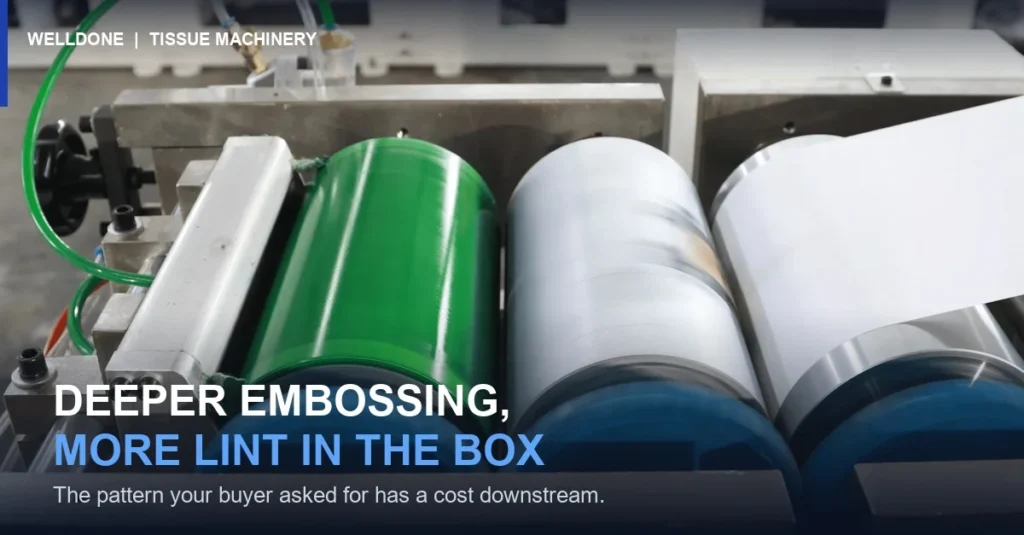
Part 3: Why deeper embossing sheds more lint — how pattern depth breaks the fibre bonds that hold a sheet together.
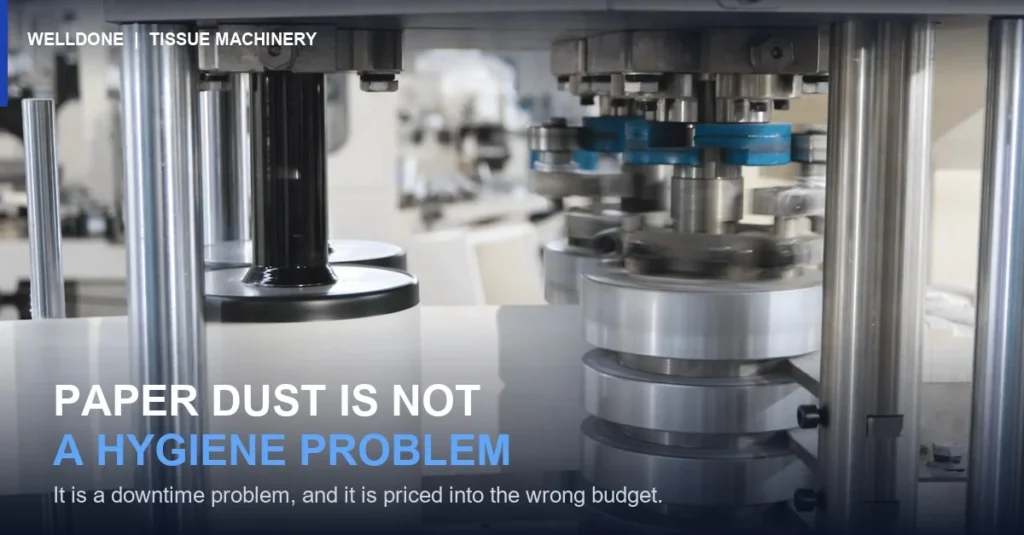
Part 4: Paper dust and downtime — the availability cost that gets filed as housekeeping.
Part 5 — the one product in this range that is not sold like tissue at all.
Part 1: 400 vs 1,000 pcs/min — why tissue speed is quoted as a range — how fold type, ply count and paper weight place you inside the quoted range.
Part 2: Facial tissue, napkin, handkerchief — one line or three? — where the three product families share stations and where they split.
Part 3: Why deeper embossing sheds more lint — how pattern depth breaks the fibre bonds that hold a sheet together.
Part 4: Paper dust and downtime — the availability cost that gets filed as housekeeping.
Part 5 — the one product in this range that is not sold like tissue at all.
The first four parts of this series were all about the same commercial problem: how to produce folded tissue more predictably and stop losing hours you already paid for. Every one of them assumed the finished product goes to a shelf.
Compressed towels do not go to a shelf. That single difference reorganises the entire business case, and it is the reason producers who evaluate them using tissue logic reach the wrong conclusion.
The question every tissue producer asks first
Why would anyone bother? A compressed towel is a small hard pellet that becomes a towel when you wet it. Next to a line producing hundreds of thousands of napkins a day, it looks like a novelty item.
I understand the reaction. Judged as a tissue product it is slower, more fiddly, and sells in smaller volumes.
The mistake is judging it as a tissue product. It is a logistics product that happens to be made of the same material.
What the product actually is
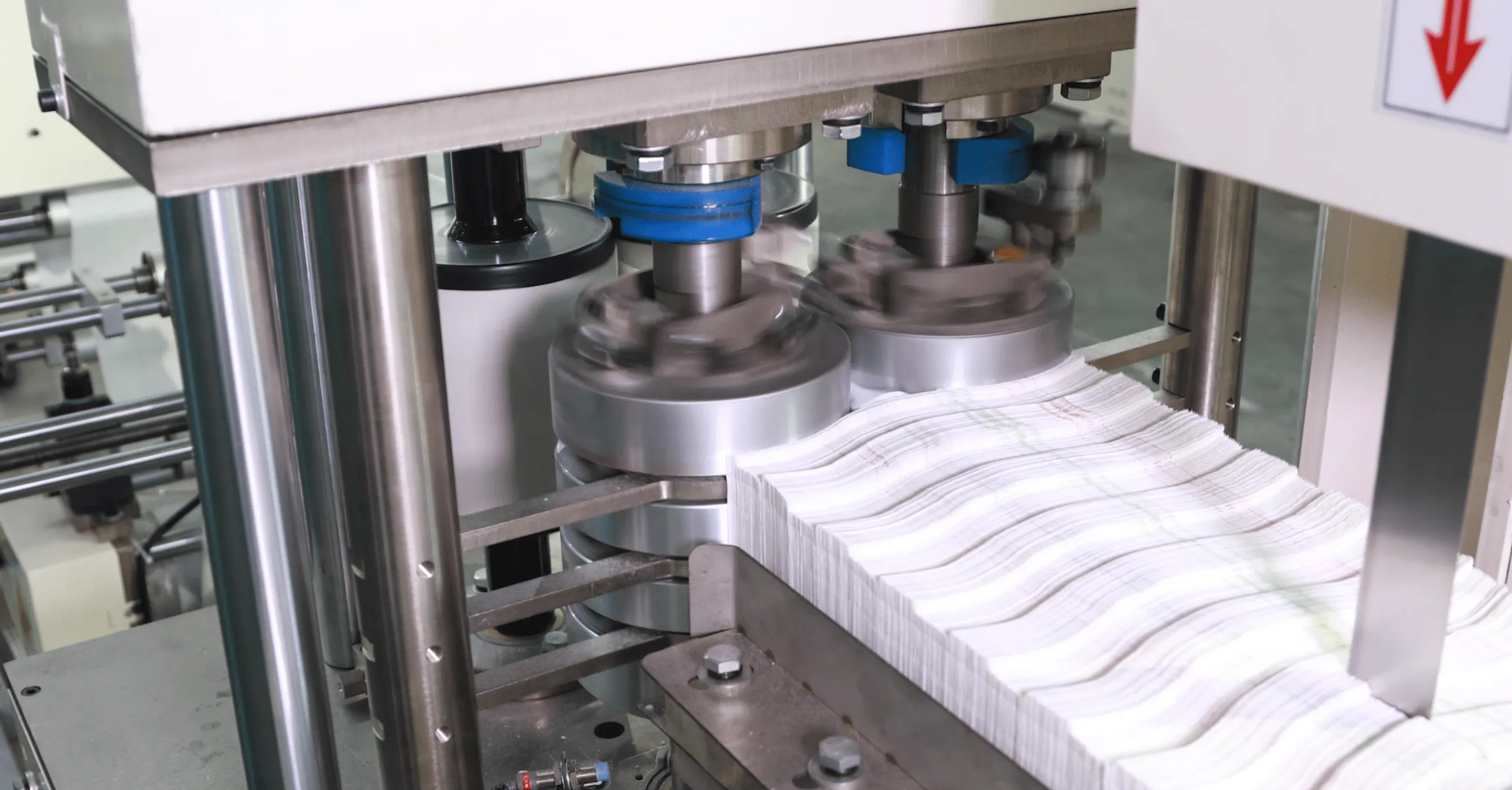
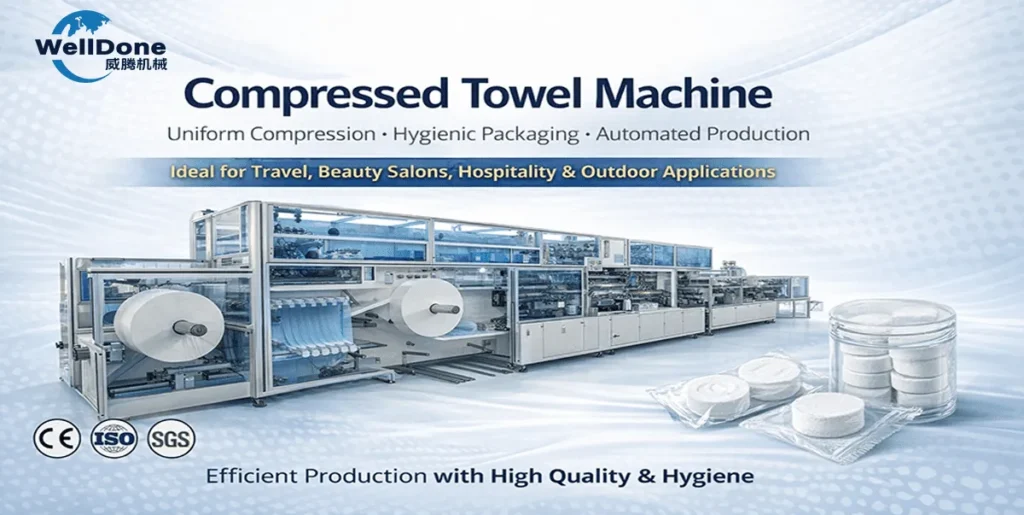
Our product page describes the machine as built for automatic production of compressed towels, coin towels and compressed wipes, with the finished format specified as coin, tablet or roll.
The mechanism is straightforward. Material is fed, cut, counted and then compression-moulded into a dense solid form. The page describes the finished behaviour precisely: when water is applied, they quickly expand back to a full-sized towel while maintaining their integrity and usability.
So the buyer receives something the size of a coin and unpacks a full towel. That gap between shipped size and delivered utility is the whole product.
The number that changes the business case
Our page states it directly: these towels are compressed to reduce their volume by 80–90%, making them easy to transport, store, and carry.
Take that range and work out what it means for a container. If volume drops to 20% of the original, the same space holds five times as many units. At 90% reduction, ten times.
| Volume reduction | Volume remaining | Units in the same space |
|---|---|---|
| 80% | 20% | 5.0× |
| 85% | 15% | 6.7× |
| 90% | 10% | 10.0× |
How this table was derived. The 80–90% figure is published on our compressed towel machine page. The multiples are simple arithmetic from it — units per space equals 1 ÷ (1 − reduction). This is a geometric ceiling, not a loading guarantee. Real container utilisation also depends on packaging format, pallet pattern and container weight limits, so treat these as the upper bound of what compression makes possible rather than what you will achieve.
Why freight is the real story
Folded tissue is one of the least efficient things you can put in a container. You are shipping air held apart by paper, and the container fills by volume long before it approaches its weight limit.
That constraint decides who your customers can be. Ship conventional tissue far enough and freight overtakes the product value, which is why tissue tends to be manufactured close to where it is consumed. Regional producers are protected by transport economics, not by product quality.
Compression removes that protection — in both directions. Actually this is the part worth sitting with: a compressed towel line changes which markets you can serve at all, not just how much a shipment costs.
A different customer entirely
Our page lists where these products create value: gifting, travel, hospitality, and personal care, and notes that their compact form and clean presentation make them suitable for a wide range of commercial and promotional applications.
Not one of those is a supermarket aisle.
That matters more than it first appears. Selling napkins into retail means competing on price per pack against producers with the same equipment and the same raw material. A promotional or gifting buyer is purchasing something else — a branded item, a specific presentation, a defined quantity for an event or a hotel programme.
Those orders behave differently. They are specified rather than shopped, they carry customisation, and they are not benchmarked against the shelf price of a napkin pack.
What the line actually looks like
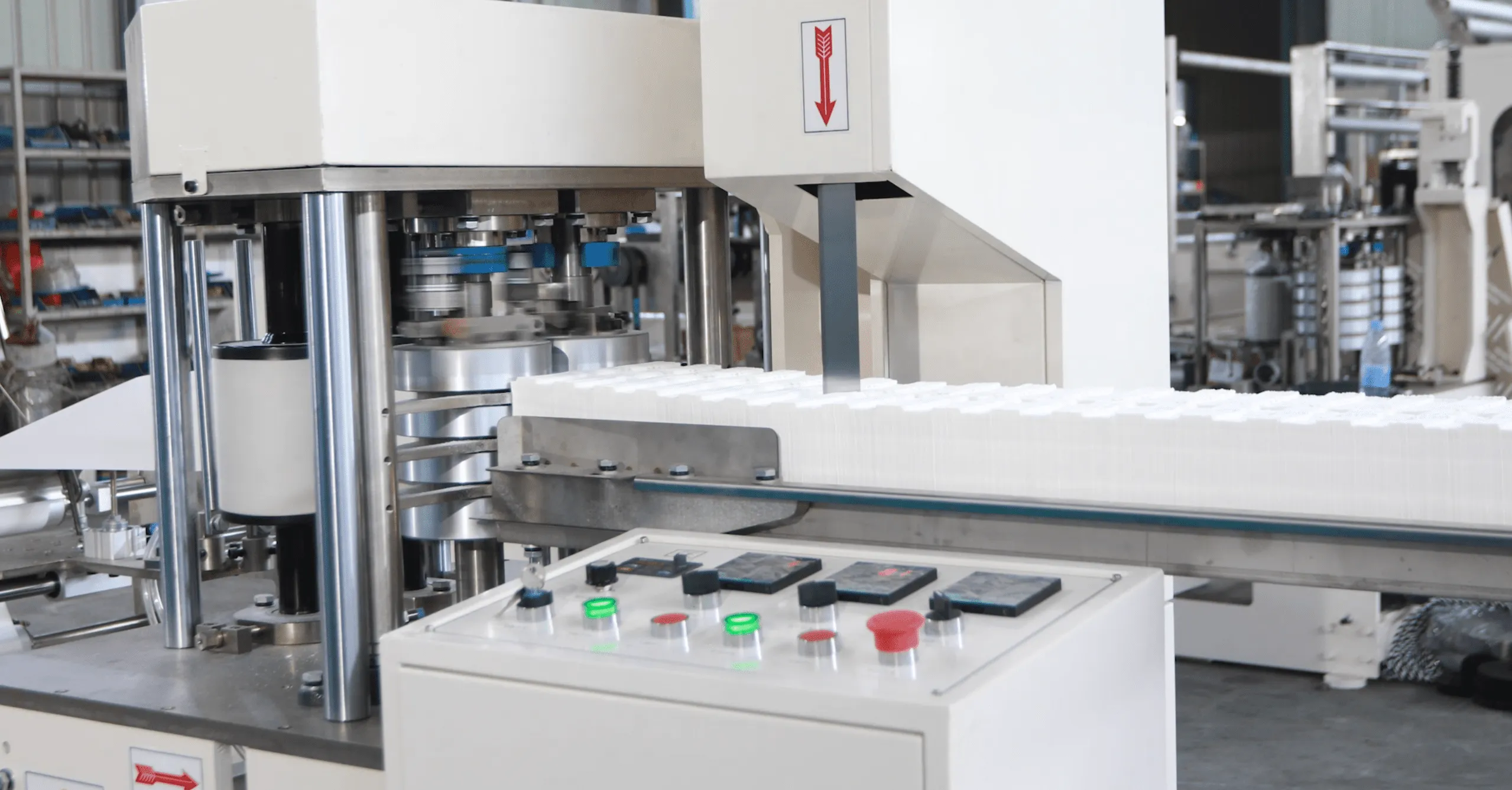
The configuration listed on our page covers automatic feeding, cutting, counting, compression molding, and integration with packing machines, with full servo options available to improve speed stability, reduce downtime and simplify operation.
Read that against a conventional tissue line and the first three stages are familiar territory. Feeding, cutting and counting are operations your team already understands.
Compression moulding is the genuinely new station. It is also where the product identity is created — the mould defines whether you produce a coin, a tablet or a roll, which in turn determines which channel you can sell into.
Where it fits alongside a tissue operation
This is a separate line, not a changeover option on an existing one. Part 2 of this series looked at when facial, napkin and handkerchief products can share a line — they can, because they are all folded sheet products with overlapping station chains.
Compression is different in kind. A folded product and a moulded pellet do not share a process chain past the cutting section, so the question is not whether to convert an existing line but whether to add a distinct one.
Which reframes the decision. You are not choosing between napkins and compressed towels. You are deciding whether a second, differently-shaped revenue stream is worth the floor space — and that depends far more on your sales organisation than on your production capability.
The misconception that costs opportunity
I believe the persistent error is treating channel unfamiliarity as product weakness. A tissue producer whose entire commercial structure points at distributors and retail buyers looks at gifting and hospitality and sees no route to market — then concludes the product does not work.
The product works. The existing sales structure does not reach its buyers.
More importantly, that is a solvable problem with a known cost, unlike competing on price in a saturated retail category. But it does need to be recognised as the actual constraint before equipment is ordered, because a compressed towel line bought by a company with no promotional-channel capability will sit underused regardless of how well it runs.
What the specification does not tell you
Sourcing note. Our compressed towel machine page carries no specification table. It publishes no output speed, no finished piece dimensions, no gram weight per unit, no compression force and no named raw material — it states only that the machine supports different raw materials and product shapes. The one hard number on the page is the 80–90% volume reduction quoted above. Any speed or piece-size figure you are given should therefore be tied to your specific format and material, and confirmed in writing during configuration.
That absence is worth reading correctly. It reflects a product that is configured per project rather than sold from a catalogue — the mould defines the output, and the mould is specific to your format.
It also means you cannot do a meaningful capacity comparison against a napkin line from published figures alone. In most cases the honest answer at enquiry stage is that speed depends on the piece format you specify, and anyone quoting you a headline rate without asking about your mould first is quoting something else.
Questions to settle before you commit
- Who in your organisation sells to non-retail buyers? If the answer is nobody, that capability has to be built before the line pays for itself.
- Which format — coin, tablet or roll? The mould is format-specific, and the format follows the channel rather than the other way round.
- What is your realistic freight advantage? Compression pays off most where you are currently shipping far or paying for volume you cannot fill with weight.
- Can you handle customisation orders? Promotional and gifting work arrives as many specified variants, not as long uniform runs.
Why Welldone
Welldone has manufactured hygiene converting equipment in Jinjiang, Fujian since 2008, incorporated in 2013, supplying tissue, wet wipes, baby care, female care, adult care and pet care lines to factories across Asia, Africa, the Middle East and Latin America.
Format-driven configuration
Coin, tablet and roll formats are quoted against your towel size, target capacity and packing style rather than from a fixed catalogue specification.
Full servo where it matters
Full servo options are available on the compressed towel line to improve speed stability, reduce downtime and simplify operation.
One supplier across the range
Compressed towel lines sit alongside facial tissue, napkin, handkerchief and wet wipes equipment, so a second product line does not mean a second supplier relationship.
Related machines
Conclusion
Compressed towels are not a better tissue product. They are a product whose economics start where tissue economics run out — at the point where volume, not quality, decides how far you can sell.
Which is why the equipment question is the easy half. The machine can be configured; the channel has to be built.
So before requesting a quotation, answer one thing honestly about your own operation: if a hotel group asked for fifty thousand branded coin towels next quarter, is there anyone in your company whose job it would be to take that call?
Frequently asked questions
How much smaller are compressed towels?
Our compressed towel machine page states that volume is reduced by 80–90%. In container terms that is a geometric ceiling of five to ten times as many units in the same space, before accounting for packaging format, pallet pattern and weight limits.
What output speed should I expect?
The page publishes no speed figure, because output depends on the piece format and mould you specify. Treat any headline rate quoted without reference to your format as unreliable, and get the figure confirmed in writing during configuration.
Can a compressed towel line be added to my existing tissue machine?
No. Feeding, cutting and counting are shared in principle, but compression moulding replaces folding entirely, so the process chains diverge after cutting. Part 2 of this series covers which tissue products genuinely can share a line and why compression is not one of them.
Which format should I choose — coin, tablet or roll?
Let the channel decide. The mould is format-specific and sits at the heart of the line, so the format choice is effectively a channel choice made at the equipment stage rather than something adjusted later.
What raw materials does the machine run?
Our page states that it supports different raw materials without naming them. Material selection should be confirmed against your target product tier during configuration rather than assumed from a specification sheet.
Considering a compressed towel line?
Send us your towel size, shape (coin, tablet or roll), target capacity and packing style. We will come back with a configuration and a quotation built around that format.
Website: www.cnwelldone.com
Email: welldone@cnwelldone.com