Tissue Machine Dust Control: The Downtime Nobody Budgets

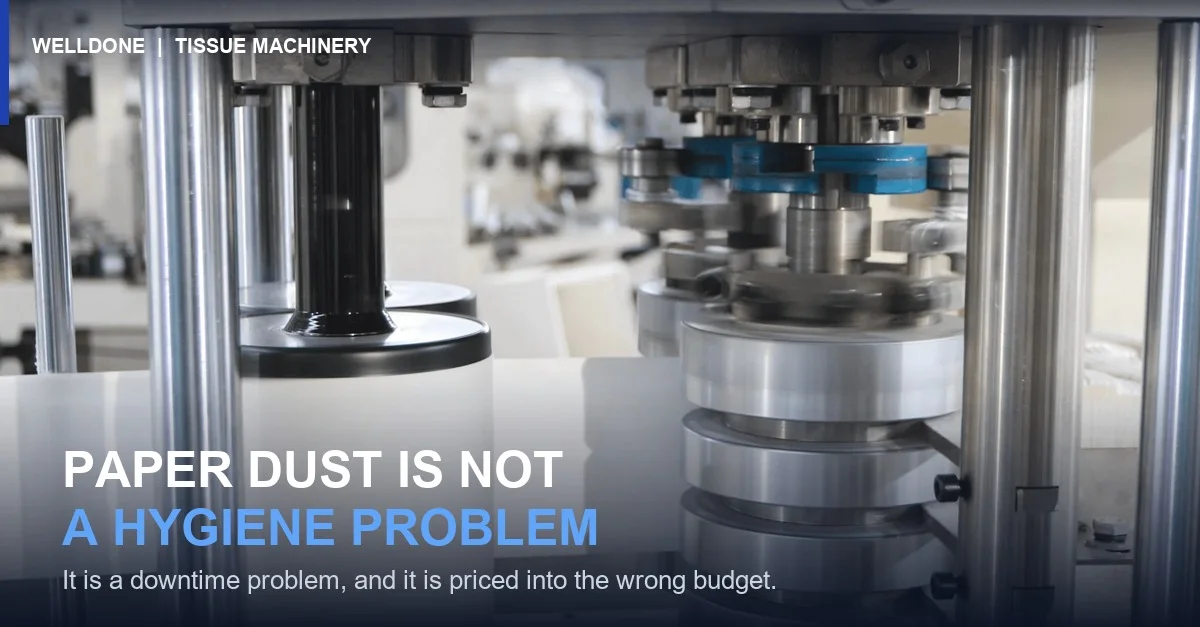
Paper Dust and Downtime: The Tissue Line Cost Nobody Budgets
Tissue Machinery Series · Part 4
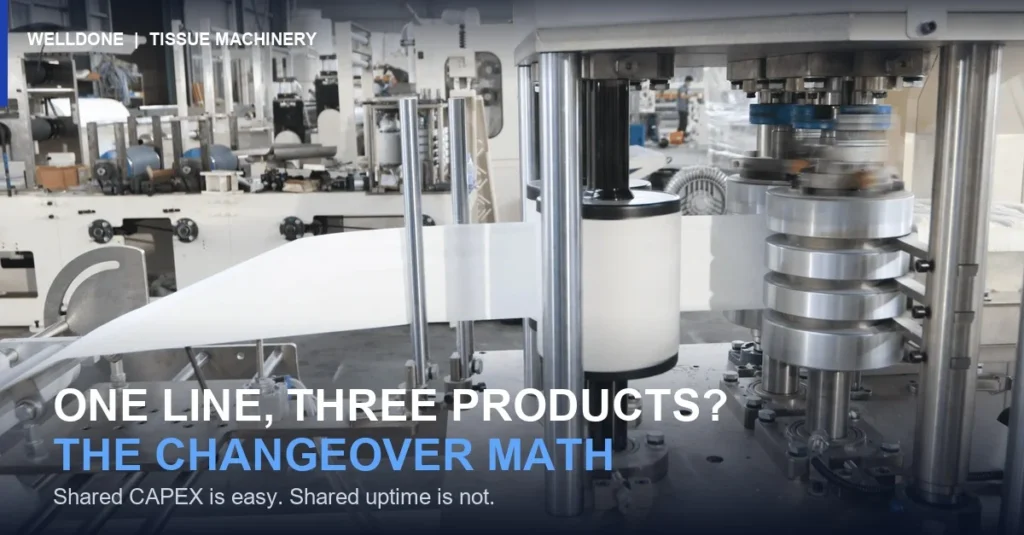
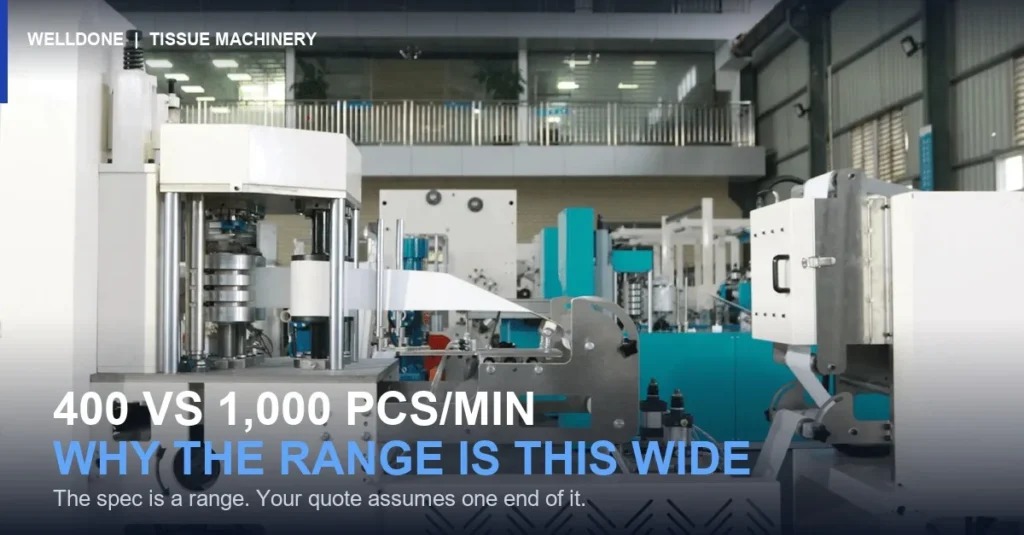
Part 1: 400 vs 1,000 pcs/min — why tissue speed is quoted as a range — how fold type, ply count and paper weight place you inside the quoted range.
Part 2: Facial tissue, napkin, handkerchief — one line or three? — where the three product families share stations and where they split.
Part 3: Why deeper embossing sheds more lint — how pattern depth breaks the fibre bonds that hold a sheet together.
Part 4 — what happens to all that loose fibre once it is inside your machine.
Part 1: 400 vs 1,000 pcs/min — why tissue speed is quoted as a range — how fold type, ply count and paper weight place you inside the quoted range.
Part 2: Facial tissue, napkin, handkerchief — one line or three? — where the three product families share stations and where they split.
Part 3: Why deeper embossing sheds more lint — how pattern depth breaks the fibre bonds that hold a sheet together.
Part 4 — what happens to all that loose fibre once it is inside your machine.
Part 3 ended on a distinction worth carrying forward: extraction cannot fix a lint problem, because it only captures fibre that has already come loose. This article is about that loose fibre — and it turns out to be a completely different cost.
Not a quality cost. Not a hygiene cost. Paper dust is an availability cost, and it lands in a budget line that nobody reviews when comparing quotations.
The line item that gets deleted first
Suction hoods and dust-collection ducting are unusually easy to cut from a quotation. They add capital cost, they occupy floor space, and they produce nothing you can sell. Next to an extra folding lane or a faster servo package, extraction looks like the obvious saving.
The reasoning is understandable. Dust seems like something a cleaner handles at the end of a shift, not something that belongs in the machine specification.
Every hour lost to clearing debris is an hour the line was bought to run and did not.
Where the dust comes from
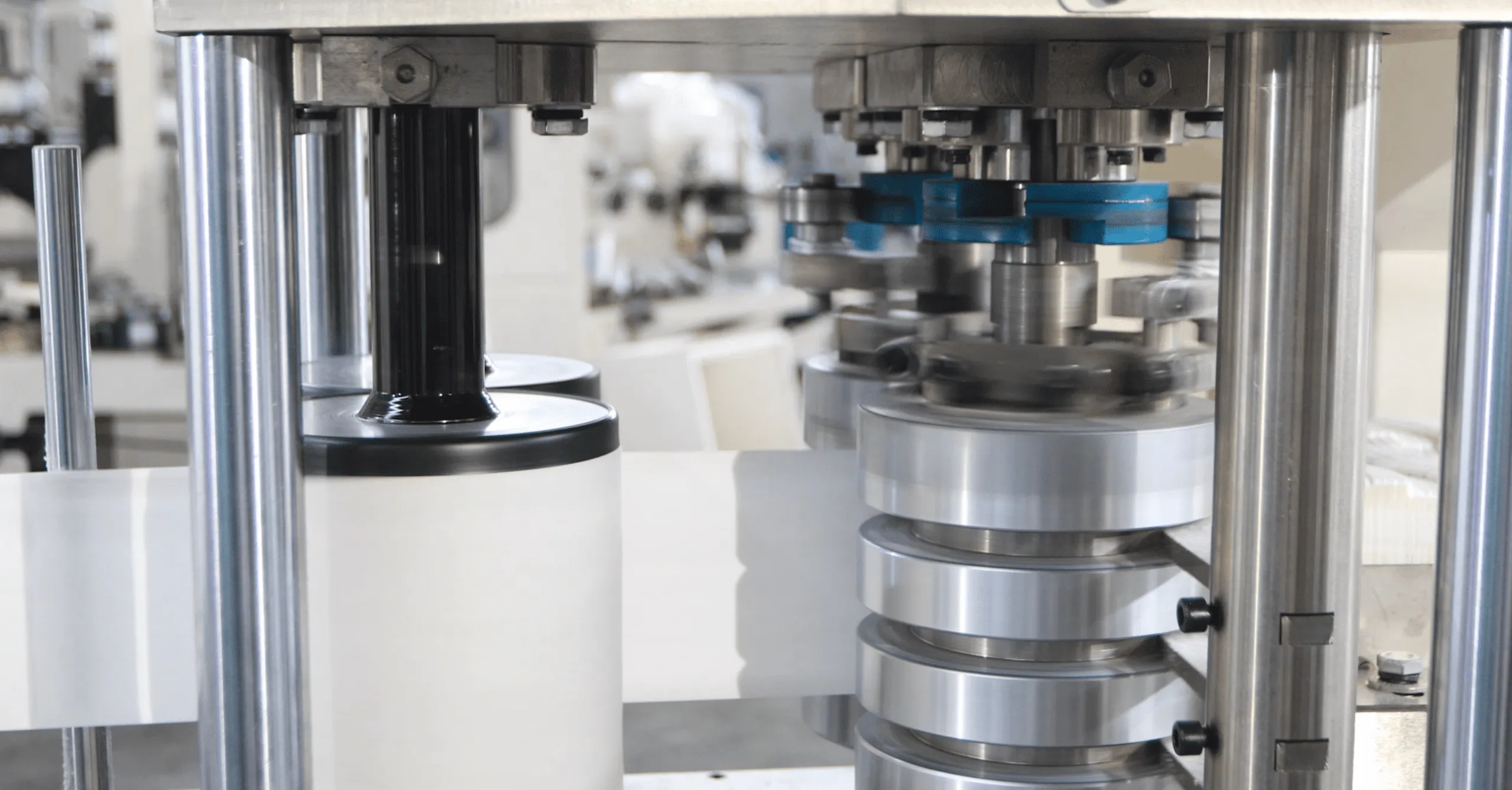
Tissue sheds because the process asks it to. Embossing stresses fibre bonds until some fibres separate, which was the subject of Part 3 of this series. Slitting and cutting generate fresh debris at every blade pass. Folding works the sheet mechanically at each plate.
None of that is a fault. It is what converting a soft, low-density paper into a folded product involves.
The question is not whether your line produces dust. It does. The question is where that dust ends up.
Folding plates and knife zones are where it settles
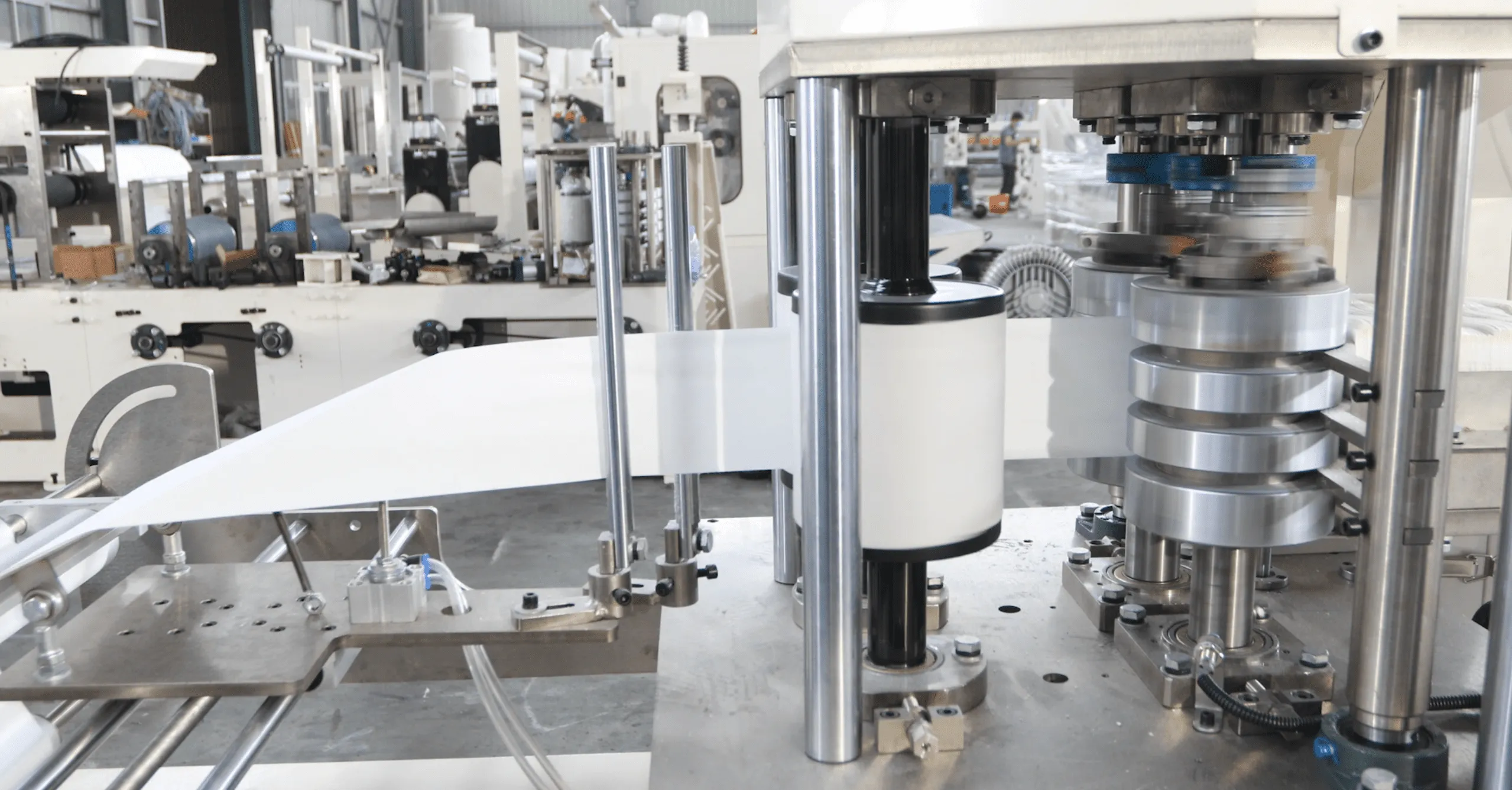
Welldone names these two zones specifically. The design guidelines entry for Cleaning & Dust Control reads: air suction hoods and CIP-friendly structures; integrated dust-collection ducts to remove paper dust and lint, keeping folding and slitting sections clean and reducing downtime.
Folding and slitting. Not the whole machine — those two sections, because that is where accumulation actually interferes with the process.
Both work to fine clearances. A folding plate positions the sheet within a narrow gap; a slitting knife runs against a defined edge. Neither has room for a growing layer of compacted fibre. What follows is a familiar sequence: the web drifts slightly off line, folds lose consistency, and eventually something jams.
Why it gets recorded as an operator problem
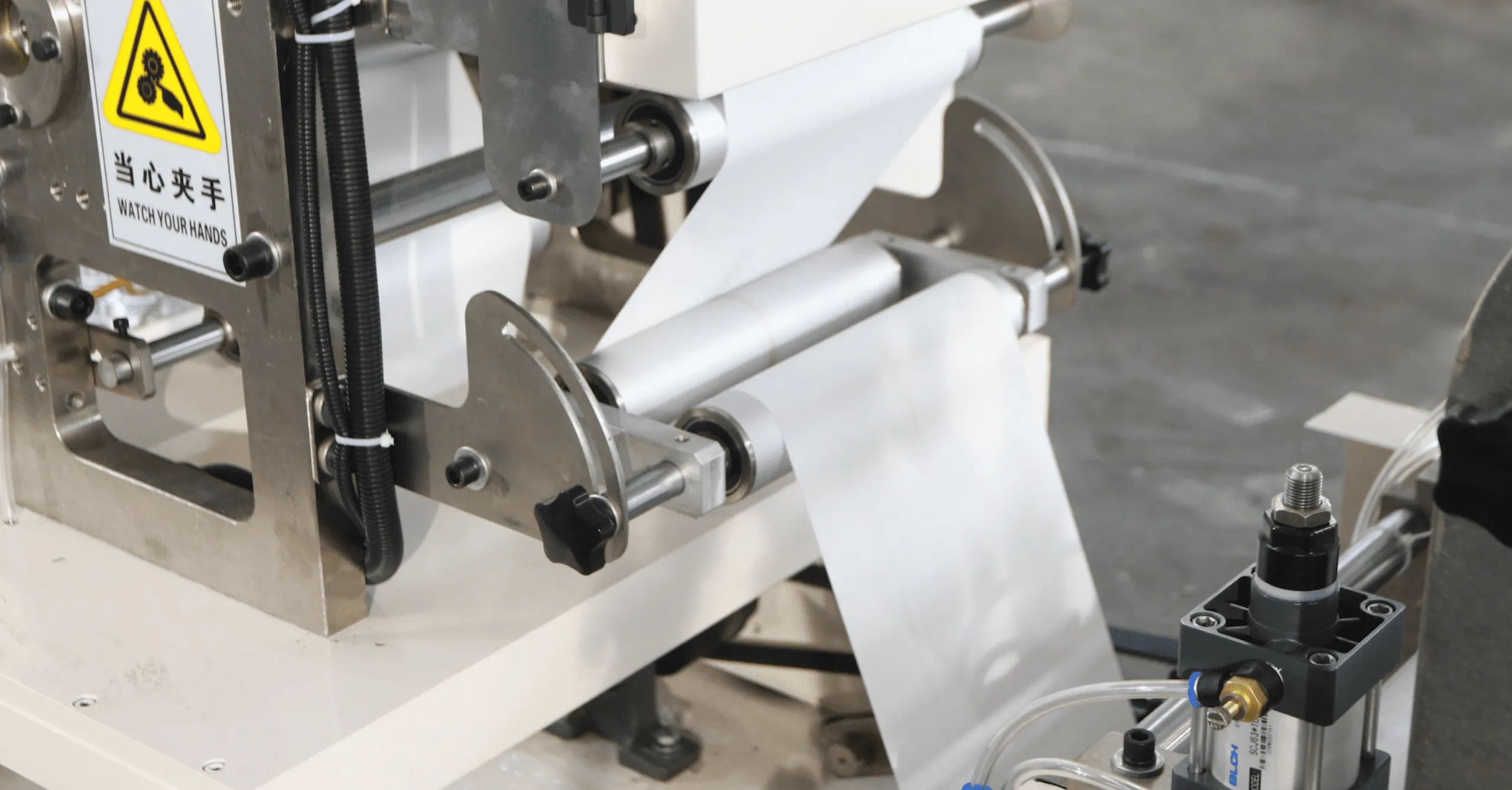
Dust-related stops rarely get logged as dust-related. They get logged as a jam, a misfeed, a reject spike, or simply as five minutes lost. Each one is small enough to fix without escalating, so nobody connects them.
Actually the servo system makes this harder to see, not easier. Alignment correction absorbs the early drift, so the line keeps running normally while the underlying condition worsens. The problem only becomes visible when correction can no longer compensate — at which point it presents as a sudden fault rather than a gradual one.
The result is a line that is genuinely running below its potential, with no single event large enough to trigger an investigation.
Putting a number on it
Welldone publishes changeover time at under 60 minutes and a maintenance rhythm of routine checks every 8 hours with preventive maintenance every 30 days. What is not published — and cannot be, because it depends entirely on your paper, product and extraction setup — is how many minutes per shift a given line loses to debris.
So take it as a scenario rather than a claim.
| Minutes lost per shift | Hours per year | Equivalent 8-hour shifts | Share of one shift |
|---|---|---|---|
| 10 | 50.0 | 6.2 | 2.08% |
| 20 | 100.0 | 12.5 | 4.17% |
| 30 | 150.0 | 18.8 | 6.25% |
| 40 | 200.0 | 25.0 | 8.33% |
Illustrative example only. These are scenario inputs, not measured data and not a Welldone specification. Our site publishes no cleaning-frequency or stoppage-duration figures, because they vary by paper grade, product format and extraction configuration. The calculation assumes one shift per day across 300 operating days. Substitute your own observed figures before using this for any investment decision.
Ten minutes a shift sounds like nothing. Over a year it is more than six full shifts. At thirty minutes — which is not an extreme figure for a line running deep-embossed product without adequate extraction — you are approaching nineteen shifts of lost availability.
Compare that against the cost of the extraction package that was removed from the quotation. In most cases the comparison is uncomfortable, and it is worth doing before the order is placed rather than after.
What the specification actually commits to
Read the Cleaning & Dust Control entry closely and it describes two distinct things.
- Air suction hoods. Capture at the point where debris is generated, before it can travel and settle elsewhere in the machine.
- Integrated dust-collection ducts. Removal of captured material out of the line, rather than relocating it to another part of the same machine.
- CIP-friendly structures. Surfaces and layouts designed so that cleaning is quick when it is needed, which is a different objective from preventing accumulation.
The word integrated is doing real work in that sentence. Extraction designed into the line differs from a portable unit brought alongside it — the capture points sit where the debris is actually produced, which is a decision made during line design rather than after installation.
Access is the other half of the answer
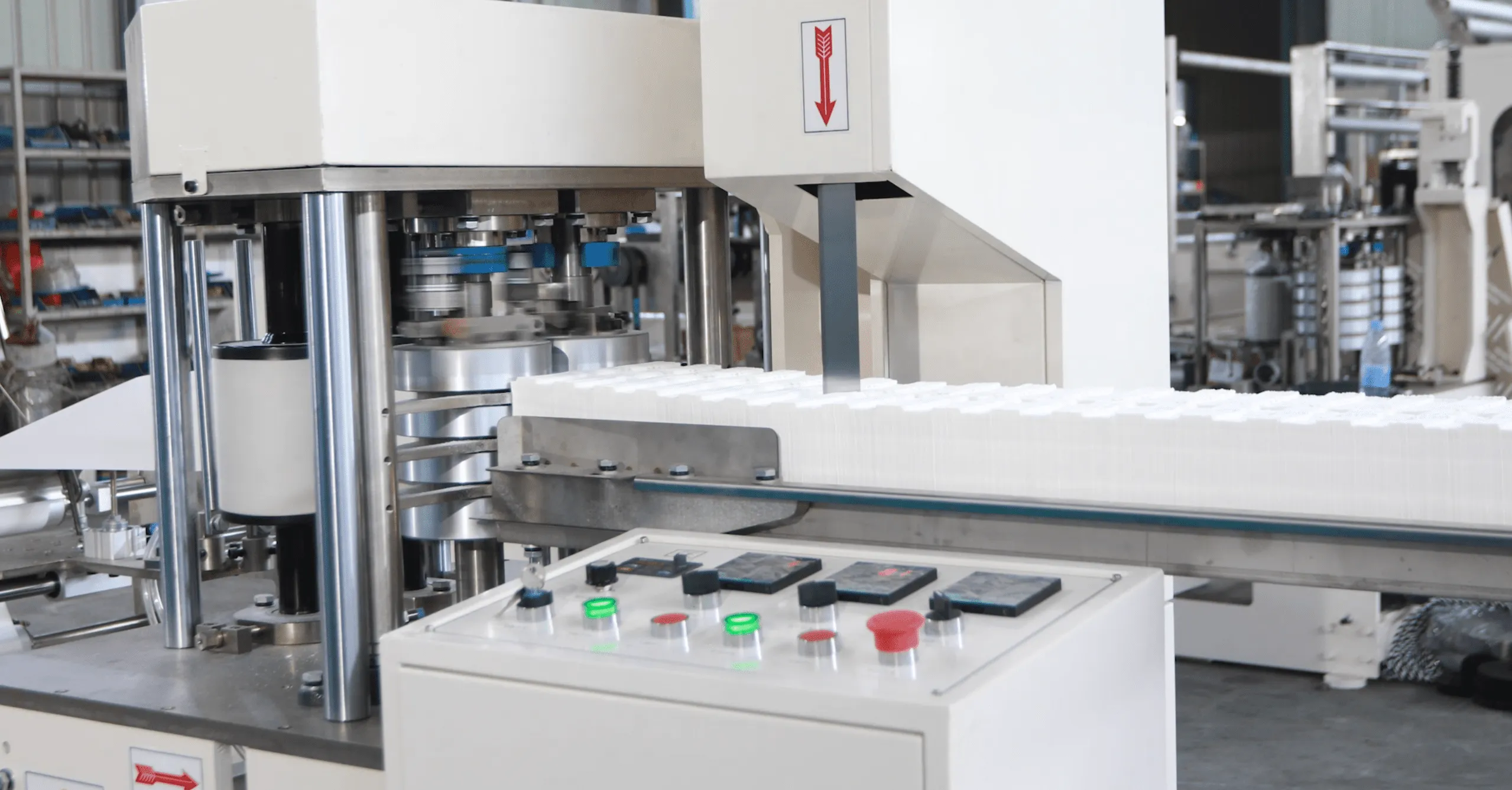
Extraction reduces accumulation. It does not eliminate the need to clean, which is why the design guidelines address access separately.
The Operator Access entry specifies maintenance aisles ≥ 650–700 mm; tool-free access for knife holders, embossing rollers, folding plates, and lotion tanks to speed up size change and daily cleaning. Note that folding plates and knife holders appear in both entries — the same two zones that accumulate dust are the two the specification makes tool-free to reach.
That pairing is the point. Extraction lowers how often cleaning is needed; tool-free access lowers how long each cleaning takes. Specify one without the other and you have solved half the problem.
The misconception that costs money
I believe the underlying error is a filing mistake. Dust gets classified as housekeeping, so it is evaluated against the cleaning budget — where extraction hardware looks expensive against a person with a brush.
Filed correctly it belongs with availability, alongside changeover time and maintenance intervals. Those are the numbers buyers scrutinise closely when comparing lines, and dust-related stops sit in exactly the same category: hours the line was bought to run and did not.
More importantly, the two budgets are usually held by different people. Production owns output; procurement owns the purchase. Extraction gets cut by someone who will never see the shift reports that record the consequence.
Questions to settle before you cut the quotation
- Is extraction quoted as a line item or built into the configuration? If it is separable, it will be compared against nothing and removed.
- Where are the capture points? Folding and slitting are the zones our own guidelines name. Extraction that does not cover both leaves the main accumulation sites open.
- How long does cleaning those zones actually take? Tool-free access to knife holders and folding plates changes this number substantially.
- Are short stops being logged at all? If five-minute clearances are not recorded, the cost of removing extraction will never appear in any report you see.
Why Welldone
Welldone has manufactured hygiene converting equipment in Jinjiang, Fujian since 2008, incorporated in 2013, supplying tissue, wet wipes, baby care, female care, adult care and pet care lines to factories across Asia, Africa, the Middle East and Latin America.
Dust control in the standard guidelines
Air suction hoods and integrated dust-collection ducts are part of the published design specification, targeted at the folding and slitting sections where accumulation interferes with the process.
Access designed for cleaning
Maintenance aisles of 650–700 mm and tool-free access to knife holders, embossing rollers and folding plates, so routine cleaning does not become a long stop.
A maintenance rhythm, not a guess
Routine checks every 8 hours and preventive maintenance every 30 days, with remote monitoring, real-time diagnostics and quick-change kits for knives, rollers and critical wear parts.
Related machines
Conclusion
Paper dust does not damage a tissue line. It simply stops it, briefly and repeatedly, in increments too small to investigate.
That is what makes it easy to under-price. The extraction package has a visible number on the quotation; the stops it prevents have no number at all unless somebody chooses to record them.
So before the next line is specified, find out one thing about your current operation: are short clearance stops written down anywhere? If they are not, the case for extraction cannot be made with evidence — and it will be cut again, for the same reason as last time.
Frequently asked questions
Is paper dust a hygiene problem or a production problem?
Primarily a production problem. Accumulated fibre in the folding and slitting sections interferes with web alignment and fold consistency, which is why our design guidelines link dust control directly to reducing downtime rather than to product cleanliness.
Which sections need extraction most?
Folding and slitting. Those are the two zones named in the Cleaning & Dust Control guideline, because both operate to fine clearances where accumulated fibre changes how the web behaves before any visible build-up appears.
How much downtime does paper dust actually cause?
We do not publish a figure, because it depends on paper grade, product format and extraction configuration. The scenario table in this article shows the arithmetic for 10 to 40 minutes per shift so you can apply your own observed number — the important step is measuring it rather than assuming it is negligible.
Will extraction stop lint appearing in the finished product?
No. Extraction captures debris travelling through the machine; it cannot reach fibres already detached inside a finished sheet. That is an embossing question, covered in Part 3 of this series. Extraction addresses what the loose fibre does to your equipment, not what it does in the carton.
Does dust build-up affect line speed?
Indirectly. Accumulation in the folding section affects fold consistency, which can force a lower running speed to maintain quality. Part 1 of this series covers the other factors that determine where a line sits within its published 400–1,000 pcs/min design range.
Specifying a tissue line?
Send us your product mix and paper grades. We will show you where the capture points sit on that configuration and what the cleaning access looks like in practice.
Website: www.cnwelldone.com
Email: welldone@cnwelldone.com