
Mattress Production Line: Why Integration Beats Isolated Machines

Mattress Production Line: Why Integration Beats Isolated Machines
A traditional mattress factory floor looks like an archipelago. Pouch coil forming happens in one zone. Multilayer lamination happens in another. Final cutting and packaging happen somewhere else. Between those islands is WIP (work in progress) — half-finished spring blocks and rolls of nonwoven fabric waiting on pallets.
Isolated machines create handling. And handling requires space, forklifts, and labour.
Isolated Machines vs an Integrated Line
The alternative is integration. A continuous mattress production line connects the core stations into one unbroken flow. The pouch coil system feeds directly into the lamination section, which feeds straight into cutting and packaging.
| Production Model | WIP Storage Space | Intermediate Transport | Operator Headcount |
|---|---|---|---|
| Isolated Machines | High (Pallets between stations) | Forklifts and manual carts | One team per isolated station |
| Integrated Line | Zero (Continuous web flow) | None | Shared monitoring across the line |
The Pouch Coil Core
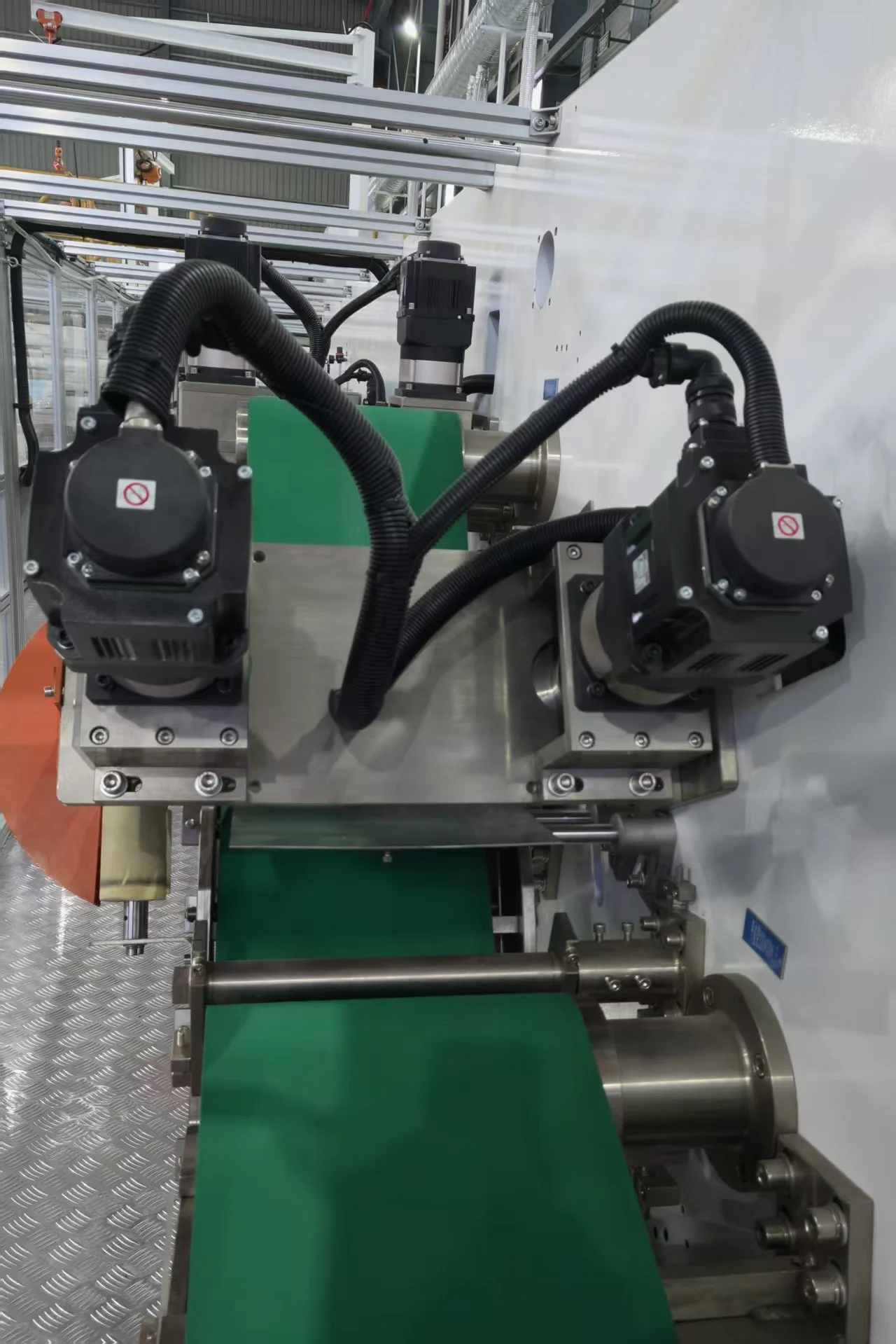
The foundation of the line is the pocket spring (pouch coil) unit. Instead of moving formed spring blocks to a separate assembly machine, the wire forming, pocketing, and gluing happen in sequence.
When the spring block exits the pouching section, it does not go onto a pallet. It travels on a continuous belt directly into the lamination zone. This eliminates the risk of deformation that happens when heavy spring blocks are lifted and stacked manually.
The Continuous Flow: Lamination to Cutting
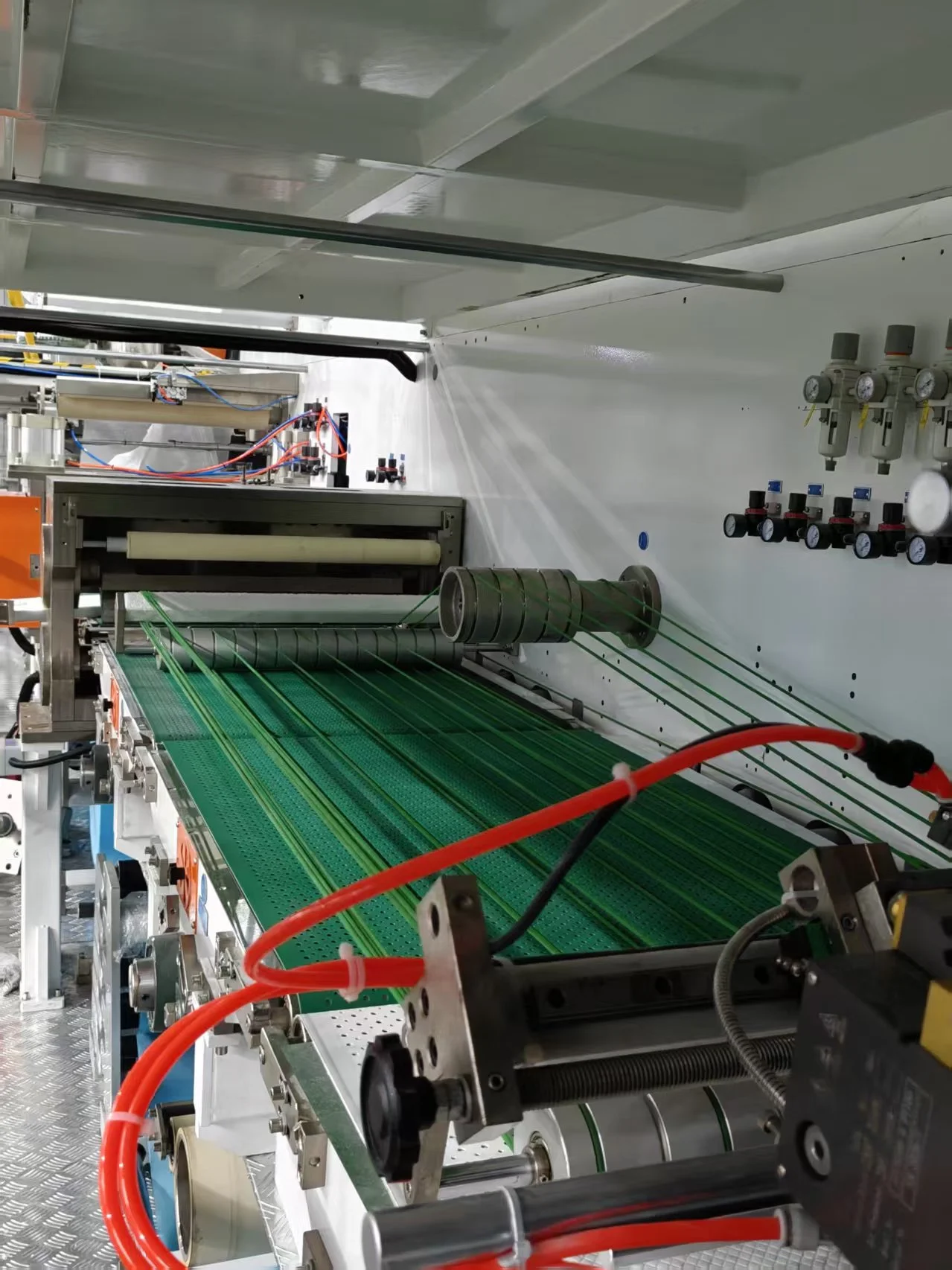
Once the core is formed, the outer layers must be applied. On an integrated line, the multilayer nonwoven application runs on a shared servo drive system. The top and bottom fabrics are unwound, tensioned, and laminated to the spring core while it is moving.
Configuration Note
The exact speed, maximum mattress width, and total power consumption depend on the specific configuration you choose. Features like automatic edge sealing or custom quilting modules can be added. For precise parameters, please refer to the formal quotation sheet.
After lamination, the continuous mattress web reaches the rotary cutting station. Here, it is cut to the exact programmed length. Because the line shares a single web controller, the cutting pitch automatically syncs with the pouch coil pattern.
The Real Cost of Handling
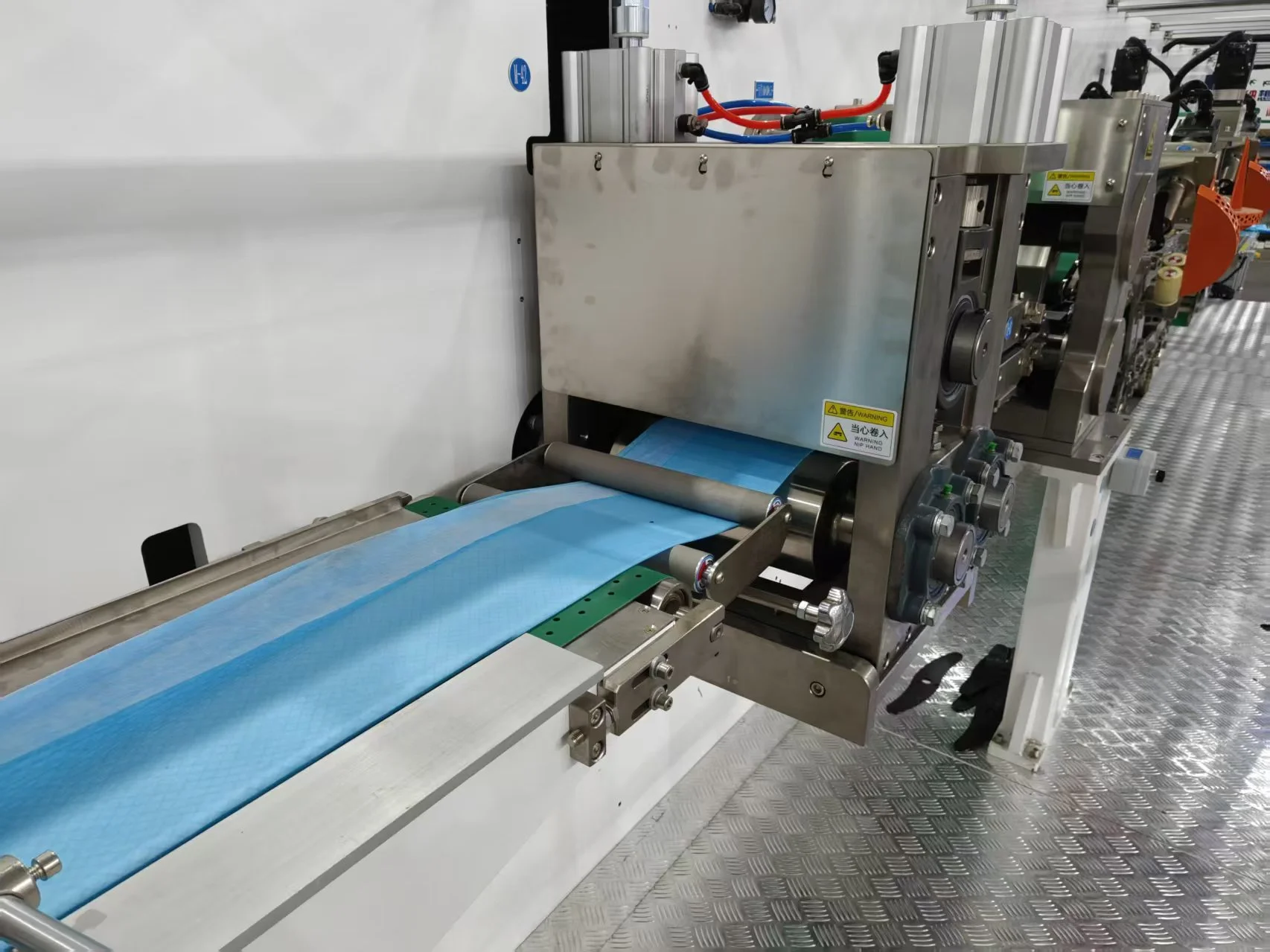
Actually, the most expensive part of a fragmented factory is not the machines themselves. It is the footprint they require for buffer zones and the labour required to move half-finished goods.
When the stations share a single web controller and safety enclosure, you eliminate the WIP buffers. The footprint shrinks. The forklift traffic stops.
Why Welldone?
We are a manufacturer of hygiene and converting machinery with over 18 years of engineering experience. We do not just build isolated units; we design integrated production systems.
- Full Servo Control: Precise tension management from unwinding to final cutting.
- Integrated Safety: Complete enclosure systems protecting operators across the entire line.
- Custom Configuration: Engineered to match your factory footprint and specific product structure.
Related Solutions
Conclusion
The real question for a factory upgrade is not just how fast each isolated machine can run. It is how smoothly the product flows from wire to finished mattress without touching a pallet. If your operators are spending more time driving forklifts than monitoring quality, what is that handling actually costing your business?
FAQ
Does the line handle both pocket springs and foam?
The configuration can be customized. While the core is typically pouch coil (pocket spring), lamination stations can be added for foam, latex, or specialized nonwoven layers.
What is the maximum mattress width supported?
Width limits depend on the specific machine frame and cutting station configured for your project. Please contact us with your target product dimensions.
Does this replace edge sewing (tape edging)?
This line focuses on continuous core formation, lamination, and cutting. Final edge sewing (tape edge) is typically handled at a separate downstream finishing station.
How do I get a precise quotation with parameters?
Because these are integrated systems, we need to know your target output, product structure, and available factory length. We will then provide a formal configuration sheet with exact speed and power parameters.
Looking to Upgrade Your Mattress Factory?
Let us configure a continuous production line for your space.
Contact Welldone Engineering