Wet Wipes Machine Sachet vs Tub: Which Line Pays Back

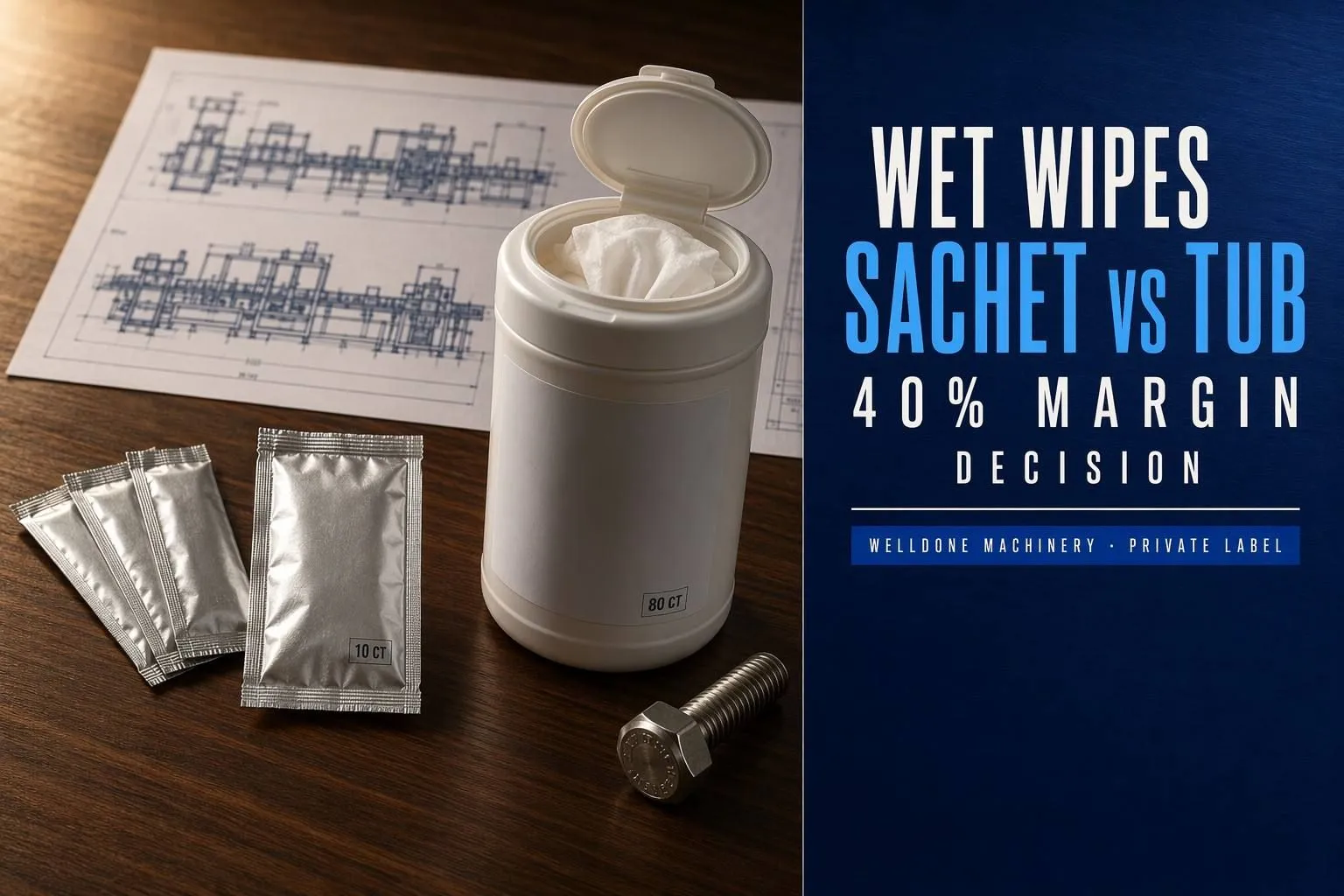
Single-Pack vs 80-Pack Wet Wipes Lines: Why the Wrong Choice Costs 40% of Your Margin
Every wet wipes line quote looks the same on the cover page — production speed, servo count, footprint. What decides your private-label margin is the pack format the line was actually engineered for. This article walks through the sachet-versus-tub decision that costs first-time factory owners 40% of their margin when they get it wrong.
This is the opening piece of the wet wipes series. Before the discussion of liquid dosing precision, hygiene compliance, or SKU changeover matrices, one decision sits above everything else: are you buying a sachet line or a tub line? Get that wrong and no downstream optimization recovers the margin. Get it right and every following decision compounds.
1 · A Vietnam factory that bought the wrong line
A first-time wet wipes factory owner in Vietnam messaged me last month. He had just closed his first private-label contract — an 80-count resealable tub, hand-and-face wipes, for a Southeast Asian drugstore chain. Volume commitment: 8 million tubs across 18 months.
He bought a single-pack sachet line. The cheapest quote on his desk. Rated at 1,000 pcs/min, USD 180,000, delivered in 75 days. Everyone in the meeting nodded.
Six months in, his gross margin was 40% below the business case the CFO had signed off on. Not because the line broke. Not because the raw materials were more expensive than budgeted. Not because the operators were slow.
Because it was the wrong architecture for the SKU he had sold. He had signed an 80-count tub contract and bought a machine engineered for 10-count sachets. Everything downstream was damage control.
The mistake was not the machine. The mistake was signing the contract before deciding which architecture the line needed to be. In wet wipes, that is the sequence that eats first-time factory owners alive.
2 · What actually separates a sachet line from a tub line
On the surface, both are "wet wipes machines." Underneath, they are two different mechanical animals — different folding logic, different liquid dosing profile, different packaging integration. Trying to run tub SKUs on a sachet line, or vice versa, is not a configuration change. It is a redesign.
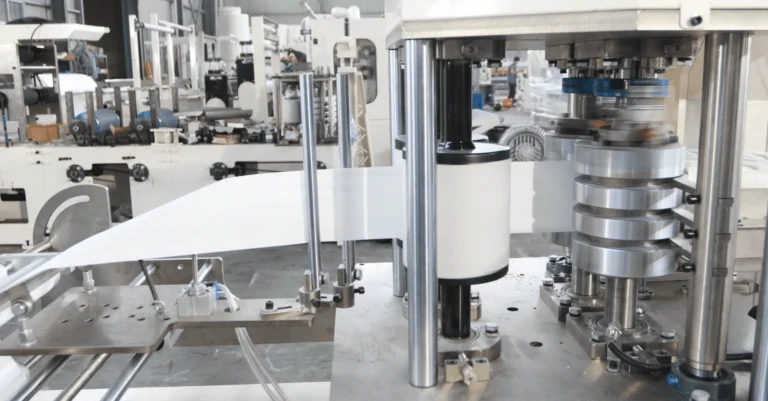
Sachet line (single-serve, 5-25 wipes per pack)
Sachet lines are optimized for volume. The folding head produces individual folded wipes at 600-1,200 pcs/min; the packaging module wraps each pack in aluminum foil or metallized film, seals four sides, and outputs at the same cycle. Ideal SKU profile: travel wipes, hotel amenity, restaurant hand-cleaning, promotional giveaways. Margin per pack is thin — usually 4-6 cents at private-label — and the entire business model is built on throughput.
Tub / canister line (30-100 wipes per pack)
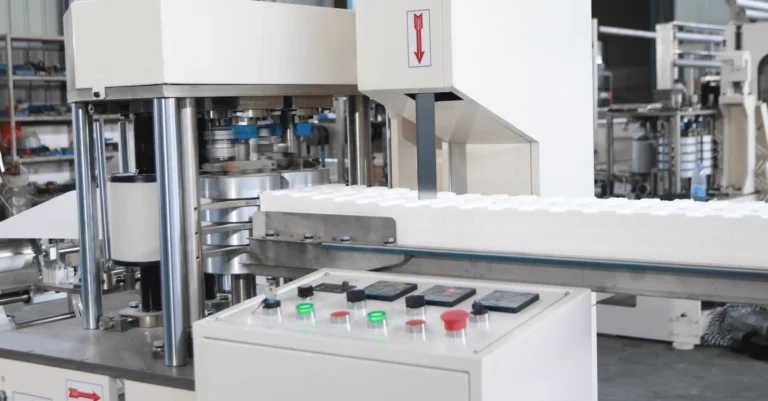
Tub lines run at 40-90 tubs/min. The mechanical difference is the interleaving-and-stacking module: individual wipes are folded, then interleaved so that pulling one wipe brings the next to the dispensing hole. That interleaving alone requires a stacking mechanism a sachet line does not have. On top of that, a plastic tub-loading module places, positions, and seals the tub — completely different automation from foil-pouch sealing.
Where the CAPEX gap comes from
The 2-3x CAPEX gap between a sachet line and a tub line is not marketing. It is real hardware — the interleaving stacker, the tub-loading module, the lid-sealing module, and the more complex servo synchronization between them. Every one of those subsystems is engineered for the pack format. You do not "add tub capability" to a sachet line; you buy a different line.
3 · The pack-count decision matrix
Match the line to the SKU your buyer signed, not the other way around. Below is the decision matrix I walk every first-time wet wipes factory through — before the RFQ, not after:
| Your SKU pack count | Right line | Realistic throughput | Typical CAPEX (USD) |
|---|---|---|---|
| 1 wipe (single-serve) | Sachet line — high speed | 1,000-1,200 pcs/min | $150K – $220K |
| 5-25 wipes (soft pouch) | Sachet line — mid speed | 600-1,000 packs/min | $180K – $260K |
| 30-60 wipes (tub / canister) | Tub line — entry | 50-90 tubs/min | $340K – $420K |
| 80-100 wipes (large tub) | Tub line — full servo | 40-70 tubs/min | $400K – $500K |
| Mixed (both sachet and tub SKUs) | Two lines — dedicated | See both above | Combined; do NOT run mixed on one line |
The last row is the critical one for private-label factories. If your book covers both sachet SKUs and tub SKUs, you need two lines. A single "flexible" line trying to run both is a compromise that hits neither format's economics. The interleaving mechanism is either present or absent; you cannot toggle it between SKUs.
4 · Three misconceptions that push first-time owners to the wrong tier
Misconception 1: "A sachet line can do tubs if we manually repack."
Technically yes. Economically no. Manual repacking of sachet output into tubs adds one full operator per line, per shift, for the entire tub production run. Over 300 working days on three shifts, that is USD 40,000-60,000 of extra annual labor cost that never appeared on the sachet line's CAPEX advantage. Add rejects from imperfect repacking and the "savings" is negative by month four.
Misconception 2: "Buy the sachet line first, upgrade to tub capability later."
You cannot upgrade a sachet line into a tub line. The folding head, the packaging module, the servo synchronization — none of it is bolt-on-compatible with an interleaving stacker or a tub-loading module. What you can do is buy a sachet line, then buy a separate tub line later. That is two POs, two commissioning cycles, two SAT teams — not an "upgrade path." Anyone who pitches it as an upgrade is optimizing for their commercial narrative, not your factory floor.
The uncomfortable pattern: the first-time factory owners who regret their line choice three years in almost always bought before signing the contract. The ones who chose correctly signed the contract first, brought the pack-count spec to the RFQ, and let the supplier build the quote around the SKU — not around the RFP form.
Misconception 3: "The supplier will tell me which line I need."
Only some suppliers will. Suppliers who only build sachet lines will always quote you a sachet line. Suppliers who only build tub lines will always quote you a tub line. A serious supplier — one that builds both — will refuse to quote until you provide the pack count on your signed or near-signed SKU. If a supplier is happy to quote without asking, that is the signal to ask why.
5 · What to ask before you sign a wet wipes RFQ
Bring these five questions to every wet wipes RFQ conversation, in this order:
- What is the pack count on my signed or committed SKU? If you cannot answer this in seconds, the RFQ is premature. Close the SKU spec first.
- Does the supplier build both sachet and tub lines? If they only build one, they will always quote you that one. Ask them for their tub / sachet reference site count before trusting the recommendation.
- What is the SKU size changeover time within the same pack format? Under 60 minutes is a servo line. Above 90 minutes is a legacy line dressed up in marketing.
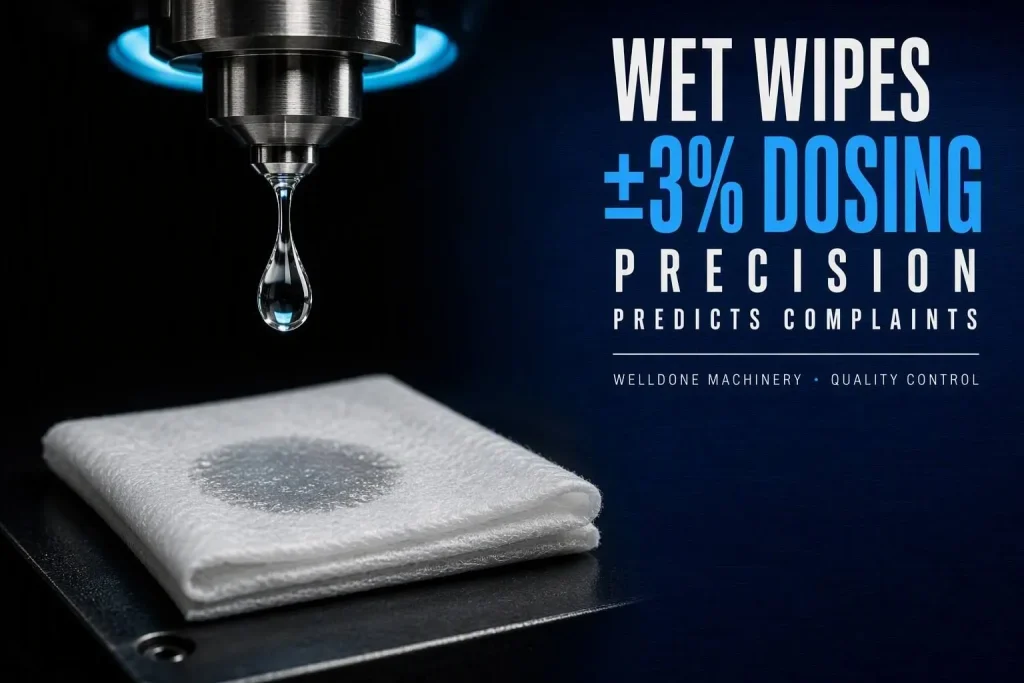
- What is the liquid dosing precision? ±3% is the acceptable ceiling for private-label. Anything wider than that shows up as consumer complaints ("too wet" / "too dry") within 90 days.
- Show me 30 days of production data from a reference site running my pack format. Not brochure numbers. Real shift-level data with reject rates and downtime events flagged.
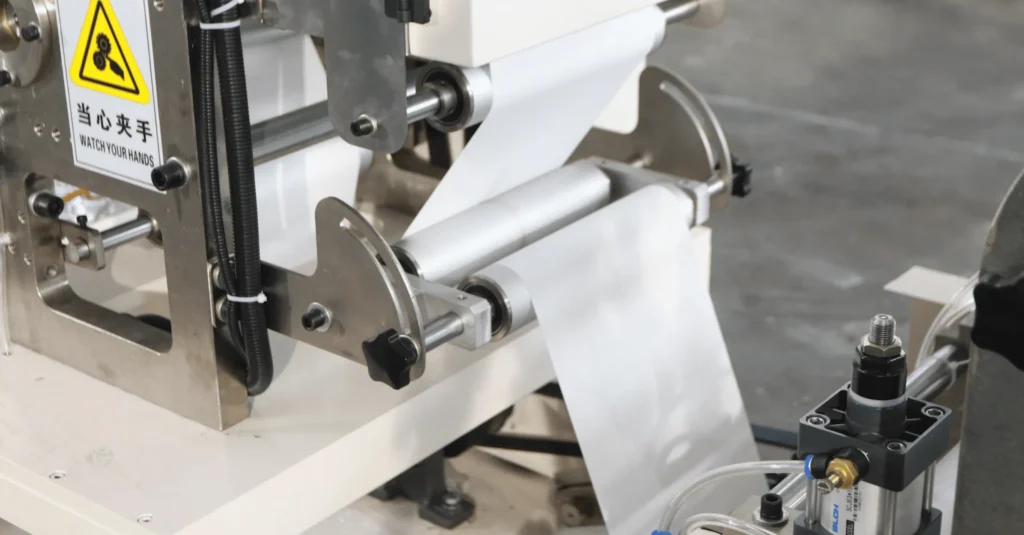
Red flag on any RFQ: the supplier can quote you a line in 24 hours without asking for the pack count on your SKU. That means the quote is a template, not an engineered recommendation. Templates are how first-time factory owners end up with 40% margin gaps in year one.
6 · Why Welldone Machinery for wet wipes private-label programs
Welldone Machinery builds both sachet lines and tub lines — and refuses to quote either until we know the pack count on the SKU your buyer signed. The RFQ turnaround is 24-48 hours, not 4 hours, precisely because we ask the questions above before writing a number. That is not slow; that is what a real engineered recommendation looks like.
01 · DUAL PORTFOLIO
Sachet and tub lines under one roof
Both architectures engineered in-house. Reference sites in Southeast Asia, GCC, and North Africa on both formats — with real 30-day production data on the pack count you plan to run.
02 · SUB-60 CHANGEOVER
Size switching under 60 minutes
Servo-driven size change within the same pack format hits sub-60-minute changeover as standard — enforced at SAT, not on the datasheet.
03 · LIQUID DOSING ±3%
Contractual precision on wet content
Servo-metered liquid injection holds ±3% precision across shift, batch, and SKU — the specification consumer complaints test against 90 days after launch.
8 · Conclusion
The sachet-versus-tub decision is not a specification question. It is a business-model question. Sachet lines and tub lines serve different consumers, at different price points, through different retail channels, at different margin structures. Buying the wrong one is not a machine problem; it is a strategy problem the machine cannot solve.
The pattern I see on every wet wipes factory that got this decision right: the pack count on the signed SKU came to the RFQ, not the other way around. The pattern on every factory that got it wrong: the machine came first, and the sales team tried to force the market to fit it.
An open question to take back to your commercial team: when you write your next wet wipes RFQ, is the pack count on the signed or near-signed SKU explicitly stated on line one — or is it something you plan to figure out after the quotes come in? If it is the latter, the quotes will optimize to the supplier's inventory, not to your business.
9 · Frequently asked questions
Can one wet wipes line produce both sachet and tub SKUs?
No — not in any economically viable way. The folding head, interleaving stacker, and packaging module are different mechanical subsystems engineered around one pack format. A "flexible" line marketed as doing both usually means it does neither well. If your SKU book covers both formats, plan for two lines — the CAPEX is higher but the margin math actually works.
What is a realistic size changeover time within the same pack format?
Under 60 minutes on a servo line. This means switching from a 40-count tub to an 80-count tub on the same tub line, or from a 10-count sachet to a 20-count sachet on the same sachet line. Anything above 90 minutes on a supposedly servo line points to missing recipe HMI or manual splice cores — the same specifications that decide throughput on sanitary napkin lines.
How precise does liquid dosing need to be for private-label?
±3% is the ceiling. Anything wider produces consumer complaints — "the wipes feel too dry" or "the tub leaks" — within 90 days of shelf launch, and those complaints go straight to the private-label brand owner. On a Welldone servo-metered line, we hold ±2% across shift, batch, and SKU as contractual acceptance criteria.
What is the typical lead time on a wet wipes line from Welldone Machinery?
60-90 days for standard sachet configurations, 90-120 days for custom tub configurations or non-standard pack counts. On-site installation and SAT run 30-45 days after arrival. Timelines are the same regardless of which architecture — the difference is in build complexity, not delivery predictability.
Can Welldone Machinery quote both sachet and tub lines side by side?
Yes. Send us your product spec, signed or target SKU, and annual volume commitment. You receive both an appropriate sachet quote and an appropriate tub quote — or a clear recommendation for one, with the reasoning explicit. We do not quote a line before knowing the pack count; that is the RFQ discipline that separates a real engineering recommendation from a template.
Building your first wet wipes line — or reviewing a quote before you sign?
Send us your product spec, signed or committed SKU pack count, and annual volume. We return an engineered recommendation with the pack-count decision explicit on line one, and CAPEX numbers sized to the format your buyer is actually paying for.