
The Machine Has Shipped. Is Your Factory Ready for Stable Production?

On June 10, 2026
Comments Off on The Machine Has Shipped. Is Your Factory Ready for Stable Production?
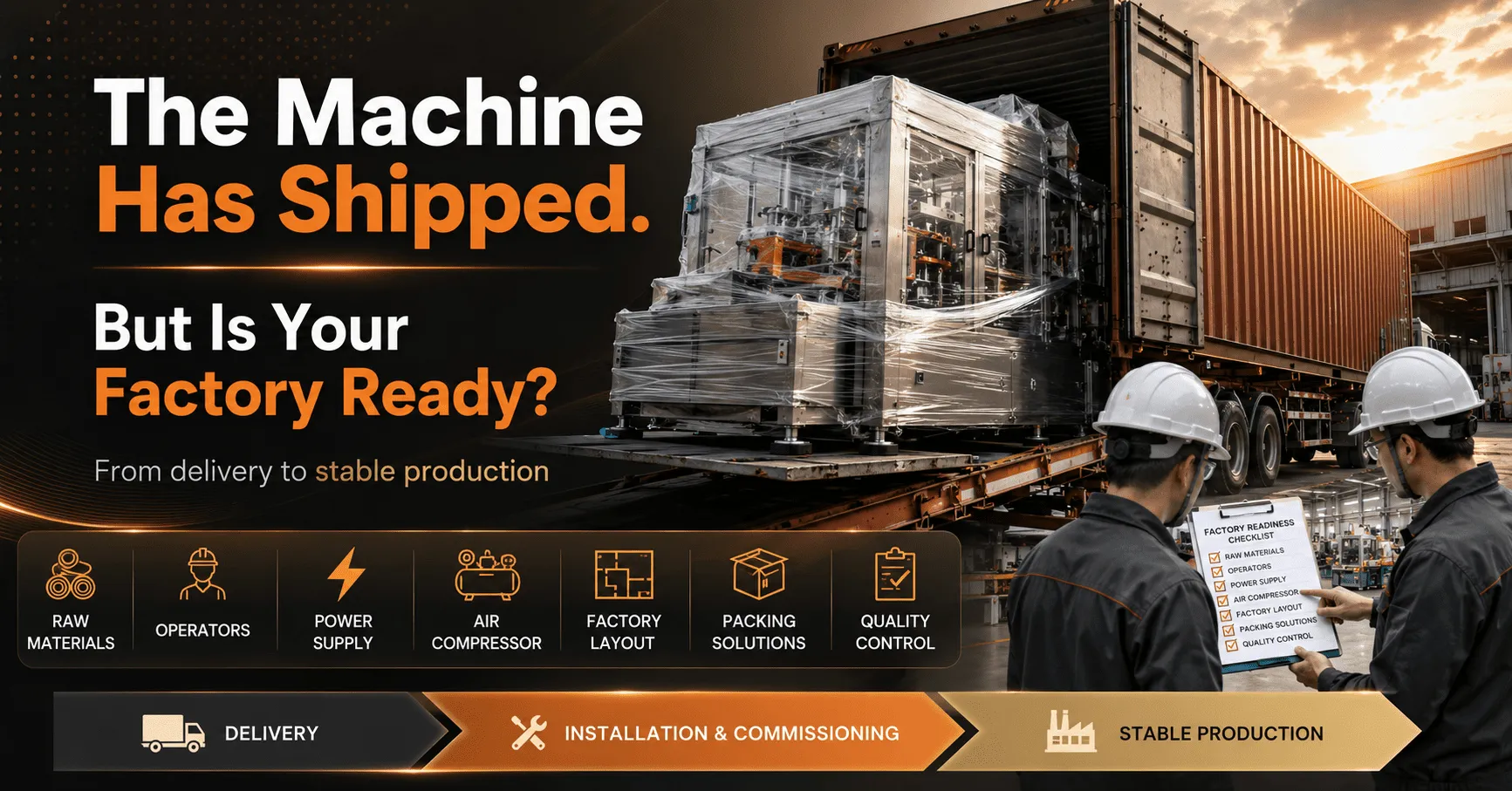
The Machine Has Shipped. Is Your Factory Ready for Stable Production?
Machine shipment is an important milestone, but it is not the end of a hygiene products machinery project. For many factories, the real challenge starts after the machine arrives.
Shipment Is Not the End of a Machinery Project
Many buyers feel relieved when their hygiene products machine is shipped. The machine is finished, the packing is completed, the container is loaded, and the documents are prepared. The project looks like it is moving forward.
But in real factory projects, shipment is not the end. It is the beginning of the next stage: installation, testing, training, adjustment, and stable production.
For a Diaper Manufacturing Machine, Sanitary Napkin Machine, Adult Diaper Machine, Pet Pad Machine, underpad machine, or wet wipes production line, the machine still needs to work under the buyer’s real factory conditions.
The better question is not only “Has the machine shipped?” The better question is “Is my factory ready to turn this machine into stable production?”
Why Factory Readiness Matters Before Installation
A common misunderstanding is thinking that production can start immediately after the machine arrives. In real projects, this is rarely that simple.
If raw materials are not ready, the machine cannot be tested properly. If operators are not trained, small problems may become daily downtime. If the factory layout is not prepared, installation may take longer. If power or air supply is unstable, commissioning may be delayed.
- Suitable raw materials
- Reasonable factory layout
- Stable electricity and air supply
- Trained operators
- Clear product size plan
- Suitable packing method
- Quality inspection standard
- Spare parts preparation
- Technical communication with engineers
Raw Materials: The First Step of Real Testing
For hygiene product machines, raw materials directly affect production stability. Even if the machine was tested successfully in the supplier’s factory, the buyer still needs to prepare suitable raw materials for local commissioning.
A diaper machine may require nonwoven, PE film, SAP, fluff pulp, frontal tape, side tape, elastic materials, hot melt glue, and packing film. A sanitary napkin machine may require nonwoven, absorbent paper, fluff pulp, SAP, PE film, release paper, hot melt glue, and packaging materials.
- Material specifications
- Material width
- Roll diameter
- Core diameter
- Glue type
- SAP quality
- PE film thickness
- Packaging film requirements
- Local supplier availability
- Backup material plan
For a new factory, raw material matching is often as important as machine selection. A good machine needs suitable materials to show its real production value.
Factory Layout, Power, and Air Supply Preparation
Factory preparation also affects installation speed and machine performance. Before the machine arrives, buyers should check whether the factory space is ready.
- Machine length and width
- Loading and unloading space
- Raw material storage area
- Finished product area
- Packing area
- Operator movement path
- Maintenance space
- Electrical cabinet position
- Air compressor location
- Future expansion possibility
Buyers should also confirm voltage, frequency, cable preparation, grounding, electrical safety, air compressor capacity, air pressure stability, factory floor condition, lifting tools, lighting, and ventilation.
Operator Training and Daily Production Control
Even a good machine needs trained operators. In many new factories, the first production problems do not come from the machine itself. They come from unfamiliar operation.
- Material loading
- Tension adjustment
- Glue system operation
- SAP control
- Core forming
- Cutting adjustment
- Size changeover
- Alarm handling
- Waste control
- Daily cleaning and basic maintenance
- Product inspection
When operators understand how to identify small problems early, the factory can solve issues faster, reduce downtime, and improve production efficiency.
Product Standards and Quality Inspection
A machine that can run is not enough. The real question is whether it can produce qualified products consistently. Before production starts, buyers should prepare clear product standards.
- Product size
- Product weight
- Absorbency requirement
- Appearance standard
- Cutting edge quality
- Glue bonding quality
- Elastic position
- Core position
- Packing quantity
- Packing appearance
- Rejection standard
Customers do not see the machine. They see the final diaper, sanitary napkin, underpad, pet pad, tissue, or wet wipes product. Stable production means producing qualified products again and again.
Spare Parts and After-Sales Communication
Before the machine arrives, buyers should also prepare spare parts and after-sales communication. A common mistake is leaving spare parts planning until production has already started.
- Spare parts list
- Wearing parts list
- Recommended stock quantity
- Maintenance schedule
- Operation manual
- Electrical drawings
- Troubleshooting method
- Engineer support contact
- Online communication channel
- After-sales response process
A reliable supplier should not disappear after shipment. They should support the buyer through the full process from delivery to stable production.
From Buying a Machine to Building a Factory
There is a big difference between buying a machine and building a factory. Buying a machine is only one step. Building a factory means creating a complete production system.
Delivery
The machine is shipped and arrives at the buyer’s factory.
Installation & Commissioning
Engineers, operators, materials, power, and air supply work together.
Stable Production
The factory builds qualified output, controlled waste, and repeatable operation.
A factory does not make profit from a shipment photo. It makes profit from stable output, qualified products, controlled waste, trained operators, and repeat orders from the market.
Why Welldone
Welldone is a hygiene products machinery manufacturer under Quanzhou Shimao Weiteng Import & Export Co., Ltd. With more than 18 years of industry experience and our own factory support, Welldone provides machinery and production solutions for baby care, female care, adult care, pet care, paper products, and wet wipes.
Our product range includes diaper manufacturing machines, baby diaper machines, baby pull-up pants machines, sanitary napkin machines, adult diaper machines, underpad machines, pet pad machines, wet wipes machines, tissue machines, packing machines, and related hygiene product raw materials.
Welldone supports buyers not only with machine supply, but also with practical project preparation, including machine configuration advice, product structure discussion, raw material matching suggestions, factory layout planning, installation preparation, operator training support, spare parts planning, commissioning guidance, and after-sales technical communication.
You can explore our related machine categories: Baby Care Machines, Female Care Machines, Adult Care Machines, Pet Care Machines, and Paper & Wet Wipes Machines.
Welldone is not a distributor or wholesaler. We are a manufacturer focused on helping buyers build stable, long-term hygiene product manufacturing capacity.
Related Machines
Diaper Manufacturing Machine
Suitable for producing baby diapers with stable absorbent core, accurate material control, and long-term production support.
Sanitary Napkin Machine
Suitable for producing sanitary napkins with stable core forming, clean cutting, accurate glue application, and consistent quality.
Adult Diaper Machine
Suitable for producing adult diapers for elderly care, medical care, nursing homes, and healthcare product markets.
Underpad Machine
Suitable for producing disposable underpads for hospitals, elderly care, baby care, and pet care applications.
Pet Pad Machine
Suitable for producing pet pee pads with stable absorbency, leakage control, and flexible size options.
Wet Wipes Machine
Suitable for producing wet wipes for hygiene, cleaning, baby care, personal care, and household applications.
Tissue Machine
Suitable for producing facial tissue, napkins, toilet tissue, handkerchief tissue, and related paper products.
Conclusion
Machine shipment is an important milestone, but it is not the end of a hygiene products machinery project. After shipment, the real work continues.
The machine needs to be installed. Operators need to be trained. Raw materials need to be matched. Factory layout needs to support production flow. Power and air supply need to be ready. Product standards need to be clear. Spare parts need to be prepared.
Real project value does not come from delivery alone. It comes from stable output, qualified products, controlled waste, trained operators, and long-term market orders.
For buyers, the key question is not only “When will the machine arrive?” The more important question is: “Is my factory ready for stable production?”
FAQ
1. What should buyers prepare before a hygiene products machine arrives?
Buyers should prepare raw materials, factory layout, power supply, air compressor, operators, spare parts, product standards, installation tools, and communication with the supplier’s engineers.
2. Can production start immediately after the machine arrives?
Not always. Production depends on installation, commissioning, raw material matching, operator training, and product testing. If preparation is incomplete, production may be delayed.
3. Why are raw materials important for machine commissioning?
Raw materials affect machine stability, tension control, glue bonding, absorbent core forming, cutting accuracy, packing performance, and final product quality.
4. Why is operator training important for hygiene product production?
Operator training helps reduce daily mistakes, downtime, material waste, and product quality problems. A good machine still needs trained operators to run stably.
5. Can Welldone support factory preparation before machine installation?
Yes. Welldone can support buyers with machine configuration, raw material matching, factory layout suggestions, installation guidance, operator training, spare parts planning, and after-sales technical support.
Preparing Your Factory After Machine Shipment?
If you are planning a hygiene products production project, Welldone can help you prepare for machine installation, raw material matching, operator training, spare parts planning, and stable production.
Contact Welldone