Installation Is Not Just Putting the Machine in Place: Why Production Know-How Transfer Matters

On June 22, 2026
Comments Off on Installation Is Not Just Putting the Machine in Place: Why Production Know-How Transfer Matters
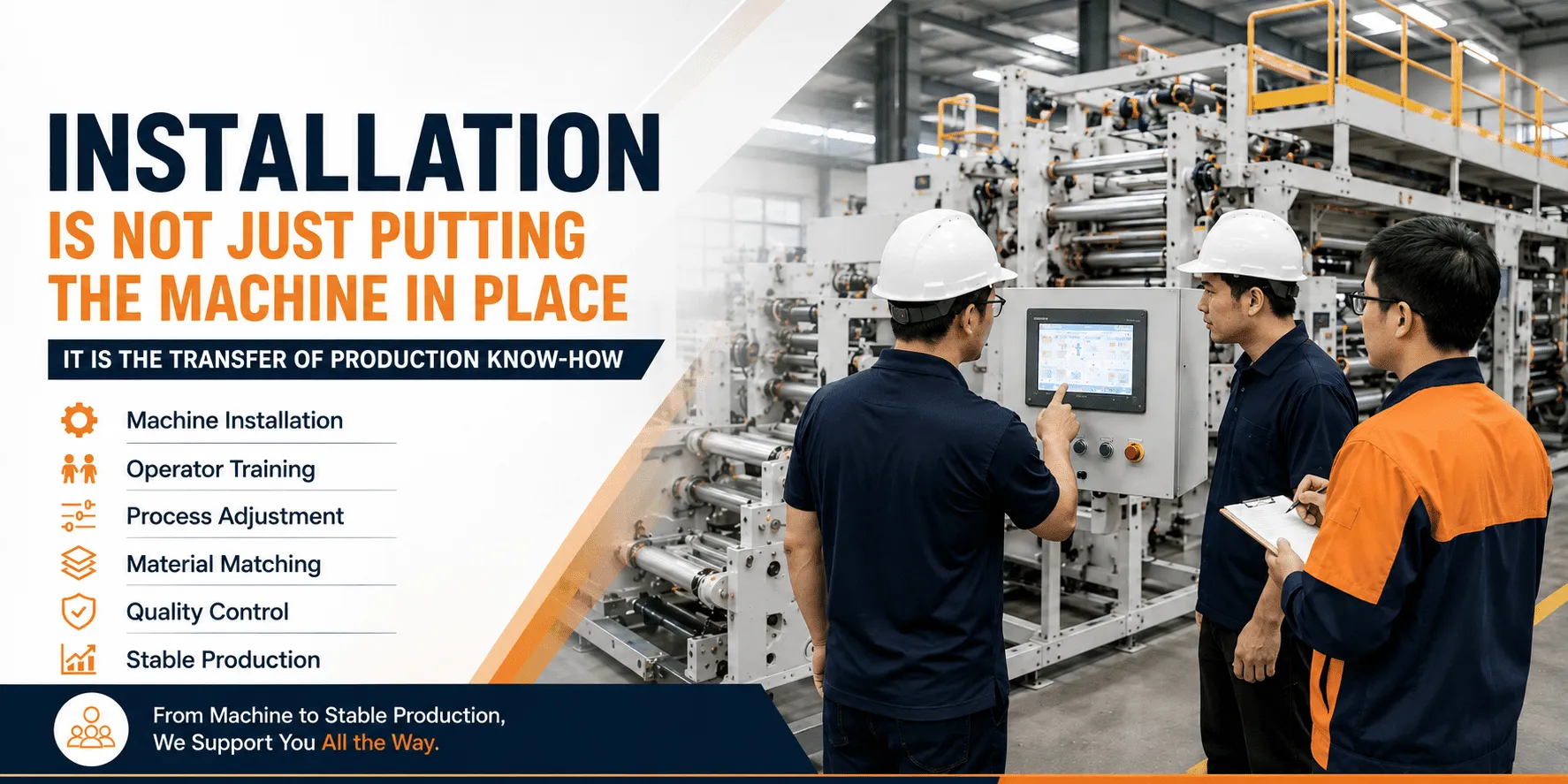
```
Production Logic
Commissioning Stage
Operator Capability
Material Matching
Quality Control
Real Handover
Pre-Installation Planning
Installation Is Not Just Putting the Machine in Place: Why Production Know-How Transfer Matters
Machine installation is not only about assembling equipment. In hygiene product manufacturing, installation is the stage where the project moves from supplier-side testing to buyer-side production.
Why Machine Installation Is More Than Mechanical Assembly
Many buyers think machine installation is mainly about putting the equipment in place. The machine arrives at the factory. The engineer comes to the site. The machine is unpacked, positioned, connected, and started. If the machine can run, the installation seems successful.
But in real hygiene product manufacturing projects, installation is much more than mechanical assembly. For a Diaper Manufacturing Machine, Sanitary Napkin Machine, Adult Diaper Machine, Pet Pad Machine, wet wipes machine, or tissue machine, installation is the stage where the project moves from supplier-side testing to buyer-side production.
Before shipment, the machine may run well in the supplier’s factory. The supplier may use familiar raw materials, experienced operators, stable workshop conditions, and well-prepared settings.
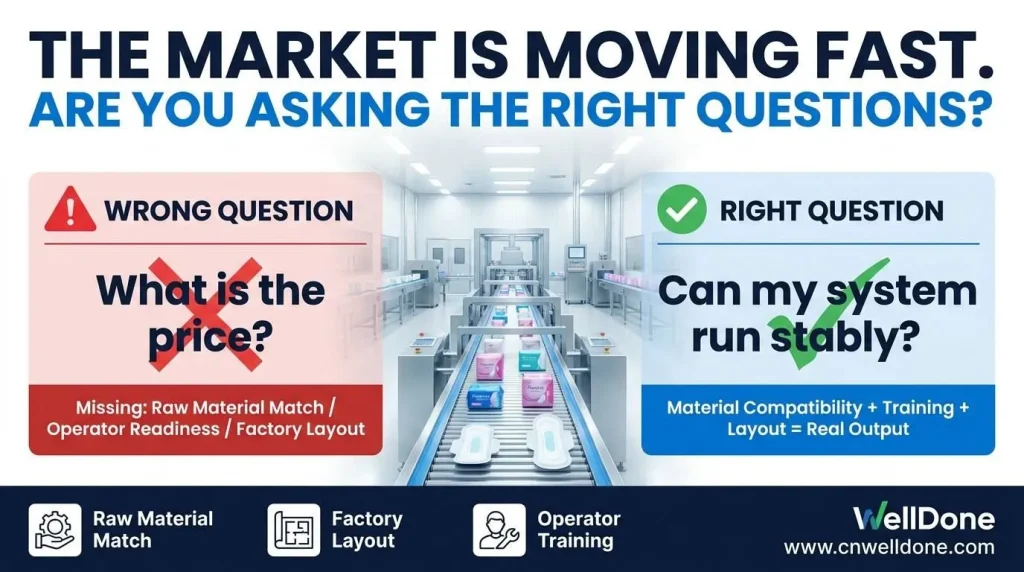
But after arrival, the machine needs to work under the buyer’s real factory conditions: local raw materials, local operators, local power and air supply, real factory layout, real product sizes, real packing plan, real quality standards, and real production pressure.
Installation should be seen as a production know-how transfer, not only a machine setup process.
From Machine Running to Stable Production
There is a big difference between “machine running” and “stable production.” A machine may run during installation, but stable production requires much more.
Machine running means the equipment can start, materials can pass through the line, and products can be formed. Stable production means the factory can continuously produce qualified products with controlled waste, trained operators, suitable materials, clear standards, and repeatable adjustment methods.
- Stable material feeding
- Correct tension control
- Suitable glue application
- Stable SAP or absorbent core forming
- Accurate cutting and sealing
- Qualified product appearance
- Controlled waste rate
- Smooth packing process
- Trained operators
- Clear inspection standards
- Daily maintenance routine
- Fast troubleshooting ability
Installation should not be judged only by one test run. It should be judged by whether the buyer’s team is becoming ready for stable production.
What Really Happens During Installation and Commissioning
Installation and commissioning are not just technical actions. They are the first real test of the full production system.
- Machine positioning
- Electrical connection
- Air supply connection
- Safety inspection
- Material loading
- Glue system setup
- Tension adjustment
- Product size setting
- Cutting adjustment
- Waste removal
- Packing connection
- Product quality inspection
- Operator training
- Troubleshooting practice
Installation is where machine design meets factory reality. The local raw materials may need different tension settings. The glue may need temperature adjustment. The product size may require fine tuning. The packing section may need better rhythm matching.
A responsible installation process is not only about making the machine run quickly. It is about helping the factory understand what settings are needed, why these settings matter, and how to repeat them during daily production.
Why Operator Training Decides Long-Term Production Stability
A hygiene product machine cannot run well only because it is well designed. It also needs trained operators. In many new factories, the first production problems are not caused by major machine failure. They are caused by unfamiliar operation.
- Material loading method
- Machine safety operation
- Touchscreen operation
- Tension control
- Glue system operation
- SAP or absorbent core adjustment
- Cutting system adjustment
- Product size changeover
- Alarm handling
- Waste control
- Daily cleaning
- Basic maintenance
- Product quality inspection
- Packing coordination
A successful installation should not end with only the engineer knowing how to run the machine. It should end with the buyer’s team knowing how to operate the production line step by step.
Raw Materials, Machine Settings, and Process Adjustment
Installation is also the stage where raw materials and machine settings are matched in the buyer’s factory. This is important because the same machine may perform differently with different materials.
- Nonwoven affects tension control, softness, surface quality, and product appearance.
- PE film affects leakage control, sealing, product structure, and backsheet stability.
- SAP affects absorbency, core stability, and product performance.
- Fluff pulp affects core forming and product thickness.
- Hot melt glue affects bonding, lamination, edge sealing, and product cleanliness.
- Release paper affects sanitary napkin positioning and user experience.
- Packing film affects final appearance and packing efficiency.
During installation, the engineer may need to adjust unwinding tension, glue temperature, glue amount, cutting pressure, SAP dosage, core forming setting, elastic tension, folding position, sealing strength, packing speed, and inspection standards based on real materials.
If the buyer’s materials are different from the supplier’s test materials, new adjustment is normal. This does not always mean the machine has a problem. It means the machine needs to be matched with real production materials.
Quality Standards Must Be Built During Installation
A machine that can run is not enough. The final product must meet market requirements. This is why quality standards should be built during installation and commissioning.
- Product size consistency
- Product weight stability
- Absorbent core position
- SAP distribution
- Product thickness
- Glue bonding quality
- Cutting accuracy
- Sealing quality
- Elastic position
- Wing folding stability
- Release paper position
- Surface cleanliness
- Packing appearance
- Rejected product quantity
Quality standards should be discussed during installation because this is when operators first learn how to judge the product. A good supplier should help buyers understand common product defects, possible causes, and adjustment methods.
The Real Handover: From Supplier Engineer to Local Team
The real handover happens when the buyer’s team can operate the machine with confidence. This does not mean they will never need support again. But it means they understand the basic production logic.
- Machine operation training
- Product structure explanation
- Material loading guidance
- Adjustment method explanation
- Common problem analysis
- Daily maintenance instructions
- Spare parts explanation
- Safety operation training
- Quality inspection method
- Communication process after installation
The supplier’s engineer may stay for a limited time. But the buyer’s team will run the factory every day. That is why the installation stage should focus on knowledge transfer.
A reliable supplier should not only adjust the machine themselves. They should teach the buyer’s team why they adjust it, how they adjust it, and what signs to watch during production.
Why Installation Planning Should Start Before Shipment
Good installation does not start when the machine arrives. It starts before shipment. Before the machine reaches the buyer’s factory, several things should already be prepared.
- Factory layout
- Foundation and floor condition
- Power supply
- Air compressor
- Installation tools
- Lifting equipment
- Raw materials
- Glue and packing materials
- Operator team
- Spare parts storage
- Quality inspection tools
- Installation schedule
- Engineer communication plan
If these preparations are not ready, installation may be delayed. The smoother the preparation, the faster the buyer can move from machine arrival to stable production.
Installation Is a Transfer of Production Capability
The value of installation is not only one successful test run. The real value is helping the buyer’s team understand how to operate, adjust, inspect, maintain, and improve the production line.
Machine Setup
Positioning, connection, safety check, initial running, and basic commissioning.
Process Adjustment
Material matching, tension control, glue adjustment, product size setup, and quality inspection.
Team Handover
Operator training, troubleshooting logic, daily maintenance, and stable production capability.
Why Welldone
Welldone is a hygiene products machinery manufacturer under Quanzhou Shimao Weiteng Import & Export Co., Ltd. With more than 18 years of industry experience and our own factory support, Welldone provides machinery and production solutions for baby care, female care, adult care, pet care, paper products, and wet wipes.
Our product range includes diaper manufacturing machines, baby diaper machines, baby pull-up pants machines, sanitary napkin machines, adult diaper machines, underpad machines, pet pad machines, wet wipes machines, tissue machines, packing machines, and related hygiene product raw materials.
Welldone supports buyers not only with machine supply, but also with practical project implementation. We can support buyers with machine configuration advice, product structure discussion, raw material matching suggestions, factory layout planning, installation preparation, commissioning guidance, operator training, process adjustment support, quality inspection guidance, spare parts planning, after-sales technical communication, and one-stop solutions from machine to raw materials.
You can explore our related machine categories: Baby Care Machines, Female Care Machines, Adult Care Machines, Pet Care Machines, and Paper & Wet Wipes Machines.
Welldone is not a distributor or wholesaler. We are a manufacturer focused on helping buyers build stable, long-term hygiene product manufacturing capacity.
Related Machines
Diaper Manufacturing Machine
Suitable for producing baby diapers with stable absorbent core, accurate material control, flexible size options, and long-term production support.
Sanitary Napkin Machine
Suitable for producing sanitary napkins with stable core forming, clean cutting, accurate glue application, and consistent product quality.
Adult Diaper Machine
Suitable for producing adult diapers for elderly care, medical care, nursing homes, and healthcare product markets.
Underpad Machine
Suitable for producing disposable underpads for hospitals, elderly care, baby care, and pet care applications.
Pet Pad Machine
Suitable for producing pet pee pads with stable absorbency, leakage control, and flexible size options.
Wet Wipes Machine
Suitable for producing wet wipes for hygiene, cleaning, baby care, personal care, and household applications.
Tissue Machine
Suitable for producing facial tissue, napkins, toilet tissue, handkerchief tissue, and related paper products.
Conclusion
Machine installation is not just putting the machine in place. It is the stage where the buyer’s factory starts to receive production know-how.
A successful installation should not only make the machine run. It should help the buyer’s team understand materials, settings, product standards, quality inspection, adjustment logic, daily maintenance, and stable production requirements.
Long-term profit does not come from a machine that only runs once during commissioning. It comes from stable output after installation.
Before judging installation success, buyers should ask whether local operators understand the machine, whether they can adjust materials correctly, whether they can identify common product defects, whether they can control waste, whether packing can match the main machine, and whether the team can solve small problems after the engineer leaves.
If the answer is yes, then installation has created real value.
FAQ
1. Is machine installation only about assembling equipment?
No. Machine installation is not only mechanical assembly. It also includes commissioning, material matching, operator training, process adjustment, quality inspection, and production know-how transfer.
2. Why is operator training important during machine installation?
Operator training helps the buyer’s team understand machine operation, material loading, tension adjustment, glue system control, product inspection, troubleshooting, and daily maintenance. This directly affects long-term production stability.
3. Can a machine run successfully during installation but still face problems later?
Yes. A machine may run during installation, but if operators are not trained, materials are unstable, packing is not matched, or quality standards are unclear, daily production may still face problems later.
4. What should buyers prepare before machine installation?
Buyers should prepare factory layout, power supply, air compressor, raw materials, glue, packing materials, installation tools, lifting equipment, operator team, spare parts storage, and quality inspection tools.
5. Can Welldone support machine installation and production training?
Yes. Welldone can support buyers with installation preparation, commissioning guidance, operator training, material matching, process adjustment, quality inspection support, spare parts planning, and after-sales technical communication.
Need Support from Machine Installation to Stable Production?
If you are planning a hygiene products production project, Welldone can help you prepare installation, commissioning, operator training, material matching, process adjustment, quality inspection, and long-term production support.
Contact Welldone