Pet Pee Pad vs Hospital Under-Pad: What Changes on the Line

Pet Pee Pad vs Hospital Under-Pad: What Actually Changes on the Line
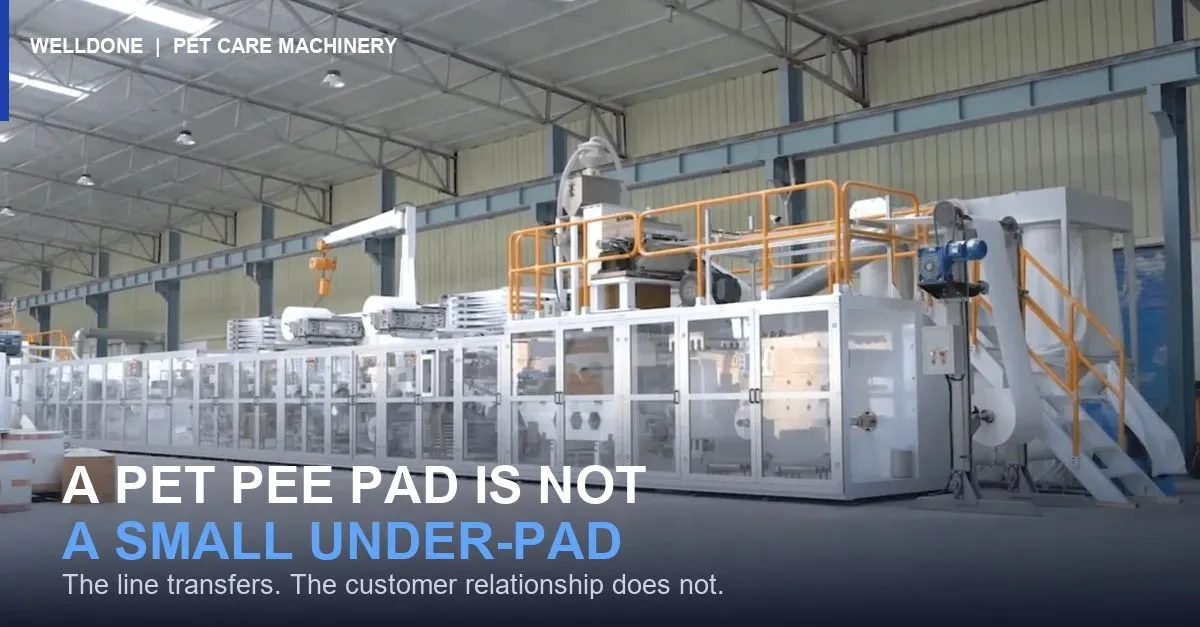
A pet pee pad and a hospital under-pad can come off almost the same machine. Same nonwoven web, same fluff core, same embossing station, same cutting logic. On paper the transfer looks trivial.
Then the first quote goes out. One buyer asks for a tender certificate and a batch traceability record. The other asks what the pad looks like when a shopper picks up the bag in a pet store. Same equipment. Completely different conversation.
The line transfers. The customer relationship does not.
Over the last two years we have had a steady stream of enquiries from factories that already run under-pad lines for hospitals and elderly care. Most of them open the same way: we already make this product, we just want to add a pet version.
They are technically correct. The converting process really is close. What catches them out is everything after the machine.
Hospital and institutional under-pads are sold into tenders. The specification is written before you quote. Absorbency, basis weight, sterility handling, batch documentation — the buyer already knows what they want and is checking whether you comply. Price matters, but compliance decides whether you are even allowed to bid.
Pet pee pads are sold to brand owners. There is no tender. There is a brand manager who needs a product that looks right on a shelf, survives shipping to a distribution centre, and can be re-specified next season if their marketing changes. They are not checking compliance. They are checking whether you can follow their spec, hit their carton, and do it again in three months with a different print and a different size.
The line transfers. The customer relationship does not.
My own view, after sitting in on a fair number of these projects: the factories that struggle are almost never the ones with a technical problem. They are the ones that bought a line sized for one long institutional run and then discovered the pet business wants six short runs a month.
Where the two products actually diverge
Strip away the marketing and there are four practical differences that show up on the shop floor.
| Dimension | Hospital / institutional under-pad | Pet pee pad |
|---|---|---|
| Who writes the spec | The buyer, before you quote | The brand owner, negotiated with you |
| Order pattern | Fewer, longer runs against a contract | More frequent, shorter runs by SKU |
| What is inspected | Absorbency, documentation, compliance | Appearance, embossing, edge quality, pack presentation |
| What kills the deal | Failing a specification clause | Missing a launch window or an inconsistent-looking pad |
Notice that only one of those rows is about the machine. The other three are about how often you change over, how tightly you hold appearance, and how fast you can respond. That is where the equipment decision actually gets made.
Speed: why m/min and pcs/min are not the same conversation
Flat products like pee pads and under-pads are quoted in metres per minute, not pieces per minute. This trips people up constantly, and it is worth being blunt about why.
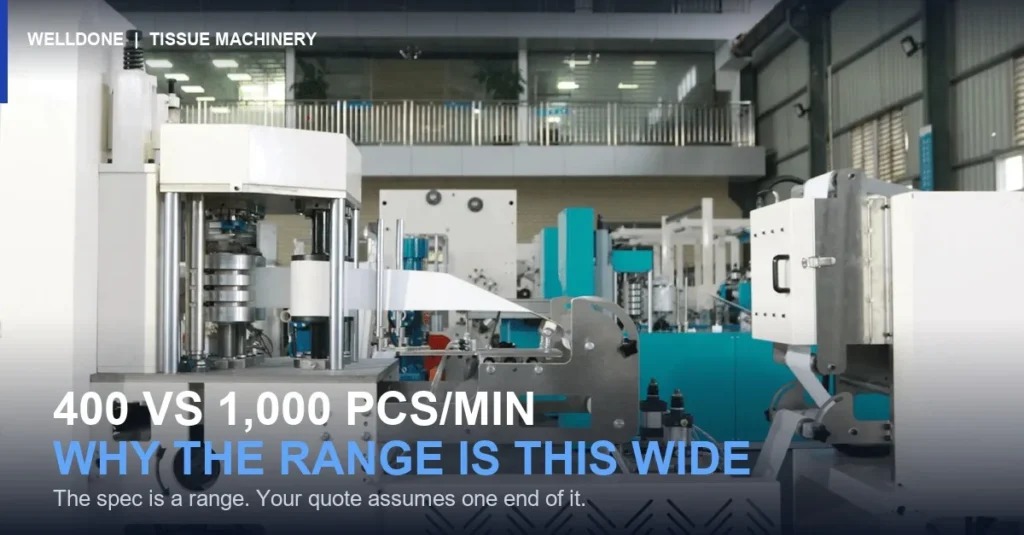
A diaper line makes a discrete article, so pieces per minute is the natural unit. A pad line makes a continuous web that is cut at the end, so the meaningful number is how fast the web travels. Convert one to the other and you need the pad length — a 600 mm pad and a 900 mm pad running at the same web speed give you very different piece counts.
Welldone pet pad lines are specified as design speed 150–250 m/min, stable speed 150–230 m/min. The gap between those two numbers is the honest part of the spec. Design speed is what the mechanics permit. Stable speed is what you can hold across a shift with a real operator and a real nonwoven batch.
A practical check when comparing quotes: if a supplier gives you one speed figure and no distinction between design and stable, ask which one it is. If the answer is vague, assume it is design speed and plan your capacity on something lower.
Unwinding and tension at 230 m/min
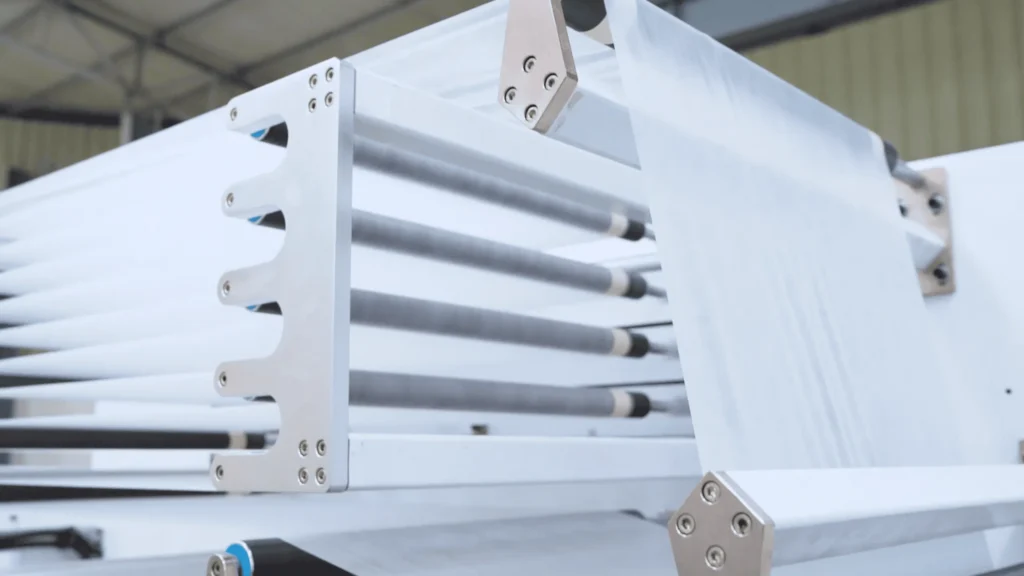
Tension control gets talked about as a quality issue. On a pad line it is mostly a waste issue.
The nonwoven roll gets lighter as it depletes. If the unwind does not compensate, tension climbs through the back half of the roll. On a hospital under-pad that often passes — the product is inspected for absorbency, not for whether the top sheet is very slightly stretched. On a pet pad going into a printed retail bag, a stretched top sheet changes how the embossing reads, and the brand owner notices in the sample carton.
This is one reason the drive tier matters more for pet work than people expect. Full servo lines hold web position to ±0.02 mm; semi servo to ±0.05 mm; mechanical to ±0.1 mm. For an institutional pad, ±0.1 mm is frequently acceptable. For a retail pad where the embossing pattern has to sit square inside a printed border, it often is not.
Embossing and the shelf appeal problem
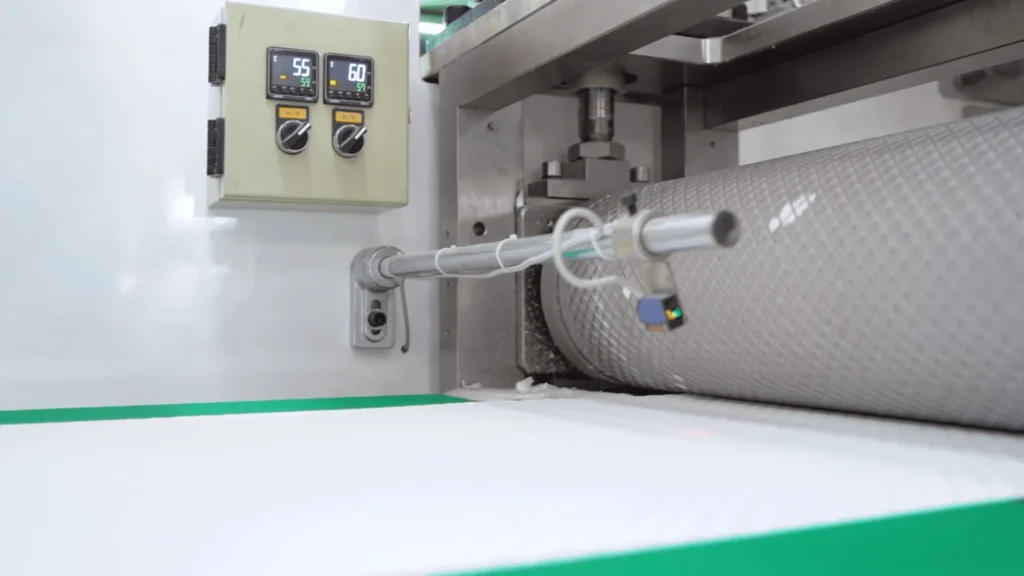
Embossing on an institutional pad is functional. It bonds layers and helps distribute liquid. Nobody outside the factory ever looks at it.
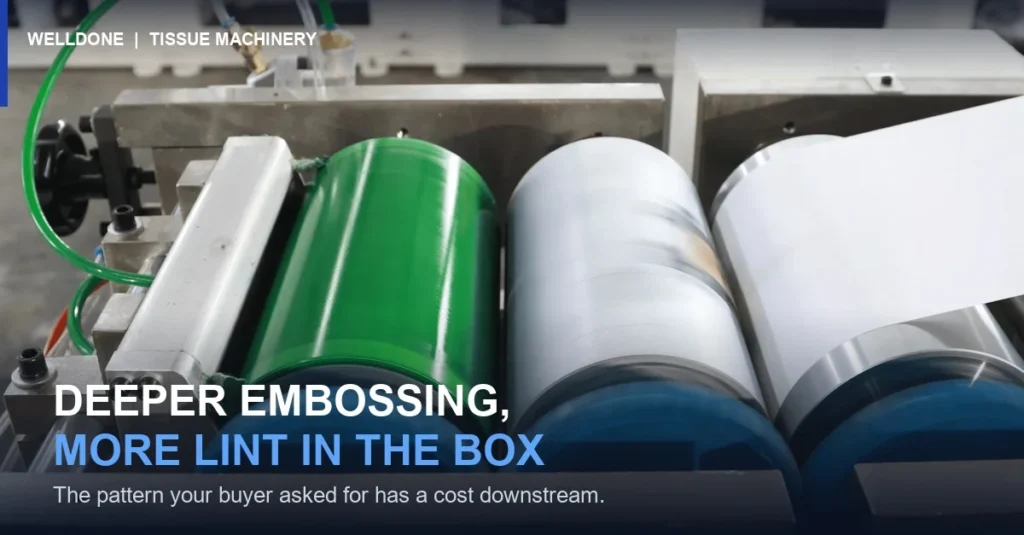
Embossing on a retail pet pad is doing two jobs at once. It still has to bond, but it is also the visual signature of the product. The brand owner approved a sample with a particular pattern depth and sheen. If your temperature drifts a few degrees across a shift and the pattern flattens, the pad still absorbs perfectly and still gets rejected.
The failure mode I see most often is an operator compensating for a temperature drop by increasing pressure. It restores pattern depth in the short term and produces a glazed, slightly hardened surface that the buyer flags in the next shipment. Two variables, one adjustment, and the mismatch only becomes visible after the container has shipped.
Cutting precision and edge quality
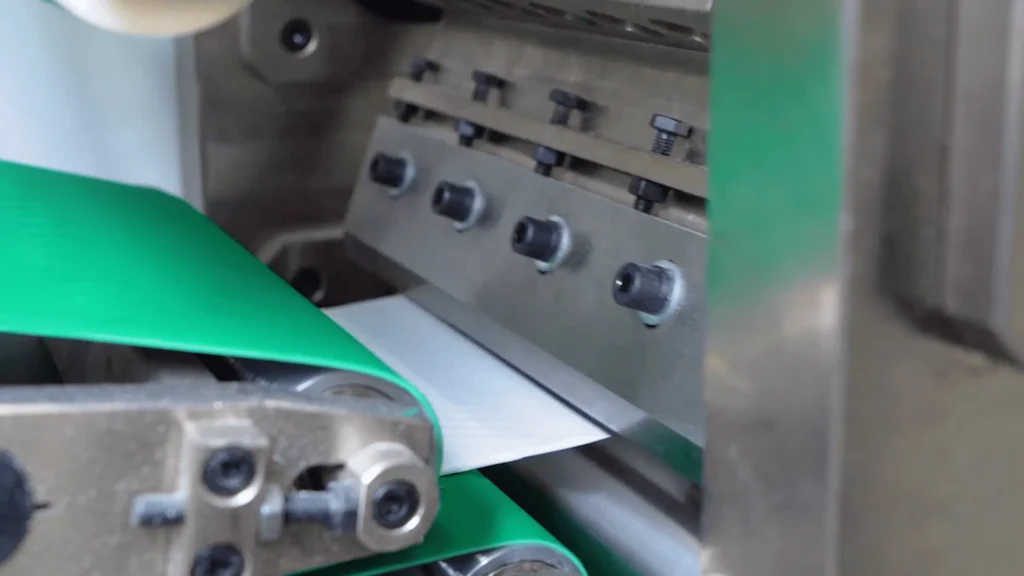
A frayed edge on a hospital pad packed 100 to a plain carton is a non-event. The same edge on a pad folded into a clear retail bag is the first thing a shopper sees.
Blade wear is gradual, which is exactly what makes it dangerous. There is no moment where the cut suddenly fails. It degrades over thousands of metres until someone in QC notices the edges are no longer crisp, and by then you have produced a large quantity of technically-functional, commercially-unsellable product.
Welldone pet pad lines are specified at ≥98% passing rate. That figure assumes the consumables are maintained on schedule. It is a machine capability, not a guarantee that covers a blade left in service too long.
Size range and the changeover trap
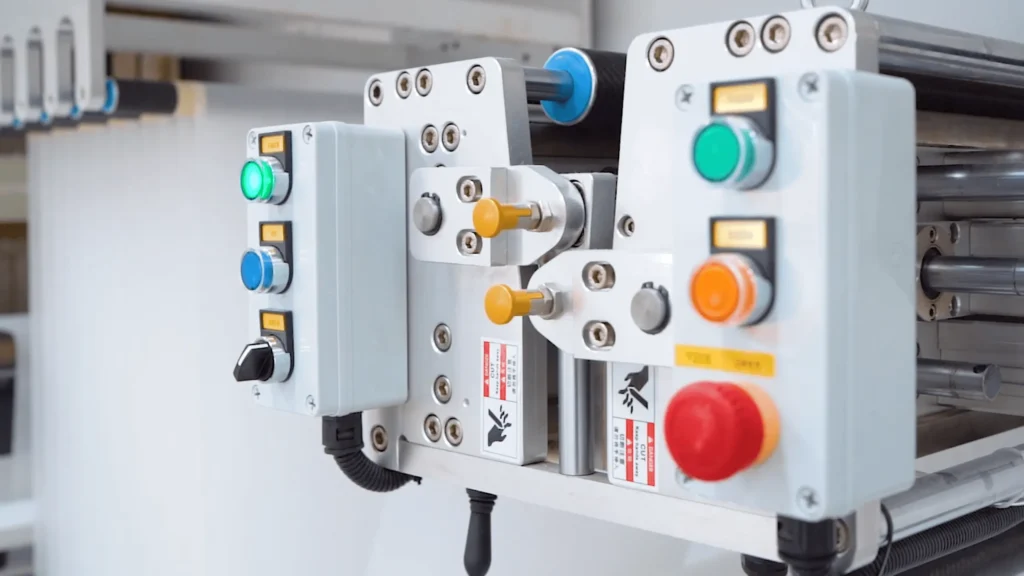
Standard pet pad sizes on the Welldone platform are 400×600 mm, 600×600 mm and 600×900 mm. Changeover between them is specified at under 60–90 minutes depending on configuration.
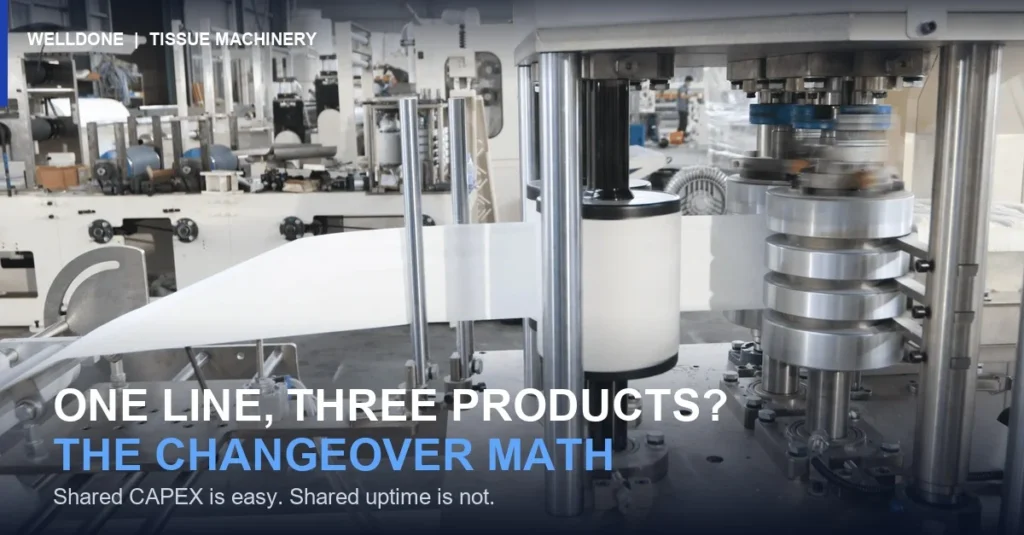
Here is the part that gets underestimated. An institutional contract might mean two or three changeovers a month. A pet brand portfolio with three sizes and two private-label customers can mean six to eight. If each one costs 90 minutes of stopped line plus the start-up waste before the product stabilises, that is a meaningful slice of your month that never appears in the speed figure you compared quotes on.
This is the single strongest argument for the higher drive tier on pet work, and it has nothing to do with top speed. A full servo line stores size recipes and repositions electronically. A mechanical line needs physical adjustment and a re-verification run. On a long institutional contract that difference barely registers. On a multi-SKU pet portfolio it compounds every month.
The misconception that costs money
I understand why so many factories assume pet is the easy adjacent market. The product is simpler than a pull-up, the tolerances feel more forgiving, and the raw materials are already in the warehouse. From a pure converting standpoint that reasoning holds.
Where it breaks is the assumption that a line specified for institutional work will behave the same way under retail demand. It will not, for one structural reason: institutional buyers optimise for compliance and pet brand owners optimise for turnaround. Compliance rewards a stable, long-running configuration. Turnaround rewards a line that can be reconfigured quickly and repeatably.
Those are different machines, or at least different specifications of the same machine. Buying for the first and then selling into the second is the mismatch that shows up six months later as missed launch windows.
Choosing the drive tier
Welldone offers three tiers on the pet care platform. The honest way to choose is by order pattern, not by budget.
| Tier | Speed | Positioning | Suits |
|---|---|---|---|
| Full servo | Design 250 m/min · Stable 230–250 m/min | ±0.02 mm | Multi-SKU retail brands, frequent changeover, tight appearance control |
| Semi servo | Design 200–230 m/min · Stable 200 m/min | ±0.05 mm | Mixed portfolio, moderate changeover frequency |
| Mechanical | Design 200 pcs/min · Stable 150–180 pcs/min | ±0.1 mm | Long single-SKU runs, cost-led institutional supply |
Note on units: the mechanical tier is quoted in pieces per minute while the servo tiers are quoted in metres per minute. When you compare tiers, convert to a common basis using your actual pad length before drawing conclusions — the raw numbers are not directly comparable.
Line footprint runs 30–38 m × 6.0–8.0 m × 4.0 m depending on configuration, at 380 V, 250–450 kW. Worth confirming your building height and incoming supply early; on more than one project the electrical upgrade turned out to be the long-lead item, not the machine.
Why Welldone
Welldone has manufactured hygiene converting equipment in Jinjiang, Fujian since 2008, incorporated in 2013, supplying baby care, female care, adult care and pet care lines to factories across Asia, Africa, the Middle East and Latin America.
Tiered specification
Three drive levels on the same platform, so the line is matched to your order pattern rather than to a single catalogue speed.
Changeover-first design
Size changes specified under 60–90 minutes, with distributed station control that keeps the time predictable across different operators.
Engineering support
Commissioning, operator training and remote diagnostics from the same team that builds the line, not a subcontracted installer.
Related machines
Conclusion
The machinery question in pet care is easier than most buyers expect. The commercial question is harder. A line that performs beautifully on a twelve-month institutional contract can look like a bad purchase the moment you are running six SKUs for two private-label brands.
So before comparing speed figures, work out one number from your own order book: how many size or SKU changes will this line handle in a typical month, and what does an hour of stopped line actually cost you?
If that number is small, buy on speed. If it is not, buy on changeover.
Frequently asked questions
Can one line make both pet pee pads and hospital under-pads?
Technically yes — the converting process is close and the size ranges overlap. The practical constraint is changeover frequency. If both product families run on one line, budget for the combined number of size changes rather than assuming the institutional pattern.
Why is pad line speed quoted in m/min instead of pcs/min?
Flat pads are produced as a continuous web and cut at the end, so web speed is the meaningful measure. Piece output depends on pad length. Our pet care platform overview lists both bases; convert using your own pad size before comparing suppliers.
What is the difference between design speed and stable speed?
Design speed is the mechanical ceiling. Stable speed is what the line holds across a production shift with normal material variation and normal operator intervention. Plan capacity on stable speed.
How long does a size changeover take?
Specified at under 60–90 minutes depending on configuration and drive tier. Full servo lines recall stored recipes electronically; mechanical lines require physical adjustment and a verification run, which widens the spread between operators.
Do I need full servo for pet pads?
Not always. It depends on how many SKUs you run and how tightly your brand customers control appearance. Long single-SKU institutional supply is well served by the mechanical or semi servo tier. Multi-SKU retail work is where full servo positioning and recipe recall pay for themselves.
Planning a pet care line?
Send us your SKU list, target sizes and expected monthly changeover count. We will come back with a tier recommendation and a realistic stable-speed figure — not a catalogue number.
Website: www.cnwelldone.com
Email: welldone@cnwelldone.com