Canton Fair Hygiene Machinery Meeting Checklist | Welldone

What to Bring to Booth 19.1I29 for a Hygiene Machinery Meeting
A buyer arrives at a machinery booth and says, "I need a diaper machine." Thirty minutes later, both sides have discussed speed, servo motors and price, but no one can define the product the line must make.
That is not a quotation meeting. It is an introduction.
140th Canton Fair Hygiene Machinery Sourcing Series - Part 1 of 6
Part 1 - this article: prepare the technical input for Booth 19.1I29.
Part 2: compare hygiene production-line projects.
Part 3: separate design speed from qualified output.
Part 4: compare full-servo and semi-servo scope.
Part 5: convert a booth discussion into material trials and FAT.
Part 6: turn the meeting record into a formal proposal.
Part 1 - this article: prepare the technical input for Booth 19.1I29.
Part 2: compare hygiene production-line projects.
Part 3: separate design speed from qualified output.
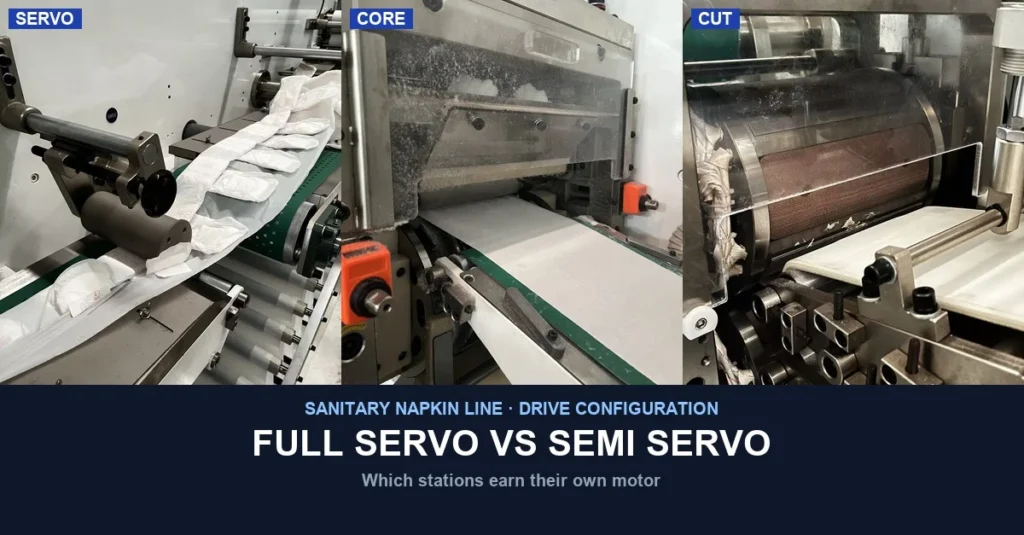
Part 4: compare full-servo and semi-servo scope.
Part 5: convert a booth discussion into material trials and FAT.
Part 6: turn the meeting record into a formal proposal.
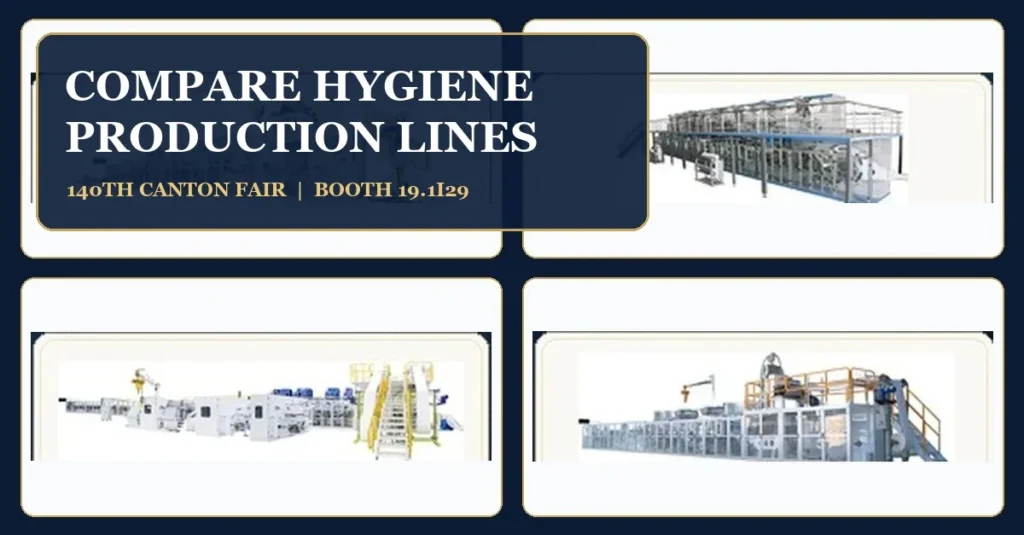
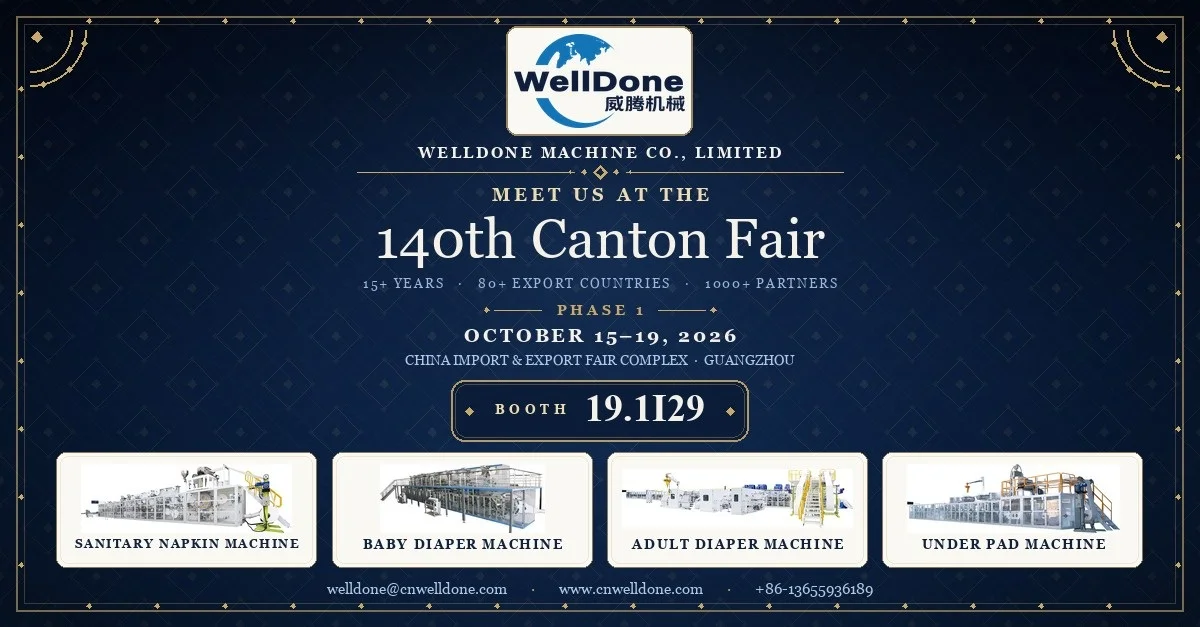
Confirmed event information: Welldone will attend Phase 1 of the 140th Canton Fair, October 15-19, 2026, at the China Import & Export Fair Complex in Guangzhou. Meet the team at Booth 19.1I29. This article concerns hygiene production machinery, not finished consumer products.
Why a machinery meeting stalls after the first question
The product name is not a machine specification. "Baby diaper," "sanitary napkin," "adult diaper" and "underpad" identify product families, but each family contains different core shapes, material routes, sizes, sealing methods and packing formats.
Actually, the first technical decision happens before anyone opens a machine catalogue. The supplier has to understand the finished product and the factory task. Without that input, a line drawing is only a generic route.
Bring evidence of the product you want to make. Do not ask the booth team to reconstruct it from a name.
Bring a physical sample - and let it be opened
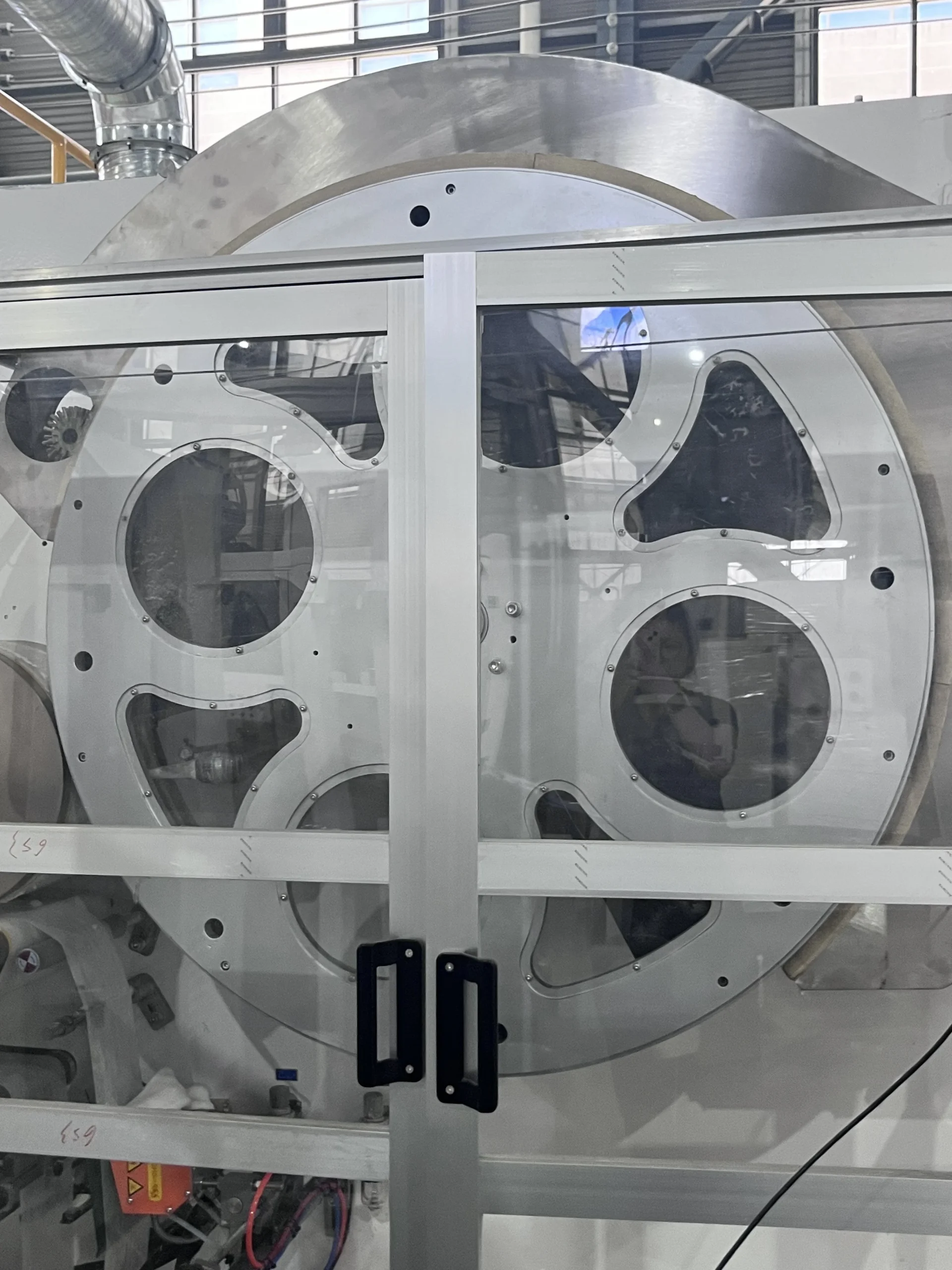
Bring at least three samples of each target SKU: one intact, one opened for layer inspection and one available for measurement. Mark the front, back, waist, core boundary, leakage-cuff position and any printed registration point.
The real question is not whether the booth team recognizes the product category. It is whether the team can map every visible feature to a forming, feeding, laminating, cutting or sealing station.
If the sample cannot be cut open, photographed and measured, the technical meeting will stay at brochure level.
Turn the opened sample into a working BOM
A bill of materials does not need to be perfect before the fair. It does need to identify each layer, its role and the data still missing.
| Material input | Bring this evidence | Machine question it answers |
|---|---|---|
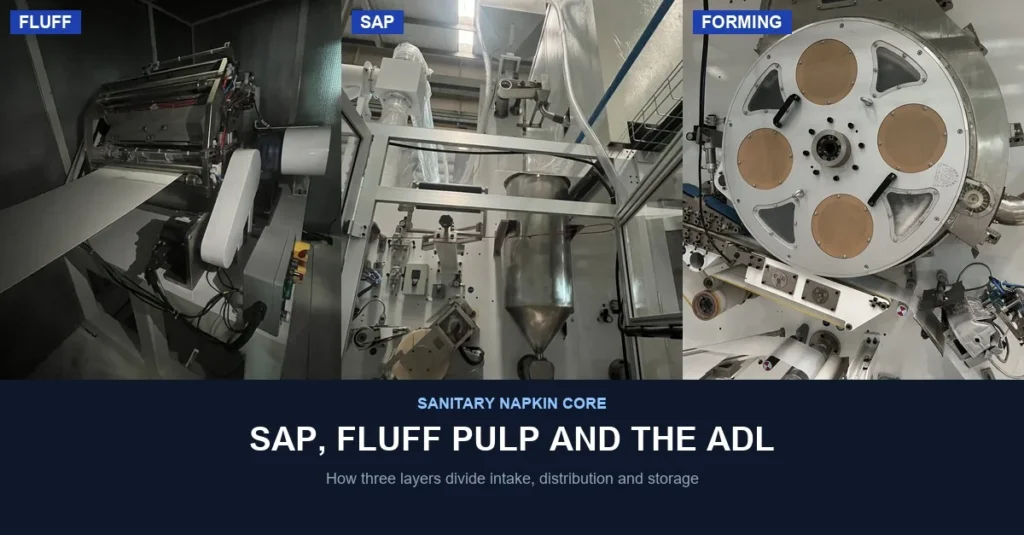
| Fluff pulp and SAP | Supplier data sheet, target core weight and sample dissection | Crusher, dosing and forming route |
| Top sheet and acquisition layer | GSM, width, roll diameter and sample position | Unwind, web guiding and registration |
| Back sheet film | Width, thickness, print repeat and tension behavior | Unwind control, print registration and lamination |
| Elastic and spandex | Grade, strand count, target zone and supplier data | Feeding paths, pre-stretch control and bonding |
| Adhesive | Grade, application area and supplier recommendation | Glue unit, gun layout and temperature window |
A material name alone is not enough. Two nonwovens with the same GSM can behave differently under tension; two SAP grades can require different dosing and forming adjustments.
Define the launch SKUs before discussing changeover
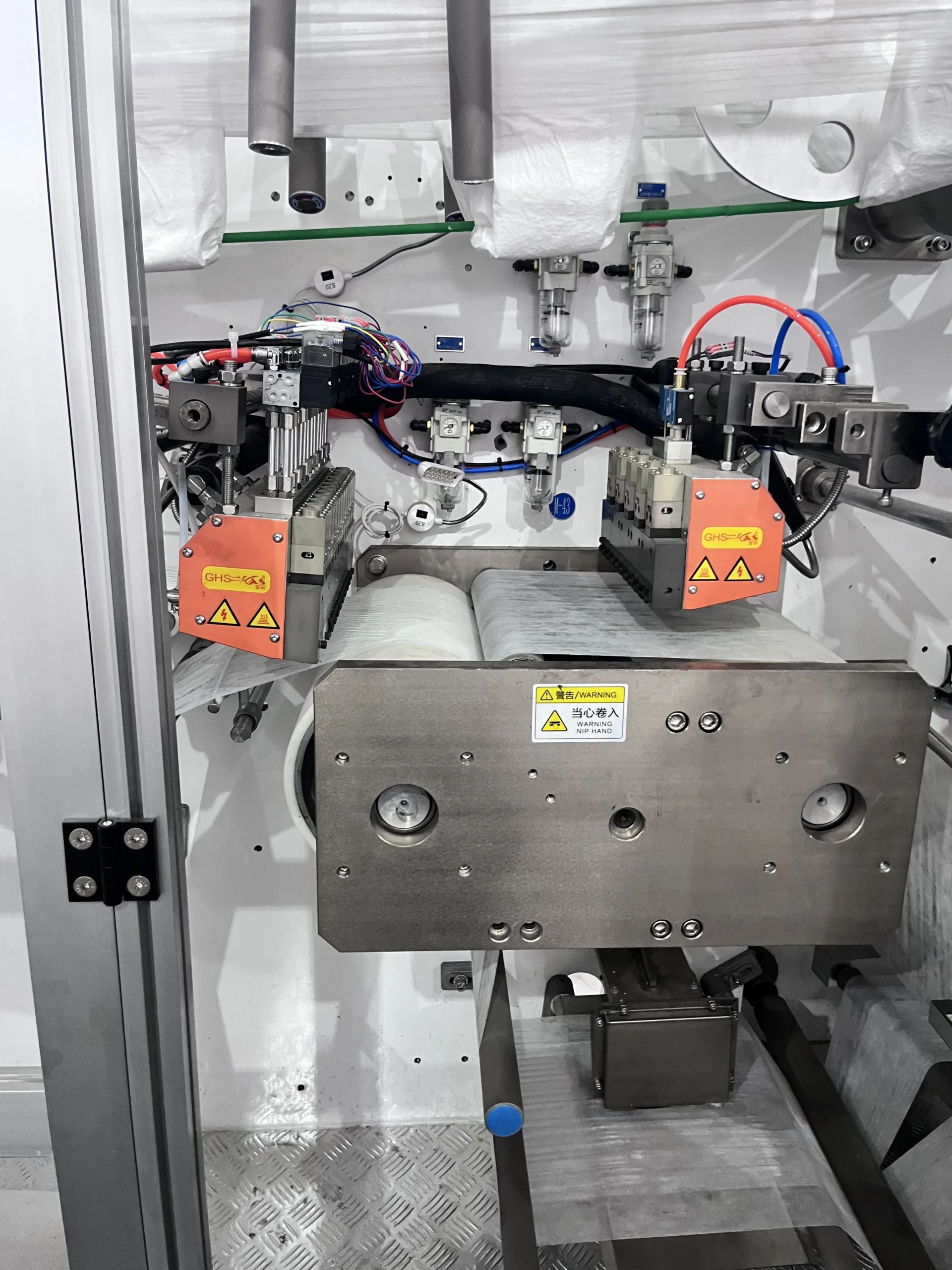
Write the launch range in a table: product type, size, finished dimensions, core dimensions, waist construction, pack count and expected monthly mix. "S to XXL" is not enough because brands use different dimensions under the same size name.
I believe the most useful fair meeting separates the launch range from the future wish list. The launch range determines the first machine configuration. Future SKUs become reserved interfaces, change parts or later validation work.
That distinction prevents a quotation from carrying the cost and complexity of products that may never enter production.
Ask for qualified output, not only the highest speed
Bring a target stated in saleable pieces per shift or per month. Add shift length, planned working days, size mix, expected changeovers and packing format.
| Input | Weak request | Useful meeting input |
|---|---|---|
| Speed | "I need a fast line." | Target qualified pieces per shift for each main SKU |
| Operating plan | "We will run every day." | Shifts, hours, planned cleaning and changeover windows |
| Quality | "Waste must be low." | Defined good-product criteria and reject categories |
| Expansion | "We may add capacity." | Expected SKU or shift expansion and target decision date |
Welldone's category pages publish design speed, stable speed, yield and changeover guidance for several machine platforms. Those figures help frame the discussion, but a dated configuration for the selected product must control the final proposal.
Define where the production line ends
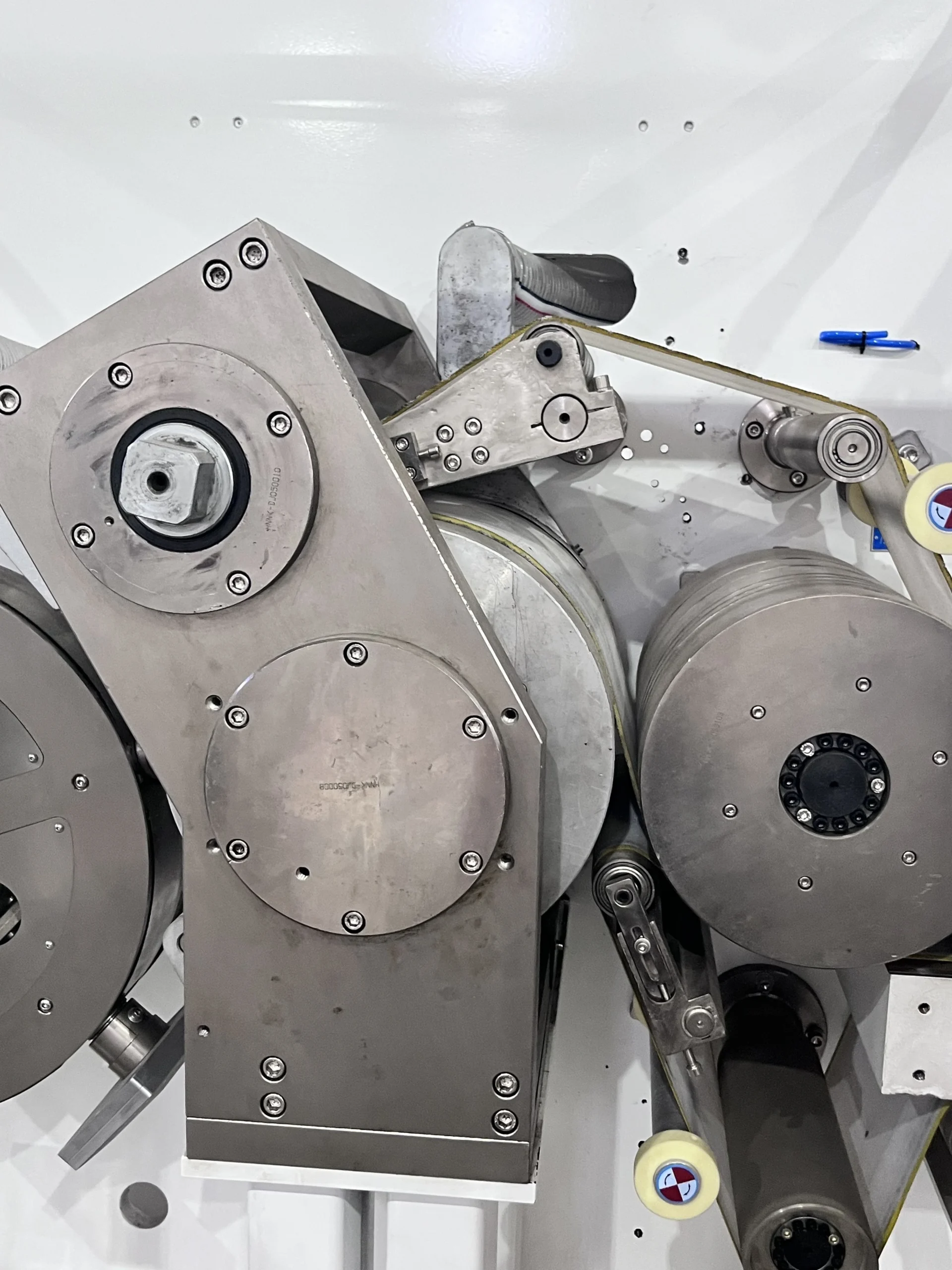
A machinery quotation can stop at the product discharge, a stacker, a bagging machine or a wider end-of-line system. Bring the bag sample, pack count, compression requirement, sealing style and required output unit.
More importantly, state whether packaging is inside the first investment phase. If it is outside the scope, define the transfer height, buffer and interface now. Otherwise a future packer can become a layout problem designed into the first purchase.
Bring the building constraints, even if the factory is not final
A simple floor sketch is enough for the first meeting. Mark available length, width, clear height, columns, doors, material entry, finished-goods exit, operator side and maintenance aisle.
Add the planned voltage, frequency, compressed-air pressure, adhesive system preference and environmental constraints. Do not copy these values from another buyer's project; confirm them for the target site.
The fair meeting should identify missing civil and utility data. It should not pretend that a machine footprint alone is a factory layout.
If this is an upgrade, bring evidence from the current line
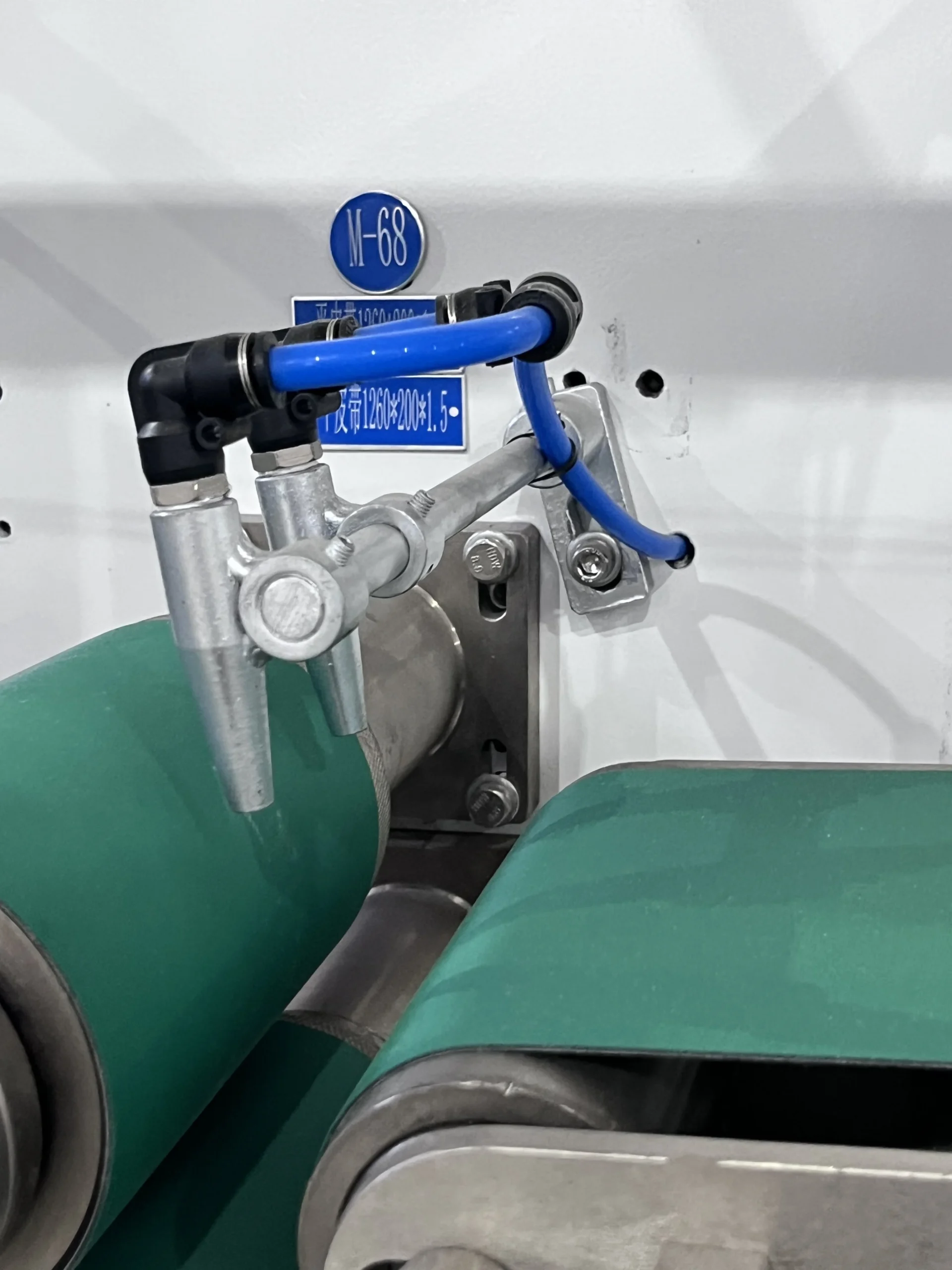
Bring three records: downtime by cause, rejects by defect and output by SKU. Add photos of the current line, its control cabinet, production flow and the station believed to be the bottleneck.
A request such as "add servo" or "add inspection" describes a component, not a result. The data should show which loss the component is expected to address and what evidence will prove the upgrade worked.
The one-page meeting pack for Booth 19.1I29
Prepare one printed copy and one digital folder. Use the same names in both.
- Company, country, contact person and project role
- Target product family and three physical samples per main SKU
- Exploded product drawing or marked layer photo
- Working BOM with material data sheets
- Launch sizes, finished dimensions and monthly mix
- Qualified output target by shift or month
- Bag sample, pack count and end-of-line boundary
- Factory sketch, utilities and material-flow direction
- Current-line performance records if upgrading
- Decision timeline and required technical documents
This pack does not lock the project before the meeting. It makes every uncertainty visible, which is what allows the supplier to produce a comparable technical response.
What the meeting should produce
A successful booth meeting should end with a list of agreed facts and open items, not a verbal price.
| Meeting output | Owner | Next evidence |
|---|---|---|
| Product definition | Buyer and Welldone | Approved samples, drawings and size table |
| Preliminary process route | Welldone | Station map and configuration boundary |
| Missing material data | Buyer | Supplier data sheets and production samples |
| Capacity basis | Both parties | Stable output assumptions and pack interface |
| Site constraints | Buyer | Layout and utility questionnaire |
| Proposal schedule | Welldone | Dated technical proposal and open-item list |
Why meet Welldone at Booth 19.1I29
Welldone's official 140th Canton Fair material presents four machinery directions: sanitary napkin, baby diaper, adult diaper and underpad production equipment. The booth meeting is an opportunity to discuss which project route fits the buyer's actual product and factory.
Product-to-process mapping
Samples, layers and sizes are translated into the required forming and converting stations.
Configuration boundary
Drive architecture, inspection, changeover and packing interfaces are defined before a formal quote.
Project follow-up
Open items are converted into a technical proposal, factory-input list and next verification step.
Welldone can provide overseas engineer support for installation, commissioning and training. The exact service scope is confirmed per project.
Prepare the project before you prepare the questions
The booth cannot replace sample analysis, engineering review or factory acceptance. It can determine whether both sides are discussing the same product, scope and evidence.
If your team had twenty minutes at Booth 19.1I29, which missing document would prevent the discussion from reaching a real machine configuration?
FAQ
Where and when can we meet Welldone at the 140th Canton Fair?
Meet Welldone at Booth 19.1I29 during Phase 1, October 15-19, 2026, at the China Import & Export Fair Complex in Guangzhou.
Will complete production machines run at the booth?
The official fair material confirms Welldone's machinery business directions but does not confirm a live full-line demonstration. Use the meeting to review samples, process routes and project documents.
Can we request a quotation without a final BOM?
Yes, but mark every missing material specification. A preliminary quotation should state its assumptions and open items so it can be revised after material confirmation.
What should an upgrading factory bring?
Bring current-line output, downtime, reject and SKU records, plus photos and control information. These show whether the project needs a station upgrade, interface change or a new line.
What happens after the Canton Fair meeting?
The next step should be a dated open-item list covering samples, BOM, capacity, layout and configuration scope, followed by a technical proposal rather than an unsupported total-price quote.
Prepare your Booth 19.1I29 technical meeting
Send Welldone your samples, working BOM, launch SKUs, target output and factory sketch before Phase 1 of the 140th Canton Fair.
Book a technical meetingReview machinery optionsWebsite: www.cnwelldone.com
Email: welldone@cnwelldone.com