Spare Parts Are Not an After-Sales Detail: Why They Are Production Insurance

On June 23, 2026
Comments Off on Spare Parts Are Not an After-Sales Detail: Why They Are Production Insurance
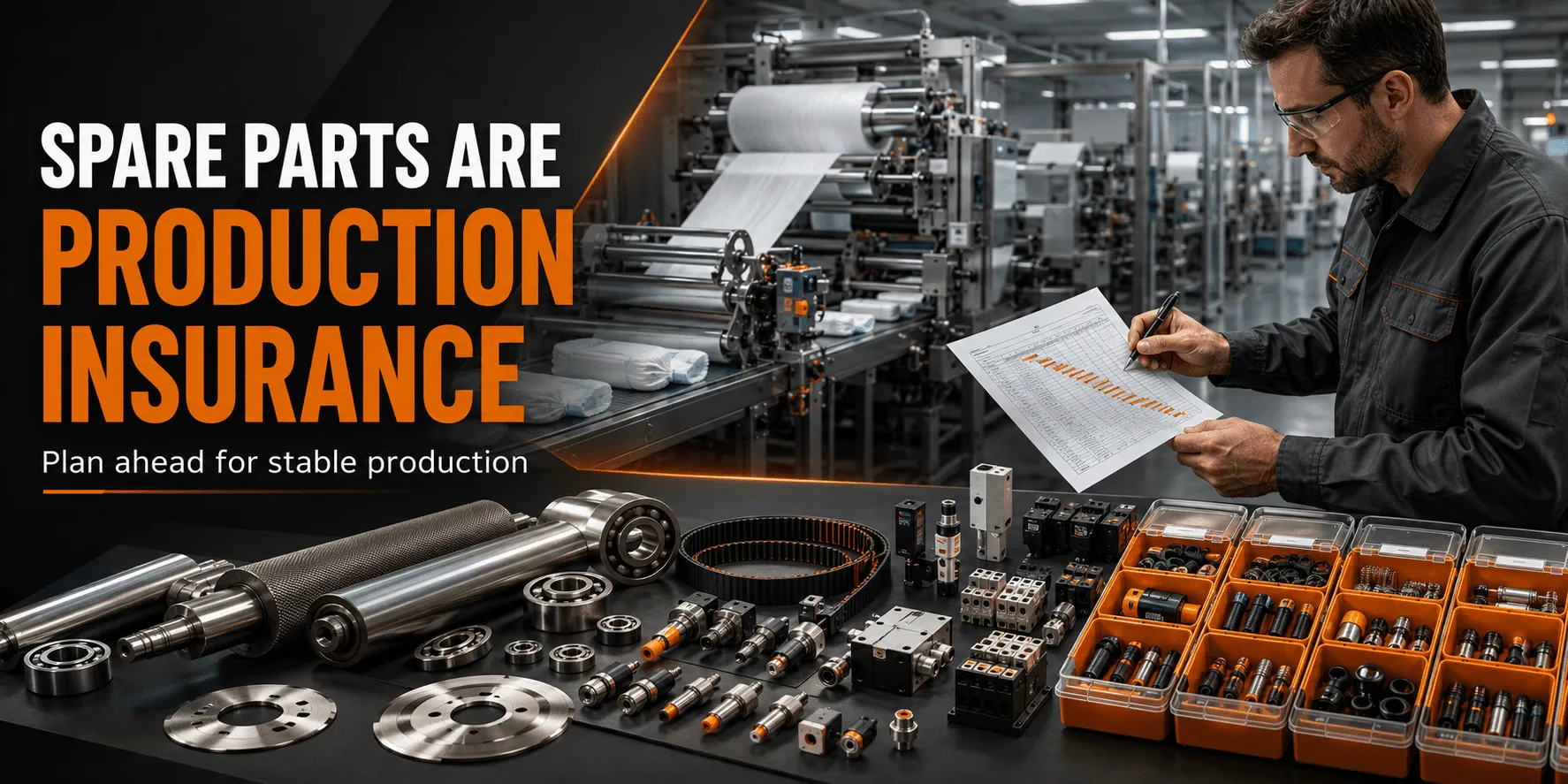
Spare Parts Are Not an After-Sales Detail: Why They Are Production Insurance for Hygiene Product Factories
When buyers choose hygiene products machinery, they usually pay close attention to machine price, speed, configuration, delivery time, and installation support.
These are all important. But one detail is often discussed too late: spare parts planning.
For a Diaper Manufacturing Machine, Sanitary Napkin Machine, Adult Diaper Machine, Pet Pad Machine, wet wipes machine, or tissue machine, spare parts are not just something to think about after a problem happens.
Spare parts are part of production continuity. They are production insurance before problems happen.
A small part may not look expensive. But if the factory does not have it when needed, the whole production line may stop.
Downtime Is More Expensive Than Many Buyers Think
Many buyers calculate machine cost carefully, but they may not calculate downtime cost deeply enough. In hygiene product manufacturing, downtime does not only mean the machine is not running.
- Operators are waiting.
- Raw materials may stay on the line.
- Glue temperature may need to be maintained.
- Unfinished products may be rejected.
- Production schedules may be delayed.
- Delivery pressure may increase.
- Customer trust may be affected.
A spare part may be small, but its absence may create a big production loss. For factories far from the supplier, spare parts planning is not optional. It is production insurance.
The Difference Between Wearing Parts, Critical Parts, and Emergency Parts
A good spare parts plan is not about buying many parts blindly. It is about understanding different types of parts and preparing them according to production risk.
Wearing Parts
Parts that naturally wear during normal operation, such as blades, belts, bearings, cutters, seals, rollers, and glue system parts.
Critical Parts
Parts that may stop the whole line if they fail, such as sensors, motors, control modules, servo-related parts, or customized components.
Emergency Parts
Parts that may not be replaced often, but must be available quickly when unexpected downtime happens.
Why Spare Parts Planning Should Follow the Real Production Line
Different machines have different spare parts logic. A spare parts plan should not be copied from one machine to another without understanding the production process.
- For a diaper machine, spare parts may relate to absorbent core forming, SAP distribution, tape application, elastic control, cutting, glue application, and packing connection.
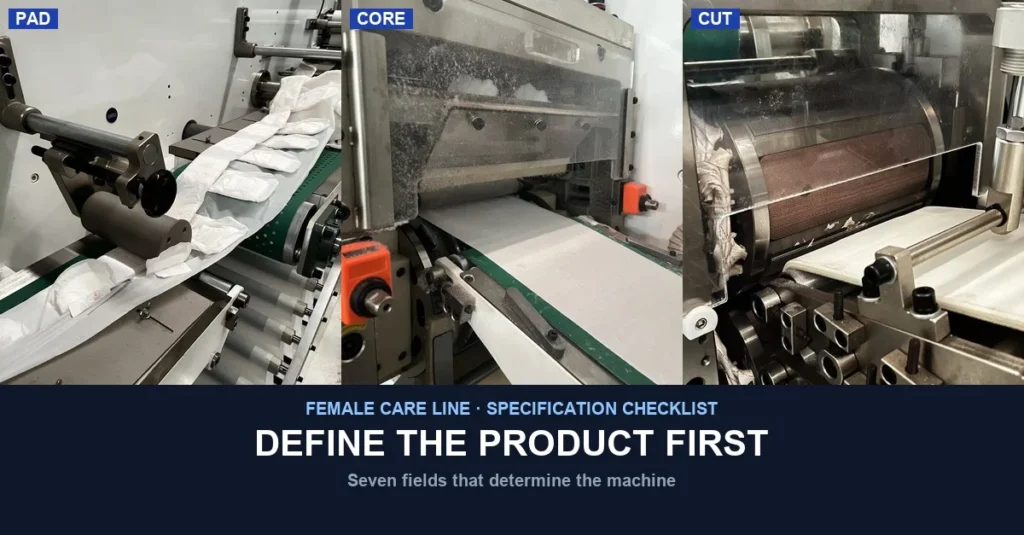
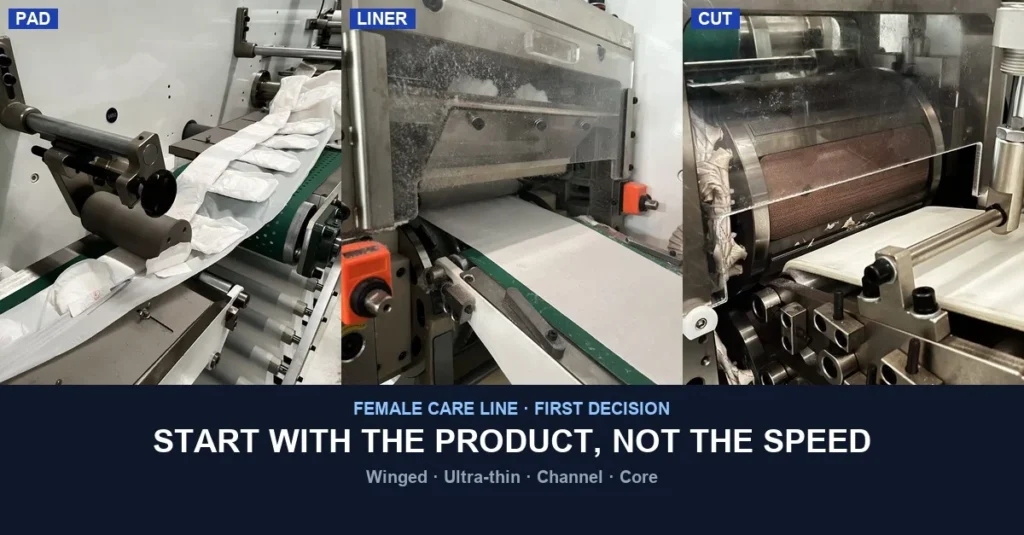
- For a sanitary napkin machine, spare parts may relate to core forming, release paper control, wing folding, glue system, cutting shape, and individual wrapping.
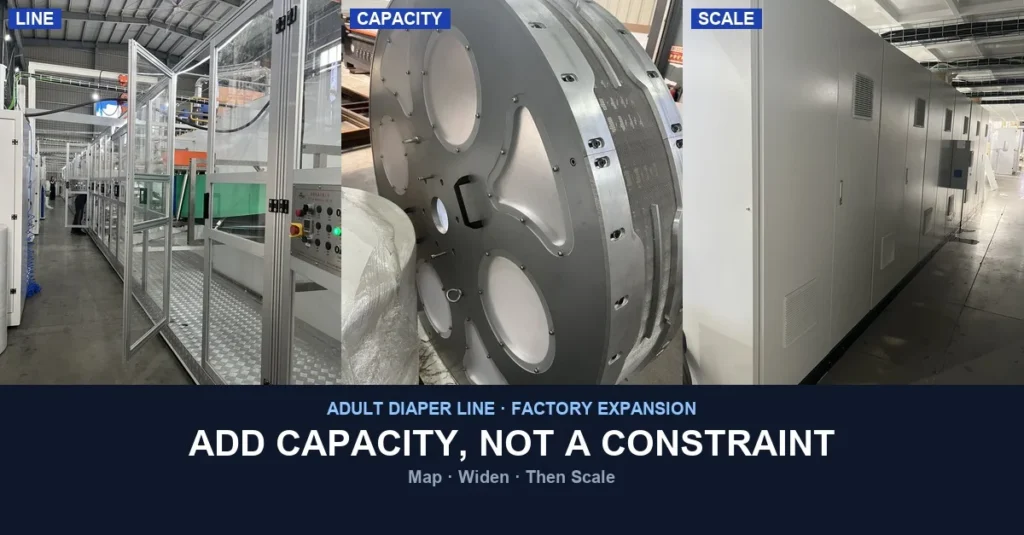
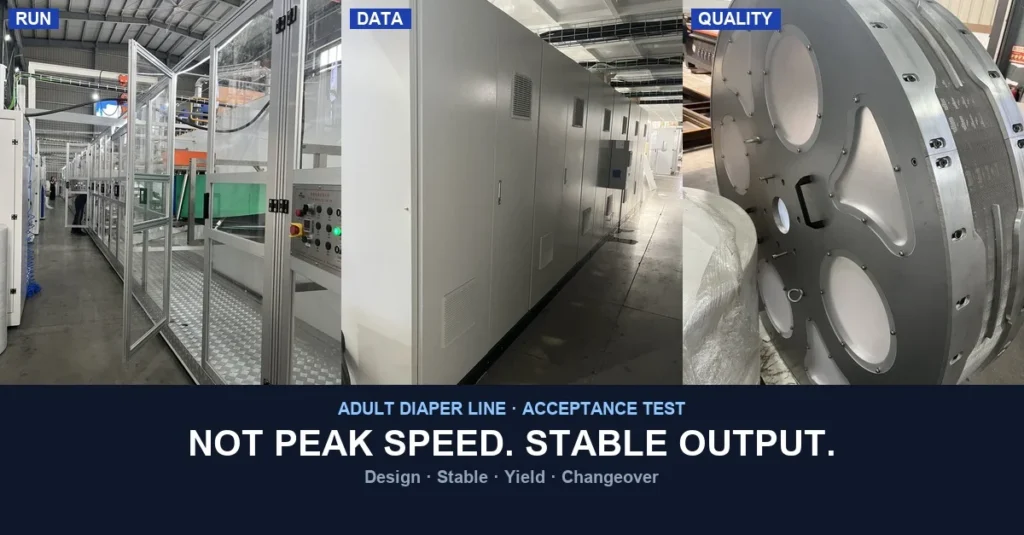
- For an adult diaper machine, larger size and heavier material handling make tension control, cutting, core stability, and transmission parts more important.
- For underpad and pet pad machines, spare parts may relate to PE film control, edge sealing, sheet cutting, folding, and packing.
Buyers should ask: “What parts are most important for my product type, machine configuration, daily running time, and maintenance ability?”
How Poor Spare Parts Management Creates Hidden Factory Costs
Poor spare parts management can create many hidden costs. These costs may not appear in the machine quotation, but they appear during daily operation.
- Long machine downtime
- Delayed orders
- Higher rejected product rate
- Emergency shipping cost
- Operator waiting time
- Repeated troubleshooting
- Unstable cutting or sealing quality
- Increased material waste
- Lower customer confidence
Spare parts problems are not only maintenance problems. They are production management problems.
What Buyers Should Confirm Before Machine Shipment
Before machine shipment, buyers should confirm spare parts clearly with the supplier. Once the machine is shipped, it may be more difficult and more expensive to add missing parts.
- Standard spare parts list
- Wearing parts list
- Recommended spare parts list
- Critical parts list
- Emergency parts suggestion
- Part codes and part names
- Part photos if available
- Quantity recommendation
- Replacement cycle suggestion
- Maintenance instructions
- Future purchasing process
Why Spare Parts Codes, Drawings, and Manuals Matter
Spare parts are not useful if the factory cannot identify them correctly. When a machine problem happens, the buyer should be able to describe the part quickly and accurately.
- Machine manuals
- Electrical drawings
- Mechanical drawings
- Spare parts list
- Part codes
- Part photos
- Maintenance records
- Replacement history
- Supplier contact process
Good documentation reduces downtime and helps new operators and maintenance staff learn the machine faster.
Operator Maintenance Training Is Part of Spare Parts Planning
Even if spare parts are available, operators and maintenance staff still need to know how to use them correctly.
- Which parts need daily checking
- Which parts need regular cleaning
- Which parts are wearing parts
- Which parts affect product quality
- Which parts affect machine safety
- How to notice early warning signs
- When to stop the machine for inspection
- How to record problems
- How to communicate with the supplier
- How to store spare parts properly
A spare part is only useful when the factory knows when and how to use it.
From After-Sales Service to Production Continuity Support
Many people see spare parts as part of after-sales service. That is correct, but it is not enough. For hygiene product factories, spare parts are part of production continuity support.
- Recommended starting spare parts
- Wearing parts and critical parts explanation
- Clear codes and documents
- Replacement cycle guidance
- Operator maintenance training
- Urgent technical support
- Repeated downtime reduction
Stable production is not built after the problem happens. It is built before the problem happens.
Why Welldone
Welldone is a hygiene products machinery manufacturer under Quanzhou Shimao Weiteng Import & Export Co., Ltd. With more than 18 years of industry experience and our own factory support, Welldone provides machinery and production solutions for baby care, female care, adult care, pet care, paper products, and wet wipes.
Our product range includes diaper manufacturing machines, baby diaper machines, baby pull-up pants machines, sanitary napkin machines, adult diaper machines, underpad machines, pet pad machines, wet wipes machines, tissue machines, packing machines, and related hygiene product raw materials.
Welldone supports buyers not only with machine supply, but also with long-term production support, including spare parts list preparation, wearing parts explanation, recommended spare parts planning, installation preparation, operator training, basic maintenance guidance, troubleshooting communication, raw material matching suggestions, factory layout planning, and after-sales technical support.
You can explore our related machine categories: Baby Care Machines, Female Care Machines, Adult Care Machines, Pet Care Machines, and Paper & Wet Wipes Machines.
Related Machines
Diaper Manufacturing Machine
Suitable for producing baby diapers with stable absorbent core, accurate material control, flexible size options, and long-term spare parts support.
Sanitary Napkin Machine
Suitable for producing sanitary napkins with stable core forming, clean cutting, accurate glue application, and reliable maintenance support.
Adult Diaper Machine
Suitable for producing adult diapers for elderly care, medical care, nursing homes, and healthcare product markets.
Underpad Machine
Suitable for producing disposable underpads for hospitals, elderly care, baby care, and pet care applications.
Pet Pad Machine
Suitable for producing pet pee pads with stable absorbency, leakage control, flexible size options, and spare parts support.
Wet Wipes Machine
Suitable for producing wet wipes for hygiene, cleaning, baby care, personal care, and household applications.
Conclusion
Spare parts are not only an after-sales detail. They are production insurance.
For hygiene product factories, stable operation depends not only on machine quality, but also on spare parts planning, maintenance logic, operator training, documentation, and supplier response.
A small missing part can create a big production delay. A clear spare parts plan can help the factory reduce downtime, control risk, and recover faster.
In hygiene product manufacturing, stable production is built before the problem happens. Not after.
FAQ
1. Why are spare parts important for hygiene product machinery?
Spare parts help reduce downtime, support continuous production, and allow factories to respond quickly when wearing parts or critical parts need replacement.
2. Are spare parts only needed after machine problems happen?
No. Spare parts should be planned before production starts. A good spare parts strategy helps prevent avoidable downtime and supports stable daily operation.
3. What spare parts should buyers prepare before machine shipment?
Buyers should prepare wearing parts, recommended spare parts, critical parts, emergency parts, part codes, manuals, drawings, and maintenance instructions based on machine configuration and production plan.
4. How can poor spare parts planning increase factory cost?
Poor spare parts planning can cause long downtime, delayed orders, rejected products, emergency shipping costs, operator waiting time, and unstable production quality.
5. Can Welldone support spare parts planning and after-sales service?
Yes. Welldone can support buyers with spare parts list preparation, wearing parts explanation, recommended spare parts planning, operator training, maintenance guidance, troubleshooting communication, and long-term after-sales support.
Need Support for Spare Parts and Stable Production?
If you are planning a hygiene products production project, Welldone can help you prepare machine configuration, spare parts planning, maintenance training, raw material matching, installation support, and long-term production service.
Contact Welldone