Top 7 Mistakes Buyers Make When Choosing a Disposable Underpad Machine

On June 4, 2026
Comments Off on Top 7 Mistakes Buyers Make When Choosing a Disposable Underpad Machine
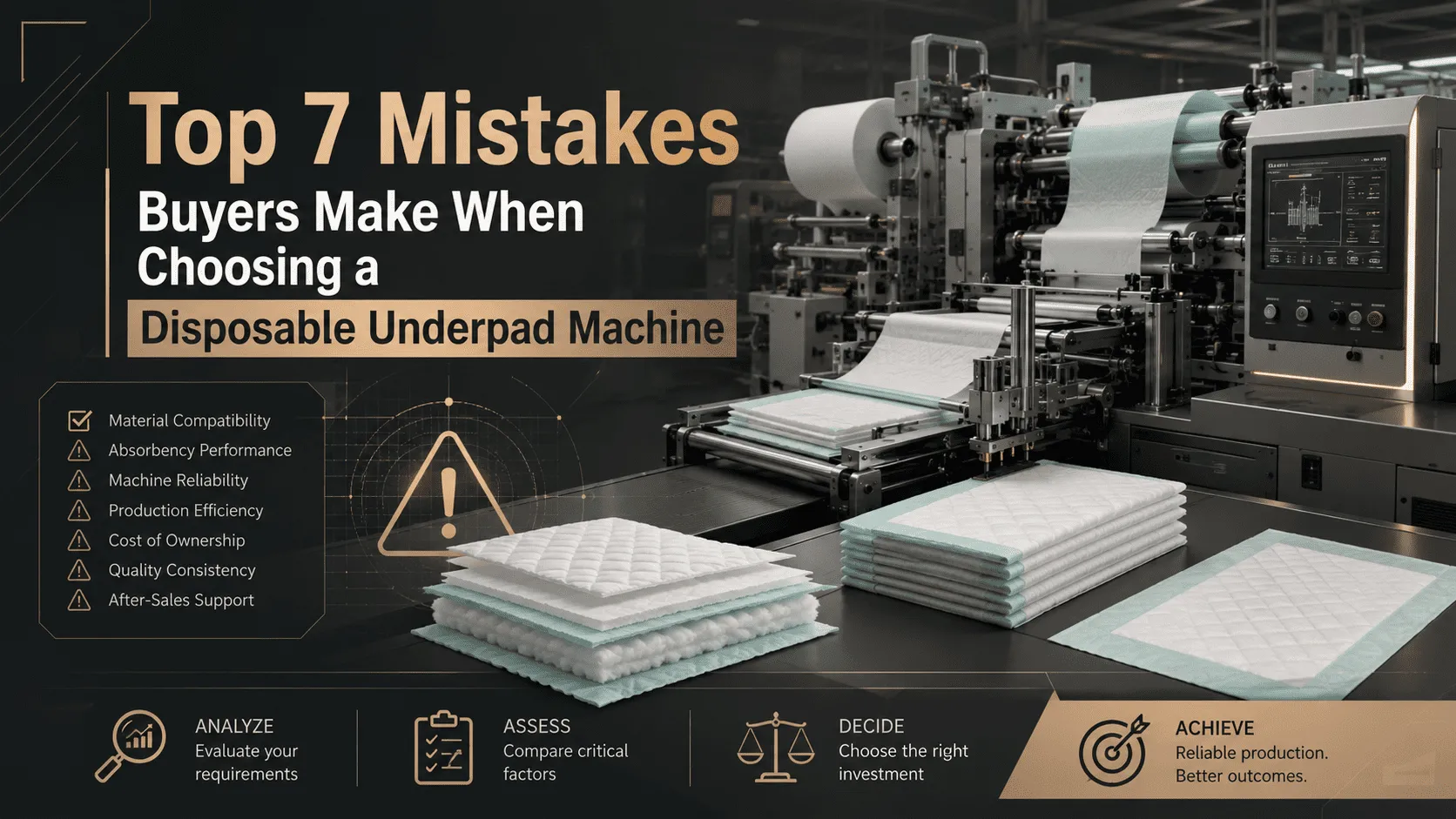
Top 7 Mistakes Buyers Make When Choosing a Disposable Underpad Machine
A practical buying guide for factories, investors, and procurement teams who want stable underpad production instead of only comparing machine price and design speed.
Why Disposable Underpad Production Needs More Than a Basic Machine
Many buyers think a Disposable Underpad Machine is easier to choose than a diaper machine or sanitary napkin machine. The product looks simple: nonwoven, absorbent core, SAP, fluff pulp, PE film, cutting, stacking, and packing.
But in real production, a disposable underpad is not just a flat absorbent sheet. It may be used in hospitals, nursing homes, elderly care, baby care, home care, or even pet care.
Different use scenarios create different requirements for absorbency, leakage protection, surface comfort, size stability, packaging, and product cost.
One of the biggest mistakes buyers make is thinking that all underpads are the same. They are not.
A hospital underpad may need higher absorbency and better leakage control. An elderly care underpad may need a softer surface and stable liquid distribution. A pet underpad may need fast absorption and stronger PE film protection. A low-cost underpad may focus more on material control and production efficiency.
01
Only Comparing the Machine Price
Price is usually the first thing buyers compare. This is understandable, especially for new factories or investors entering the absorbent hygiene product industry.
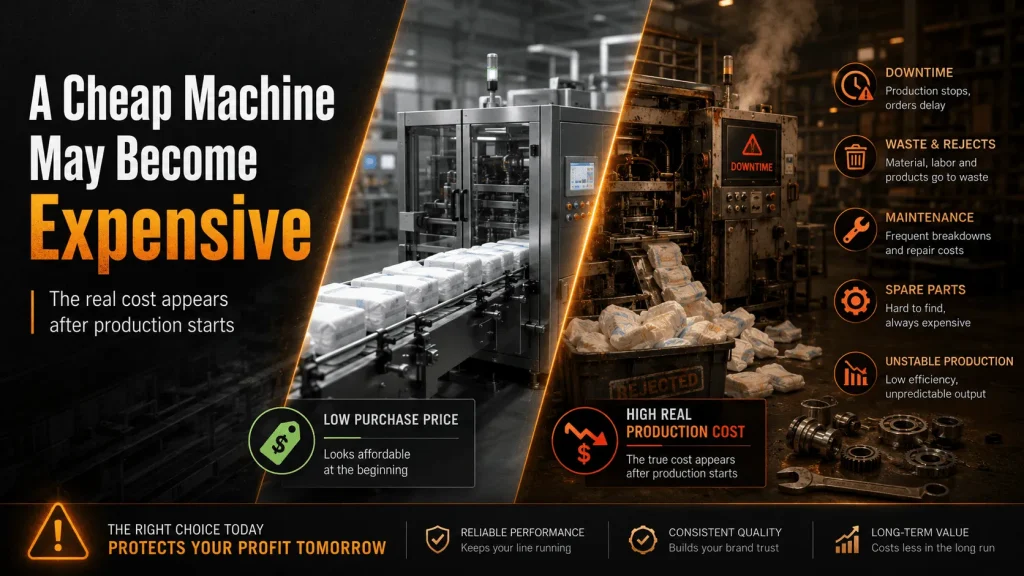
But an Underpad Machine is not only a machine purchase. It is part of a complete production system.
- Higher raw material waste
- Unstable absorbent core forming
- Uneven SAP distribution
- Weak PE film control
- Poor cutting accuracy
- Limited spare parts support
- Weak after-sales service
In most cases, the real cost of an Underpad Making Machine appears after installation. A cheap machine may look attractive during quotation comparison, but it may become expensive during daily production.
02
Ignoring the Target Application of the Underpad
A common mistake is treating underpads as one standard product. But underpads are used in different markets, and each market has different expectations.
- Hospital underpads need stable absorbency and leakage protection
- Elderly care underpads need softness and liquid distribution
- Baby care underpads need safe materials and clean appearance
- Pet underpads need fast absorption and stronger PE film protection
- Price-sensitive markets need material efficiency and stable output
For me, the right Disposable Underpad Machine should be selected according to the buyer’s target product, not only according to machine speed.
03
Not Checking SAP and Fluff Pulp Distribution
Absorbency is the core function of a disposable underpad. If SAP and fluff pulp distribution is unstable, the underpad may look acceptable, but it may fail during real use.
- Uneven absorbent core
- Poor liquid absorption
- Liquid pooling in one area
- Leakage after repeated use
- Unstable product thickness
- High material waste
A good Underpad Production Line should support stable core forming, accurate SAP dosing, smooth fluff pulp handling, and consistent product weight.
04
Underestimating PE Film Quality and Leakage Protection
PE film is the bottom protection layer of a disposable underpad. If this layer is weak, too thin, poorly controlled, or badly matched with the absorbent core, leakage problems can appear quickly.
- PE film thickness
- Film tension control
- Lamination stability
- Bottom leakage protection
- Edge sealing strength
- Product flatness after cutting
A reliable Disposable Underpad Machine should not only make the product shape. It should help protect the final use experience.
05
Choosing Speed Without Checking Real Stable Output
Many buyers ask one question first: “What is the machine speed?” This is important, but it is not enough. Design speed and real stable output are not always the same.
- Raw material instability
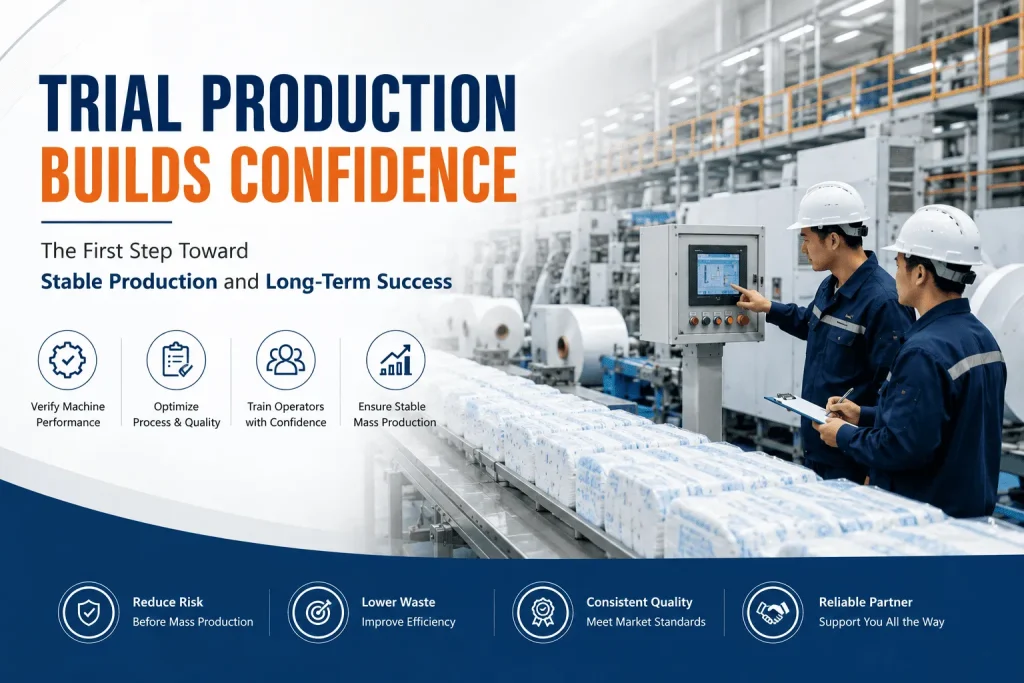
- Weak tension control
- Frequent machine adjustment
- Unstable cutting
- Poor stacking
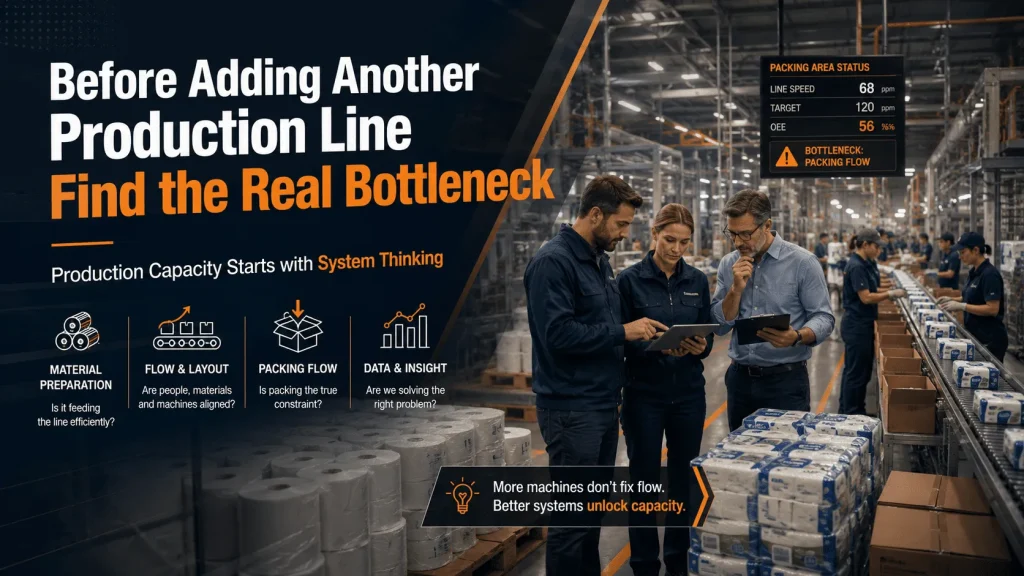
- Packing bottlenecks
- Untrained operators
A factory does not make profit from design speed alone. It makes profit from stable production, qualified output, controlled waste, reliable packaging, and repeat orders.
06
Forgetting Size Changeover and Packing Flexibility
Many underpad factories do not produce only one size. They may need different sizes for hospitals, nursing homes, elderly care, baby care, pet care, private-label orders, or e-commerce packaging.
- Hospital bed underpads
- Nursing home care pads
- Elderly home care pads
- Baby care pads
- Pet training pads
- Private-label retail packs
- E-commerce carton packs
A practical Underpad Production Line should support the buyer’s real product planning, not only today’s first order.
07
Working with a Supplier Without Long-Term Technical Support
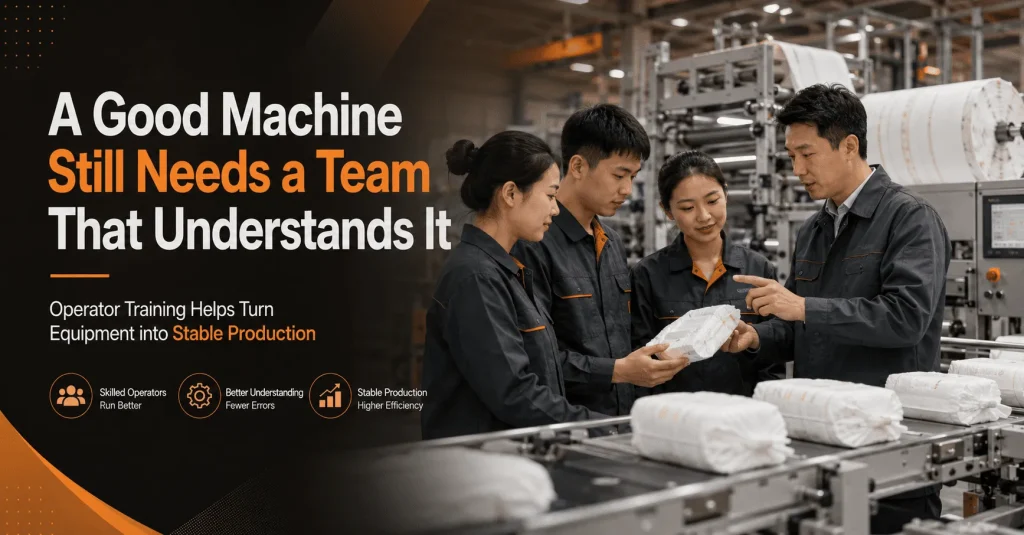
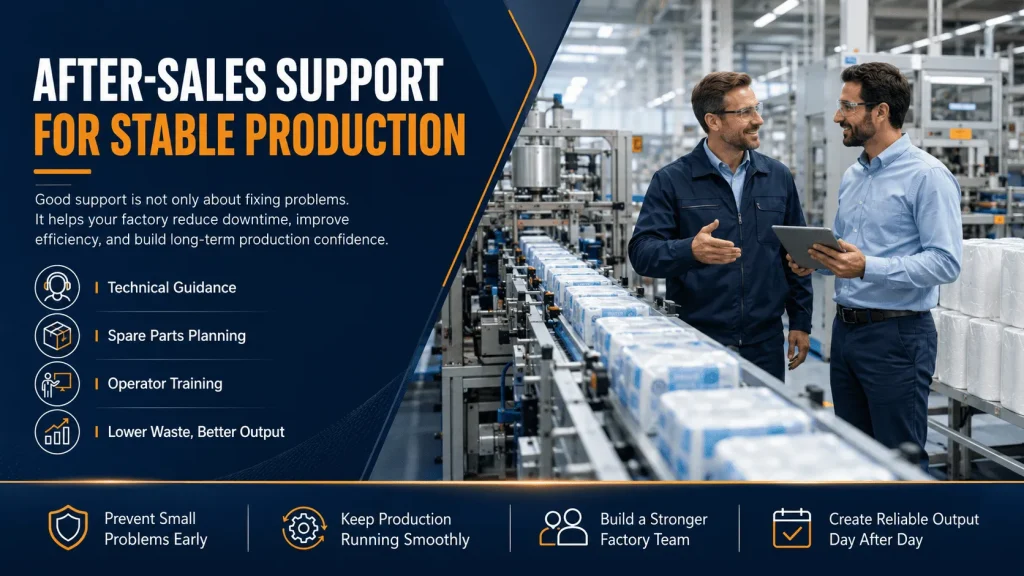
An underpad production project does not end when the machine arrives at the factory. After delivery, buyers still need installation guidance, commissioning support, raw material testing, operator training, spare parts planning, troubleshooting, and future product upgrade advice.
A reliable Underpad Machine Supplier should help buyers build a production system, not only complete a transaction.
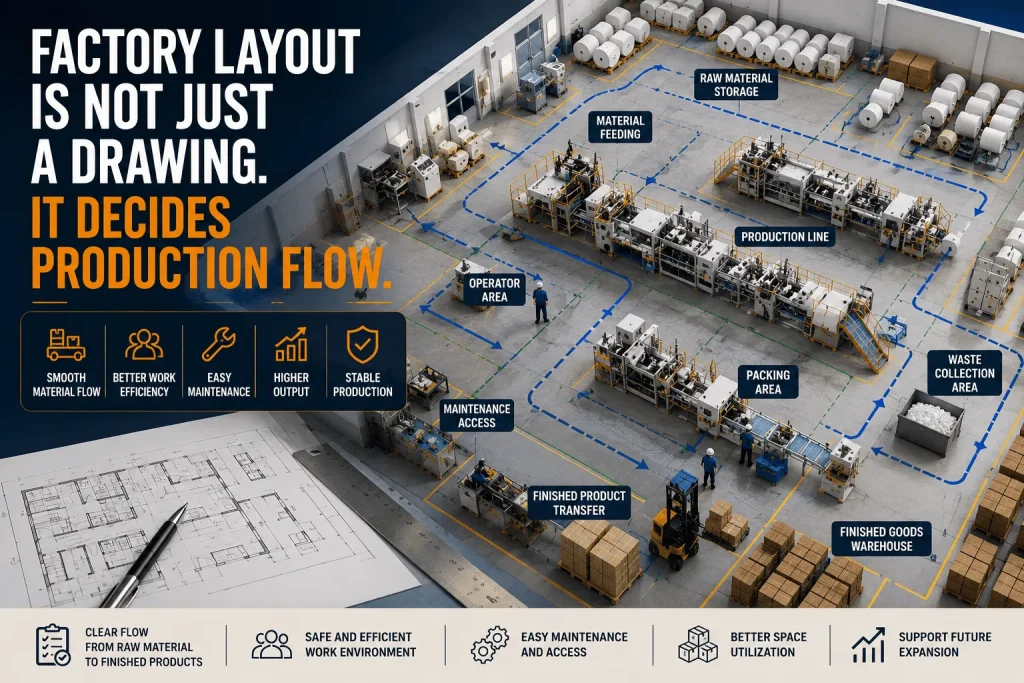
- Factory layout suggestions
- Product structure discussion
- Raw material matching advice
- Engineer installation support
- Operator training
- Spare parts supply
- Long-term after-sales service
The Better Buying Question
Before choosing a Disposable Underpad Machine, do not only ask: “How much is the machine?”
Ask a more practical question: “Can this supplier help me build a stable underpad production system for my target market?”
Why Welldone
Welldone is a hygiene products machinery manufacturer under Quanzhou Shimao Weiteng Import & Export Co., Ltd. With more than 18 years of industry experience and our own factory support, Welldone provides Disposable Underpad Machines, Underpad Machines, baby diaper machines, adult diaper machines, sanitary napkin machines, pet pad machines, wet wipes machines, tissue machines, and related hygiene product production solutions.
For underpad projects, Welldone can support buyers with machine configuration advice, product structure discussion, SAP and fluff pulp planning, raw material matching suggestions, product size and packing format support, factory layout suggestions, installation and commissioning guidance, operator training support, spare parts, and after-sales service.
If you are evaluating an Underpad Machine Manufacturer, you can explore Welldone’s Adult Care Machines and Pet Care Machines for related production solutions.
Welldone is not a distributor or wholesaler. We are a manufacturer focused on helping buyers build stable, long-term hygiene product manufacturing capacity.
Related Machines
Disposable Underpad Machine
Suitable for producing disposable underpads for hospitals, nursing homes, elderly care, baby care, home care, and pet care applications.
Underpad Making Machine
Suitable for factories that need stable absorbent pad production with flexible sizes and product structures.
Adult Diaper Machine
Suitable for manufacturers expanding into adult care products, including adult diapers, adult pull-up pants, and incontinence products.
Pet Pad Machine
Suitable for producing pet pee pads, puppy training pads, dog pads, senior pet pads, and disposable pet care products.
Baby Diaper Machine
Suitable for factories planning to build wider absorbent hygiene product manufacturing capacity.
Underpad Packing Machine
Suitable for improving packing efficiency, reducing labor pressure, and supporting stable delivery for underpad production.
Conclusion
Choosing a Disposable Underpad Machine is not only about buying a flat pad-making machine. It is about building a stable absorbent product production system.
The biggest mistake is thinking that all underpads are the same. In real production, different applications require different absorbency levels, material structures, leakage protection, sizes, packaging formats, and cost-control strategies.
A reliable Underpad Production Line should help the factory produce stable, clean, absorbent, and market-ready underpads every day.
FAQ
1. What should buyers check before choosing a disposable underpad machine?
Buyers should check SAP distribution, fluff pulp forming, PE film quality, leakage protection, edge sealing, cutting accuracy, size changeover, packing flexibility, spare parts, and after-sales support.
2. Is an underpad machine the same as a pet pad machine?
Not exactly. Underpads and pet pads may have similar structures, but their target users, absorbency requirements, packaging needs, and product positioning can be different.
3. Why is SAP distribution important in underpad production?
SAP distribution affects absorbency, liquid spreading, leakage protection, product thickness, and final user experience. Uneven SAP distribution may cause product failure and customer complaints.
4. Why does PE film quality matter for disposable underpads?
PE film is the bottom leakage protection layer. If the PE film is weak or unstable, liquid may pass through the product and affect the bed, floor, chair, or mattress.
5. Can Welldone support a complete underpad production project?
Yes. Welldone can provide disposable underpad machines, product structure suggestions, raw material planning support, factory layout advice, installation guidance, operator training, spare parts, and one-stop production solutions.
Planning a Disposable Underpad Production Project?
If you are comparing a Disposable Underpad Machine, Underpad Machine, or Underpad Production Line, Welldone can help you evaluate machine configuration, raw materials, product structure, packing format, factory layout, and long-term production support.
Contact Welldone