Common Mistakes New Hygiene Factories Make When Buying Machines

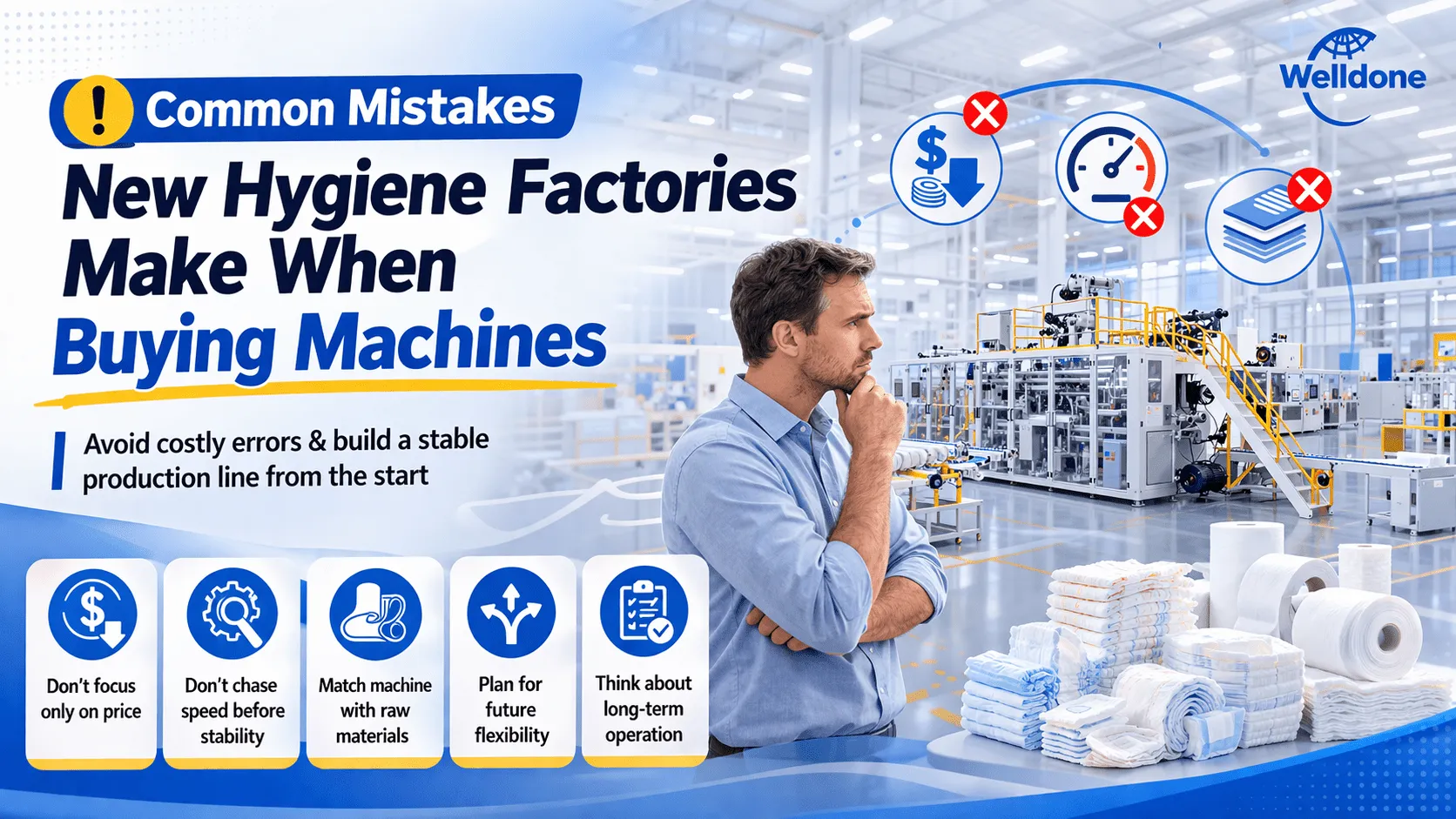
Starting a new hygiene factory is exciting, but it is also the stage where many expensive decisions are made too quickly.
In 2026, new buyers are facing a more demanding market than before. Budgets are tighter, raw material conditions can change faster, and factory owners are under more pressure to balance cost, stability, and future growth from the very beginning.
That is why buying a hygiene machine is no longer just a purchasing task. It is a production strategy decision.
Actually, many new factories do not struggle because they fail to find a machine. They struggle because they choose a machine that does not truly fit their product plan, material conditions, labor structure, or long-term operating goals.
Table of Contents
- Why machine buying mistakes are more expensive in 2026
- The most common mistakes new hygiene factories make
- Why machine price is only one part of the decision
- Why stability matters more than design speed
- Why raw material matching should come earlier
- Why future flexibility cannot be ignored
- What smarter machine selection looks like
- Why Welldone
- Related machine categories
- FAQ
- Conclusion
Why Machine Buying Mistakes Are More Expensive in 2026
A few years ago, some buyers could still recover more easily from a weak machine decision. Today, that is harder.
When a new factory starts with the wrong production setup, the cost does not appear only once. It keeps showing up through waste, downtime, labor inefficiency, difficult changeovers, weak product consistency, and slower scaling.
More importantly, new factories often do not have much room for repeated trial and error. Early-stage mistakes affect output, cash flow, operator confidence, and customer trust all at the same time.
That is why first-stage machine decisions now deserve much more careful thinking.
The Most Common Mistakes New Hygiene Factories Make
Most buying mistakes are not caused by carelessness. They happen because buyers focus on one visible factor and overlook the bigger production system.
Below are the most common problems we see.
1. Focusing too much on machine price
A low quotation always gets attention.
But a machine that is cheaper to buy is not always cheaper to own. Many new buyers compare the machine mainly by initial price and assume that this is the safest choice.
In reality, the bigger cost often appears later through:
- higher labor requirement
- more production waste
- weaker output stability
- longer adjustment time
- more daily operating pressure
For me, this is one of the biggest traps for first-time factory investors. The wrong low-price choice can quietly become the most expensive option after production begins.
2. Chasing speed before stability
A high design speed sounds powerful. It looks good in a quotation sheet and can make one machine appear much stronger than another.
But a fast machine is not always the right machine for a new factory.
If the line is difficult to control, if operators are still inexperienced, or if material matching is not strong enough, then high speed may create more stress than value.
A common mistake is to assume that higher speed automatically means higher profitability.
In many cases, steady output at a realistic speed is far more valuable than a high speed that the factory cannot manage consistently.
3. Treating raw materials as a separate issue
This is one of the most common planning problems in hygiene projects.
Some buyers choose the machine first, then think about nonwovens, SAP, hot melt adhesive, PE film, fluff pulp, tissue, or other materials later. On paper, that may look efficient. In practice, it often creates avoidable trouble.
If the machine does not match the actual materials well, the factory may face:
- unstable tension
- higher waste
- inconsistent quality
- weaker sealing or bonding
- more operator correction
- slower optimization after startup
That is why machine selection and raw material planning should be discussed together, not one after the other.
4. Ignoring future flexibility
Many new factories buy only for today’s product plan.
But markets change. Product sizes change. Packaging needs change. Customer requirements change.
If the machine leaves no room for adjustment or future upgrades, the factory may quickly feel limited. What looked “good enough” at the beginning can become a bottleneck later.
The wiser choice is usually not to buy only for current production. It is to buy with enough flexibility to support the next stage of growth.
5. Underestimating startup and after-sales support
Some buyers assume that once the machine arrives, the difficult part is over.
In reality, startup is often where the real challenge begins.
Installation, adjustment, operator training, raw material coordination, and stable running all affect how quickly the factory can move from testing to real production.
That is why supplier support matters more than many new buyers expect. A machine supplier who only delivers equipment is not the same as a supplier who helps the project run successfully.
Why Machine Price Is Only One Part of the Decision
Machine price matters. No serious buyer ignores it.
But the real investment decision should be based on total production logic, not just purchase cost.
A machine may look cheaper at the beginning, but if it creates more waste or needs more labor, the cost advantage can disappear quickly.
The real question should not only be:
How much does this machine cost to buy?
It should also be:
How much will this machine cost us to run?
That small change in thinking can prevent many expensive mistakes.
Why Stability Matters More Than Design Speed
New factories often want confidence, not complexity.
Stable production gives the factory something more useful than a high-speed claim. It gives predictability.
Predictability means:
- easier labor management
- better quality control
- lower daily stress
- more reliable delivery
- stronger control over cost
I believe stable production is one of the most underestimated advantages for a new hygiene factory. It may not look as exciting as high speed, but it usually creates much better long-term results.
Why Raw Material Matching Should Come Earlier
A hygiene production line is not just a machine. It is a working system built around machine, materials, settings, and operators.
That is especially true for projects involving Baby Care Machines, Female Care Machines, and Adult Care Machines, where material structure has a strong effect on line stability and product performance.
If raw material planning starts too late, the factory may lose time and money trying to solve compatibility problems after installation.
That is why stronger projects usually begin with a combined discussion:
machine, materials, output target, and factory layout all planned together.
Why Future Flexibility Cannot Be Ignored
A new factory does not stay “new” for very long.
Once the line starts running, the owner often begins to think about expansion, product changes, or new market opportunities. If the machine is too fixed, too narrow, or too hard to adjust, those next steps become harder.
This does not mean every new factory needs the most advanced line on day one. It means buyers should ask whether the chosen line can still support them after one year, not only after one week.
What Smarter Machine Selection Looks Like
Smarter buying decisions usually begin with better questions.
Instead of asking only which machine is faster or cheaper, new factory investors should ask:
- What product will we start with?
- What output is truly realistic for our stage?
- How stable is our material supply?
- How much labor can we manage well?
- Will this line still support us after the business grows?
- Can this supplier help us during startup, not just during quotation?
Those questions usually lead to better machine choices and fewer expensive surprises.
Why Welldone
Welldone supports hygiene factory projects from a full-project perspective.
We do not simply recommend a machine model. We help customers think through:
- machine selection
- raw material matching
- factory layout planning
- installation preparation
- startup support
- engineer guidance
- long-term production stability
For other related production directions, buyers can also explore our core categories:
- Baby Care Machines
- Female Care Machines
- Adult Care Machines
- Pet Care Product Machines
- Paper & Wet Wipes Machines
That makes it easier to compare not only machine types, but overall factory direction.
Related Machine Categories
Depending on your project, this topic is especially relevant to buyers exploring:
- baby diaper machine
- pull-up baby diaper machine
- sanitary napkin machine
- panty liner machine
- adult diaper machine
- under pad machine
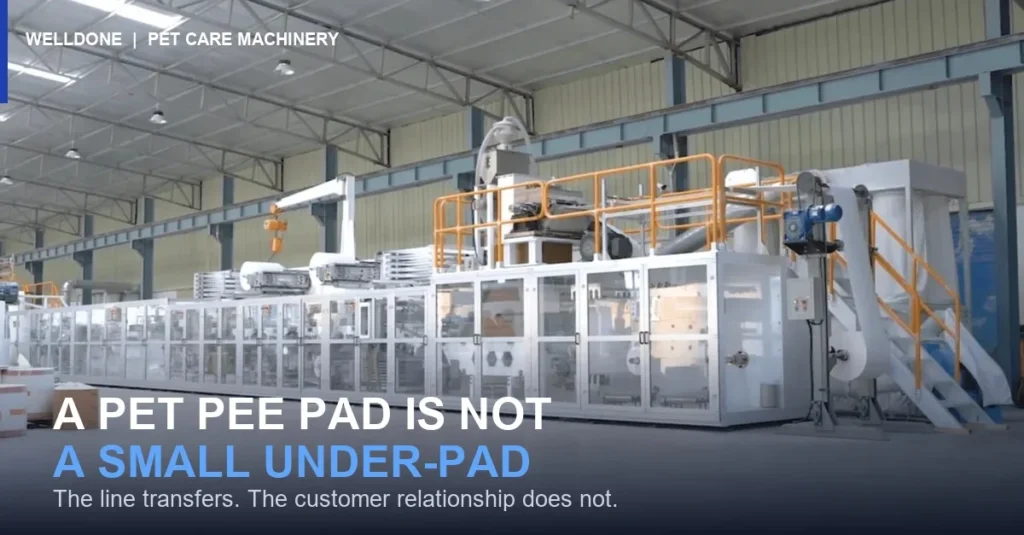
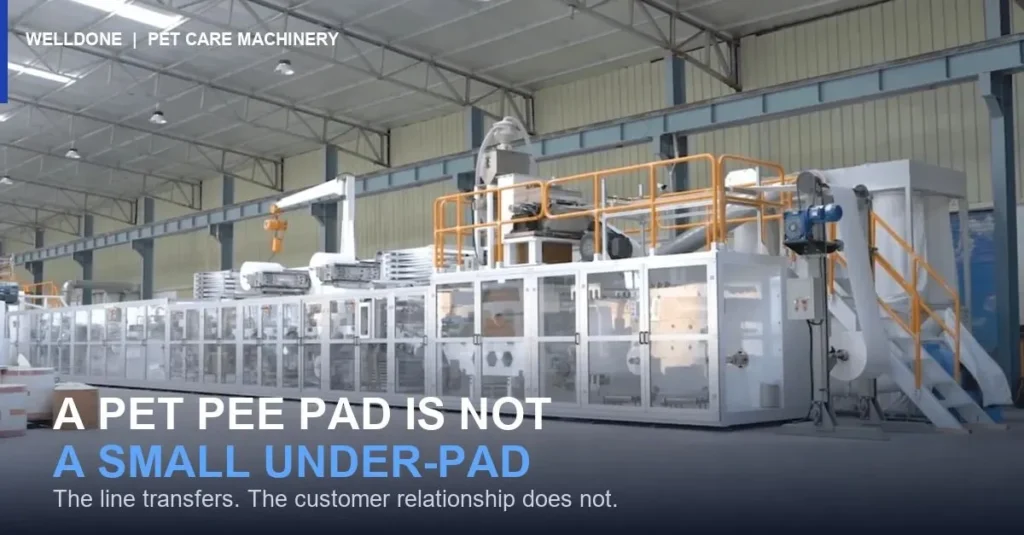
- pet pee pad machine
- wet wipes machine
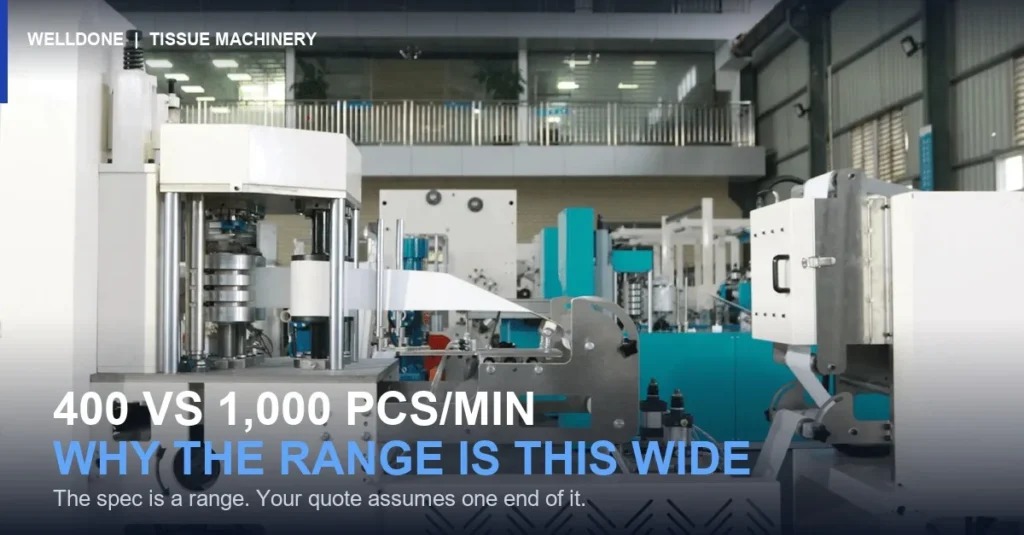
- tissue machine
FAQ
What is the biggest mistake new hygiene factories make when buying machines?
The biggest mistake is usually focusing too much on machine price while overlooking stability, material matching, and long-term operating cost.
Is the fastest machine always the best choice?
No. For many new factories, stable output at a realistic speed is more valuable than a higher design speed that is difficult to control.
Why should raw material planning happen before machine purchase?
Because machine-material matching has a direct effect on waste, stability, quality, and startup efficiency.
Should new factories think about future expansion from the beginning?
Yes. Even at the startup stage, buyers should consider whether the line can support future product changes and growth.
Why is supplier support so important?
Because installation, adjustment, training, and early-stage production often decide whether the line can move into stable operation quickly.
Conclusion
New hygiene factories do not make costly machine mistakes because they are careless. They make them because they look at one part of the decision and miss the full factory picture.
In 2026, that kind of mistake is becoming more expensive.
The right machine is not simply the cheapest one or the fastest one. It is the machine that fits the factory’s real product plan, material conditions, labor capacity, and future direction.
So before comparing quotations alone, it is worth asking one better question:
What kind of production system do we really need to build?